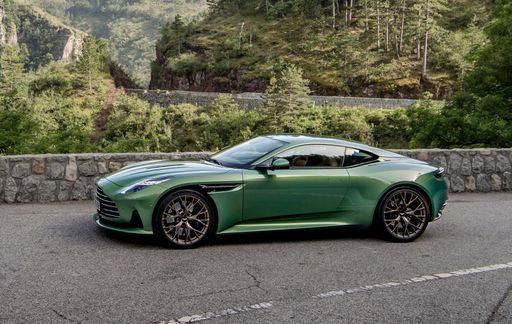
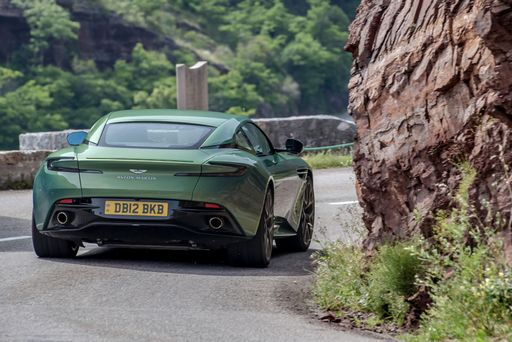
VS

Aston Martin DB12 vs Ferrari Amalfi comparison

Compare performance (680 HP vs 640 HP), boot space and price (192,900 £ vs 222,900 £ ) at a glance. Find out which car is the better choice for you – Aston Martin DB12 or Ferrari Amalfi?

Aston Martin DB12 vs Ferrari Amalfi: Key differences

Aston Martin DB12

  • slightly cheaper
  • marginally more power
details

Ferrari Amalfi

3.9 (1 Reviews)
rate
  • only slightly quicker 0–100 km/h
  • a bit lighter
  • marginally more trunk space
details

By Achim Sedelmaier

DB12

Head-to-head: Aston Martin DB12 VS Ferrari Amalfi — first look

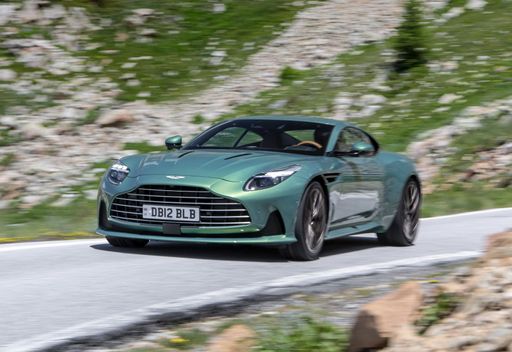
The Aston Martin DB12 and Ferrari Amalfi bring two distinct flavours of modern grand tourer to the same address: one leans toward taut sporting grace, the other toward Italian poise and everyday usability. The DB12 arrives with a more driver-focused character and a noticeably upgraded cabin that aims to feel bespoke; the Amalfi counters with a softer, more forgiving ride and ergonomics tuned to daily life. Both cars are clearly premium statements, but they sell different emotional promises — the DB12 sells controlled drama, the Amalfi sells polished presence. That difference is what matters when you park one in your garage: the choice is about what you want to feel behind the wheel most days, not which sheet of paper has the higher number.

DB12

Character and driving dynamics

The Aston Martin DB12 drives like a sharper GT that wants to be pushed: stiffer suspension tuning, precise steering and a setup that rewards an engaged driver who likes to thread corners at speed. The Ferrari Amalfi prefers to charm rather than intimidate, offering quick, light steering and a balanced demeanor that makes spirited driving accessible without feeling clinical or harsh. In practice the DB12 feels more willing to hang on to an enthusiast’s inputs, while the Amalfi trades a touch of edge for composure and predictability. For buyers who prize a communicative chassis and sharper turn-in the DB12 will feel more alive; for those who want effortless fun and neutral manners from street to motorway the Amalfi is easier to live with.

DB12

Comfort and long‑distance behavior

On long runs the Aston Martin DB12 plays the long‑distance card with a relaxed cruising personality, excellent range between fuel stops and seats that support a couple for hours on end, although firm suspension and tyre noise can remind you you’re in a performance GT. The Ferrari Amalfi is the more cosseting companion over poor surfaces thanks to adaptive damping and a dedicated smoothing mode that softens bumps without turning the car into a floaty limousine. Noise insulation is a shared caveat: the DB12’s tyres can sing on rougher surfaces while the Amalfi also allows tyre and wind intrusions at higher speeds, so neither is as hushed as ultra-luxury tourers. If your priority is a taut, engaging long-distance machine you’ll prefer the DB12; if you want a smoother, more indulgent cruise day after day the Amalfi is the kinder companion.

Cabin feel, controls and perceived quality

The Aston Martin DB12 impresses with a tangible uplift in material quality and tactile switches that make the interior feel deliberately crafted rather than assembled from catalog parts. The Ferrari Amalfi matches that sense of luxury but leans on more intuitive placement of driver controls and a layout that keeps the most used functions within easy reach, although its central screen sits lower and sometimes forces menu dives. In daily use the DB12’s physical buttons and metal touches convey solidity and ceremony, while the Amalfi’s cockpit feels sportingly ergonomic and immediately familiar to Ferrari buyers. Both cabins read as premium, but the DB12 feels like a refreshed British craft, and the Amalfi like an Italian atelier that prioritises effortless usability.

Practicality and city usability

Practical differences show up in small, annoying ways: the Aston Martin DB12’s luggage opening is less generous and the rear seats remain genuinely 2+2, so packing for a weekend trip requires soft bags and careful stacking. The Ferrari Amalfi offers a more sensible load area with foldable rear backs that make odd-shaped items and longer loads easier, which helps the Amalfi in daily errands and airport runs. In town both cars require respect for long noses and broad hips, but the Amalfi’s lighter steering and city‑friendly transmission make tight manoeuvres and traffic commuting less fatiguing. If you need a GT that behaves more like a practical weekend car the Amalfi has the edge; if you accept a bit less luggage convenience for a stronger sporting presence the DB12 remains compelling.

Buyer fit: who should pick which car before the specs page

Choosing between the Aston Martin DB12 and Ferrari Amalfi comes down to temperament: pick the DB12 if you want a refined but distinctly sporty grand tourer that rewards an involved driver and places tactile luxury high on the checklist. Opt for the Amalfi if brand charisma, everyday ergonomics and a softer long‑distance ride that simplifies city life are your priorities. Both cars can be optioned into very different characters, and both quickly climb in price when personalised, so budget discipline matters equally for each. Below this editorial we’ll step through the technical numbers—power, weight, acceleration and cargo figures—to show how those real‑world impressions arise from the mechanical trade‑offs.

Here’s where it gets real: The technical differences in detail

DB12

Costs and Efficiency:

Price and efficiency are key factors when choosing a car – and this is often where the real differences emerge.

Aston Martin DB12 is slightly cheaper – starting at 192,900 £ , while the Ferrari Amalfi costs 222,900 £ . That’s a price difference of around 30,000 £.

DB12

Engine and Performance:

Power, torque and acceleration say a lot about how a car feels on the road. This is where you see which model delivers more driving dynamics.

When it comes to engine power, the Aston Martin DB12 offers marginally more power – delivering 680 HP compared to 640 HP. That’s roughly 40 HP more horsepower.

When accelerating from 0 to 100 km/h, the Ferrari Amalfi is only slightly quicker – completing the sprint in 3.3 s, while the Aston Martin DB12 takes 3.6 s. That’s about 0.3 s quicker.

There’s also a difference in torque: the Aston Martin DB12 delivers only slightly more torque with 800 Nm compared to 760 Nm. That’s about 40 Nm more.

DB12

Space and Everyday Use:

Whether family car or daily driver – which one offers more room, flexibility and comfort?

Both vehicles offer seating for 4 people.

In terms of curb weight, Ferrari Amalfi is a bit lighter – 1,545 kg compared to 1,788 kg. The difference is around 243 kg.

Looking at boot space, the Ferrari Amalfi offers marginally more boot space – 273 L compared to 262 L. That’s a difference of about 11 L.

Who wins the race in the data check?

The Aston Martin DB12 is barely ahead in the objective data comparison.
This result only shows which model scores more points on paper – not which of the two cars feels right for you.

from £192,900
DB12

Aston Martin DB12

  • Engine Type : Petrol
  • Transmission : Automatic
  • Drive Type : Rear-Wheel Drive
  • Power HP : 680 HP
  • Consumption L/100km : 12.2 L/100km
Aston Martin DB12
Ferrari Amalfi

Costs and Consumption

View detailed analysis

Engine and Performance

View detailed analysis

Dimensions and Body

View detailed analysis

Aston Martin DB12

The Aston Martin DB12 is a gorgeously styled grand tourer that fuses beguiling elegance with a fiercely driver-focused personality while wrapping occupants in luxury. If you want a car that turns heads on the street and makes long journeys feel like an event, the DB12 provides effortless poise and an intoxicating soundtrack—perfect for buyers who prefer their drama tailored rather than shouty.

details

Ferrari Amalfi

Ferrari's latest masterpiece, the Amalfi, captivates the senses with its sleek design and unparalleled performance. Aptly named after the stunning coastal region in Italy, the Amalfi embodies luxury and elegance while promising an exhilarating driving experience. It effortlessly merges classic Ferrari DNA with modern innovation, making it a true icon in the world of high-performance automobiles.

details
Aston Martin DB12
Ferrari Amalfi

Costs and Consumption

Price
192,900 - 209,600 £
Price
222,900 - 231,400 £
Consumption L/100km
12.2 L/100km
Consumption L/100km
-
Consumption kWh/100km
-
Consumption kWh/100km
-
Electric Range
-
Electric Range
-
Battery Capacity
-
Battery Capacity
-
co2
276 - 278 g/km
co2
-
Fuel tank capacity
-
Fuel tank capacity
-

Dimensions and Body

Body Type
Coupe, Convertible
Body Type
Coupe, Convertible
Seats
4
Seats
4
Doors
-
Doors
-
Curb weight
1,788 - 1,898 kg
Curb weight
1,545 kg
Trunk capacity
206 - 262 L
Trunk capacity
273 L
Length
-
Length
-
Width
1,980 mm
Width
1,974 mm
Height
-
Height
-
Max trunk capacity
-
Max trunk capacity
-
Payload
-
Payload
-

Engine and Performance

Engine Type
Petrol
Engine Type
Petrol
Transmission
Automatic
Transmission
Automatic
Transmission Detail
Automatic Gearbox
Transmission Detail
Dual-Clutch Automatic
Drive Type
Rear-Wheel Drive
Drive Type
Rear-Wheel Drive
Power HP
680 HP
Power HP
640 HP
Acceleration 0-100km/h
3.6 - 3.7 s
Acceleration 0-100km/h
3.3 s
Max Speed
-
Max Speed
-
Torque
800 Nm
Torque
760 Nm
Number of Cylinders
8
Number of Cylinders
8
Power kW
500 kW
Power kW
471 kW
Engine capacity
3,982 cm3
Engine capacity
3,855 cm3

General

Model Year
2,023 - 2,024
Model Year
2026
CO2 Efficiency Class
G
CO2 Efficiency Class
-
Brand
Aston Martin
Brand
Ferrari
DriveDuel uses data analysis and artificial intelligence to evaluate vehicle data and create content. Content is regularly reviewed and improved. The displayed prices are estimates based on German list prices, adjusted to the respective country’s VAT. Country-specific registration taxes are not included. This information is not legally binding.