VS

Audi A3 Limousine vs BMW 3 Series Touring comparison

Compare performance (400 HP vs 530 HP), boot space and price (27,700 £ vs 41,100 £ ) at a glance. Find out which car is the better choice for you – Audi A3 Limousine or BMW 3 Series Touring?

Audi A3 Limousine vs BMW 3 Series Touring: Key differences

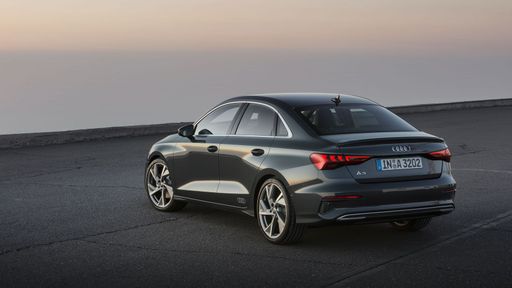
Audi A3 Limousine

  • considerably cheaper
  • visibly lighter

BMW 3 Series Touring

4.3 (1 Reviews)
rate
  • visibly more power
  • substantially more efficient
  • very slightly quicker 0–100 km/h
  • moderately more trunk space
A3 Limousine

A Clash of Titans: Audi A3 Limousine vs. BMW 3er Touring

In the world of luxury automobiles, two models stand out for their blend of performance and sophistication – the Audi A3 Limousine and the BMW 3er Touring. Both vehicles have been updated for the latest model years, boasting state-of-the-art technology and refined design. This article delves into the technical details and innovations that set these vehicles apart, helping potential buyers make an informed decision.
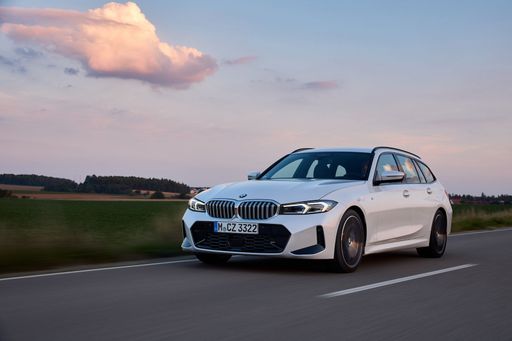
3 Series Touring

Performance and Powertrain

The new Audi A3 Limousine offers a variety of engine choices, catering to a wide range of preferences. Drivers can choose from diesel and petrol options, and for the environmentally conscious, a petrol Mild Hybrid Electric Vehicle (MHEV) variant. The power output ranges from a modest 116 HP, ideal for urban settings, to a robust 400 HP for those craving performance. With both manual and dual-clutch automatic transmissions available, its flexibility in driving dynamics is impressive.

Meanwhile, the BMW 3er Touring provides a similarly diverse array of powertrain options. Emphasizing efficiency and performance, BMW offers petrol engines, diesel MHEV, and even plug-in hybrids for those seeking increased fuel economy. With power outputs spanning from 150 HP to an exhilarating 550 HP, and coupled with its automatic transmission, the 3er Touring can cater to both comfort-focused drivers and high-speed enthusiasts.

A3 Limousine

Fuel Efficiency and Range

Efficiency is a key criterion for many modern drivers. The Audi A3 Limousine's fuel consumption varies depending on the engine, ranging from an economical 4.8 L/100 km for diesel variants to 9.1 L/100 km for the high-performance petrol models. This efficiency comes with CO2 emissions between 118 and 207 g/km, ensuring that the A3 remains competitive in its segment.

In comparison, the BMW 3er Touring excels with its plug-in hybrid technology, offering an electric range of up to 96 km, making it one of the greener options in its class. Fuel consumption for the petrol and hybrid models ranges from an impressive 0.9 L/100 km to 10.5 L/100 km for the higher power variants. CO2 emissions are remarkably reduced for the hybrid models, providing a greener alternative with only 20 g/km.

3 Series Touring

Dimensions and Practicality

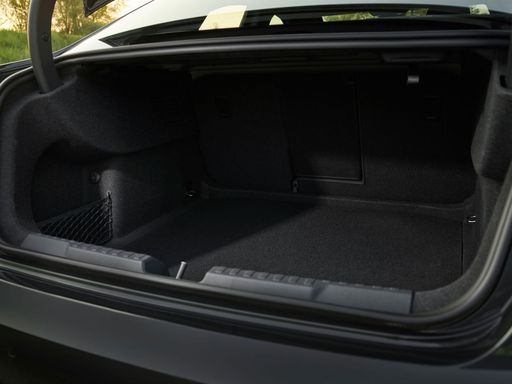
With regards to size and design, the A3 Limousine offers a compact sedan body style, measuring up to 4533 mm in length and 1851 mm in width. Its trunk capacity of 425 liters makes it a practical choice for urban transportation and small family trips.

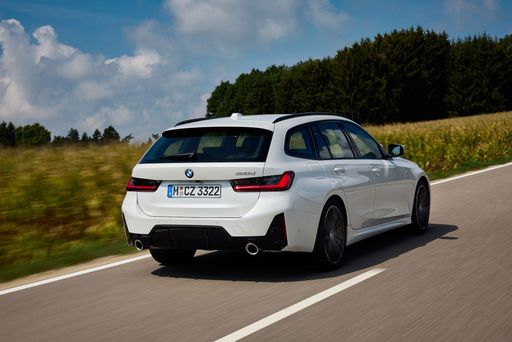
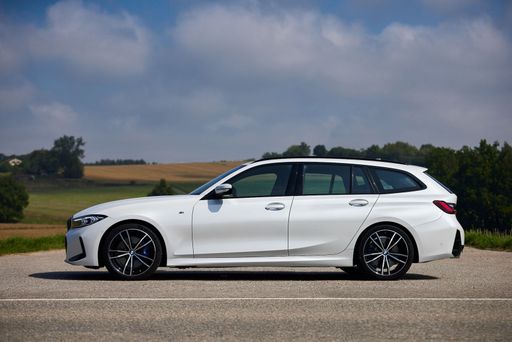
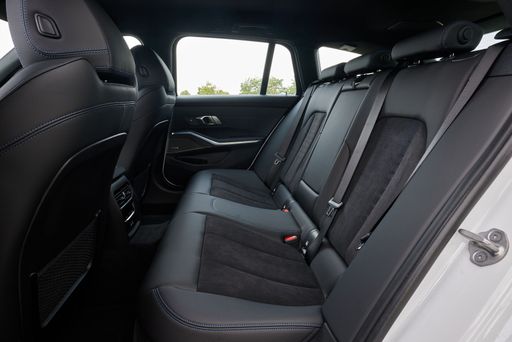
The BMW 3er Touring, recognized for its versatility as a wagon, offers more cargo space with a trunk capacity of 500 liters and an extended length of up to 4801 mm. This translates to enhanced practicality, particularly advantageous for longer journeys or when additional luggage space is a priority.

A3 Limousine

Innovative Features and Technology

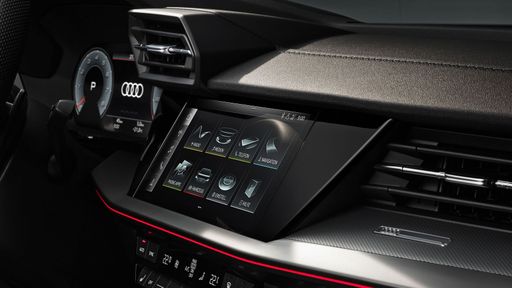
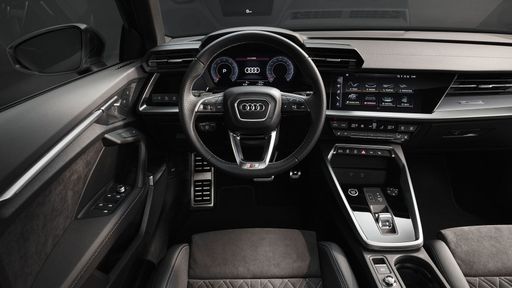
Both models come equipped with the latest in automotive technology. The Audi A3 Limousine integrates advanced infotainment systems with connectivity features that keep drivers engaged and informed. Safety is paramount, with driver-assist systems designed to aid in various driving conditions.

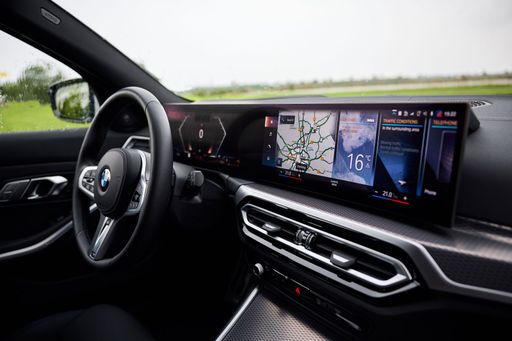
The BMW 3er Touring, on the other hand, showcases its cutting-edge technological prowess with impressive assistant systems and an intuitive iDrive infotainment setup. The inclusion of hybrid technology not only enhances efficiency but also represents BMW's commitment to innovative mobility solutions.

3 Series Touring

Conclusion

Choosing between the Audi A3 Limousine and the BMW 3er Touring depends largely on personal needs and preferences. The A3 Limousine offers a range of options between performance and economy, in a compact, stylish package. The 3er Touring, with its hybrid options and spacious interiors, is perfect for those seeking versatility without compromising on luxury. Ultimately, both cars exemplify their brands' dedication to performance, efficiency, and cutting-edge technology, making either choice a commendable one for discerning drivers.

Here’s where it gets real: The technical differences in detail

A3 Limousine

Costs and Efficiency:

Looking at overall running costs, both models reveal some interesting differences in everyday economy.

Audi A3 Limousine is considerably cheaper – starting at 27,700 £ , while the BMW 3 Series Touring costs 41,100 £ . That’s a price difference of around 13,372 £.

Fuel consumption also shows a difference: the BMW 3 Series Touring uses 2.5 L/100km and is substantially more efficient than the Audi A3 Limousine with 4.4 L/100km. The difference is about 1.9 L/100km.

3 Series Touring

Engine and Performance:

Under the bonnet, it becomes clear which model is tuned for sportiness and which one takes the lead when you hit the accelerator.

When it comes to engine power, the BMW 3 Series Touring offers visibly more power – delivering 530 HP compared to 400 HP. That’s roughly 130 HP more horsepower.

When accelerating from 0 to 100 km/h, the BMW 3 Series Touring is very slightly quicker – completing the sprint in 3.6 s, while the Audi A3 Limousine takes 3.8 s. That’s about 0.2 s quicker.

There’s also a difference in torque: the BMW 3 Series Touring delivers noticeably more torque with 700 Nm compared to 500 Nm. That’s about 200 Nm more.

A3 Limousine

Space and Everyday Use:

Beyond pure performance, interior space and usability matter most in daily life. This is where you see which car is more practical and versatile.

Both vehicles offer seating for 5 people.

In terms of curb weight, Audi A3 Limousine is visibly lighter – 1,360 kg compared to 1,650 kg. The difference is around 290 kg.

Looking at boot space, the BMW 3 Series Touring offers moderately more boot space – 500 L compared to 425 L. That’s a difference of about 75 L.

When it comes to payload, the BMW 3 Series Touring carries only slightly more – 520 kg compared to 480 kg. That’s a difference of about 40 kg.

Who wins the race in the data check?

The BMW 3 Series Touring holds a decisive overall lead in the objective data comparison.
This result only shows which model scores more points on paper – not which of the two cars feels right for you.

from £41,100
3 Series Touring

BMW 3 Series Touring

  • Engine Type : Diesel MHEV, Petrol, Petrol MHEV, Plugin Hybrid
  • Transmission : Automatic
  • Drive Type : Rear-Wheel Drive, All-Wheel Drive
  • Power HP : 150 - 530 HP
  • Consumption L/100km : 2.5 - 10.3 L/100km
  • Electric Range : 91 - 97 km
Audi A3 Limousine
BMW 3 Series Touring

Costs and Consumption

View detailed analysis

Engine and Performance

View detailed analysis

Dimensions and Body

View detailed analysis

Audi A3 Limousine

The Audi A3 sedan dresses up compact practicality in clean, premium lines, giving you the feel of an upscale small car with a proper boot. Inside it’s neat, driver-focused and nicely finished — a sensible, enjoyable daily companion that prefers poise over showy theatrics.

details

BMW 3 Series Touring

The BMW 3 Series Touring blends sporting poise with everyday practicality, wrapping sharp handling and a premium cabin into a wagon that actually makes errands feel enjoyable. It’s the kind of car that hides a family-hauler’s sense of duty beneath a driver's-car attitude — useful, classy, and just cheeky enough to make you smile on the open road.

details
Audi A3 Limousine
BMW 3 Series Touring

Costs and Consumption

Price
27,700 - 58,300 £
Price
41,100 - 91,900 £
Consumption L/100km
4.4 - 9.2 L/100km
Consumption L/100km
2.5 - 10.3 L/100km
Consumption kWh/100km
-
Consumption kWh/100km
-
Electric Range
-
Electric Range
91 - 97 km
Battery Capacity
-
Battery Capacity
19.5 kWh
co2
115 - 208 g/km
co2
57 - 233 g/km
Fuel tank capacity
-
Fuel tank capacity
40 - 59 L

Dimensions and Body

Body Type
Sedan
Body Type
Estate
Seats
5
Seats
5
Doors
-
Doors
5
Curb weight
1,360 - 1,640 kg
Curb weight
1,650 - 2,025 kg
Trunk capacity
321 - 425 L
Trunk capacity
410 - 500 L
Length
-
Length
4,713 mm
Width
1,816 - 1,851 mm
Width
1,827 - 1,903 mm
Height
-
Height
1,440 - 1,448 mm
Max trunk capacity
-
Max trunk capacity
1,420 - 1,510 L
Payload
415 - 480 kg
Payload
430 - 520 kg

Engine and Performance

Engine Type
Petrol, Petrol MHEV, Diesel
Engine Type
Diesel MHEV, Petrol, Petrol MHEV, Plugin Hybrid
Transmission
Manuel, Automatic
Transmission
Automatic
Transmission Detail
Manual Gearbox, Dual-Clutch Automatic
Transmission Detail
Automatic Gearbox
Drive Type
Front-Wheel Drive, All-Wheel Drive
Drive Type
Rear-Wheel Drive, All-Wheel Drive
Power HP
116 - 400 HP
Power HP
150 - 530 HP
Acceleration 0-100km/h
3.8 - 10.1 s
Acceleration 0-100km/h
3.6 - 8.8 s
Max Speed
-
Max Speed
213 - 250 km/h
Torque
220 - 500 Nm
Torque
250 - 700 Nm
Number of Cylinders
4 - 5
Number of Cylinders
4 - 6
Power kW
85 - 294 kW
Power kW
110 - 390 kW
Engine capacity
1,498 - 2,480 cm3
Engine capacity
1,995 - 2,998 cm3

General

Model Year
2,025
Model Year
2,024 - 2,025
CO2 Efficiency Class
D, C, E, G
CO2 Efficiency Class
D, E, F, G, B
Brand
Audi
Brand
BMW
DriveDuel uses data analysis and artificial intelligence to evaluate vehicle data and create content. Content is regularly reviewed and improved. The displayed prices are estimates based on German list prices, adjusted to the respective country’s VAT. Country-specific registration taxes are not included. This information is not legally binding.