VS

Audi A3 Sportback vs Lexus NX comparison

Compare performance (400 HP vs 292 HP), boot space and price (27,000 £ vs 46,000 £ ) at a glance. Find out which car is the better choice for you – Audi A3 Sportback or Lexus NX?

Audi A3 Sportback vs Lexus NX: Key differences

Audi A3 Sportback

3.9 (1 Reviews)
rate
  • clearly cheaper
  • noticeably more power
  • significantly more efficient
  • clearly more electric range
  • clearly quicker 0–100 km/h
  • markedly lighter
details

Lexus NX

4.8 (11 Reviews)
rate
details

All details on performance, efficiency, range and trunk space can be found in the technical comparison below – including user reviews for both models.

By Achim Sedelmaier

A3 Sportback

A Battle of Elegance and Efficiency: Audi A3 Sportback vs Lexus NX

When it comes to choosing a car that balances style, performance, and modern features, the Audi A3 Sportback and Lexus NX stand out as formidable contenders. As we dive into the finer details of these two vehicles, we'll explore their technical specifications and innovative features which cater to differing preferences in the automobile market.
NX

Design & Dimensions

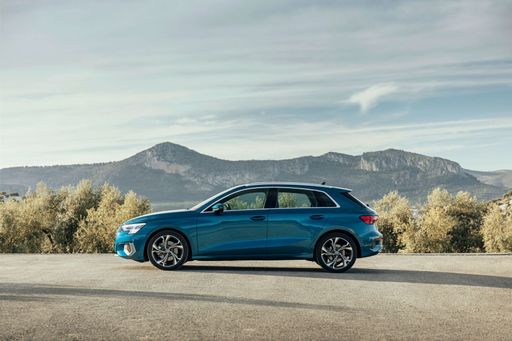
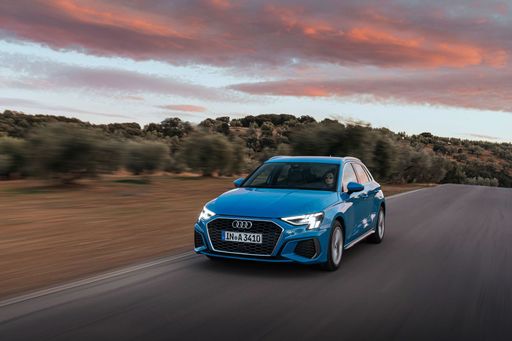
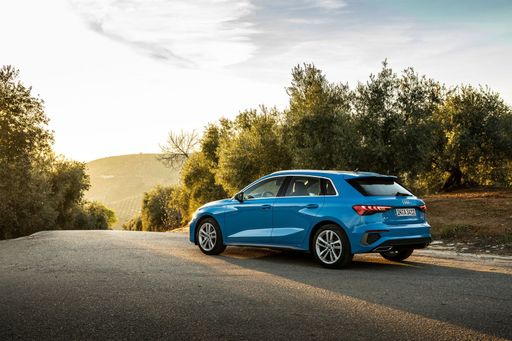
The Audi A3 Sportback embraces the versatility of a hatchback design, contributing to its dynamic and youthful appeal. With a length of approximately 4381mm, a width of 1851mm, and a height of around 1415mm, it presents a compact yet spacious option that blends perfectly with urban landscapes.

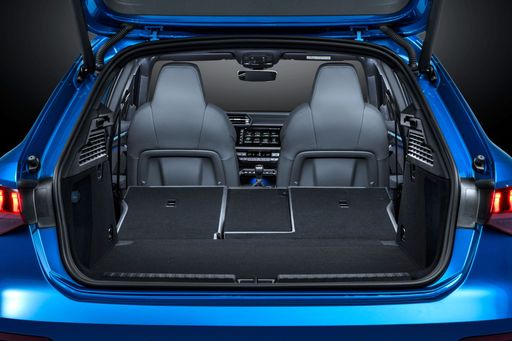
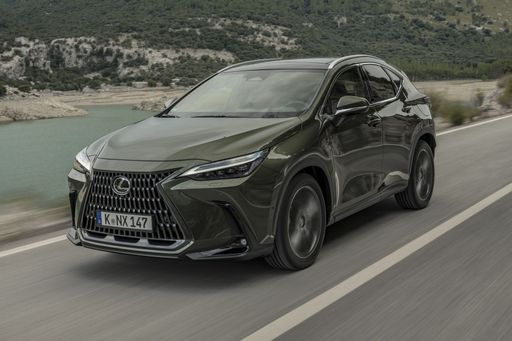
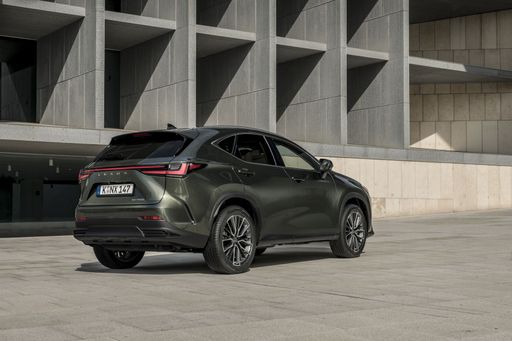
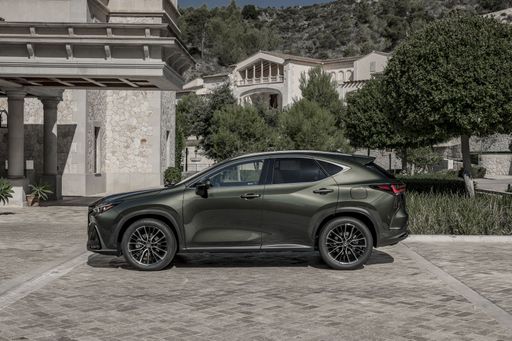
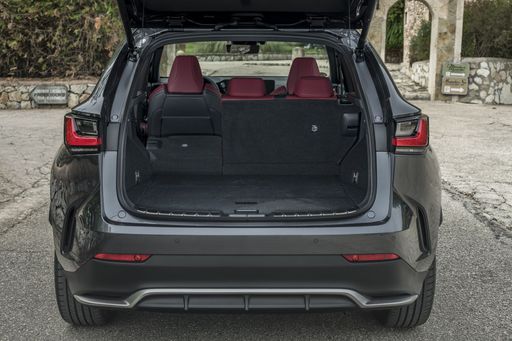
On the other hand, the Lexus NX is designed as an SUV, providing a more robust and spacious structure. It measures 4660mm in length, 1865mm in width, and stands taller at 1670mm, offering a commanding presence on the road. This size increase translates directly to a generous trunk capacity of 545 liters, significantly surpassing the A3's 280 liters.

A3 Sportback

Powertrains & Performance

The Audi A3 Sportback offers a plethora of engine choices: from a traditional petrol variant to more innovative options like the petrol MHEV, diesel, and plugin hybrid models. Power outputs for the A3 range from 116 HP to a powerful 400 HP, catering to both efficiency-seekers and performance enthusiasts. Acceleration from 0-100km/h ranges between 3.8 seconds and 10.1 seconds, depending on the selected engine, while it achieves top speeds between 205 and 250 km/h.

Lexus NX opts for two primary hybrid powertrains: a full hybrid and a plugin hybrid. These configurations deliver between 244 HP and 309 HP. The acceleration timing can go as fast as 7.7 seconds for the plugin variant, with a max speed pegged at 200 km/h. The NX emphasizes eco-friendliness with CO2 emissions as low as 22g/km for the plugin hybrid.

NX

Innovation in Efficiency

The Audi A3 Sportback shines with its option of a plugin hybrid engine, boasting an electric range up to 143 km, which sets a benchmark for hybrid hatchbacks in this segment. With a CO2 output as low as 6g/km, it reflects Audi's commitment to reducing its environmental footprint.

Contrastingly, the Lexus NX's full and plugin hybrid models focus on balancing power and efficiency. The plugin variant achieves a remarkable fuel consumption rate of just 1L/100km. It also offers an electric-only range of 68 km, which is substantial for typical daily commuting.

A3 Sportback

Transmission & Drive Options

The Audi A3 brings diversity in transmission choices with both manual and dual-clutch automatic gearboxes, appealing to varied driving preferences. It also provides the flexibility of both front-wheel and all-wheel-drive platforms.

Meanwhile, the Lexus NX simplifies the driving experience with a CVT automatic transmission, available in both front-wheel and all-wheel drive, aiming at a smoother and more seamless driving experience.

NX

Conclusion

Both the Audi A3 Sportback and Lexus NX offer unique advantages tailored to specific needs. Audi's versatile engine options and innovative plugin hybrid technology give it an edge for urban drivers seeking agility with efficiency. Lexus redefines luxury and sustainability with its hybrid focus, providing an eco-friendly yet powerful SUV experience. Ultimately, the choice boils down to personal preference: the lifestyle-oriented hatchback of the A3 Sportback or the luxury-driven and eco-conscious SUV experience of the Lexus NX.

Here’s where it gets real: The technical differences in detail

A3 Sportback

Costs and Efficiency:

Price and efficiency are key factors when choosing a car – and this is often where the real differences emerge.

Audi A3 Sportback is clearly cheaper – starting at 27,000 £ , while the Lexus NX costs 46,000 £ . That’s a price difference of around 19,028 £.

Fuel consumption also shows a difference: the Audi A3 Sportback uses 1.1 L/100km and is significantly more efficient than the Lexus NX with 2.9 L/100km. The difference is about 1.8 L/100km.

As for electric range, the Audi A3 Sportback offers clearly more range – reaching up to 141 km, about 69 km more than the Lexus NX.

NX

Engine and Performance:

Power, torque and acceleration are the classic benchmarks for car enthusiasts – and here, some clear differences start to show.

When it comes to engine power, the Audi A3 Sportback offers noticeably more power – delivering 400 HP compared to 292 HP. That’s roughly 108 HP more horsepower.

When accelerating from 0 to 100 km/h, the Audi A3 Sportback is clearly quicker – completing the sprint in 3.8 s, while the Lexus NX takes 6.4 s. That’s about 2.6 s quicker.

A3 Sportback

Space and Everyday Use:

Beyond pure performance, interior space and usability matter most in daily life. This is where you see which car is more practical and versatile.

Both vehicles offer seating for 5 people.

In terms of curb weight, Audi A3 Sportback is markedly lighter – 1,360 kg compared to 1,805 kg. The difference is around 445 kg.

When it comes to payload, the Lexus NX carries very slightly more – 515 kg compared to 480 kg. That’s a difference of about 35 kg.

Who wins the race in the data check?

The Audi A3 Sportback is clearly superior overall in the objective data comparison.
This result only shows which model scores more points on paper – not which of the two cars feels right for you.

from £27,000
A3 Sportback

Audi A3 Sportback

  • Engine Type : Petrol, Petrol MHEV, Diesel, Plugin Hybrid
  • Transmission : Manuel, Automatic
  • Drive Type : Front-Wheel Drive, All-Wheel Drive
  • Power HP : 116 - 400 HP
  • Consumption L/100km : 1.1 - 9.3 L/100km
  • Electric Range : 134 - 141 km
Audi A3 Sportback
Lexus NX

Costs and Consumption

View detailed analysis

Engine and Performance

View detailed analysis

Dimensions and Body

View detailed analysis

Audi A3 Sportback

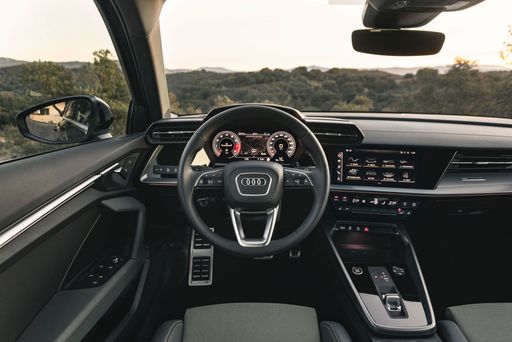
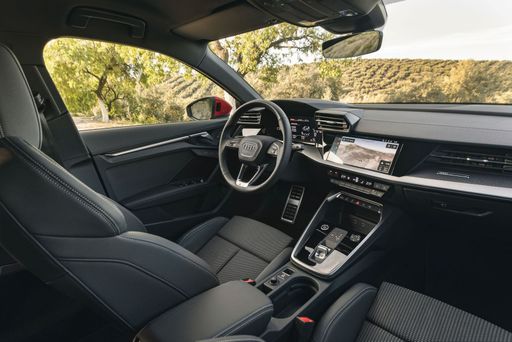
The Audi A3 Sportback wraps premium materials and crisp German design into a practical hatchback package that makes daily driving feel smart rather than showy. It’s nimble in the city, composed on longer trips, and carries just enough swagger to satisfy buyers who want quality without shouting about it.

details

Lexus NX

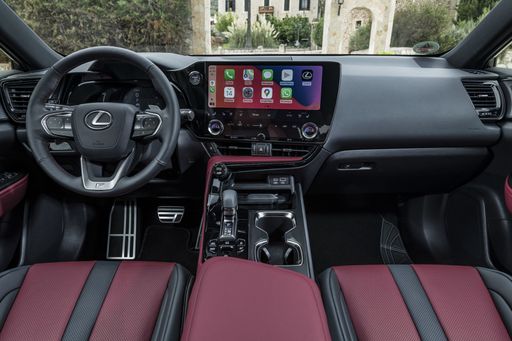
The Lexus NX wraps striking, chiseled styling around a cabin that feels more crafted living room than utility vehicle, with soft materials and user-friendly tech that give it genuine premium cachet. On the road it's composed and quietly confident, trading sporty pretensions for a refined, easygoing personality that will suit buyers who want luxury without fuss — with a little Lexus flair to make daily commutes feel special.

details
Audi A3 Sportback
Lexus NX

Costs and Consumption

Price
27,000 - 92,900 £
Price
46,000 - 64,300 £
Consumption L/100km
1.1 - 9.3 L/100km
Consumption L/100km
2.9 - 5.9 L/100km
Consumption kWh/100km
-
Consumption kWh/100km
-
Electric Range
134 - 141 km
Electric Range
72 km
Battery Capacity
19.7 kWh
Battery Capacity
-
co2
25 - 211 g/km
co2
65 - 134 g/km
Fuel tank capacity
40 L
Fuel tank capacity
-

Dimensions and Body

Body Type
Hatchback
Body Type
SUV
Seats
5
Seats
5
Doors
5
Doors
-
Curb weight
1,360 - 1,685 kg
Curb weight
1,805 - 2,065 kg
Trunk capacity
280 - 380 L
Trunk capacity
-
Length
4,352 - 4,353 mm
Length
-
Width
1,816 - 1,851 mm
Width
1,865 mm
Height
1,441 - 1,470 mm
Height
-
Max trunk capacity
1,100 L
Max trunk capacity
-
Payload
410 - 480 kg
Payload
475 - 515 kg

Engine and Performance

Engine Type
Petrol, Petrol MHEV, Diesel, Plugin Hybrid
Engine Type
Full Hybrid, Plugin Hybrid
Transmission
Manuel, Automatic
Transmission
Automatic
Transmission Detail
Manual Gearbox, Dual-Clutch Automatic
Transmission Detail
CVT
Drive Type
Front-Wheel Drive, All-Wheel Drive
Drive Type
Front-Wheel Drive, All-Wheel Drive
Power HP
116 - 400 HP
Power HP
200 - 292 HP
Acceleration 0-100km/h
3.8 - 10.1 s
Acceleration 0-100km/h
6.4 - 8.8 s
Max Speed
225 - 237 km/h
Max Speed
-
Torque
220 - 500 Nm
Torque
-
Number of Cylinders
4 - 5
Number of Cylinders
4
Power kW
85 - 294 kW
Power kW
147 - 215 kW
Engine capacity
1,498 - 2,480 cm3
Engine capacity
2,487 cm3

General

Model Year
2,025 - 2,026
Model Year
2025
CO2 Efficiency Class
D, F, E, G, B
CO2 Efficiency Class
D, B
Brand
Audi
Brand
Lexus
DriveDuel uses data analysis and artificial intelligence to evaluate vehicle data and create content. Content is regularly reviewed and improved. The displayed prices are estimates based on German list prices, adjusted to the respective country’s VAT. Country-specific registration taxes are not included. This information is not legally binding.