VS

Audi A3 Sportback vs Mercedes GLC comparison

Compare performance (400 HP vs 472 HP), boot space and price (27,000 £ vs 50,300 £ ) at a glance. Find out which car is the better choice for you – Audi A3 Sportback or Mercedes GLC?

Audi A3 Sportback vs Mercedes GLC: Key differences

Audi A3 Sportback

4.1 (2 Reviews)
rate
  • clearly cheaper
  • clearly more efficient
  • marginally more electric range
  • moderately quicker 0–100 km/h
  • substantially lighter
details

Mercedes GLC

4.3 (14 Reviews)
rate
  • somewhat more power
  • visibly more trunk space
details

All details on performance, efficiency, range and trunk space can be found in the technical comparison below – including user reviews for both models.

By Achim Sedelmaier

A3 Sportback

Audi A3 Sportback vs. Mercedes GLC: A Clash of Luxury and Performance

When it comes to luxury vehicles, both Audi and Mercedes-Benz have long been at the forefront, offering cars that promise performance, elegance, and cutting-edge technology. Today, we delve into a detailed comparison between two of their standout models: the Audi A3 Sportback and the Mercedes GLC. We'll explore their technical specifications, innovations, and what makes each car unique in its own right.
GLC

The Audi A3 Sportback: Brimming with Innovation

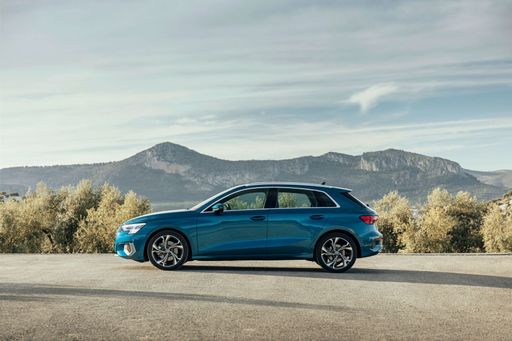
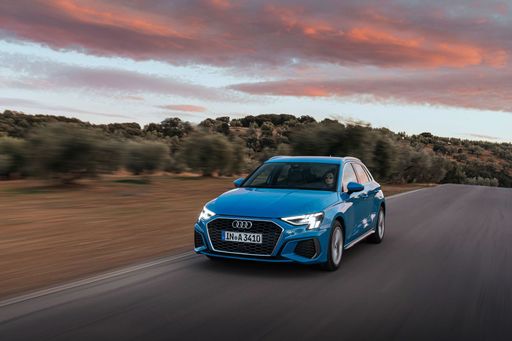
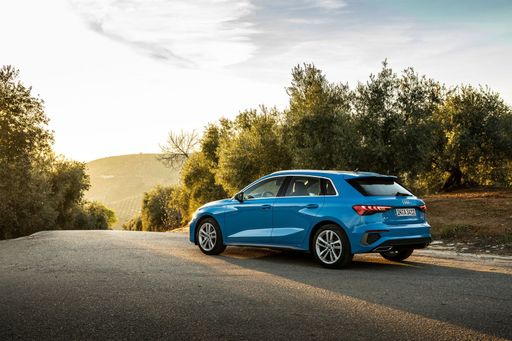
The Audi A3 Sportback is a quintessential representation of Audi’s knack for combining style and performance in a compact body type. As a hatchback, it offers versatility alongside a touch of luxury. The 2024 model year brings several engine options including petrol, diesel, mild hybrid, and plug-in hybrid variants, making it highly adaptable to various driving preferences and environmental considerations. The combustion engines range from 116 HP to an impressive 400 HP, catering to both efficiency seekers and performance enthusiasts.

The Technical highlights include a top speed that varies from 205 km/h to 250 km/h, acceleration from 0-100 km/h between 3.8s and 10.1s, and a torque spectrum of 220 to 500 Nm. Moreover, the A3 Sportback prides itself on its aerodynamic design extending 4,353 mm in length and a curb weight varying between 1,360 kg to 1,685 kg depending on the engine type and configuration.

A3 Sportback

Mercedes GLC: The Epitome of Premium SUVs

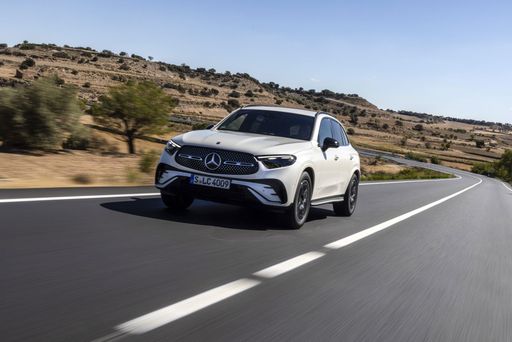
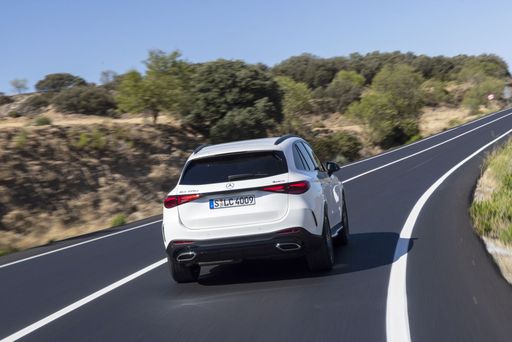
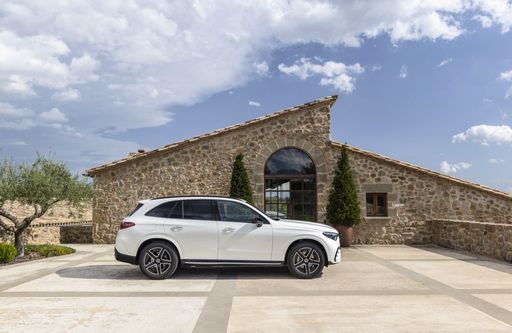
Stepping into the realm of SUVs, the Mercedes GLC stands out with its larger-than-life presence and exceptional luxury. The GLC is tailored for those who demand the space and comfort associated with SUVs, without compromising on the driving dynamics that Mercedes-Benz is known for.

The 2024 model year of the GLC offers a variety of engine types such as petrol mild hybrids, diesel mild hybrids, and plug-in hybrids, with a horsepower range from 186 HP to a formidable 680 HP. The SUV's acceleration varies between 3.5s to 9s for a 0-100 km/h sprint, with a top speed that reaches 250 km/h for certain models.

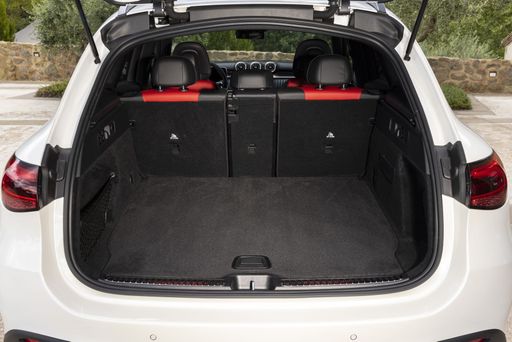
With a spacious trunk capacity spanning from 390 to 620 liters, the GLC caters to families and individuals who need ample storage space. It’s also complemented by a power-packed torque of up to 1020 Nm and boasts superior engineering with dimensions measuring 4,749 mm in length and a weight spectrum spanning from 1,870 kg to 2,415 kg.

GLC

Technological Enhancements Across Models

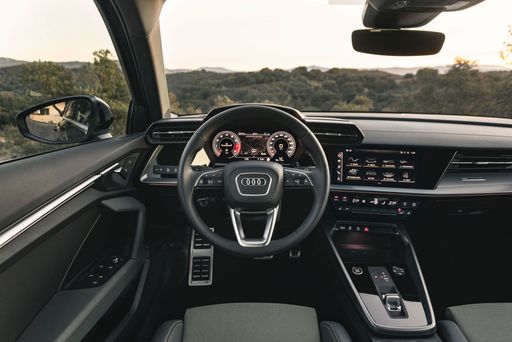
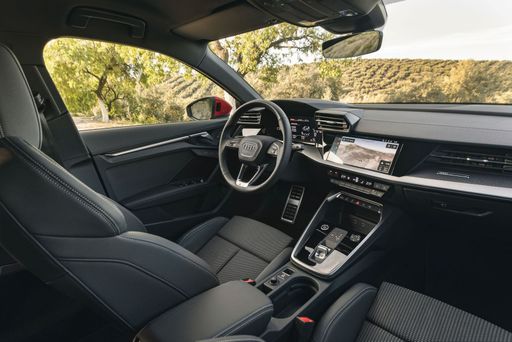
Both the Audi A3 Sportback and the Mercedes GLC shine when it comes to incorporating modern technologies. The A3 Sportback is available with front-wheel and all-wheel drive options, promoting a remarkable driving experience. Its cockpit is designed with the latest digital interfaces, ensuring seamless connectivity and entertainment on the go.

The Mercedes GLC, on the other hand, offers standard all-wheel drive, supporting off-road ventures with its robust build. Features like the MBUX interface bring in intelligent voice control, taking in-car communication to new heights. The advanced suspension system ensures a smooth ride, even on rough terrains.

A3 Sportback

Conclusion: Which One to Choose?

The decision between the Audi A3 Sportback and the Mercedes GLC largely depends on personal preferences. For those seeking a compact, agile vehicle with cutting-edge features, the Audi A3 Sportback is a commendable choice. It is ideal for urban environments, where its size and efficiency shine.

In contrast, if size, cargo space, and SUV luxury are priorities, the Mercedes GLC stands out as a powerhouse with plenty of room for drivers and passengers to stretch out. Its array of advanced features and stately appearance make it perfect for those who often embark on long journeys or adventure drives.

Ultimately, both vehicles reflect their brands' commitment to excellence, and regardless of choice, drivers are sure to enjoy a superior driving experience.

Here’s where it gets real: The technical differences in detail

A3 Sportback

Costs and Efficiency:

When it comes to price and running costs, the biggest differences usually appear. This is often where you see which car fits your budget better in the long run.

Audi A3 Sportback is clearly cheaper – starting at 27,000 £ , while the Mercedes GLC costs 50,300 £ . That’s a price difference of around 23,327 £.

Fuel consumption also shows a difference: the Audi A3 Sportback uses 1.1 L/100km and is clearly more efficient than the Mercedes GLC with 1.6 L/100km. The difference is about 0.5 L/100km.

As for electric range, the Audi A3 Sportback offers marginally more range – reaching up to 141 km, about 13 km more than the Mercedes GLC.

GLC

Engine and Performance:

Power, torque and acceleration are the classic benchmarks for car enthusiasts – and here, some clear differences start to show.

When it comes to engine power, the Mercedes GLC offers somewhat more power – delivering 472 HP compared to 400 HP. That’s roughly 72 HP more horsepower.

When accelerating from 0 to 100 km/h, the Audi A3 Sportback is moderately quicker – completing the sprint in 3.8 s, while the Mercedes GLC takes 4.2 s. That’s about 0.4 s quicker.

There’s also a difference in torque: the Mercedes GLC delivers clearly more torque with 750 Nm compared to 500 Nm. That’s about 250 Nm more.

A3 Sportback

Space and Everyday Use:

Cabin size, boot volume and payload all play a role in everyday practicality. Here, comfort and flexibility make the difference.

Both vehicles offer seating for 5 people.

In terms of curb weight, Audi A3 Sportback is substantially lighter – 1,345 kg compared to 1,985 kg. The difference is around 640 kg.

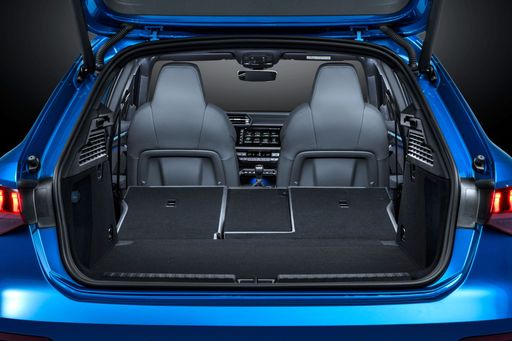
Looking at boot space, the Mercedes GLC offers visibly more boot space – 620 L compared to 380 L. That’s a difference of about 240 L.

When it comes to payload, the Mercedes GLC carries moderately more – 575 kg compared to 485 kg. That’s a difference of about 90 kg.

Who wins the race in the data check?

The Audi A3 Sportback stands well ahead of its rival in the objective data comparison.
This result only shows which model scores more points on paper – not which of the two cars feels right for you.

from £27,000
A3 Sportback

Audi A3 Sportback

  • Engine Type Petrol, Petrol MHEV, Diesel, Plugin Hybrid
  • Transmission Manuel, Automatic
  • Drive Type Front-Wheel Drive, All-Wheel Drive
  • Power HP 116 - 400 HP
  • Consumption L/100km 1.1 - 9.3 L/100km
  • Electric Range 134 - 141 km
Audi A3 Sportback
Mercedes GLC

Costs and Consumption

View detailed analysis

Engine and Performance

View detailed analysis

Dimensions and Body

View detailed analysis

Audi A3 Sportback

The Audi A3 Sportback wraps premium materials and crisp German design into a practical hatchback package that makes daily driving feel smart rather than showy. It’s nimble in the city, composed on longer trips, and carries just enough swagger to satisfy buyers who want quality without shouting about it.

details

Mercedes GLC

The Mercedes GLC blends quiet refinement with premium materials to create a comfortable, modern cabin that feels more upscale than its size might suggest. It delivers composed handling and confident on-road manners while offering practical versatility and a strong suite of driver assistance and infotainment features.

details
Audi A3 Sportback
Mercedes GLC

Costs and Consumption

Price
27,000 - 92,900 £
Price
50,300 - 82,100 £
Consumption L/100km
1.1 - 9.3 L/100km
Consumption L/100km
1.6 - 9.4 L/100km
Consumption kWh/100km
-
Consumption kWh/100km
-
Electric Range
134 - 141 km
Electric Range
122 - 128 km
Battery Capacity
-
Battery Capacity
-
co2
25 - 211 g/km
co2
41 - 214 g/km
Fuel tank capacity
-
Fuel tank capacity
-

Dimensions and Body

Body Type
Hatchback
Body Type
SUV
Seats
5
Seats
5
Doors
-
Doors
-
Curb weight
1,345 - 1,685 kg
Curb weight
1,985 - 2,400 kg
Trunk capacity
280 - 380 L
Trunk capacity
390 - 620 L
Length
-
Length
-
Width
1,816 - 1,851 mm
Width
1,890 - 1,920 mm
Height
-
Height
-
Max trunk capacity
-
Max trunk capacity
-
Payload
410 - 485 kg
Payload
475 - 575 kg

Engine and Performance

Engine Type
Petrol, Petrol MHEV, Diesel, Plugin Hybrid
Engine Type
Diesel MHEV, Plugin Hybrid, Petrol MHEV
Transmission
Manuel, Automatic
Transmission
Automatic
Transmission Detail
Manual Gearbox, Dual-Clutch Automatic
Transmission Detail
Automatic Gearbox
Drive Type
Front-Wheel Drive, All-Wheel Drive
Drive Type
All-Wheel Drive
Power HP
116 - 400 HP
Power HP
186 - 472 HP
Acceleration 0-100km/h
3.8 - 10.1 s
Acceleration 0-100km/h
4.2 - 9 s
Max Speed
-
Max Speed
-
Torque
220 - 500 Nm
Torque
380 - 750 Nm
Number of Cylinders
4 - 5
Number of Cylinders
4 - 6
Power kW
85 - 294 kW
Power kW
137 - 347 kW
Engine capacity
1,498 - 2,480 cm3
Engine capacity
1,993 - 2,999 cm3

General

Model Year
2,025 - 2,026
Model Year
2,025 - 2,026
CO2 Efficiency Class
D, F, E, G, B
CO2 Efficiency Class
D, B, E, F, G
Brand
Audi
Brand
Mercedes-Benz
DriveDuel uses data analysis and artificial intelligence to evaluate vehicle data and create content. Content is regularly reviewed and improved. The displayed prices are estimates based on German list prices, adjusted to the respective country’s VAT. Country-specific registration taxes are not included. This information is not legally binding.