VS

Audi A4 Avant vs Audi Q5 comparison

Compare performance (470 HP vs 367 HP), boot space and price (37,200 £ vs 46,400 £ ) at a glance. Find out which car is the better choice for you – Audi A4 Avant or Audi Q5?

Audi A4 Avant vs Audi Q5: Key differences

Audi A4 Avant

5 (1 Reviews)
rate
  • visibly cheaper
  • clearly more power
  • noticeably quicker 0–100 km/h
  • moderately lighter
details

Audi Q5

4.4 (6 Reviews)
rate
  • substantially more efficient
  • barely more trunk space
details

All details on performance, efficiency, range and trunk space can be found in the technical comparison below – including user reviews for both models.

By Achim Sedelmaier

A4 Avant

Overview: Audi A4 Avant vs Audi Q5

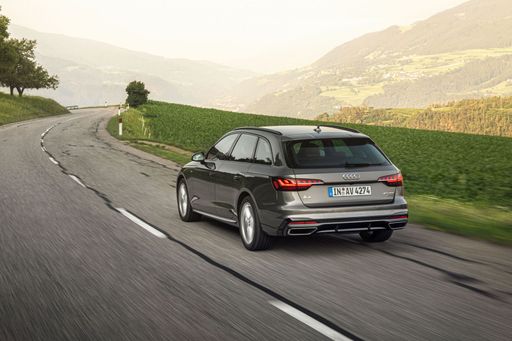
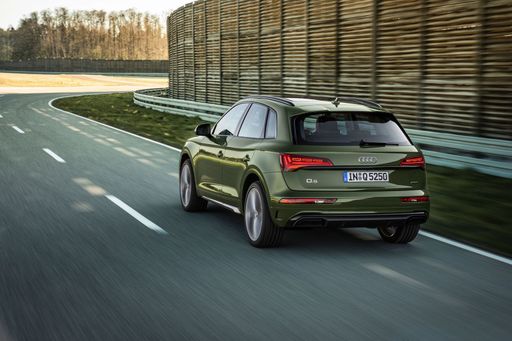
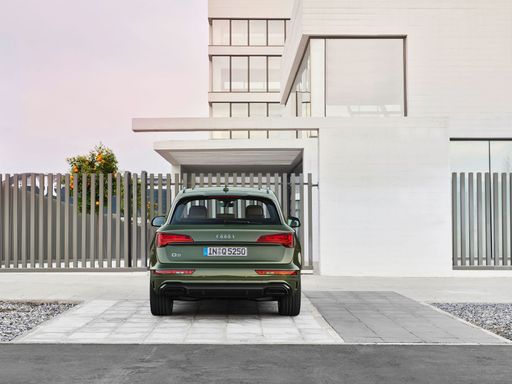
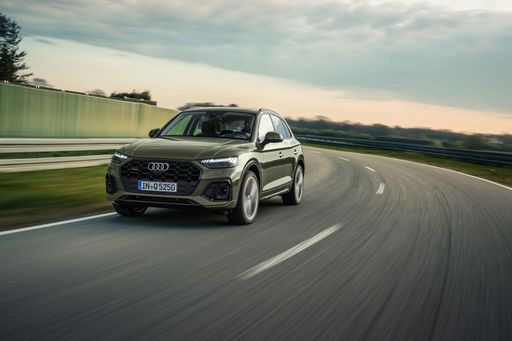
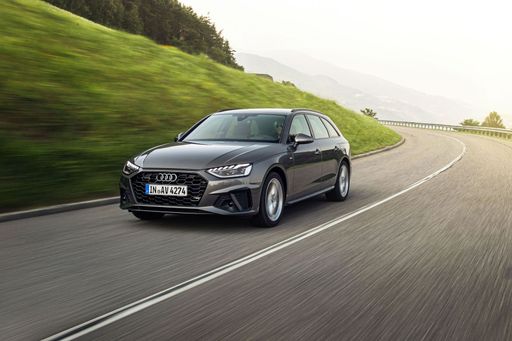
Audi A4 Avant and Audi Q5 sit in the same premium bracket but speak to different priorities, which is exactly what this Audi A4 Avant VS Audi Q5 comparison aims to make clear. The A4 Avant presents itself as the classic business kombi: low, composed and built around quiet, long‑distance comfort and refined materials. The Q5 answers with SUV virtues: elevated seating, flexible rear packaging and a tech‑first approach that includes plug‑in options. Choosing between them is less about absolute superiority and more about which everyday compromises you’re willing to accept.
Q5

On the road: character and driving feel

On the move the Audi A4 Avant feels car‑like and composed, rewarding drivers who want precise, planted responses rather than theatrical handling. By contrast the Audi Q5 feels reassuringly upright and secure, delivering SUV calm and predictability at the cost of some engagement when you push it. The A4 Avant’s lower centre of gravity lends crisper direction and a closer connection to the road, while the Q5’s higher stance and softer bias favour relaxed cruising and light off‑pavement confidence. Both share Audi’s traction competence, but the A4 Avant is the pick if you care about a firmer, more communicative chassis and the Q5 if you prioritise confidence and ease over sportiness.

A4 Avant

Comfort and long‑distance behaviour

For motorway miles the Audi A4 Avant is quietly persuasive with exemplary noise damping and seats built for long stints, so fatigue simply arrives later. The Audi Q5 is equally aimed at extended trips but delivers comfort through a higher driving position and optional air suspension that can feel more floaty and authoritative. Where the A4 Avant isolates wind and road noise, the Q5 trades a bit of that isolation for better ingress/egress and a broader feeling of control in mixed terrain. On broken urban surfaces the A4 Avant often filters sharp inputs more cleanly, whereas the Q5 with large wheels or air springs can sometimes thud over short bumps. In practical terms, choose the A4 Avant for serene, low‑effort cruising and the Q5 if you want commanding posture and a more versatile long‑distance setup.

Q5

Family practicality and cargo

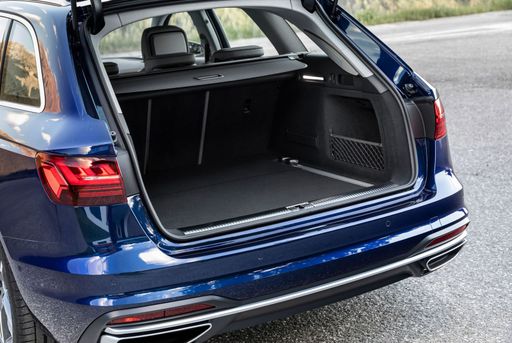
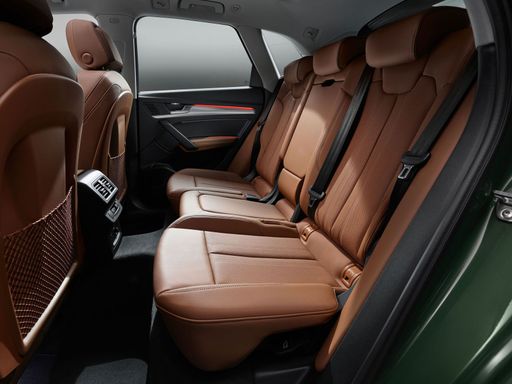
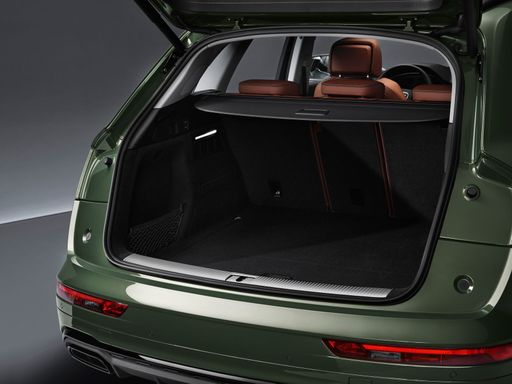
Practical buyers will notice the A4 Avant’s wagon proportions immediately: a lower loading lip, a square load area and a split‑folding rear bench that handles skis and awkward cargo with minimal fuss. The Audi Q5 swaps some of that boxiness for SUV advantages — a sliding rear bench, three ISOFIX points and a generally easier step‑in plus genuine towing capacity for trailers. If you regularly stack tall luggage or need a very flat folded floor the A4 Avant’s layout often feels more usable, while the Q5’s higher floor and rising loadbed can limit usable depth when folded. Rear passengers get different benefits too: the Q5’s elevated seats aid access and visibility, but the A4 Avant frequently feels more comfortable for two adults over distance.

A4 Avant

Cabin, controls and technology

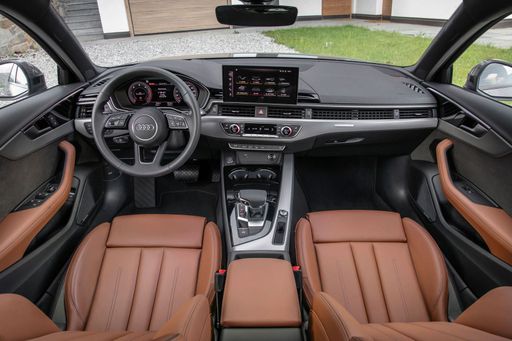
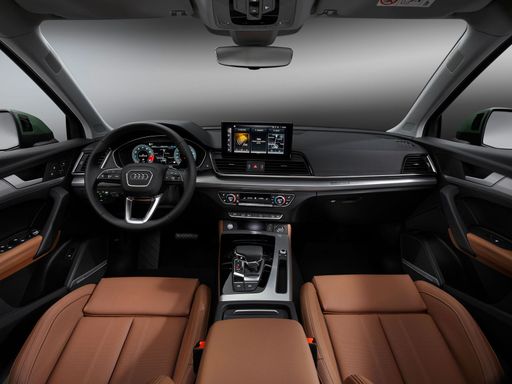
Inside the Audi A4 Avant you’ll find materials and switchgear that still reward touch—simple, reachable controls for core functions and a generally higher haptic quality. The Audi Q5 tilts toward displays and digital features, offering broader connectivity and an optional passenger screen, but that comes with more menus, capacitive panels and fewer physical climate controls. For drivers who want quick, instinctive adjustments without hunting through screens the A4 Avant’s layout is less distracting; tech‑forward buyers will like the Q5’s feature set but should accept ergonomics that can feel fiddly. Perceived quality therefore splits: the A4 Avant scores on finish and tactile luxury, the Q5 on functional tech breadth and assistance prowess.

Q5

Buyer fit: who should consider which car next

If your day is dominated by motorways, business trips and a need for a quiet, tactile cabin, the Audi A4 Avant is the more natural companion thanks to its kombi practicality and refined ride. If your priorities are a higher driving position, rear‑seat flexibility, towing or the ability to do many short commutes electrically, the Audi Q5 aligns better even though it sits higher on the options and pricing ladder. Powertrain choices also shift the argument: the A4 Avant leans toward brisk, car‑like performance while the Q5’s plug‑in availability and SUV packaging favour mixed‑use economy and versatility. Below you’ll find a technical comparison that lays out those trade‑offs in detail so you can map the numbers onto the real‑world differences described here.

Here’s where it gets real: The technical differences in detail

A4 Avant

Costs and Efficiency:

When it comes to price and running costs, the biggest differences usually appear. This is often where you see which car fits your budget better in the long run.

Audi A4 Avant is visibly cheaper – starting at 37,200 £ , while the Audi Q5 costs 46,400 £ . That’s a price difference of around 9,129 £.

Fuel consumption also shows a difference: the Audi Q5 uses 2.5 L/100km and is substantially more efficient than the Audi A4 Avant with 4.8 L/100km. The difference is about 2.3 L/100km.

Q5

Engine and Performance:

Power, torque and acceleration are the classic benchmarks for car enthusiasts – and here, some clear differences start to show.

When it comes to engine power, the Audi A4 Avant offers clearly more power – delivering 470 HP compared to 367 HP. That’s roughly 103 HP more horsepower.

When accelerating from 0 to 100 km/h, the Audi A4 Avant is noticeably quicker – completing the sprint in 3.7 s, while the Audi Q5 takes 4.5 s. That’s about 0.8 s quicker.

There’s also a difference in torque: the Audi A4 Avant delivers only slightly more torque with 600 Nm compared to 580 Nm. That’s about 20 Nm more.

A4 Avant

Space and Everyday Use:

Cabin size, boot volume and payload all play a role in everyday practicality. Here, comfort and flexibility make the difference.

Both vehicles offer seating for 5 people.

In terms of curb weight, Audi A4 Avant is moderately lighter – 1,595 kg compared to 1,910 kg. The difference is around 315 kg.

Looking at boot space, the Audi Q5 offers barely more boot space – 520 L compared to 495 L. That’s a difference of about 25 L.

Maximum payload is identical – both can carry up to 565 kg.

Who wins the race in the data check?

The Audi Q5 is clearly superior overall in the objective data comparison.
This result only shows which model scores more points on paper – not which of the two cars feels right for you.

from £46,400
Q5

Audi Q5

  • Engine Type : Plugin Hybrid, Petrol MHEV, Diesel MHEV
  • Transmission : Automatic
  • Drive Type : All-Wheel Drive, Front-Wheel Drive
  • Power HP : 204 - 367 HP
  • Consumption L/100km : 2.5 - 8.3 L/100km
  • Electric Range : 92 - 100 km
Audi A4 Avant
Audi Q5

Costs and Consumption

View detailed analysis

Engine and Performance

View detailed analysis

Dimensions and Body

View detailed analysis

Audi A4 Avant

The Audi A4 Avant blends elegant, understated styling with practical estate versatility, making it a polished choice for drivers who want both poise and generous cargo space. Inside, the cabin feels premium and tech-forward while the composed driving manners turn routine journeys into a quietly satisfying experience—exactly the sensible indulgence buyers will appreciate.

details

Audi Q5

The Audi Q5 feels like the sensible luxury choice — polished cabin materials, a calm ride and enough tech to keep commuters and weekend adventurers equally pleased. It won't shout for attention but will quietly check the boxes for buyers who want refinement, space and everyday usability with a dash of Audi charisma.

details
Audi A4 Avant
Audi Q5

Costs and Consumption

Price
37,200 - 122,500 £
Price
46,400 - 79,600 £
Consumption L/100km
4.8 - 9.7 L/100km
Consumption L/100km
2.5 - 8.3 L/100km
Consumption kWh/100km
-
Consumption kWh/100km
-
Electric Range
-
Electric Range
92 - 100 km
Battery Capacity
-
Battery Capacity
-
co2
126 - 220 g/km
co2
56 - 189 g/km
Fuel tank capacity
40 - 58 L
Fuel tank capacity
-

Dimensions and Body

Body Type
Estate
Body Type
SUV
Seats
5
Seats
5
Doors
5
Doors
-
Curb weight
1,595 - 1,820 kg
Curb weight
1,910 - 2,245 kg
Trunk capacity
495 L
Trunk capacity
433 - 520 L
Length
4,750 - 4,782 mm
Length
-
Width
1,842 - 1,866 mm
Width
1,900 mm
Height
1,428 - 1,493 mm
Height
-
Max trunk capacity
1,495 L
Max trunk capacity
-
Payload
510 - 565 kg
Payload
490 - 565 kg

Engine and Performance

Engine Type
Diesel MHEV, Petrol MHEV, Petrol
Engine Type
Plugin Hybrid, Petrol MHEV, Diesel MHEV
Transmission
Automatic
Transmission
Automatic
Transmission Detail
Dual-Clutch Automatic, Automatic Gearbox
Transmission Detail
Dual-Clutch Automatic
Drive Type
All-Wheel Drive, Front-Wheel Drive
Drive Type
All-Wheel Drive, Front-Wheel Drive
Power HP
136 - 470 HP
Power HP
204 - 367 HP
Acceleration 0-100km/h
3.7 - 9.8 s
Acceleration 0-100km/h
4.5 - 8.6 s
Max Speed
210 - 300 km/h
Max Speed
-
Torque
270 - 600 Nm
Torque
340 - 580 Nm
Number of Cylinders
4 - 6
Number of Cylinders
4 - 6
Power kW
100 - 346 kW
Power kW
150 - 270 kW
Engine capacity
1,968 - 2,894 cm3
Engine capacity
1,968 - 2,995 cm3

General

Model Year
2,023 - 2,024
Model Year
2025
CO2 Efficiency Class
E, F, D, G
CO2 Efficiency Class
B, E, F, G
Brand
Audi
Brand
Audi
DriveDuel uses data analysis and artificial intelligence to evaluate vehicle data and create content. Content is regularly reviewed and improved. The displayed prices are estimates based on German list prices, adjusted to the respective country’s VAT. Country-specific registration taxes are not included. This information is not legally binding.