VS

Audi A4 Avant vs VW Tayron comparison

Compare performance (470 HP vs 272 HP), boot space and price (37,200 £ vs 40,200 £ ) at a glance. Find out which car is the better choice for you – Audi A4 Avant or VW Tayron?

Audi A4 Avant vs VW Tayron: Key differences

Audi A4 Avant

5 (1 Reviews)
rate
  • only slightly cheaper
  • substantially more power
  • substantially quicker 0–100 km/h
  • barely lighter
details

VW Tayron

4.5 (6 Reviews)
rate
  • significantly more efficient
  • substantially more trunk space
details

All details on performance, efficiency, range and trunk space can be found in the technical comparison below – including user reviews for both models.

By Achim Sedelmaier

A4 Avant

The Audi A4 Avant vs. VW Tayron: A Battle of German Engineering

The automotive world never stands still, and we, as enthusiasts, adore the thrill of comparing stellar vehicles from legendary manufacturers. In this article, we'll pit two formidable contenders against each other: the Audi A4 Avant and the VW Tayron. Both vehicles represent the pinnacle of German engineering in their respective segments, bringing distinct strengths and sophisticated innovations to the table. Let's dive in and explore what makes each model unique and see if we can discern a clear winner.
Tayron

Sculpted Exteriors and Dimensions

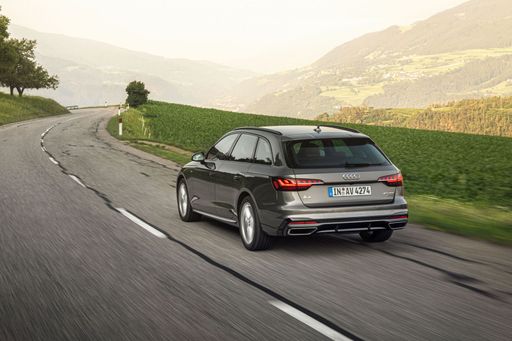
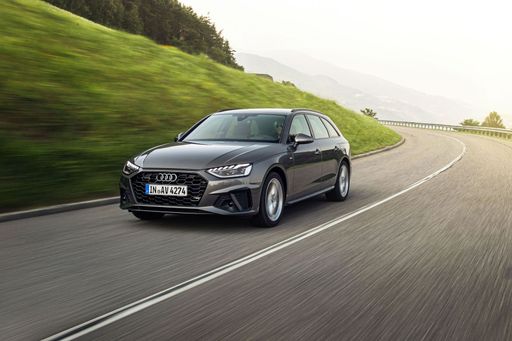
The Audi A4 Avant is an epitome of elegance and sophistication, adopting the classic wagon body style. With a length variability stretching from 4750mm to 4782mm, a width ranging up to 1866mm, and a height between 1428mm and 1493mm, the A4 Avant exudes a streamlined aesthetic. Its design strikes a delicate balance between sportiness and utility, highlighted by Audi's signature Singleframe grille.

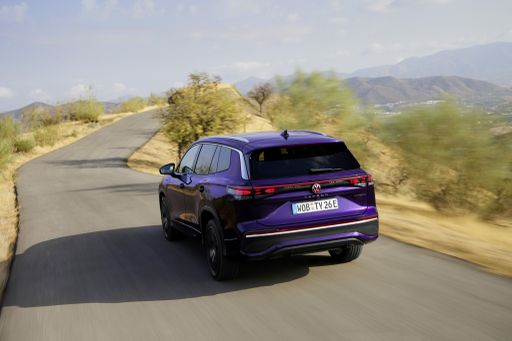
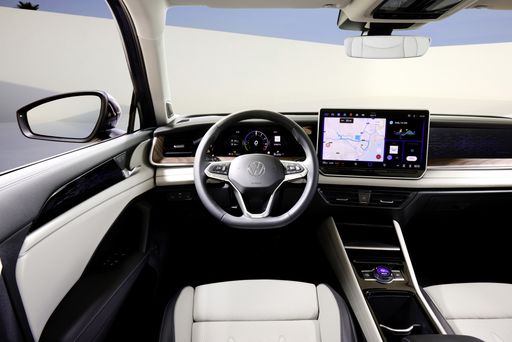
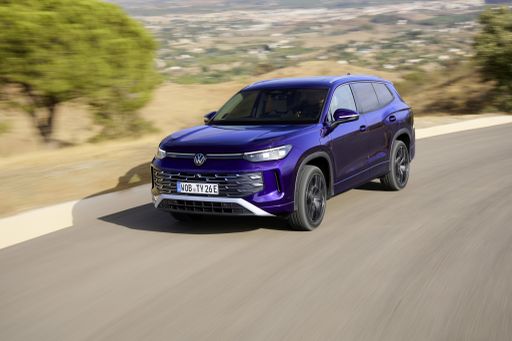
In contrast, the VW Tayron presents itself as an SUV, standing robust with a length of 4792mm, a width between 1853mm and 1866mm, and a height nearing 1668mm. Its commanding presence on the road is further amplified by a distinctive front fascia and a muscular stance, ready to conquer both urban and off-road challenges with ease.

A4 Avant

Powertrain and Performance

The heart of the Audi A4 Avant's allure lies in its versatile engine lineup. With options stretching from a 136 HP Petrol MHEV to a robust 470 HP petrol engine, it caters to varying performance desires. The model boasts a top speed range from 210 to an impressive 300 km/h, ensuring exhilarating drives. Its torque metrics range between 270 and a hefty 600 Nm, promising potent acceleration and responsiveness.

Meanwhile, the VW Tayron's powertrain choices focus on smooth and efficient drives, offering engine options between 150 HP and a powerful 272 HP variant. Paired with an advanced Dual-Clutch Automatic, the acceleration ranges from 6.1 to a leisurely 9.7 seconds for 0-100 km/h sprints. The Tayron's top speed caps at 240 km/h, affirming its credentials as a sophisticated family SUV.

Tayron

Innovations and Tech Features

Audi's engineering prowess shines in its wide array of tech innovations in the A4 Avant. Offering both Diesel and Petrol Mild-Hybrid Electric Vehicle (MHEV) powertrains, Audi emphasizes enhanced fuel efficiency without sacrificing performance. A typical highway consumption tally ranges from as low as 4.8 L/100km to 9.7 L/100km, depending on model choices, ensuring economical drives.

The VW Tayron, on the other hand, integrates modern tech with its available Plugin Hybrid variant, boasting an electric range of up to 126 km. This focus not only elevates its efficiency but also champions VW's commitment to sustainable mobility. For the environmentally conscious driver, the Tayron’s CO2 emissions range as low as 9 g/km.

A4 Avant

Space, Comfort, and Practicality

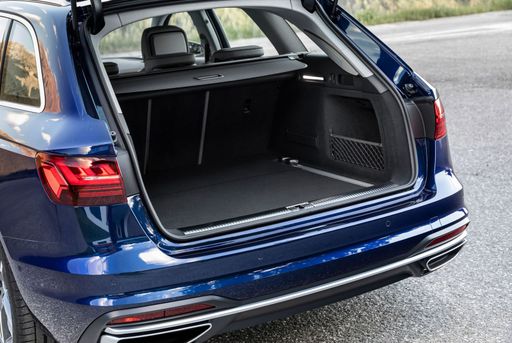
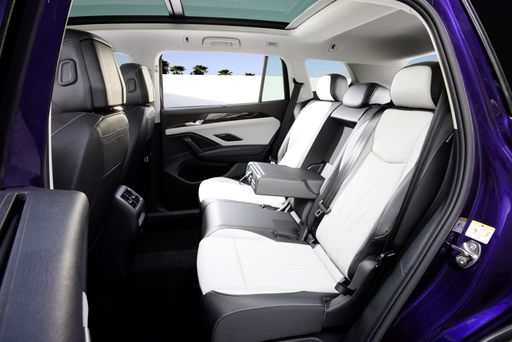
Family outings in the Audi A4 Avant are complemented by a 5-seater configuration and a trunk capacity of 495 liters, meeting the demands of both everyday commutes and weekend getaways. The Avant's payload capacity boasts up to 565 kg, ensuring luggage needs are effortlessly accommodated.

The VW Tayron, with its SUV advantage, offers a remarkable trunk capacity of up to 885 liters, making it ideal for larger families or those with diverse storage needs. The seating capacity remains standard at five but the plush interiors enhance passenger comfort for long-distance travel.

Tayron

Verdict: Picking the Right Fit

Choosing between the Audi A4 Avant and the VW Tayron boils down to preference and need. The A4 Avant emerges as a sleek option for those prioritizing stylish aesthetics and engaging driving dynamics. In contrast, the Tayron appeals to those seeking practicality conjoined with modern technology and efficient performance.

Both vehicles stand tall in delivering German engineering excellence, ensuring drivers remain spoilt for choice. Whether you choose the elegance of an Audi or the muscular versatility of a VW, satisfaction is the ultimate destination.

Here’s where it gets real: The technical differences in detail

A4 Avant

Costs and Efficiency:

Looking at overall running costs, both models reveal some interesting differences in everyday economy.

Audi A4 Avant is only slightly cheaper – starting at 37,200 £ , while the VW Tayron costs 40,200 £ . That’s a price difference of around 2,979 £.

Fuel consumption also shows a difference: the VW Tayron uses 1.5 L/100km and is significantly more efficient than the Audi A4 Avant with 4.8 L/100km. The difference is about 3.3 L/100km.

Tayron

Engine and Performance:

Power, torque and acceleration say a lot about how a car feels on the road. This is where you see which model delivers more driving dynamics.

When it comes to engine power, the Audi A4 Avant offers substantially more power – delivering 470 HP compared to 272 HP. That’s roughly 198 HP more horsepower.

When accelerating from 0 to 100 km/h, the Audi A4 Avant is substantially quicker – completing the sprint in 3.7 s, while the VW Tayron takes 6.1 s. That’s about 2.4 s quicker.

There’s also a difference in torque: the Audi A4 Avant delivers clearly more torque with 600 Nm compared to 400 Nm. That’s about 200 Nm more.

A4 Avant

Space and Everyday Use:

Whether family car or daily driver – which one offers more room, flexibility and comfort?

Both vehicles offer seating for 5 people.

In terms of curb weight, Audi A4 Avant is barely lighter – 1,595 kg compared to 1,682 kg. The difference is around 87 kg.

Looking at boot space, the VW Tayron offers substantially more boot space – 885 L compared to 495 L. That’s a difference of about 390 L.

When it comes to payload, the VW Tayron carries marginally more – 573 kg compared to 565 kg. That’s a difference of about 8 kg.

Who wins the race in the data check?

The VW Tayron is decisively ahead in the objective data comparison.
This result only shows which model scores more points on paper – not which of the two cars feels right for you.

from £40,200
Tayron

VW Tayron

  • Engine Type Petrol MHEV, Diesel, Petrol, Plugin Hybrid
  • Transmission Automatic
  • Drive Type Front-Wheel Drive, All-Wheel Drive
  • Power HP 150 - 272 HP
  • Consumption L/100km 1.5 - 8.5 L/100km
  • Electric Range 116 - 123 km
Audi A4 Avant
VW Tayron

Costs and Consumption

View detailed analysis

Engine and Performance

View detailed analysis

Dimensions and Body

View detailed analysis

Audi A4 Avant

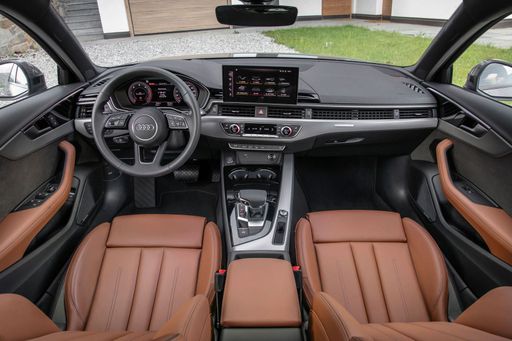
The Audi A4 Avant blends elegant, understated styling with practical estate versatility, making it a polished choice for drivers who want both poise and generous cargo space. Inside, the cabin feels premium and tech-forward while the composed driving manners turn routine journeys into a quietly satisfying experience—exactly the sensible indulgence buyers will appreciate.

details

VW Tayron

The VW Tayron combines a roomy, practical interior with a composed, comfortable ride that suits both daily commuting and longer journeys. With a restrained, modern design and a focus on straightforward tech and safety, it’s a sensible choice for buyers who want Volkswagen refinement without unnecessary flash.

details
Audi A4 Avant
VW Tayron

Costs and Consumption

Price
37,200 - 122,500 £
Price
40,200 - 56,000 £
Consumption L/100km
4.8 - 9.7 L/100km
Consumption L/100km
1.5 - 8.5 L/100km
Consumption kWh/100km
-
Consumption kWh/100km
-
Electric Range
-
Electric Range
116 - 123 km
Battery Capacity
-
Battery Capacity
-
co2
126 - 220 g/km
co2
33 - 192 g/km
Fuel tank capacity
40 - 58 L
Fuel tank capacity
-

Dimensions and Body

Body Type
Estate
Body Type
SUV
Seats
5
Seats
5
Doors
5
Doors
-
Curb weight
1,595 - 1,820 kg
Curb weight
1,682 - 1,948 kg
Trunk capacity
495 L
Trunk capacity
705 - 885 L
Length
4,750 - 4,782 mm
Length
-
Width
1,842 - 1,866 mm
Width
1,853 - 1,866 mm
Height
1,428 - 1,493 mm
Height
-
Max trunk capacity
1,495 L
Max trunk capacity
-
Payload
510 - 565 kg
Payload
497 - 573 kg

Engine and Performance

Engine Type
Diesel MHEV, Petrol MHEV, Petrol
Engine Type
Petrol MHEV, Diesel, Petrol, Plugin Hybrid
Transmission
Automatic
Transmission
Automatic
Transmission Detail
Dual-Clutch Automatic, Automatic Gearbox
Transmission Detail
Dual-Clutch Automatic
Drive Type
All-Wheel Drive, Front-Wheel Drive
Drive Type
Front-Wheel Drive, All-Wheel Drive
Power HP
136 - 470 HP
Power HP
150 - 272 HP
Acceleration 0-100km/h
3.7 - 9.8 s
Acceleration 0-100km/h
6.1 - 9.7 s
Max Speed
210 - 300 km/h
Max Speed
-
Torque
270 - 600 Nm
Torque
250 - 400 Nm
Number of Cylinders
4 - 6
Number of Cylinders
4
Power kW
100 - 346 kW
Power kW
110 - 200 kW
Engine capacity
1,968 - 2,894 cm3
Engine capacity
1,498 - 1,984 cm3

General

Model Year
2,023 - 2,024
Model Year
2,025 - 2,026
CO2 Efficiency Class
E, F, D, G
CO2 Efficiency Class
E, F, B, G
Brand
Audi
Brand
VW
DriveDuel uses data analysis and artificial intelligence to evaluate vehicle data and create content. Content is regularly reviewed and improved. The displayed prices are estimates based on German list prices, adjusted to the respective country’s VAT. Country-specific registration taxes are not included. This information is not legally binding.