
 Deutschland
 Schweiz (DE)
 France
 Nederland
 Great Britain
 Italia
 España
VS
Audi A8 VS Jaguar F-Pace – Specs, Efficiency & Price Comparison
Which model is the better choice – the Audi A8 or the Jaguar F-Pace? We compare performance (571 HP vs 575 HP), boot capacity (505 L vs 470 L), efficiency (1.80 L vs 1.80 L), and of course, the price (91400 £ vs 56400 £).
Find out now which car fits your needs better!
The Audi A8 (Sedan) is powered by a Diesel MHEV, Petrol MHEV or Plugin Hybrid engine and comes with a Automatic transmission. In comparison, the Jaguar F-Pace (SUV) features a Diesel MHEV, Petrol MHEV, Plugin Hybrid or Petrol engine and a Automatic gearbox.
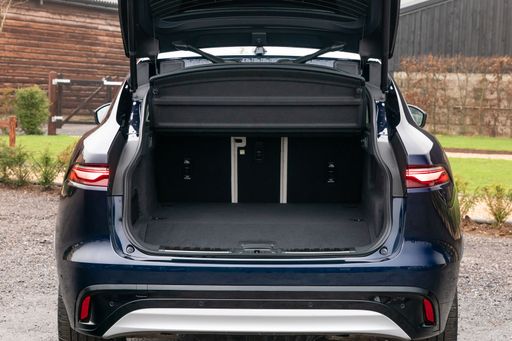
When it comes to boot capacity, the Audi A8 offers 505 L, while the Jaguar F-Pace provides 470 L – depending on what matters most to you. If you’re looking for more power, you’ll need to decide whether the 571 HP of the Audi A8 or the 575 HP of the Jaguar F-Pace suits your needs better.
There are also differences in efficiency: 1.80 L vs 1.80 L. In terms of price, the Audi A8 starts at 91400 £, while the Jaguar F-Pace is available from 56400 £.
Compare all the key specs now and find out which model fits your lifestyle best!
Audi A8
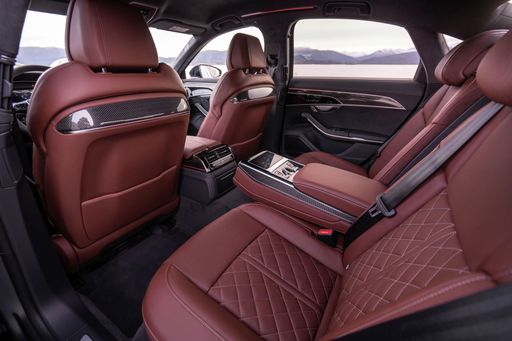
The Audi A8 represents the pinnacle of luxury and sophistication in the automotive world, blending elegant design with advanced technology. Its interior provides an opulent experience, boasting premium materials and a wide range of cutting-edge features designed for comfort and convenience. With a focus on performance and efficiency, the Audi A8 offers a driving experience that is both dynamic and refined, making it a leader in its class.
details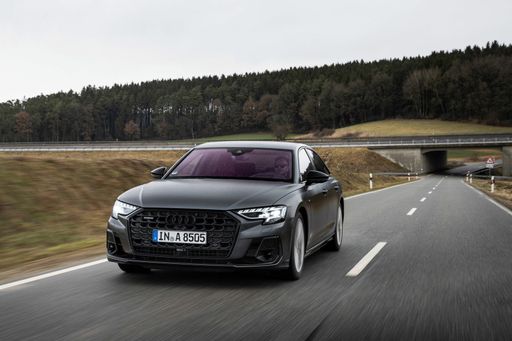 @ audi-mediacenter.com
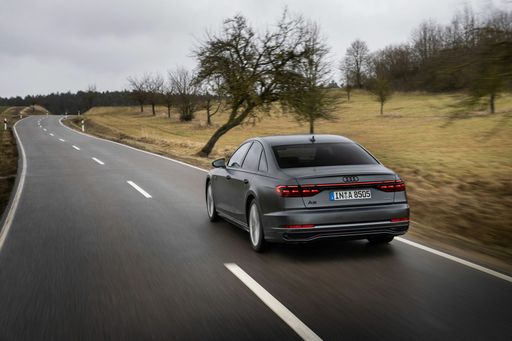 @ audi-mediacenter.com
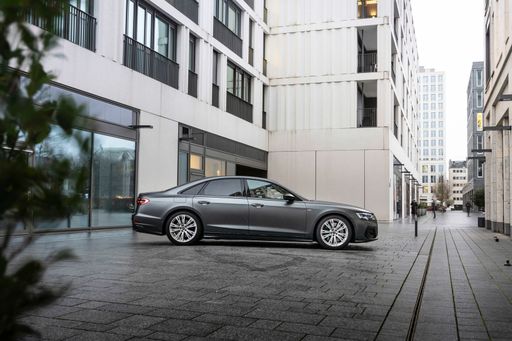 @ audi-mediacenter.com
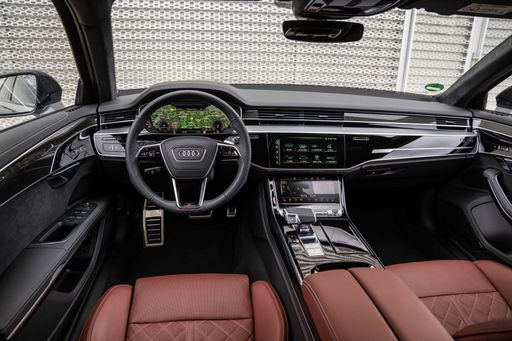 @ audi-mediacenter.com
 @ audi-mediacenter.com
Jaguar F-Pace
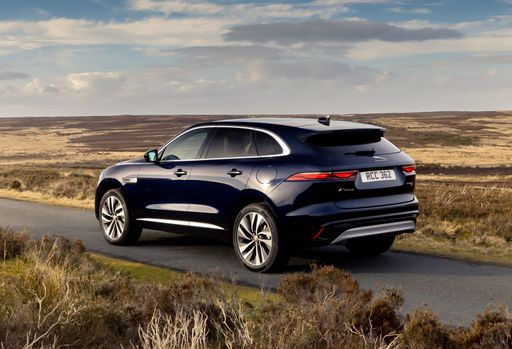
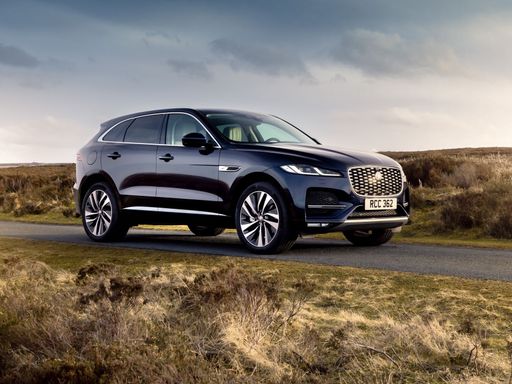
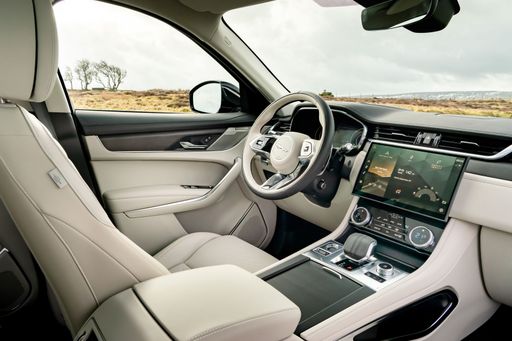
The Jaguar F-Pace effortlessly combines luxury and performance, offering an exceptional driving experience. Its sleek design is complemented by a refined interior that ensures comfort even on the longest journeys. With advanced technology features, the F-Pace remains at the forefront of innovation, making it a standout choice in the SUV segment.
details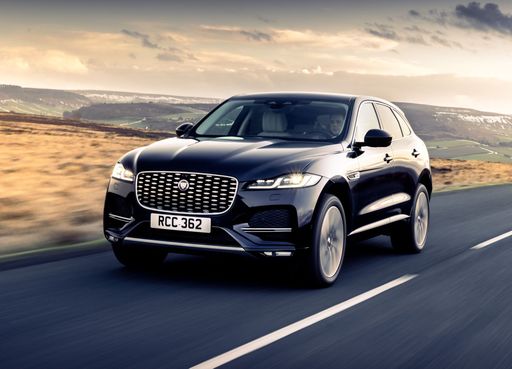 @ media.jaguar.com
 @ media.jaguar.com
 @ media.jaguar.com
 @ media.jaguar.com
 @ media.jaguar.com
Audi A8
Jaguar F-Pace
|
|
|
|
|
|
Costs and Consumption |
|
|---|---|
|
Price
91400 - 134900 £
|
Price
56400 - 100800 £
|
|
Consumption L/100km
1.8 - 11.5 L
|
Consumption L/100km
1.8 - 12 L
|
|
Consumption kWh/100km
-
|
Consumption kWh/100km
-
|
|
Electric Range
59 km
|
Electric Range
64 km
|
|
Battery Capacity
14.40 kWh
|
Battery Capacity
15.40 kWh
|
|
co2
42 - 261 g/km
|
co2
41 - 274 g/km
|
|
Fuel tank capacity
65 - 82 L
|
Fuel tank capacity
62 - 83 L
|
Dimensions and Body |
|
|---|---|
|
Body Type
Sedan
|
Body Type
SUV
|
|
Seats
5
|
Seats
5
|
|
Doors
4
|
Doors
5
|
|
Curb weight
2035 - 2415 kg
|
Curb weight
1951 - 2230 kg
|
|
Trunk capacity
390 - 505 L
|
Trunk capacity
354 - 470 L
|
|
Length
5190 - 5320 mm
|
Length
4747 - 4762 mm
|
|
Width
1945 mm
|
Width
1936 mm
|
|
Height
1473 - 1488 mm
|
Height
1664 - 1670 mm
|
|
Payload
525 - 700 kg
|
Payload
457 - 589 kg
|
Engine and Performance |
|
|---|---|
|
Engine Type
Diesel MHEV, Petrol MHEV, Plugin Hybrid
|
Engine Type
Diesel MHEV, Petrol MHEV, Plugin Hybrid, Petrol
|
|
Transmission
Automatic
|
Transmission
Automatic
|
|
Transmission Detail
Automatikgetriebe
|
Transmission Detail
Automatic Gearbox
|
|
Drive Type
All-Wheel Drive
|
Drive Type
All-Wheel Drive
|
|
Power HP
286 - 571 HP
|
Power HP
163 - 575 HP
|
|
Acceleration 0-100km/h
3.8 - 5.9 s
|
Acceleration 0-100km/h
4 - 10.1 s
|
|
Max Speed
250 km/h
|
Max Speed
195 - 286 km/h
|
|
Torque
500 - 800 Nm
|
Torque
380 - 700 Nm
|
|
Number of Cylinders
6 - 8
|
Number of Cylinders
4 - 8
|
|
Power kW
210 - 420 kW
|
Power kW
120 - 423 kW
|
|
Engine capacity
2967 - 3996 cm3
|
Engine capacity
1997 - 5000 cm3
|
General |
|
|---|---|
|
Model Year
2023
|
Model Year
2024
|
|
CO2 Efficiency Class
G, B
|
CO2 Efficiency Class
G, B
|
|
Brand
Audi
|
Brand
Jaguar
|
Audi A8
Introducing the Audi A8: Excellence in Motion
The Audi A8 stands as a testament to German engineering prowess, combining cutting-edge technology with exquisite luxury. As one of the flagships of the Audi fleet, the A8 continues to set benchmarks for innovation and performance. In this article, we'll delve into its technical specifications and the innovative features that make it a leader in its class.
Advanced Powertrains
Under the bonnet, the Audi A8 offers a range of advanced powertrains. These include diesel mild-hybrids, petrol mild-hybrids, and plug-in hybrids, ensuring optimal performance and efficiency. With power outputs ranging from 286 PS to a remarkable 571 PS, the A8 caters to a variety of driving preferences, from the efficiency-focused to those seeking exhilarating speed.
Performance and Efficiency
Despite its size, the Audi A8 is engineered for performance. It accelerates from 0-100 km/h in as little as 3.8 seconds and boasts a top speed of 250 km/h. The integration of mild-hybrid technology across the range optimises fuel consumption, ensuring that power and efficiency go hand in hand. For those prioritising economy, the plug-in hybrid variant offers a combined consumption as low as 1.7 L/100 km with an all-electric range of up to 60 km.
Elegant Design and Comfort
The exterior of the A8 exudes sophistication with its sleek yet imposing design. Inside, the cabin is a sanctuary of luxury, featuring premium materials and advanced technology such as the intuitive MMI touch response system. Comfort is paramount, with spacious seating for five passengers and ample legroom, courtesy of its extended wheelbase.
Innovative Technologies
Innovation is at the heart of the Audi A8. It comes equipped with cutting-edge driver-assistance systems and connectivity features that redefine the driving experience. Audi's Virtual Cockpit and MMI navigation plus ensure you’re always in control, while the optional Bang & Olufsen sound system delivers an unparalleled auditory experience.
Environmental Considerations
While performance is a hallmark of the A8, environmental impact is also given due consideration. The range includes models with CO2 emissions as low as 40 g/km, demonstrating Audi's commitment to sustainability and reducing carbon footprints within the luxury market.
Conclusion: A Benchmark in Luxury Automotive Engineering
The Audi A8 embodies a perfect marriage of performance, luxury, and innovation. For discerning drivers who demand nothing but the best, the A8 offers an exceptional driving experience that stands as a benchmark in the luxury automotive sector. With its range of powertrains and state-of-the-art features, the Audi A8 remains a formidable contender in its class.
Jaguar F-Pace
Unveiling the Jaguar F-Pace: A Blend of Power and Sophistication
The Jaguar F-Pace represents the perfect amalgamation of luxury and performance, encapsulating the essence of a modern SUV. Crafted with precision, the F-Pace offers a unique driving experience backed by innovative technology and robust engineering.
Engineering Excellence: Performance and Power
At the heart of the Jaguar F-Pace lies a diverse lineup of engines: from fuel-efficient diesel mild hybrids to potent petrol engines, and even a state-of-the-art plug-in hybrid option. The engine power ranges from a solid 163 PS in the entry-level model to an exhilarating 575 PS in the top-tier variant, ensuring that there is a F-Pace suitable for every performance preference.
Coupled with an automatic transmission and all-wheel drive, the F-Pace guarantees seamless power delivery and exceptional handling across various terrains. Its acceleration prowess varies from 0-100 km/h in as quick as 4 seconds, providing thrilling performance for the avid driver.
Innovative Green Technology
Jaguar ensures the F-Pace aligns with modern sustainability needs by incorporating a plug-in hybrid model that achieves remarkable efficiency. With a consumption rate of merely 1.8 L/100km and an electric range of up to 64 km, the P400e model reduces the carbon footprint while maintaining the luxury and performance synonymous with Jaguar.
The mild hybrid technology integrated into several models reduces emissions and improves fuel efficiency, solidifying the F-Pace's commitment to eco-friendly innovation.
Luxurious Interior and Cutting-edge Features
Inside the F-Pace, luxury takes centre stage. The cabin is adorned with high-quality materials and the latest infotainment systems, ensuring a comfortable and connected journey. The SUV's spacious interior, accommodating up to five passengers, offers ample room for both occupants and luggage, with a minimum boot capacity of 354 litres.
Advanced technological features enhance the F-Pace's appeal, with options for personalized electronic settings and premium audio systems, making every journey as enjoyable as possible.
Safety and Technology Integration
The Jaguar F-Pace is equipped with advanced safety technologies that provide peace of mind for all passengers. Features such as adaptive cruise control, lane-keeping assist, and parking assistance exemplify its commitment to protecting drivers and passengers alike.
Beyond safety, the infotainment system offers seamless connectivity, with options for navigation, media streaming, and smartphone integration, ensuring the F-Pace is both a sanctuary and a mobile office.
Conclusion: The Epitome of Modern Luxury SUVs
The Jaguar F-Pace symbolizes a dedication to engineering prowess and luxurious design, all while embracing modern advancements in eco-friendly technology. Whether cruising on a city road or adventuring off the beaten path, the F-Pace delivers a driving experience that is both exhilarating and refined. For those in pursuit of a blend of performance, luxury, and innovative technology, the F-Pace stands as an exemplary choice.
The prices and data displayed are estimates based on German list prices and may vary by country. This information is not legally binding.