VS

Audi Q3 vs Mercedes GLA - Differences and prices compared

Compare performance (272 HP vs 421 HP), boot space and price (38200 £ vs 38800 £ ) at a glance. Find out which car is the better choice for you – Audi Q3 or Mercedes GLA?

Q3

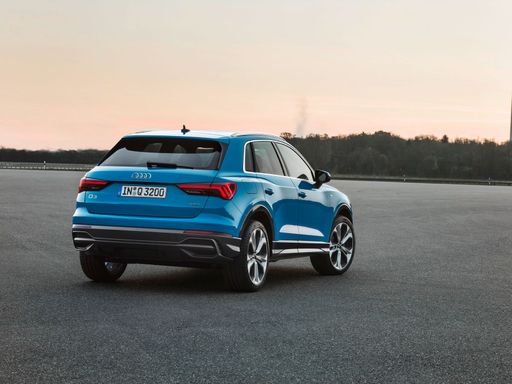
In the compact luxury SUV segment, the Audi Q3 and Mercedes GLA stand out as two of the most compelling options for buyers seeking a blend of performance, technology, and practicality. This comparison delves into their technical specifications, innovations, and overall driving experience to help you decide which is the better fit for your lifestyle.
GLA

Design and Dimensions

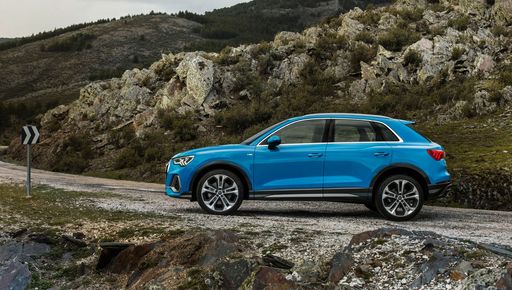
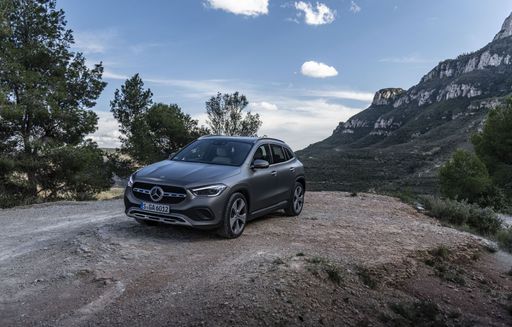
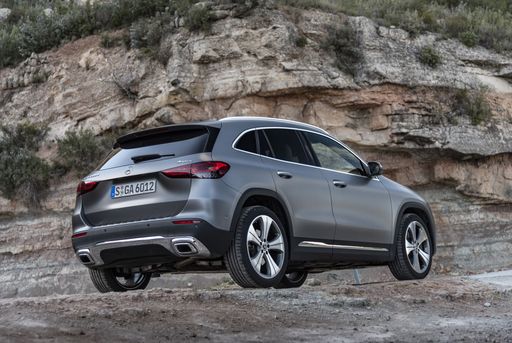
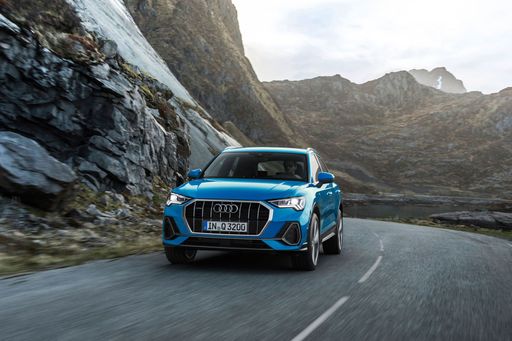
Both the Audi Q3 and Mercedes GLA maintain a distinct sporty yet elegant aesthetic, but there are notable differences in their sizing and proportions. The Q3 measures 4484 mm in length, 1849 mm in width, and stands at 1585 mm high, giving it a robust and commanding presence. In contrast, the GLA is slightly shorter at 4412 mm in length, 1834 mm in width, and taller at 1616 mm. This height advantage results in a more upright stance, which may appeal to those preferring a higher driving position.

Q3

Powertrain and Performance

Both models offer a variety of engine options catering to different performance needs. The Audi Q3 features petrol and diesel engines with power outputs ranging from 150 to 245 HP. Notably, it boasts impressive acceleration times, with the sporty variant reaching 0-100 km/h in just 5.8 seconds. Fuel efficiency is commendable, with consumption figures between 5.5 to 8.5 L/100km, depending on the engine choice.

On the other hand, the Mercedes GLA presents a broader engine range, including petrol MHEV, diesel, and plug-in hybrid versions, generating power from 116 to an astounding 421 HP. The GLA's acceleration capability is equally impressive, with top variants achieving 0-100 km/h in just 4.3 seconds. The GLA also showcases efficient fuel consumption, with figures as low as 1.0 L/100km in hybrid mode. This variety provides buyers with ample choices to suit their performance desires and fuel economy preferences.

GLA

Transmission and Drive Options

Transmission options further enhance the driving experience of both SUVs. The Q3 employs either a 6-speed manual or a dual-clutch automatic gearbox for seamless shifting. It is available in both front-wheel and all-wheel-drive configurations, which provides versatility and control under various driving conditions.

The GLA, exclusively using a dual-clutch automatic transmission, also comes equipped with front and all-wheel-drive options. This results in smooth gear transitions and excellent handling, especially in dynamic driving scenarios. Both vehicles offer a balanced distribution of power, ensuring an engaging driving experience.

Q3

Interior and Technology

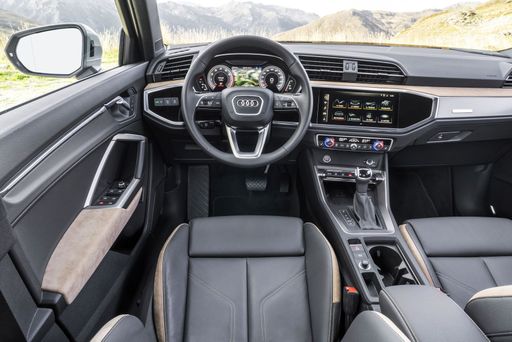
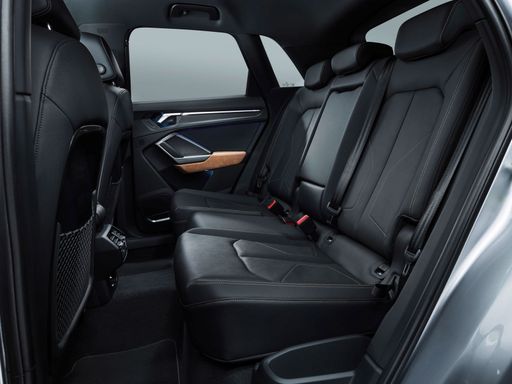
Inside, the Audi Q3 is known for its elegant and high-quality materials, with a user-friendly MMI infotainment system that incorporates a 10.1-inch touchscreen. The spacious interior is complemented by versatile seating and ample storage space, including a trunk capacity of 530 liters.

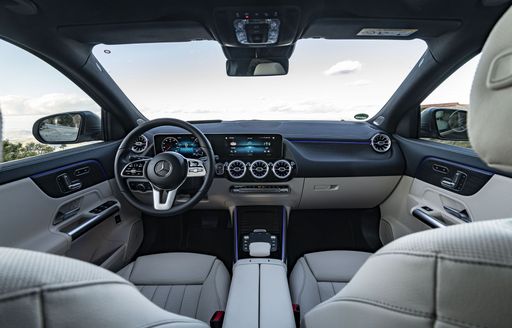
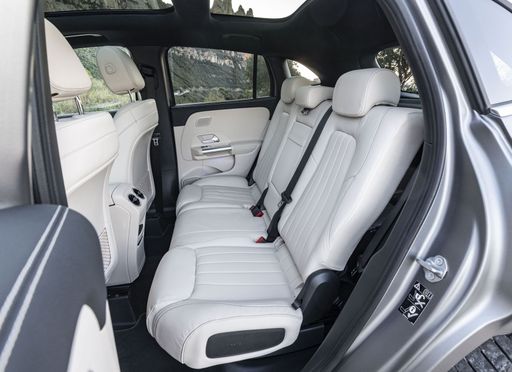
Conversely, the Mercedes GLA's interior boasts a futuristic design highlighted by a dual-screen MBUX system that integrates the instrument cluster and infotainment display. The ambient lighting and luxury finishes elevate the cabin experience, while the trunk space, ranging from 385 to 435 liters, remains practical for everyday use.

GLA

Safety and Driver Assistance Features

Both the Audi Q3 and Mercedes GLA are equipped with an array of safety and driver assistance features. The Q3 offers advanced systems, including adaptive cruise control, lane departure warning, and emergency braking. Meanwhile, the GLA features similar driver assistance technologies and adds extras like active parking assist, further enhancing its appeal in urban environments.

Q3

Conclusion

In summary, the Audi Q3 and Mercedes GLA each present distinct advantages. The Q3 excels in pure performance and interior spaciousness, making it a suitable choice for those who prioritize these aspects. Meanwhile, the GLA impresses with its technological innovations, hybrid options, and slightly higher seating position. Ultimately, your choice will depend on personal preferences regarding style, powertrain options, and desired features. No matter which model you choose, both deliver an exceptional driving experience worthy of luxury SUV status.

Audi Q3

5 (1 Reviews)
rate

Mercedes GLA

4.6 (3 Reviews)
rate

Here’s where it gets real: The technical differences in detail

GLA

Costs and Efficiency:

Price and efficiency are often the first things buyers look at. Here it becomes clear which model has the long-term edge – whether at the pump, the plug, or in purchase price.

Audi Q3 has a slight advantage in terms of price – it starts at 38200 £ , while the Mercedes GLA costs 38800 £ . That’s a price difference of around 608 £.

Fuel consumption also shows a difference: Audi Q3 manages with 1.70 L and is therefore convincingly more efficient than the Mercedes GLA with 2.90 L. The difference is about 1.20 L per 100 km.

As for electric range, the Audi Q3 performs distinct better – achieving up to 119 km, about 45 km more than the Mercedes GLA.

Q3

Engine and Performance:

Under the bonnet, it becomes clear which model is tuned for sportiness and which one takes the lead when you hit the accelerator.

When it comes to engine power, the Mercedes GLA has a evident edge – offering 421 HP compared to 272 HP. That’s roughly 149 HP more horsepower.

In acceleration from 0 to 100 km/h, the Mercedes GLA is noticeable quicker – completing the sprint in 4.30 s, while the Audi Q3 takes 5.70 s. That’s about 1.40 s faster.

In terms of top speed, the Audi Q3 performs a bit better – reaching 240 km/h, while the Mercedes GLA tops out at 210 km/h. The difference is around 30 km/h.

There’s also a difference in torque: Mercedes GLA pulls a bit stronger with 500 Nm compared to 400 Nm. That’s about 100 Nm difference.

Space and Everyday Use:

Whether family car or daily driver – which one offers more room, flexibility and comfort?

Both vehicles offer seating for 5 people.

In curb weight, Mercedes GLA is slight lighter – 1570 kg compared to 1635 kg. The difference is around 65 kg.

In terms of boot space, the Audi Q3 offers a bit more room – 488 L compared to 435 L. That’s a difference of about 53 L.

In maximum load capacity, the Audi Q3 performs minimal better – up to 1386 L, which is about 1 L more than the Mercedes GLA.

When it comes to payload, Audi Q3 minimal takes the win – 535 kg compared to 500 kg. That’s a difference of about 35 kg.

Who wins the race in the data check?

The Audi Q3 holds a decisive overall lead in the objective data comparison.
This result only shows which model scores more points on paper – not which of the two cars feels right for you.

Audi Q3
Mercedes GLA

Costs and Consumption

View detailed analysis

Engine and Performance

View detailed analysis

Dimensions and Body

View detailed analysis
from about £38,200
Q3

Audi Q3

  • Engine Type : Petrol MHEV, Petrol, Plugin Hybrid, Diesel
  • Transmission : Automatic
  • Drive Type : Front-Wheel Drive, All-Wheel Drive
  • Power HP : 150 - 272 HP
  • Consumption L/100km : 1.7 - 8.6 L
  • Electric Range : 118 - 119 km

Audi Q3

5 (1 Reviews)
rate

The Audi Q3 feels like a grown-up compact SUV with premium polish and city-friendly agility, the sort of car that makes weekend escapes and daily commutes equally satisfying. Inside, you get quality materials and smart packaging that keep things practical without skimping on style, so it’s an easy pick for buyers who want luxury without the drama.

details

Mercedes GLA

4.6 (3 Reviews)
rate

The Mercedes GLA blends Mercedes style with compact crossover practicality, looking sharper than its size suggests while still feeling purposeful around town. Inside it serves up premium materials and tech-forward ergonomics, and the composed ride makes it an appealing pick for buyers who want luxury wrapped in a city-friendly package with a wink of adventurous spirit.

details
Audi Q3
Mercedes GLA

Costs and Consumption

Price
38200 - 52900 £
Price
38800 - 75300 £
Consumption L/100km
1.7 - 8.6 L
Consumption L/100km
2.9 - 9.5 L
Consumption kWh/100km
-
Consumption kWh/100km
-
Electric Range
118 - 119 km
Electric Range
74 km
Battery Capacity
19.70 kWh
Battery Capacity
12.90 kWh
co2
39 - 195 g/km
co2
66 - 216 g/km
Fuel tank capacity
45 - 60 L
Fuel tank capacity
35 L

Dimensions and Body

Body Type
SUV
Body Type
SUV
Seats
5
Seats
5
Doors
5
Doors
5
Curb weight
1635 - 1900 kg
Curb weight
1570 - 1810 kg
Trunk capacity
375 - 488 L
Trunk capacity
385 - 435 L
Length
4531 mm
Length
4412 mm
Width
1859 mm
Width
1834 - 1849 mm
Height
1559 - 1601 mm
Height
1616 mm
Max trunk capacity
1196 - 1386 L
Max trunk capacity
1385 L
Payload
505 - 535 kg
Payload
480 - 500 kg

Engine and Performance

Engine Type
Petrol MHEV, Petrol, Plugin Hybrid, Diesel
Engine Type
Plugin Hybrid, Petrol MHEV, Diesel, Petrol
Transmission
Automatic
Transmission
Automatic
Transmission Detail
Dual-Clutch Automatic
Transmission Detail
Dual-Clutch Automatic
Drive Type
Front-Wheel Drive, All-Wheel Drive
Drive Type
Front-Wheel Drive, All-Wheel Drive
Power HP
150 - 272 HP
Power HP
116 - 421 HP
Acceleration 0-100km/h
5.7 - 9.2 s
Acceleration 0-100km/h
4.3 - 11 s
Max Speed
208 - 240 km/h
Max Speed
210 km/h
Torque
250 - 400 Nm
Torque
230 - 500 Nm
Number of Cylinders
4
Number of Cylinders
4
Power kW
110 - 200 kW
Power kW
85 - 310 kW
Engine capacity
1498 - 1984 cm3
Engine capacity
1332 - 1991 cm3

General

Model Year
2025
Model Year
2024 - 2025
CO2 Efficiency Class
E, G, B
CO2 Efficiency Class
B, E, F, G
Brand
Audi
Brand
Mercedes-Benz
Is the Audi Q3 offered with different drivetrains?

The Audi Q3 is available as Front-Wheel Drive or All-Wheel Drive.

The prices shown are estimates based on German list prices, adjusted for local VAT. Local registration taxes (e.g. NoVA, BPM or CO2 malus) are not included. This information is not legally binding.