VS

Audi Q5 vs BMW 5 Series Saloon comparison

Compare performance (367 HP vs 727 HP), boot space and price (46,400 £ vs 51,400 £ ) at a glance. Find out which car is the better choice for you – Audi Q5 or BMW 5 Series Saloon?

Audi Q5 vs BMW 5 Series Saloon: Key differences

Audi Q5

4.5 (7 Reviews)
rate
  • a bit cheaper
details

BMW 5 Series Saloon

  • significantly more power
  • a bit more efficient
  • marginally more electric range
  • visibly quicker 0–100 km/h
  • very slightly lighter
details

All details on performance, efficiency, range and trunk space can be found in the technical comparison below – including user reviews for both models.

By Achim Sedelmaier

Q5

When it comes to choosing a luxury vehicle, enthusiasts often find themselves torn between the offerings from prestigious manufacturers like Audi and BMW. This article delves into a detailed comparison of two of their standout models: the Audi Q5 and the BMW 5er Limousine. The focus will be on various technical aspects, driving innovations, and how these vehicles cater to the needs of modern drivers.
5 Series Saloon

Body and Design

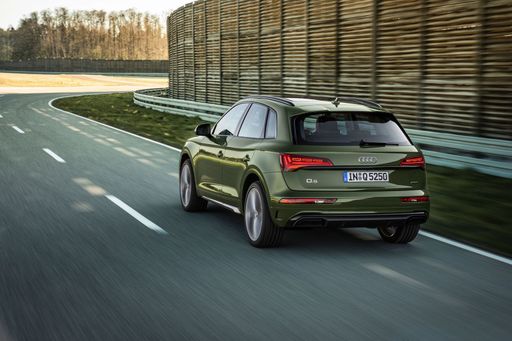
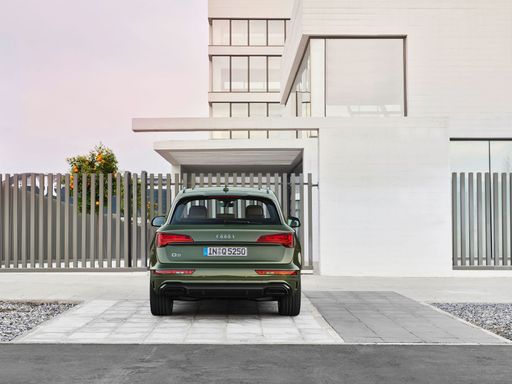
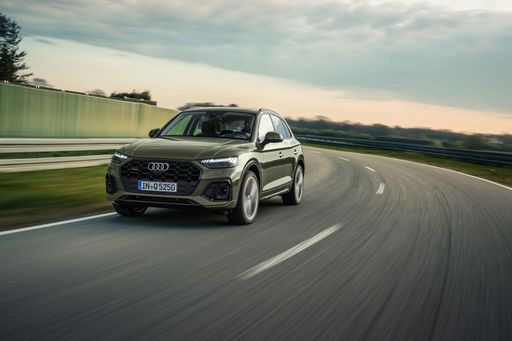
The Audi Q5 is a compact luxury SUV, blending sporty aesthetics with robust functionality. Its dimensions—4717 mm in length, 1900 mm in width, and a height that varies slightly depending on trim—give it a commanding presence while allowing for versatile cargo space and comfort for up to five passengers.

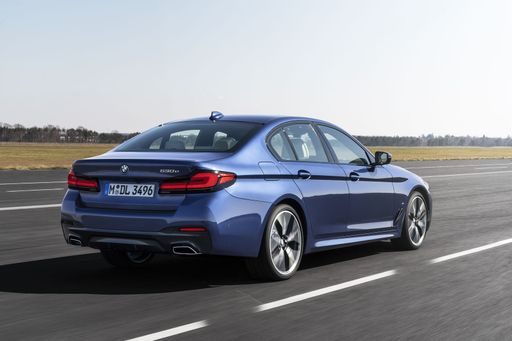
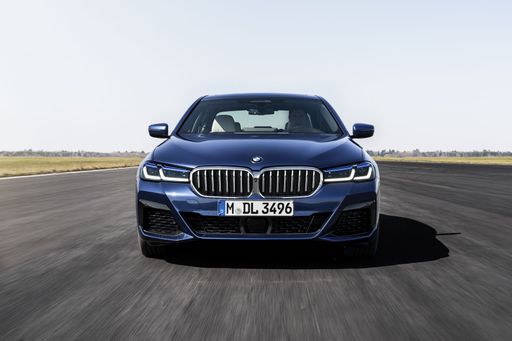
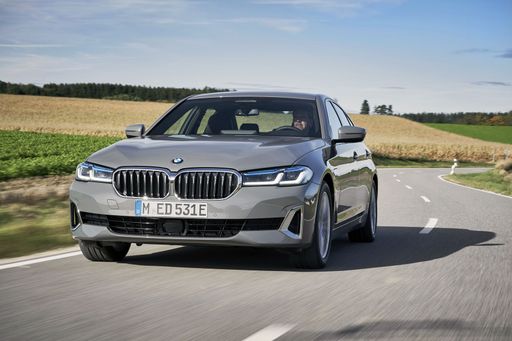
In contrast, the BMW 5er Limousine is a sophisticated sedan that emphasizes elegance and performance. With a length ranging from 5060 to 5096 mm, a width of 1900 to 1970 mm, and a height of approximately 1510 mm, this vehicle is designed for those who appreciate refined styling and superior handling.

Q5

Engine and Performance

Both vehicles offer a variety of engine options that cater to different driving preferences and efficiency needs. The Audi Q5 features a range of powertrains, including Diesel MHEV and Petrol MHEV variants, producing power outputs between 163 HP to a robust 367 HP. An impressive acceleration of 0-100 km/h can be achieved in as little as 4.5 seconds with the right configuration, while the maximum speed reaches up to 250 km/h.

The BMW 5er Limousine, on the other hand, takes performance to the next level with its powerful options, including configurations that can yield up to 727 HP. The 5er also boasts rapid acceleration, with some models achieving 0-100 km/h in just 3.5 seconds. Its top speed aligns with that of the Q5, reaching 250 km/h, but providing a much sportier driving experience.

5 Series Saloon

Fuel Efficiency and Eco-Friendliness

Efficiency is a pivotal aspect for many drivers today. The Audi Q5 offers commendable fuel consumption, with figures ranging from 5.6 to 8.4 L/100km depending on the engine choice. Its hybrid variants present an electric range of up to 62 km, supported by a battery capacity of up to 14.4 kWh.

The BMW 5er Limousine similarly combines efficiency with power, showing consumption figures as low as 5.2 L/100km. The electric range here is slightly superior at up to 103 km, bolstered by a larger battery capacity of 19 kWh. Both models promote sustainability without compromising on performance.

Q5

Innovative Features

Innovation is at the forefront of both Audi and BMW technologies. The Audi Q5 incorporates Audi's latest MMI touch response systems, offering seamless connectivity and an intuitive interface, along with advanced driver-assistance features for enhanced safety and convenience.

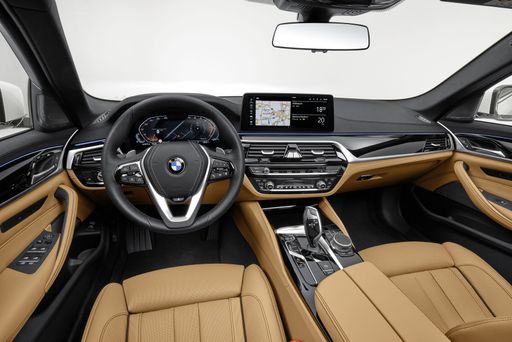
The BMW 5er Limousine embraces similar technologies, with its iDrive system that provides a sophisticated user experience. Additionally, the integration of a digital key and comprehensive safety packages aims to ensure drivers are protected and connected at all times, catering to the modern motorist.

5 Series Saloon

Interior Comfort and Storage

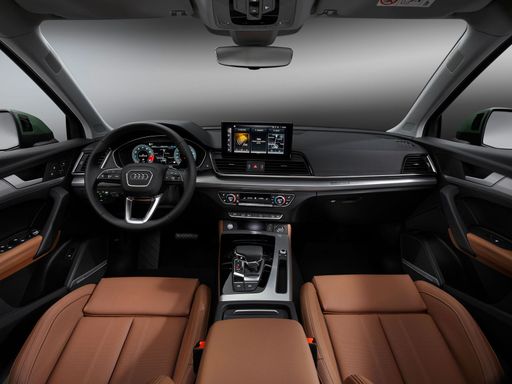
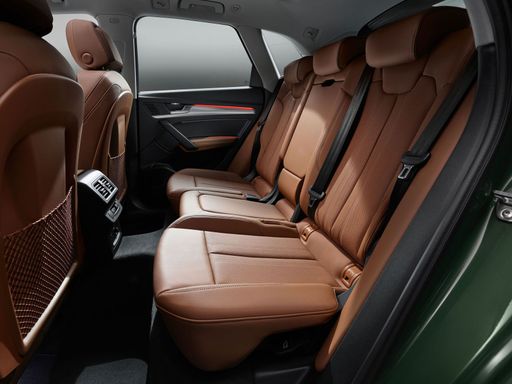
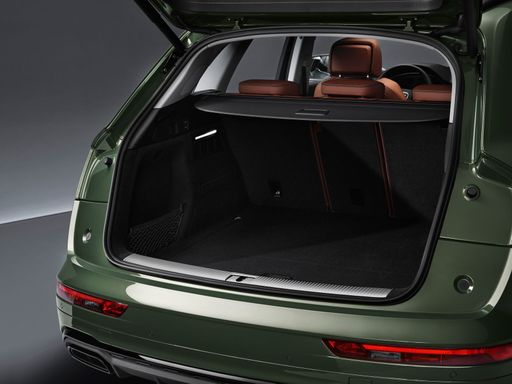
Inside, the Audi Q5 is designed for comfort with a focus on high-quality materials and modern styling. The spacious interior allows for a trunk capacity of 520 liters, making it a practical choice for families.

The BMW 5er Limousine does not fall short in interior luxury either. With a sleek design and top-tier materials, it equally provides comfort for all passengers, along with a trunk capacity of 520 liters. This ample storage space makes it quite versatile for both business and leisure activities.

Q5

Conclusion

In the battle of the Audi Q5 vs. BMW 5er Limousine, consumers will find two outstanding vehicles that offer their unique advantages. The Q5 stands out for its practicality and advanced SUV features, while the 5er Limousine excels in performance and sportiness. Ultimately, the choice between these two prestigious models will depend on personal preferences for driving style, comfort, and functionality.

Here’s where it gets real: The technical differences in detail

Q5

Costs and Efficiency:

Price and efficiency are often the first things buyers look at. Here it becomes clear which model has the long-term edge – whether at the pump, the plug, or in purchase price.

Audi Q5 is a bit cheaper – starting at 46,400 £ , while the BMW 5 Series Saloon costs 51,400 £ . That’s a price difference of around 5,057 £.

Fuel consumption also shows a difference: the BMW 5 Series Saloon uses 2.1 L/100km and is a bit more efficient than the Audi Q5 with 2.5 L/100km. The difference is about 0.4 L/100km.

As for electric range, the BMW 5 Series Saloon offers marginally more range – reaching up to 105 km, about 5 km more than the Audi Q5.

5 Series Saloon

Engine and Performance:

Power, torque and acceleration say a lot about how a car feels on the road. This is where you see which model delivers more driving dynamics.

When it comes to engine power, the BMW 5 Series Saloon offers significantly more power – delivering 727 HP compared to 367 HP. That’s roughly 360 HP more horsepower.

When accelerating from 0 to 100 km/h, the BMW 5 Series Saloon is visibly quicker – completing the sprint in 3.5 s, while the Audi Q5 takes 4.5 s. That’s about 1 s quicker.

There’s also a difference in torque: the BMW 5 Series Saloon delivers significantly more torque with 1,000 Nm compared to 580 Nm. That’s about 420 Nm more.

Q5

Space and Everyday Use:

Beyond pure performance, interior space and usability matter most in daily life. This is where you see which car is more practical and versatile.

Both vehicles offer seating for 5 people.

In terms of curb weight, BMW 5 Series Saloon is very slightly lighter – 1,800 kg compared to 1,910 kg. The difference is around 110 kg.

Boot capacity is identical – both offer 520 L of storage.

When it comes to payload, the BMW 5 Series Saloon carries barely more – 600 kg compared to 565 kg. That’s a difference of about 35 kg.

Who wins the race in the data check?

The BMW 5 Series Saloon is clearly superior overall in the objective data comparison.
This result only shows which model scores more points on paper – not which of the two cars feels right for you.

from £51,400
5 Series Saloon

BMW 5 Series Saloon

  • Engine Type Diesel MHEV, Petrol MHEV, Plugin Hybrid
  • Transmission Automatic
  • Drive Type Rear-Wheel Drive, All-Wheel Drive
  • Power HP 197 - 727 HP
  • Consumption L/100km 2.1 - 5.8 L/100km
  • Electric Range 67 - 105 km
Audi Q5
BMW 5 Series Saloon

Costs and Consumption

View detailed analysis

Engine and Performance

View detailed analysis

Dimensions and Body

View detailed analysis

Audi Q5

The Audi Q5 is a refined compact luxury SUV that blends a plush, well-appointed interior with confident, composed handling suited to everyday driving. It’s a strong choice if you want a comfortable, technology-rich cabin and a practical, upscale package that feels polished on both city streets and longer trips.

details

BMW 5 Series Saloon

The BMW 5 Series Saloon blends executive poise with a driver's instinct, delivering a supple, refined cabin and a chassis that prefers composed authority over bravado. For buyers who want a grown-up commuter that still enjoys a twisty road, it’s the kind of car that keeps your colleagues impressed and your weekend grin intact.

details
Audi Q5
BMW 5 Series Saloon

Costs and Consumption

Price
46,400 - 79,600 £
Price
51,400 - 124,500 £
Consumption L/100km
2.5 - 8.3 L/100km
Consumption L/100km
2.1 - 5.8 L/100km
Consumption kWh/100km
-
Consumption kWh/100km
-
Electric Range
92 - 100 km
Electric Range
67 - 105 km
Battery Capacity
-
Battery Capacity
-
co2
56 - 189 g/km
co2
48 - 152 g/km
Fuel tank capacity
-
Fuel tank capacity
-

Dimensions and Body

Body Type
SUV
Body Type
Sedan
Seats
5
Seats
5
Doors
-
Doors
-
Curb weight
1,910 - 2,245 kg
Curb weight
1,800 - 2,515 kg
Trunk capacity
433 - 520 L
Trunk capacity
466 - 520 L
Length
-
Length
-
Width
1,900 mm
Width
1,900 - 1,970 mm
Height
-
Height
-
Max trunk capacity
-
Max trunk capacity
-
Payload
490 - 565 kg
Payload
425 - 600 kg

Engine and Performance

Engine Type
Plugin Hybrid, Petrol MHEV, Diesel MHEV
Engine Type
Diesel MHEV, Petrol MHEV, Plugin Hybrid
Transmission
Automatic
Transmission
Automatic
Transmission Detail
Dual-Clutch Automatic
Transmission Detail
Automatic Gearbox
Drive Type
All-Wheel Drive, Front-Wheel Drive
Drive Type
Rear-Wheel Drive, All-Wheel Drive
Power HP
204 - 367 HP
Power HP
197 - 727 HP
Acceleration 0-100km/h
4.5 - 8.6 s
Acceleration 0-100km/h
3.5 - 7.5 s
Max Speed
-
Max Speed
-
Torque
340 - 580 Nm
Torque
330 - 1,000 Nm
Number of Cylinders
4 - 6
Number of Cylinders
4 - 8
Power kW
150 - 270 kW
Power kW
145 - 535 kW
Engine capacity
1,968 - 2,995 cm3
Engine capacity
1,995 - 4,395 cm3

General

Model Year
2025
Model Year
2,023 - 2,026
CO2 Efficiency Class
B, E, F, G
CO2 Efficiency Class
D, E, B, C
Brand
Audi
Brand
BMW
DriveDuel uses data analysis and artificial intelligence to evaluate vehicle data and create content. Content is regularly reviewed and improved. The displayed prices are estimates based on German list prices, adjusted to the respective country’s VAT. Country-specific registration taxes are not included. This information is not legally binding.