VS

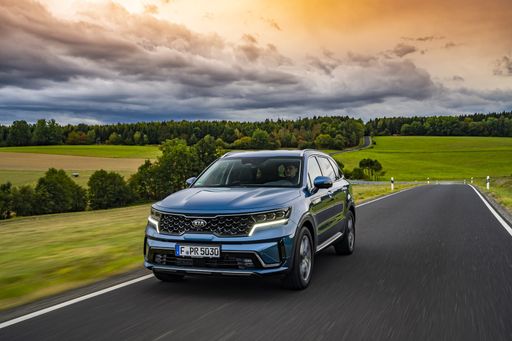
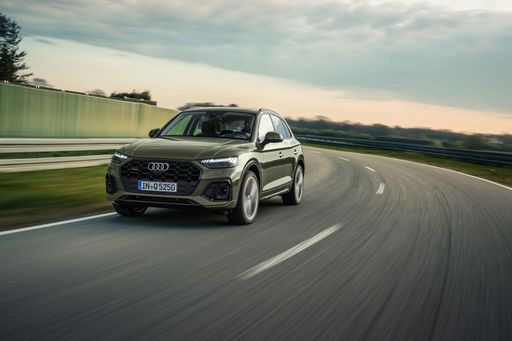
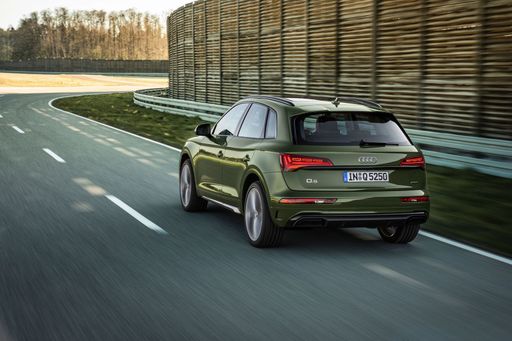
Audi Q5 vs Kia Sorento comparison

Compare performance (367 HP vs 252 HP), boot space and price (46,400 £ vs 46,900 £ ) at a glance. Find out which car is the better choice for you – Audi Q5 or Kia Sorento?

Audi Q5 vs Kia Sorento: Key differences

Audi Q5

4.4 (5 Reviews)
rate
  • marginally cheaper
  • noticeably more power
  • considerably more efficient
  • substantially more electric range
  • clearly quicker 0–100 km/h

Kia Sorento

  • marginally lighter
  • markedly more trunk space

All details on performance, efficiency, range and trunk space can be found in the technical comparison below – including user reviews for both models.

Q5

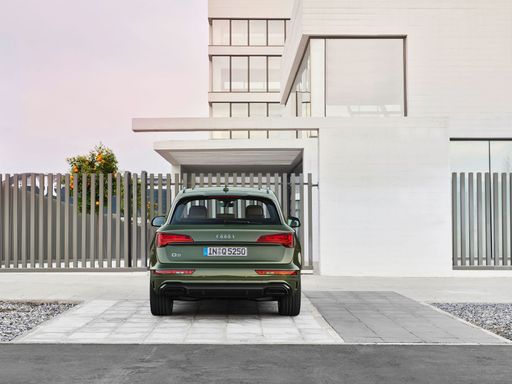
When it comes to the compact SUV segment, the competition heats up as consumers seek a perfect blend of style, performance, and practicality. In this article, we delve deep into the face-off between two notable contenders: the Audi Q5 and the Kia Sorento. Both vehicles deliver impressive features, but they cater to different preferences and needs. Let’s explore the technical specifications, innovations, and intricacies of both models.
Sorento

Engine and Performance

The Audi Q5 is available with multiple engine options, including a Diesel MHEV, Petrol MHEV, and a Plugin Hybrid. Across its lineup, the Q5 boasts power outputs ranging from 163 HP to a potent 367 HP. The vehicle is renowned for its refined performance, with a 0-100 km/h acceleration ranging from 4.5 seconds for the high-performance variant to around 9 seconds for the base models, providing options for varying driving preferences.

On the other hand, the Kia Sorento, while offering fewer power options, presents a robust lineup with ratings of 194 HP to 252 HP. The Sorento features a range of drivetrains including full hybrid and diesel variants. Its acceleration times are respectable, sitting between 8.8 and 9.7 seconds for the different trims, ensuring that it holds its own in terms of performance in the competitive compact SUV market.

Q5

Fuel Efficiency and Emissions

Fuel efficiency is a critical consideration for many buyers. The Audi Q5 excels in this arena, with consumption figures ranging as low as 1.5 L/100 km for its hybrid variants. Its CO2 emissions range significantly based on the configuration, showcasing a range of efficiency classes from B to G, highlighting its environmentally-conscious design.

The Kia Sorento's efficiency, while slightly less impressive, still holds its ground with hybrid variants consuming as low as 1.6 L/100 km. Its CO2 efficiency class ranges from B to E, making it a reasonable option for eco-conscious consumers, especially with its ability to seat up to seven passengers.

Sorento

Interior Space and Comfort

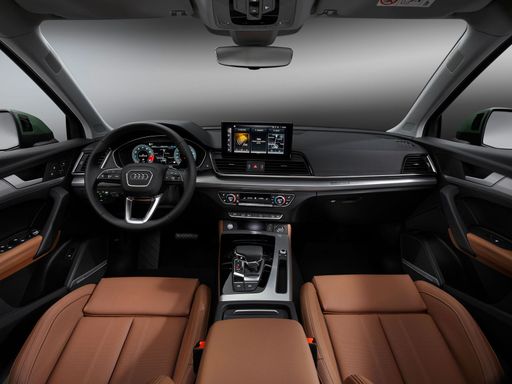
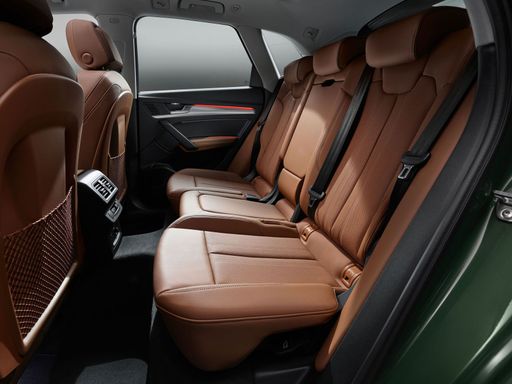
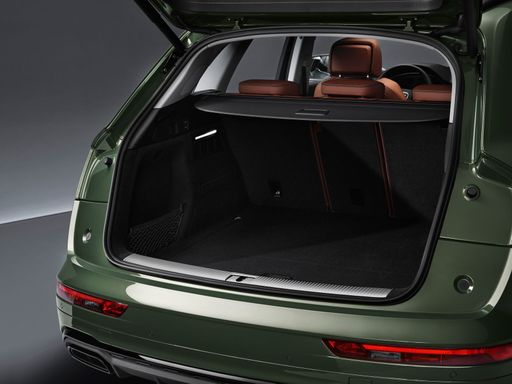
Inside, the Audi Q5 is tailored for comfort and luxury. It accommodates five passengers with a trunk capacity that boasts 510 to 520 liters. The refined materials, advanced tech features, and ambient lighting create an upscale atmosphere. Moreover, the Q5 comes equipped with a series of driver-assistance technologies that enhance the driving experience.

In contrast, the Kia Sorento shines with its versatility. It offers configurations for five, six, or seven passengers, making it an ideal choice for families or those needing extra space. With a trunk capacity reaching up to 705 liters, the Sorento ensures plenty of room for luggage and cargo. The interior is well-appointed but leans more toward functionality than luxury, appealing to buyers who prioritize practicality.

Q5

Technological Innovations

Technological advancements are paramount for both Audi and Kia. The Q5 features the latest MMI infotainment system, integrating seamlessly with smartphones and housing a multitude of convenience features. Its driver-assistance systems include adaptive cruise control, lane-keeping assist, and a 360-degree camera system, ensuring safety and ease of use.

The Kia Sorento, while slightly more utilitarian, grapples with innovation through its extensive suite of tech features. It includes a dual-screen setup, bringing infotainment and instrument displays together. Plus, it offers several standard safety technologies, ensuring that it provides a secure environment for all passengers.

Sorento

Conclusion: Which SUV Reigns Supreme?

Choosing between the Audi Q5 and the Kia Sorento ultimately boils down to personal preferences and requirements. If you prioritize luxury, performance, and cutting-edge technology, the Audi Q5 is hard to beat. However, if practicality, space, and value for money are your primary concerns, the Kia Sorento presents an attractive proposition.

Both SUVs deliver compelling features and innovations, standing strong in their respective corners of the market. The decision rests on whether you seek the opulence of the Q5 or the practicality of the Sorento; either way, both vehicles present a superb driving experience.

Here’s where it gets real: The technical differences in detail

Q5

Costs and Efficiency:

Price and efficiency are often the first things buyers look at. Here it becomes clear which model has the long-term edge – whether at the pump, the plug, or in purchase price.

Audi Q5 is marginally cheaper – starting at 46,400 £ , while the Kia Sorento costs 46,900 £ . That’s a price difference of around 506 £.

Fuel consumption also shows a difference: the Audi Q5 uses 2.5 L/100km and is considerably more efficient than the Kia Sorento with 3.9 L/100km. The difference is about 1.4 L/100km.

As for electric range, the Audi Q5 offers substantially more range – reaching up to 100 km, about 45 km more than the Kia Sorento.

Sorento

Engine and Performance:

Power, torque and acceleration are the classic benchmarks for car enthusiasts – and here, some clear differences start to show.

When it comes to engine power, the Audi Q5 offers noticeably more power – delivering 367 HP compared to 252 HP. That’s roughly 115 HP more horsepower.

When accelerating from 0 to 100 km/h, the Audi Q5 is clearly quicker – completing the sprint in 4.5 s, while the Kia Sorento takes 8 s. That’s about 3.5 s quicker.

There’s also a difference in torque: the Audi Q5 delivers noticeably more torque with 580 Nm compared to 440 Nm. That’s about 140 Nm more.

Q5

Space and Everyday Use:

Whether family car or daily driver – which one offers more room, flexibility and comfort?

Seats: Kia Sorento offers more seats – 7 vs 5.

In terms of curb weight, Kia Sorento is marginally lighter – 1,855 kg compared to 1,910 kg. The difference is around 55 kg.

Looking at boot space, the Kia Sorento offers markedly more boot space – 705 L compared to 520 L. That’s a difference of about 185 L.

When it comes to payload, the Kia Sorento carries a bit more – 685 kg compared to 565 kg. That’s a difference of about 120 kg.

Who wins the race in the data check?

The Audi Q5 is clearly superior overall in the objective data comparison.
This result only shows which model scores more points on paper – not which of the two cars feels right for you.

from £46,400
Q5

Audi Q5

  • Engine Type : Plugin Hybrid, Petrol MHEV, Diesel MHEV
  • Transmission : Automatic
  • Drive Type : All-Wheel Drive, Front-Wheel Drive
  • Power HP : 204 - 367 HP
  • Consumption L/100km : 2.5 - 8.3 L/100km
  • Electric Range : 92 - 100 km
Audi Q5
Kia Sorento

Costs and Consumption

View detailed analysis

Engine and Performance

View detailed analysis

Dimensions and Body

View detailed analysis

Audi Q5

The Audi Q5 feels like the sensible luxury choice — polished cabin materials, a calm ride and enough tech to keep commuters and weekend adventurers equally pleased. It won't shout for attention but will quietly check the boxes for buyers who want refinement, space and everyday usability with a dash of Audi charisma.

details

Kia Sorento

The Kia Sorento blends roomy practicality with smart tech and an unexpectedly composed highway manner, making it an easy choice for families who want comfort without fuss. It presents classy interior touches and sensible packaging at a realistic price, proving you don't need to shout to be noticed in the SUV crowd.

details
Audi Q5
Kia Sorento

Costs and Consumption

Price
46,400 - 79,600 £
Price
46,900 - 60,100 £
Consumption L/100km
2.5 - 8.3 L/100km
Consumption L/100km
3.9 - 7 L/100km
Consumption kWh/100km
-
Consumption kWh/100km
-
Electric Range
92 - 100 km
Electric Range
55 km
Battery Capacity
-
Battery Capacity
-
co2
56 - 189 g/km
co2
87 - 174 g/km
Fuel tank capacity
-
Fuel tank capacity
-

Dimensions and Body

Body Type
SUV
Body Type
SUV
Seats
5
Seats
5 - 7
Doors
-
Doors
-
Curb weight
1,910 - 2,245 kg
Curb weight
1,855 - 2,110 kg
Trunk capacity
433 - 520 L
Trunk capacity
175 - 705 L
Length
-
Length
-
Width
1,900 mm
Width
1,900 mm
Height
-
Height
-
Max trunk capacity
-
Max trunk capacity
-
Payload
490 - 565 kg
Payload
162 - 685 kg

Engine and Performance

Engine Type
Plugin Hybrid, Petrol MHEV, Diesel MHEV
Engine Type
Full Hybrid, Diesel, Plugin Hybrid
Transmission
Automatic
Transmission
Automatic
Transmission Detail
Dual-Clutch Automatic
Transmission Detail
Automatic Gearbox, Dual-Clutch Automatic
Drive Type
All-Wheel Drive, Front-Wheel Drive
Drive Type
Front-Wheel Drive, All-Wheel Drive
Power HP
204 - 367 HP
Power HP
194 - 252 HP
Acceleration 0-100km/h
4.5 - 8.6 s
Acceleration 0-100km/h
8 - 9.7 s
Max Speed
-
Max Speed
-
Torque
340 - 580 Nm
Torque
380 - 440 Nm
Number of Cylinders
4 - 6
Number of Cylinders
4
Power kW
150 - 270 kW
Power kW
142 - 212 kW
Engine capacity
1,968 - 2,995 cm3
Engine capacity
1,598 - 2,151 cm3

General

Model Year
2,025
Model Year
2,025 - 2,026
CO2 Efficiency Class
B, E, F, G
CO2 Efficiency Class
E, F, B
Brand
Audi
Brand
Kia
DriveDuel uses data analysis and artificial intelligence to evaluate vehicle data and create content. Content is regularly reviewed and improved. The displayed prices are estimates based on German list prices, adjusted to the respective country’s VAT. Country-specific registration taxes are not included. This information is not legally binding.