VS

Audi Q8 e-tron vs Porsche Taycan Wagon comparison

Compare performance (503 HP vs 952 HP), boot space and price (65,100 £ vs 88,700 £ ) at a glance. Find out which car is the better choice for you – Audi Q8 e-tron or Porsche Taycan Wagon?

Audi Q8 e-tron vs Porsche Taycan Wagon: Key differences

Audi Q8 e-tron

  • markedly cheaper
  • clearly more trunk space

Porsche Taycan Wagon

  • clearly more power
  • somewhat more efficient
  • only slightly more electric range
  • clearly quicker 0–100 km/h
  • a bit lighter
Q8 e-tron

Introduction: The Battle of Electrifying Luxury

In the ever-evolving world of electric vehicles (EVs), two titans stand out: the Audi Q8 e-tron and the Porsche Taycan Sport Turismo. These vehicles represent the pinnacle of luxury and performance in the EV segment. This article delves into a comprehensive comparison of their technical specifications and innovative features, helping potential buyers decide which model best suits their lifestyle.
Taycan Wagon

Powertrain Performance: Heart of the Machines

The Audi Q8 e-tron is available in multiple configurations, offering power ratings that range from 340 HP to a potent 503 HP. Its robust all-wheel-drive system ensures excellent traction in various conditions. The Q8 e-tron features a reduction gearbox and can achieve a 0 to 100 km/h time as brisk as 4.5 seconds, depending on the variant. However, it is noteworthy that the Q8 e-tron has a slightly higher energy consumption range, with figures hitting as high as 26.3 kWh/100km.

On the other side, the Porsche Taycan Sport Turismo shines with its extensive array of powertrain options, boasting power outputs from a nimble 408 HP to a staggering 952 HP in its most powerful form. The Taycan also features all-wheel-drive and rear-wheel-drive options, allowing for diverse performance characteristics. With a mind-blowing acceleration time of just 2.5 seconds for the top-spec model, the Taycan showcases Porsche's commitment to performance.

Q8 e-tron

Electric Range: Longevity and Capability

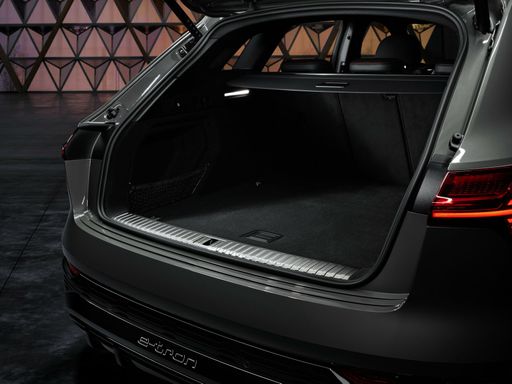
When it comes to electric range, the Audi Q8 e-tron offers competitive figures, with a maximum range of up to 595 km on a single charge, depending on the battery capacity chosen (89 kWh or 106 kWh). This makes it a suitable companion for both short and long journeys, with practical trunk capacity ranging from 528 L to 569 L.

The Porsche Taycan Sport Turismo offers slightly superior efficiency in terms of electric range, stretching up to 652 km depending on the configuration. The Taycan retains a lower energy consumption profile, achieving figures as low as 17.5 kWh/100km, presenting a noteworthy advantage in everyday usability.

Taycan Wagon

Innovative Driving Technologies: The Cutting-Edge Experience

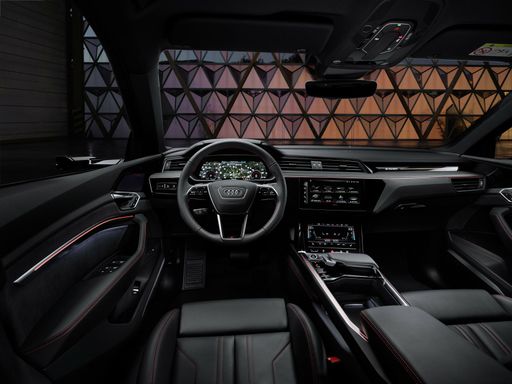
Both SUVs are packed with advancements and tech-savvy features, enhancing the driving experience. The Q8 e-tron is equipped with Audi's latest MMI infotainment system, offering intuitive interface controls, robust connectivity options, and advanced driver-assist features. Moreover, its quattro all-wheel-drive system ensures optimal handling, delivering a smooth and confident drive.

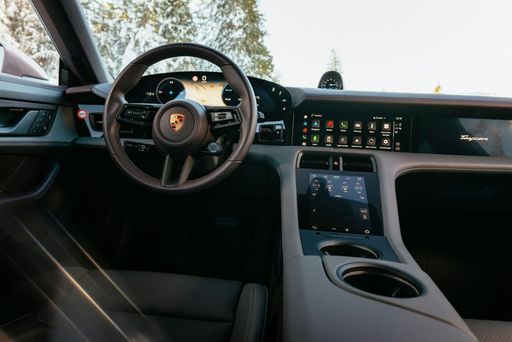
Porsche, revered for its performance credentials, has incorporated its own suite of technology into the Taycan Sport Turismo. This includes an adaptive air suspension system, precise steering calibration, and an advanced battery management system that maximizes performance and efficiency. The Taycan’s multiple driving modes cater to enthusiasts looking for a more personalized driving experience, while its integrated infotainment system features multiple touchscreens for enhanced interactivity.

Q8 e-tron

Design and Comfort: Luxury Meets Functionality

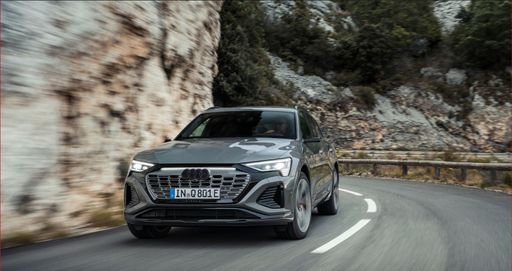
In terms of aesthetics, both models embody their respective brands’ philosophies. The Audi Q8 e-tron presents a robust and modern SUV profile, replete with a sense of elegance. Its spacious interior, designed to seat five, pairs premium materials with ample legroom, ideal for family travels.

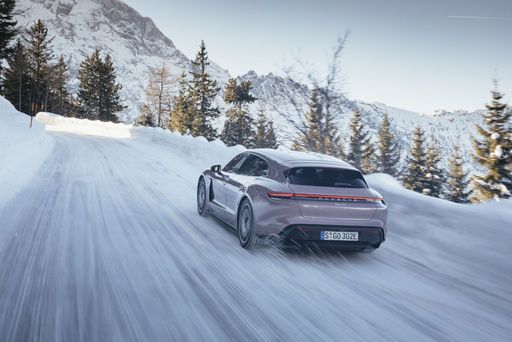
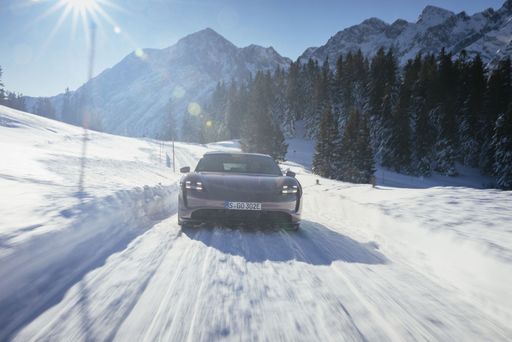
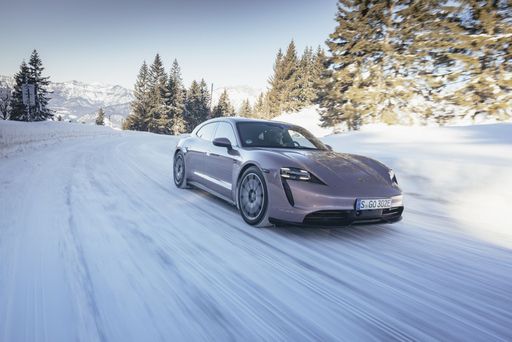
Conversely, the Porsche Taycan Sport Turismo embraces a sleek and sporty wagon design. While it seats four, the Taycan emphasizes driving engagement without compromising comfort. The interior is adorned with high-quality materials and features several customizable options, allowing owners to tailor the feel to their preferences.

Taycan Wagon

Conclusion: Choosing Your Electric Companion

In summary, both the Audi Q8 e-tron and the Porsche Taycan Sport Turismo offer a compelling blend of performance, technology, and luxury. The choice ultimately depends on individual preferences: those seeking a spacious SUV with a strong electric range may gravitate towards the Q8 e-tron, while performance enthusiasts who prioritize speed and agility will likely lean towards the Taycan Sport Turismo.

Regardless of choice, both vehicles represent significant advancements in electric mobility, signaling a thrilling future for the automotive industry.

Here’s where it gets real: The technical differences in detail

Q8 e-tron

Costs and Efficiency:

Price and efficiency are often the first things buyers look at. Here it becomes clear which model has the long-term edge – whether at the pump, the plug, or in purchase price.

Audi Q8 e-tron is markedly cheaper – starting at 65,100 £ , while the Porsche Taycan Wagon costs 88,700 £ . That’s a price difference of around 23,657 £.

In terms of energy consumption, the Porsche Taycan Wagon is somewhat more efficient: consuming 17.5 kWh/100km compared to 19.7 kWh/100km for the Audi Q8 e-tron. That’s a difference of about 2.2 kWh/100km.

As for electric range, the Porsche Taycan Wagon offers only slightly more range – reaching up to 652 km, about 57 km more than the Audi Q8 e-tron.

Taycan Wagon

Engine and Performance:

Power, torque and acceleration are the classic benchmarks for car enthusiasts – and here, some clear differences start to show.

When it comes to engine power, the Porsche Taycan Wagon offers clearly more power – delivering 952 HP compared to 503 HP. That’s roughly 449 HP more horsepower.

When accelerating from 0 to 100 km/h, the Porsche Taycan Wagon is clearly quicker – completing the sprint in 2.4 s, while the Audi Q8 e-tron takes 4.5 s. That’s about 2.1 s quicker.

Looking at top speed, the Porsche Taycan Wagon is moderately faster – reaching 260 km/h, while the Audi Q8 e-tron tops out at 210 km/h. The difference is around 50 km/h.

There’s also a difference in torque: the Porsche Taycan Wagon delivers slightly more torque with 1,110 Nm compared to 973 Nm. That’s about 137 Nm more.

Q8 e-tron

Space and Everyday Use:

Beyond pure performance, interior space and usability matter most in daily life. This is where you see which car is more practical and versatile.

Seats: Audi Q8 e-tron offers more seats – 5 vs 4.

In terms of curb weight, Porsche Taycan Wagon is a bit lighter – 2,190 kg compared to 2,585 kg. The difference is around 395 kg.

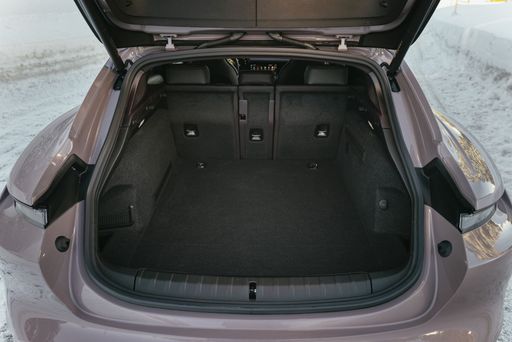
Looking at boot space, the Audi Q8 e-tron offers clearly more boot space – 569 L compared to 446 L. That’s a difference of about 123 L.

For maximum load capacity, the Audi Q8 e-tron offers noticeably more capacity – up to 1,637 L, about 425 L more than the Porsche Taycan Wagon.

When it comes to payload, the Porsche Taycan Wagon carries barely more – 605 kg compared to 595 kg. That’s a difference of about 10 kg.

Who wins the race in the data check?

The Porsche Taycan Wagon holds a decisive overall lead in the objective data comparison.
This result only shows which model scores more points on paper – not which of the two cars feels right for you.

from £88,700
Taycan Wagon

Porsche Taycan Wagon

  • Engine Type : Electric
  • Transmission : Automatic
  • Drive Type : All-Wheel Drive, Rear-Wheel Drive
  • Power HP : 408 - 952 HP
  • Consumption kWh/100km : 17.5 - 19 kWh/100km
  • Electric Range : 537 - 652 km
Audi Q8 e-tron
Porsche Taycan Wagon

Costs and Consumption

View detailed analysis

Engine and Performance

View detailed analysis

Dimensions and Body

View detailed analysis

Audi Q8 e-tron

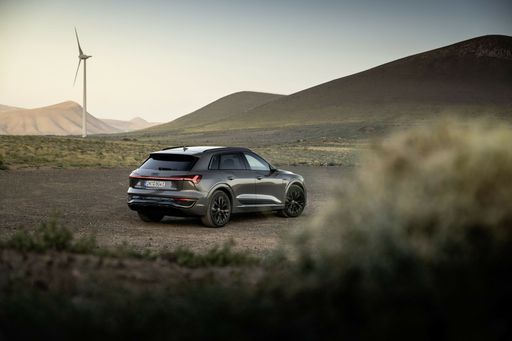
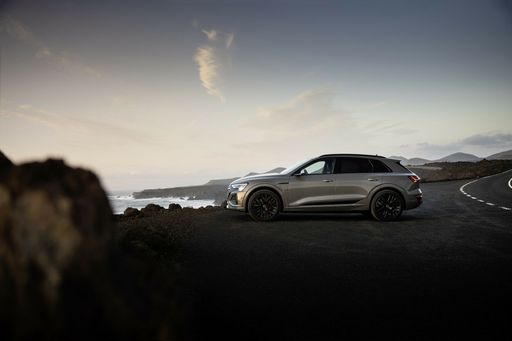
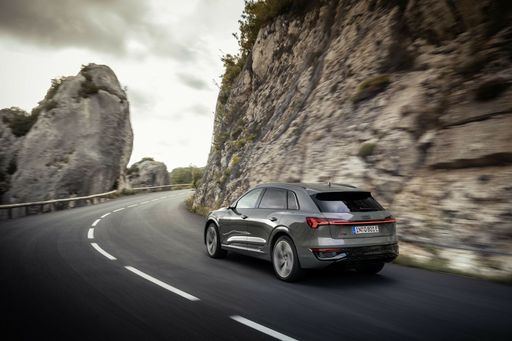
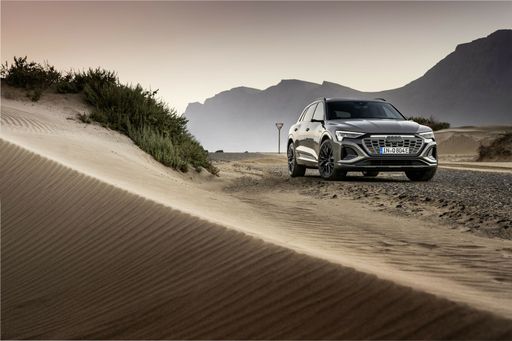
The Audi Q8 e-tron wraps Audi’s usual premium polish into a quiet, composed electric SUV that feels refined and surprisingly effortless to drive. With a spacious, tech-forward cabin and understated road presence, it’s a practical yet stylish choice for buyers who want electric motoring without losing the dignity of a proper luxury SUV.

details

Porsche Taycan Wagon

The Porsche Taycan Cross Turismo dresses electric sportscar intent in a practical, slightly rugged estate body, delivering rare performance thrills with genuine everyday usefulness. It feels unmistakably Porsche inside — taut, premium and driver-focused — while the raised ride and extra luggage space make it as happy on a muddy weekend escape as it is on a twisty back road.

details
Audi Q8 e-tron
Porsche Taycan Wagon

Costs and Consumption

Price
65,100 - 102,800 £
Price
88,700 - 182,100 £
Consumption L/100km
-
Consumption L/100km
-
Consumption kWh/100km
19.7 - 26.3 kWh/100km
Consumption kWh/100km
17.5 - 19 kWh/100km
Electric Range
456 - 595 km
Electric Range
537 - 652 km
Battery Capacity
89 - 106 kWh
Battery Capacity
82.3 - 97 kWh
co2
0 g/km
co2
0 g/km
Fuel tank capacity
-
Fuel tank capacity
-

Dimensions and Body

Body Type
SUV
Body Type
Estate
Seats
5
Seats
4
Doors
5
Doors
5
Curb weight
2,585 - 2,725 kg
Curb weight
2,190 - 2,400 kg
Trunk capacity
528 - 569 L
Trunk capacity
405 - 446 L
Length
4,915 mm
Length
4,962 - 4,974 mm
Width
1,937 - 1,994 mm
Width
1,966 - 1,967 mm
Height
1,617 - 1,683 mm
Height
1,388 - 1,412 mm
Max trunk capacity
1,567 - 1,637 L
Max trunk capacity
1,171 - 1,212 L
Payload
515 - 595 kg
Payload
475 - 605 kg

Engine and Performance

Engine Type
Electric
Engine Type
Electric
Transmission
Automatic
Transmission
Automatic
Transmission Detail
Reduction Gearbox
Transmission Detail
Reduction Gearbox
Drive Type
All-Wheel Drive
Drive Type
All-Wheel Drive, Rear-Wheel Drive
Power HP
340 - 503 HP
Power HP
408 - 952 HP
Acceleration 0-100km/h
4.5 - 6 s
Acceleration 0-100km/h
2.4 - 4.8 s
Max Speed
200 - 210 km/h
Max Speed
220 - 260 km/h
Torque
664 - 973 Nm
Torque
410 - 1,110 Nm
Number of Cylinders
-
Number of Cylinders
-
Power kW
250 - 370 kW
Power kW
300 - 700 kW
Engine capacity
-
Engine capacity
-

General

Model Year
2,023 - 2,024
Model Year
2,024 - 2,025
CO2 Efficiency Class
A
CO2 Efficiency Class
A
Brand
Audi
Brand
Porsche
DriveDuel uses data analysis and artificial intelligence to evaluate vehicle data and create content. Content is regularly reviewed and improved. The displayed prices are estimates based on German list prices, adjusted to the respective country’s VAT. Country-specific registration taxes are not included. This information is not legally binding.