VS

BMW 1 Series vs MINI Aceman comparison

Compare performance (300 HP vs 258 HP), boot space and price (28,800 £ vs 25,500 £ ) at a glance. Find out which car is the better choice for you – BMW 1 Series or MINI Aceman?

BMW 1 Series vs MINI Aceman: Key differences

BMW 1 Series

5 (1 Reviews)
rate
  • moderately more power
  • visibly quicker 0–100 km/h
  • slightly lighter
  • markedly more trunk space

MINI Aceman

4.6 (1 Reviews)
rate
  • slightly cheaper

All details on performance, efficiency, range and trunk space can be found in the technical comparison below – including user reviews for both models.

1 Series

A New Contender in the Ring: BMW 1er Reihe vs. MINI Aceman

The automotive world is constantly evolving, with fresh models emerging to capture the attention of drivers worldwide. Today, we set our sights on an intriguing comparison between the 2024 BMW 1er Reihe and the all-electric MINI Aceman. Both have their appeal, but which one edges out in today’s competitive market? Let’s delve into the technical aspects and innovations that define these vehicles.
Aceman

Power and Performance

In the world of internal combustion, the BMW 1er Reihe offers a variety of engine types, with choices between diesel, petrol, and mild hybrid electric vehicles (MHEV). Power outputs range from 122 HP to a fiery 300 HP. Depending on the chosen variant, you can expect a 0-100 km/h acceleration time between 4.9 and 9.8 seconds, with the dual-clutch automatic transmission ensuring smooth gear transitions. The 1er Reihe caters to different driving preferences with both front-wheel and all-wheel drive options.

On the other hand, the MINI Aceman steps into the new era of electric power with robust single-speed automatic reduction gearbox technology. Power ratings here span from 184 HP to 258 HP, accompanied by a torque range of 290 Nm to 350 Nm. This electric SUV accelerates from 0-100 km/h in a respectable 6.4 to 7.9 seconds. With a commendable range of up to 405 kilometers on a full charge, it’s a testament to MINI’s commitment towards sustainability with zero emissions.

1 Series

Efficiency and Sustainability

The BMW 1er Reihe offers commendable fuel efficiency for internal combustion engines, consuming between 4.3 and 7.6 liters per 100 kilometers, while maintaining CO2 emissions between 112 and 173 g/km. Nevertheless, some variants fall into the D and F efficiency classes, reflecting the challenges internal combustion engines face in today’s environmentally-focused automotive market.

In stark contrast, the MINI Aceman shines in efficiency with no CO2 emissions and minimal electric consumption of 14 to 16 kWh per 100 kilometers. The vehicle flaunts an 'A' efficiency class, making it a green champion in urban settings and beyond.

Aceman

Design and Dimensions

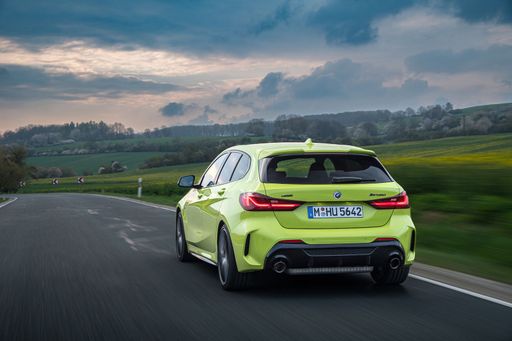
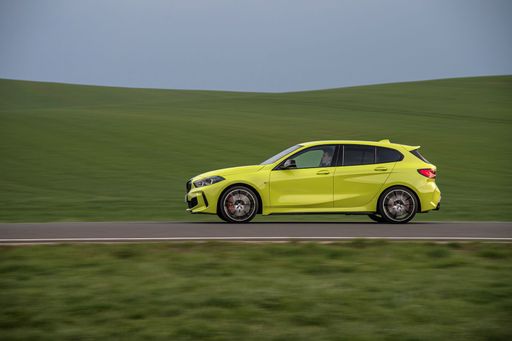
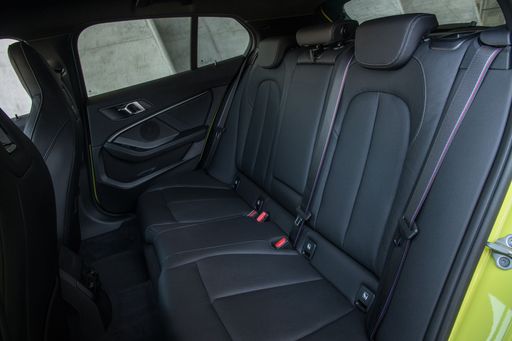
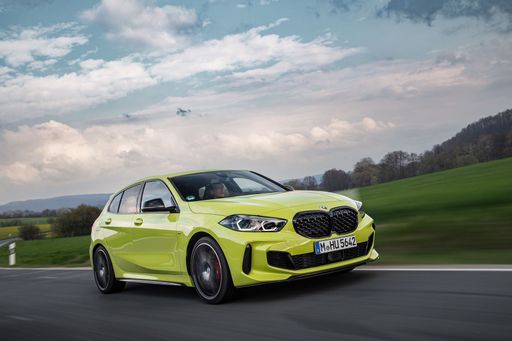
The BMW 1er Reihe features a classic hatchback design, with dimensions spanning 4361 mm in length, 1800 mm in width, and 1459 mm in height. Its design is robust, exuding the premium aura typical of BMW, with enough room to comfortably seat five passengers and a trunk capacity of up to 380 liters.

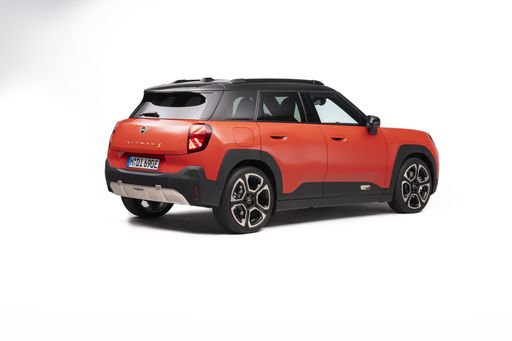
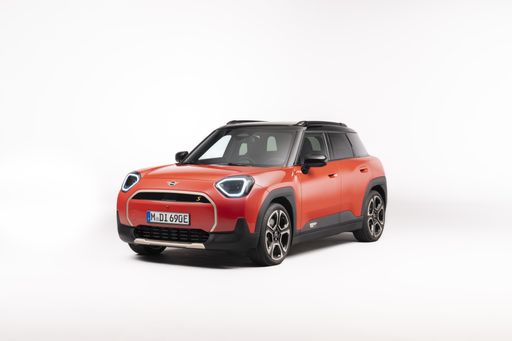
The MINI Aceman’s design philosophy targets urban adventure seekers. Measuring 4079 mm in length, 1754 mm in width, and 1514 mm in height, this SUV makes an athletic statement with its compact form. The trunk may be limited to 300 liters, but the lightweight design and three-door configuration cater to city explorers looking for maneuverability.

1 Series

Technological Innovations

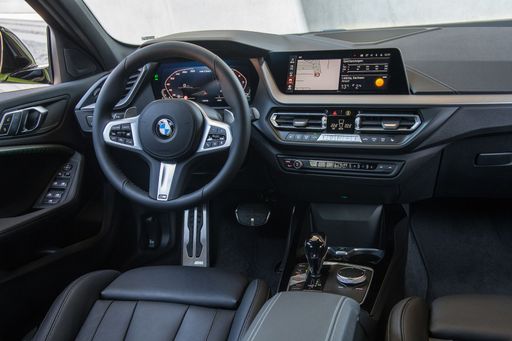
With digitalization at its peak, both models are loaded with tech innovations designed to augment the driving experience. The BMW 1er Reihe comes equipped with advanced driver assistance systems, connectivity options, and infotainment features that serve both utility and entertainment.

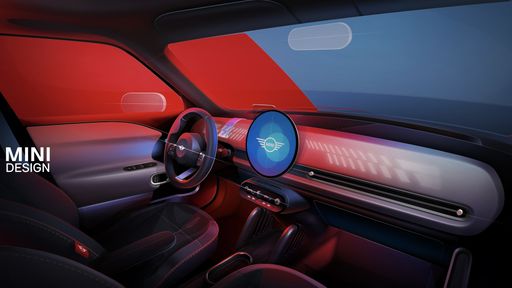
The MINI Aceman embraces futuristic tech with features including advanced electric-only user interfaces, customizable displays, and state-of-the-art safety and driver assistance systems, consolidating its position as a modern urban vehicle.

Aceman

Conclusion: A Choice Between Engine and Electric

The BMW 1er Reihe and MINI Aceman cater to different kinds of drivers. If you relish the traditional driving experience with options for performance-heavy engines, the 1er Reihe stands tall. However, if sustainability, modern design, and tech innovation guide your choice, the MINI Aceman is compelling. Both have engineered their niche perfectly, making the decision a matter of personal or environmental preference.

Here’s where it gets real: The technical differences in detail

1 Series

Costs and Efficiency:

Looking at overall running costs, both models reveal some interesting differences in everyday economy.

MINI Aceman is slightly cheaper – starting at 25,500 £ , while the BMW 1 Series costs 28,800 £ . That’s a price difference of around 3,343 £.

Aceman

Engine and Performance:

Under the bonnet, it becomes clear which model is tuned for sportiness and which one takes the lead when you hit the accelerator.

When it comes to engine power, the BMW 1 Series offers moderately more power – delivering 300 HP compared to 258 HP. That’s roughly 42 HP more horsepower.

When accelerating from 0 to 100 km/h, the BMW 1 Series is visibly quicker – completing the sprint in 4.9 s, while the MINI Aceman takes 6.4 s. That’s about 1.5 s quicker.

Looking at top speed, the BMW 1 Series is slightly faster – reaching 250 km/h, while the MINI Aceman tops out at 200 km/h. The difference is around 50 km/h.

There’s also a difference in torque: the BMW 1 Series delivers a bit more torque with 400 Nm compared to 350 Nm. That’s about 50 Nm more.

1 Series

Space and Everyday Use:

Beyond pure performance, interior space and usability matter most in daily life. This is where you see which car is more practical and versatile.

Both vehicles offer seating for 5 people.

In terms of curb weight, BMW 1 Series is slightly lighter – 1,465 kg compared to 1,720 kg. The difference is around 255 kg.

Looking at boot space, the BMW 1 Series offers markedly more boot space – 380 L compared to 300 L. That’s a difference of about 80 L.

For maximum load capacity, the BMW 1 Series offers moderately more capacity – up to 1,200 L, about 195 L more than the MINI Aceman.

When it comes to payload, the MINI Aceman carries barely more – 530 kg compared to 510 kg. That’s a difference of about 20 kg.

Who wins the race in the data check?

The BMW 1 Series comes out modestly ahead in the objective data comparison.
This result only shows which model scores more points on paper – not which of the two cars feels right for you.

from £28,800
1 Series

BMW 1 Series

  • Engine Type : Diesel, Petrol MHEV, Diesel MHEV, Petrol
  • Transmission : Automatic
  • Drive Type : Front-Wheel Drive, All-Wheel Drive
  • Power HP : 122 - 300 HP
  • Consumption L/100km : 4.3 - 7.6 L/100km
BMW 1 Series
MINI Aceman

Costs and Consumption

View detailed analysis

Engine and Performance

View detailed analysis

Dimensions and Body

View detailed analysis

BMW 1 Series

The BMW 1 Series is a compact premium hatchback that injects a proper sense of driving fun into everyday life, with sharp handling and a cabin that punches above its class. It’s a great pick for buyers who want sporty manners without losing practicality, and yes, you’ll still get that unmistakable BMW grin behind the wheel.

details

MINI Aceman

The MINI Aceman squeezes classic MINI charm into a sharper, more crossover-ready shape, trading some of the old curves for grown-up practicality while keeping the wink-and-grin personality buyers crave. Inside it's a surprisingly premium, customizable cabin that feels clever rather than cluttered, and on the road the Aceman is eager and nimble — ideal for city dwellers who want an SUV silhouette with proper fun behind the wheel.

details
BMW 1 Series
MINI Aceman

Costs and Consumption

Price
28,800 - 51,100 £
Price
25,500 - 36,200 £
Consumption L/100km
4.3 - 7.6 L/100km
Consumption L/100km
-
Consumption kWh/100km
-
Consumption kWh/100km
14 - 16 kWh/100km
Electric Range
-
Electric Range
303 - 405 km
Battery Capacity
-
Battery Capacity
38.5 - 49.2 kWh
co2
112 - 173 g/km
co2
0 g/km
Fuel tank capacity
49 L
Fuel tank capacity
-

Dimensions and Body

Body Type
Hatchback
Body Type
SUV
Seats
5
Seats
5
Doors
5
Doors
5
Curb weight
1,465 - 1,625 kg
Curb weight
1,720 - 1,825 kg
Trunk capacity
300 - 380 L
Trunk capacity
300 L
Length
4,361 mm
Length
4,079 mm
Width
1,800 mm
Width
1,754 mm
Height
1,459 mm
Height
1,514 mm
Max trunk capacity
1,135 - 1,200 L
Max trunk capacity
1,005 L
Payload
475 - 510 kg
Payload
450 - 530 kg

Engine and Performance

Engine Type
Diesel, Petrol MHEV, Diesel MHEV, Petrol
Engine Type
Electric
Transmission
Automatic
Transmission
Automatic
Transmission Detail
Dual-Clutch Automatic
Transmission Detail
Reduction Gearbox
Drive Type
Front-Wheel Drive, All-Wheel Drive
Drive Type
Front-Wheel Drive
Power HP
122 - 300 HP
Power HP
184 - 258 HP
Acceleration 0-100km/h
4.9 - 9.8 s
Acceleration 0-100km/h
6.4 - 7.9 s
Max Speed
210 - 250 km/h
Max Speed
160 - 200 km/h
Torque
230 - 400 Nm
Torque
290 - 350 Nm
Number of Cylinders
3 - 4
Number of Cylinders
-
Power kW
90 - 221 kW
Power kW
135 - 190 kW
Engine capacity
1,499 - 1,998 cm3
Engine capacity
-

General

Model Year
2,024
Model Year
2,024 - 2,026
CO2 Efficiency Class
D, C, F
CO2 Efficiency Class
A
Brand
BMW
Brand
MINI
DriveDuel uses data analysis and artificial intelligence to evaluate vehicle data and create content. Content is regularly reviewed and improved. The displayed prices are estimates based on German list prices, adjusted to the respective country’s VAT. Country-specific registration taxes are not included. This information is not legally binding.