@ BMW Group Press
@ Volkswagen AG / VW Media
VS

BMW 2 Series Active Tourer vs VW Tiguan – Which one offers the better deal?

Everyday use, family trips or long-distance drives – here’s where the differences show.
Discover whether BMW 2 Series Active Tourer or VW Tiguan fits your lifestyle better.

2 Series Active Tourer @ BMW Group Press

BMW 2er Active Tourer vs VW Tiguan: Clash of Comfort and Capabilities

In the ever-evolving world of automobiles, two versatile contenders emerge for those seeking a blend of style, performance, and practicality: the BMW 2er Active Tourer and the VW Tiguan. While both vehicles cater to similar market segments, they bring unique strengths to the table, making the decision a challenging one for potential buyers.
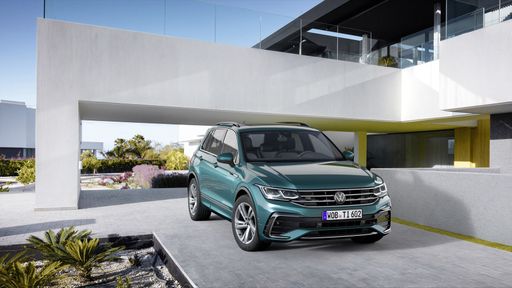
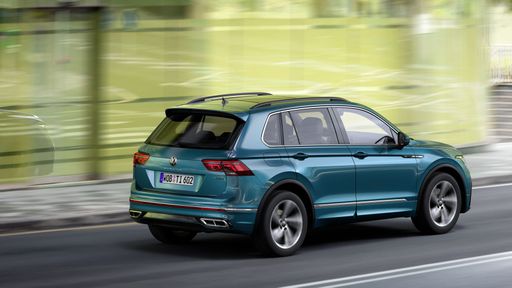
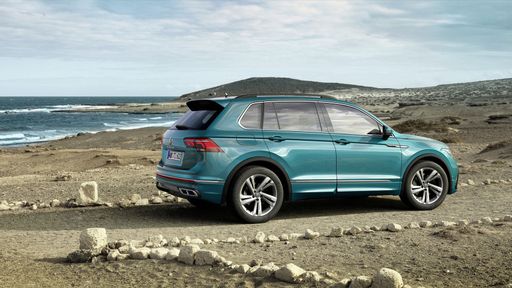
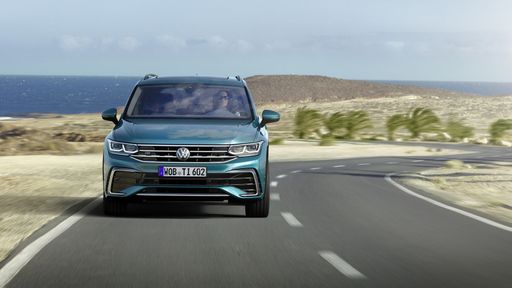
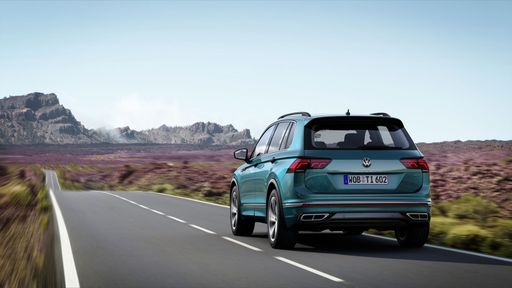
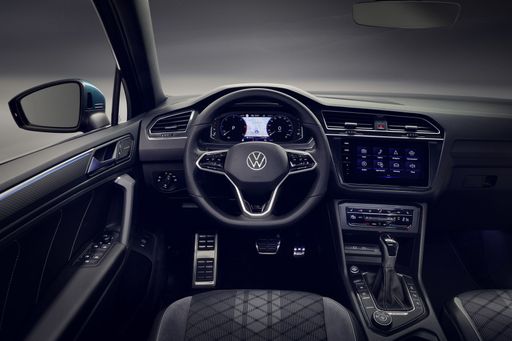
Tiguan @ Volkswagen AG / VW Media

Design and Dimensions

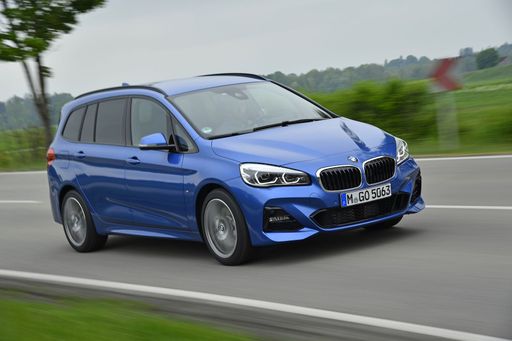
The BMW 2er Active Tourer is an MPV that exudes class and sophistication with its sleek lines and compact structure. It measures 4386 mm in length, 1824 mm in width, and 1576 mm in height, providing a balanced profile that is both luxurious and functional. Meanwhile, the VW Tiguan, a robust SUV, boasts a more commanding presence with a length of 4539 mm, width of up to 1859 mm, and height of approximately 1656 mm. This gives the Tiguan a more imposing stance on the road, appealing to those who favor the SUV's rugged charm.

2 Series Active Tourer @ BMW Group Press

Power and Performance

Under the hood, the BMW 2er Active Tourer offers a variety of engine options including petrol, diesel, diesel MHEV, petrol MHEV, and plugin hybrids. Power outputs range from a modest 122 HP to a robust 326 HP. It accommodates different driving preferences with both front-wheel and all-wheel drive options, achieving speeds up to 241 km/h and accelerating from 0-100 km/h in as little as 5.5 seconds for its top-end models.

The VW Tiguan, on the other hand, also provides a versatile engine lineup with petrol MHEV, plugin hybrids, diesel, and petrol options, offering power outputs ranging from 130 HP to 272 HP. It features similar drivetrain flexibility with both FWD and AWD. A notable strength of the Tiguan lies in its plugin hybrid variants, which can travel up to 113 km on electric power alone, a significant advantage in urban settings.

Tiguan @ Volkswagen AG / VW Media

Efficiency and Environment

The 2er Active Tourer focuses on efficiency, especially with its plugin hybrid model, boasting an impressive consumption of just 0.8 L/100km and an electric range of 88 km. Its CO2 emissions range from as low as 19 g/km to 140 g/km, reflecting BMW's commitment to environmental sustainability.

The Tiguan matches this with its own promising plugin hybrid efficiency, having a consumption rate of 0.4 L/100km for its most efficient variant. It also maintains a low carbon footprint, with some models emitting as little as 8 g/km of CO2, showcasing VW's strides in eco-friendly automotive technology.

2 Series Active Tourer @ BMW Group Press

Capacity and Comfort

In terms of practicality, the VW Tiguan takes the lead with a larger trunk capacity, offering up to 652 liters, ideal for those family road trips or grocery hauls. Meanwhile, the BMW 2er Active Tourer provides a respectable trunk capacity of up to 470 liters, which, while less than the Tiguan, still offers ample room for everyday use.

Both vehicles comfortably seat five passengers, offering luxurious interiors and state-of-the-art amenities that ensure a comfortable ride for all occupants. With their automated transmission systems and advanced safety features, both contenders promise a pleasant driving experience.

Tiguan @ Volkswagen AG / VW Media

Conclusion

Choosing between the BMW 2er Active Tourer and the VW Tiguan largely depends on individual preferences. The Active Tourer shines with its sporty dynamics and premium feel, while the Tiguan appeals with its spaciousness and hybrid efficiency. Both cars promise a blend of innovation and reliability, making them worthy contenders in their respective categories.

Here’s where it gets real: The technical differences in detail

2 Series Active Tourer @ BMW Group Press

Costs and Efficiency:

Looking at overall running costs, both models reveal some interesting differences in everyday economy.

BMW 2 Series Active Tourer has a minimal advantage in terms of price – it starts at 31000 £, while the VW Tiguan costs 32800 £. That’s a price difference of around 1757 £.

Fuel consumption also shows a difference: VW Tiguan manages with 1.40 L and is therefore significantly more efficient than the BMW 2 Series Active Tourer with 2.90 L. The difference is about 1.50 L per 100 km.

As for range, the VW Tiguan performs noticeable better – achieving up to 126 km, about 44 km more than the BMW 2 Series Active Tourer.

Tiguan @ Volkswagen AG / VW Media

Engine and Performance:

Under the bonnet, it becomes clear which model is tuned for sportiness and which one takes the lead when you hit the accelerator.

When it comes to engine power, the BMW 2 Series Active Tourer has a slightly edge – offering 326 HP compared to 272 HP. That’s roughly 54 HP more horsepower.

In acceleration from 0 to 100 km/h, the BMW 2 Series Active Tourer is minimal quicker – completing the sprint in 5.50 s, while the VW Tiguan takes 5.90 s. That’s about 0.40 s faster.

In terms of top speed, the VW Tiguan performs barely noticeable better – reaching 242 km/h, while the BMW 2 Series Active Tourer tops out at 238 km/h. The difference is around 4 km/h.

There’s also a difference in torque: BMW 2 Series Active Tourer pulls to a small extent stronger with 477 Nm compared to 400 Nm. That’s about 77 Nm difference.

Space and Everyday Use:

Whether family car or daily driver – which one offers more room, flexibility and comfort?

Both vehicles offer seating for 5 people.

In curb weight, BMW 2 Series Active Tourer is minimal lighter – 1545 kg compared to 1599 kg. The difference is around 54 kg.

In terms of boot space, the VW Tiguan offers noticeable more room – 652 L compared to 470 L. That’s a difference of about 182 L.

In maximum load capacity, the VW Tiguan performs to a small extent better – up to 1650 L, which is about 195 L more than the BMW 2 Series Active Tourer.

When it comes to payload, VW Tiguan slight takes the win – 533 kg compared to 505 kg. That’s a difference of about 28 kg.

Who comes out on top?

Overall, the VW Tiguan shows itself to be outperforms in nearly all aspects and secures the title of DriveDuel Champion.
It convinces with the more balanced overall package and proves to be the more versatile choice for everyday use.

from about £32,800
Tiguan @ Volkswagen AG / VW Media

VW Tiguan

  • Engine Type : Petrol, Petrol MHEV, Diesel, Plugin Hybrid
  • Transmission : Automatic
  • Drive Type : All-Wheel Drive, Front-Wheel Drive
  • Power HP : 130 - 272 HP
  • Consumption L/100km : 1.4 - 8.4 L
  • Electric Range : 118 - 126 km

BMW 2 Series Active Tourer

The BMW 2 Series Active Tourer turns the family MPV into something you’d actually want to park outside a café, pairing compact practicality with surprisingly premium cabin flair. It won’t thrill like a sports car, but it drives with the composed poise you expect from the badge and keeps daily life easy and un-fussy.

details

VW Tiguan

3.3 (3)
rate

The VW Tiguan blends sensible family practicality with a dash of German polish, delivering a calm, reassuring ride and a cabin that never feels like an afterthought. For buyers who want an SUV that’s easy to live with yet still nicely dressed, the Tiguan is the grown‑up choice that keeps a cheeky wink in reserve.

details
BMW 2 Series Active Tourer
VW Tiguan
2 Series Active Tourer @ BMW Group Press
Tiguan @ Volkswagen AG / VW Media

Costs and Consumption

Price
31000 - 48000 £
Price
32800 - 51900 £
Consumption L/100km
2.9 - 6.2 L
Consumption L/100km
1.4 - 8.4 L
Consumption kWh/100km
-
Consumption kWh/100km
-
Electric Range
82 km
Electric Range
118 - 126 km
Battery Capacity
14.20 kWh
Battery Capacity
19.70 kWh
co2
65 - 140 g/km
co2
32 - 190 g/km
Fuel tank capacity
45 - 54 L
Fuel tank capacity
45 - 58 L

Dimensions and Body

Body Type
MPV
Body Type
SUV
Seats
5
Seats
5
Doors
5
Doors
5
Curb weight
1545 - 1920 kg
Curb weight
1599 - 1890 kg
Trunk capacity
406 - 470 L
Trunk capacity
490 - 652 L
Length
4386 mm
Length
4539 mm
Width
1824 mm
Width
1842 - 1859 mm
Height
1576 mm
Height
1656 - 1658 mm
Max trunk capacity
1370 - 1455 L
Max trunk capacity
1486 - 1650 L
Payload
465 - 505 kg
Payload
460 - 533 kg

Engine and Performance

Engine Type
Petrol, Petrol MHEV, Diesel, Diesel MHEV, Plugin Hybrid
Engine Type
Petrol, Petrol MHEV, Diesel, Plugin Hybrid
Transmission
Automatic
Transmission
Automatic
Transmission Detail
Dual-Clutch Automatic
Transmission Detail
Dual-Clutch Automatic
Drive Type
Front-Wheel Drive, All-Wheel Drive
Drive Type
All-Wheel Drive, Front-Wheel Drive
Power HP
122 - 326 HP
Power HP
130 - 272 HP
Acceleration 0-100km/h
5.5 - 10.3 s
Acceleration 0-100km/h
5.9 - 10.6 s
Max Speed
195 - 238 km/h
Max Speed
198 - 242 km/h
Torque
230 - 477 Nm
Torque
220 - 400 Nm
Number of Cylinders
3 - 4
Number of Cylinders
4
Power kW
90 - 240 kW
Power kW
96 - 200 kW
Engine capacity
1499 - 1998 cm3
Engine capacity
1498 - 1984 cm3

General

Model Year
2024 - 2025
Model Year
2024 - 2025
CO2 Efficiency Class
E, D, B
CO2 Efficiency Class
G, D, E, F, B
Brand
BMW
Brand
VW
What drive types are available for the BMW 2 Series Active Tourer?

Available configurations include Front-Wheel Drive or All-Wheel Drive.

The prices and data displayed are estimates based on German list prices and may vary by country. This information is not legally binding.