
 Deutschland
 France
 Nederland
 Great Britain
 Sverige
 Norge
Norge Danmark
 Suomi
Suomi Italia
 Polska
 España
VS
BMW 2 Series vs Peugeot 508 - Differences and prices compared
2 Series
@ BMW Group Press
Costs and Efficiency:
Price and efficiency are key factors when choosing a car – and this is often where the real differences emerge.
BMW 2 Series has a slightly advantage in terms of price – it starts at 39200 £, while the Peugeot 508 costs 44600 £. That’s a price difference of around 5400 £.
Fuel consumption also shows a difference: Peugeot 508 manages with 1.60 L and is therefore significantly more efficient than the BMW 2 Series with 4.90 L. The difference is about 3.30 L per 100 km.
508
@ Peugeot / Stellantis Media
Engine and Performance:
Power, torque and acceleration say a lot about how a car feels on the road. This is where you see which model delivers more driving dynamics.
When it comes to engine power, the BMW 2 Series has a clearly perceptible edge – offering 530 HP compared to 360 HP. That’s roughly 170 HP more horsepower.
In acceleration from 0 to 100 km/h, the BMW 2 Series is clearly perceptible quicker – completing the sprint in 3.80 s, while the Peugeot 508 takes 5.20 s. That’s about 1.40 s faster.
In terms of top speed, the BMW 2 Series performs slightly better – reaching 302 km/h, while the Peugeot 508 tops out at 250 km/h. The difference is around 52 km/h.
There’s also a difference in torque: BMW 2 Series pulls slightly stronger with 650 Nm compared to 520 Nm. That’s about 130 Nm difference.
2 Series
@ BMW Group Press
Space and Everyday Use:
Cabin size, boot volume and payload all play a role in everyday practicality. Here, comfort and flexibility make the difference.
Seats: Peugeot 508 offers somewhat more seating capacity – 5 vs 4.
In curb weight, BMW 2 Series is slightly lighter – 1560 kg compared to 1811 kg. The difference is around 251 kg.
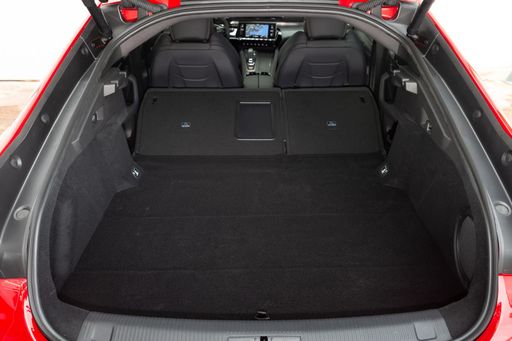
In terms of boot space, the Peugeot 508 offers slightly more room – 487 L compared to 390 L. That’s a difference of about 97 L.
When it comes to payload, Peugeot 508 somewhat takes the win – 469 kg compared to 400 kg. That’s a difference of about 69 kg.
Who comes out on top?
Overall, the Peugeot 508 shows itself to be outperforms in nearly all aspects and secures the title of DriveDuel Champion.
It convinces with the more balanced overall package and proves to be the more versatile choice for everyday use.
from about £44,600
 @ Peugeot / Stellantis Media
Peugeot 508
BMW 2 Series
Peugeot 508
Costs and Consumption
View detailed analysis
View detailed analysis
Engine and Performance
View detailed analysis
View detailed analysis
Dimensions and Body
View detailed analysis
View detailed analysis
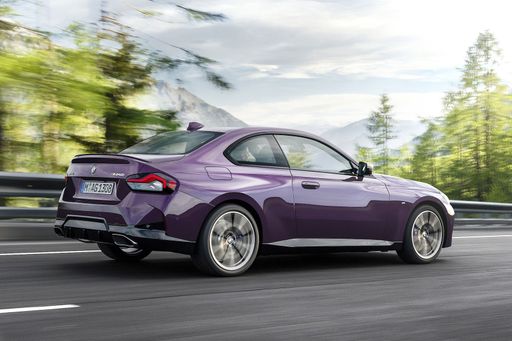
BMW 2 Series
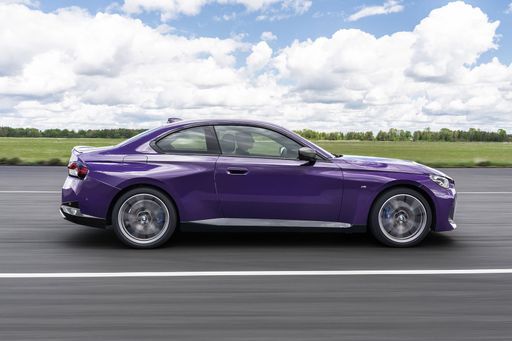
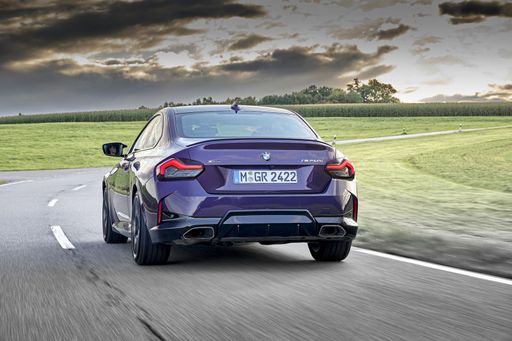
The BMW 2 Series feels like a pocket rocket in smart clothes, delivering sharp handling and a premium cabin that turns everyday errands into something worth looking forward to. For buyers who crave a compact car with real driving character and a dash of German confidence, it’s a spirited choice that never takes itself too seriously.
details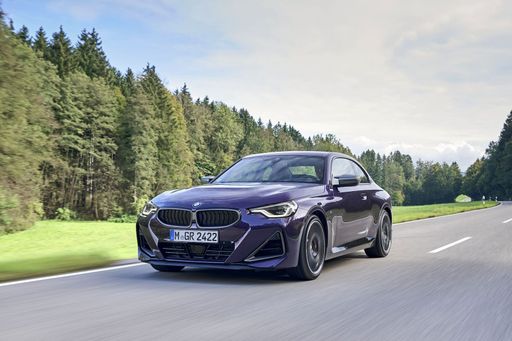 @ BMW Group Press
 @ BMW Group Press
 @ BMW Group Press
 @ BMW Group Press
 @ BMW Group Press
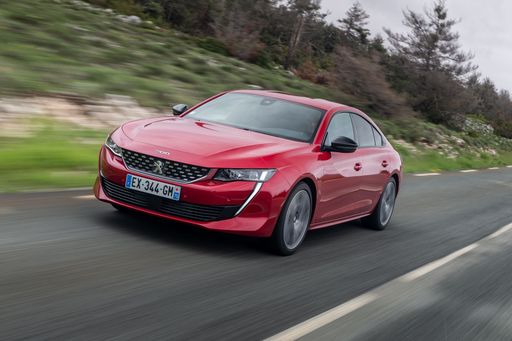
Peugeot 508
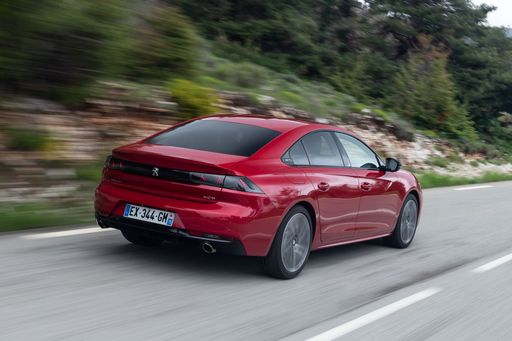
The Peugeot 508 turns heads with a low-slung, almost coupe-like silhouette and a cabin that feels grown-up and surprisingly premium for the money. On the road it balances comfort and poise with a playful edge, making it a convincing choice for buyers who want something stylish and sensible without shouting for attention.
details
@ Peugeot / Stellantis Media
 @ Peugeot / Stellantis Media
 @ Peugeot / Stellantis Media
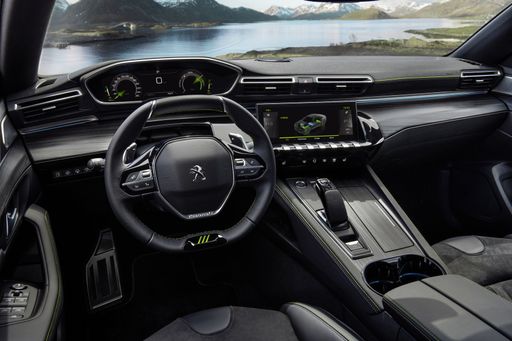 @ Peugeot / Stellantis Media
BMW 2 Series
Peugeot 508
|
@ BMW Group Press
|
@ Peugeot / Stellantis Media
|
|
|
|
Costs and Consumption |
|
|---|---|
|
Price
39200 - 98600 £
|
Price
44600 - 60800 £
|
|
Consumption L/100km
4.9 - 10 L
|
Consumption L/100km
1.6 - 2 L
|
|
Consumption kWh/100km
-
|
Consumption kWh/100km
-
|
|
Electric Range
-
|
Electric Range
46 - 55 km
|
|
Battery Capacity
-
|
Battery Capacity
-
|
|
co2
129 - 226 g/km
|
co2
36 - 45 g/km
|
|
Fuel tank capacity
51 - 52 L
|
Fuel tank capacity
43 L
|
Dimensions and Body |
|
|---|---|
|
Body Type
Coupe
|
Body Type
Hatchback
|
|
Seats
4
|
Seats
5
|
|
Doors
2
|
Doors
5
|
|
Curb weight
1560 - 1830 kg
|
Curb weight
1811 - 1941 kg
|
|
Trunk capacity
390 L
|
Trunk capacity
487 L
|
|
Length
4537 - 4587 mm
|
Length
4750 mm
|
|
Width
1838 - 1887 mm
|
Width
1859 mm
|
|
Height
1390 - 1404 mm
|
Height
1403 mm
|
|
Max trunk capacity
-
|
Max trunk capacity
1537 L
|
|
Payload
350 - 400 kg
|
Payload
379 - 469 kg
|
Engine and Performance |
|
|---|---|
|
Engine Type
Diesel MHEV, Petrol
|
Engine Type
Plugin Hybrid
|
|
Transmission
Automatic, Manuel
|
Transmission
Automatic
|
|
Transmission Detail
Automatic Gearbox, Manual Gearbox
|
Transmission Detail
Automatic Gearbox
|
|
Drive Type
Rear-Wheel Drive, All-Wheel Drive
|
Drive Type
Front-Wheel Drive, All-Wheel Drive
|
|
Power HP
156 - 530 HP
|
Power HP
180 - 360 HP
|
|
Acceleration 0-100km/h
3.8 - 8.7 s
|
Acceleration 0-100km/h
5.2 - 8.2 s
|
|
Max Speed
224 - 302 km/h
|
Max Speed
230 - 250 km/h
|
|
Torque
250 - 650 Nm
|
Torque
360 - 520 Nm
|
|
Number of Cylinders
4 - 6
|
Number of Cylinders
4
|
|
Power kW
115 - 390 kW
|
Power kW
133 - 265 kW
|
|
Engine capacity
1995 - 2998 cm3
|
Engine capacity
1598 cm3
|
General |
|
|---|---|
|
Model Year
2024 - 2025
|
Model Year
2024
|
|
CO2 Efficiency Class
D, E, G
|
CO2 Efficiency Class
B
|
|
Brand
BMW
|
Brand
Peugeot
|
What drivetrain options does the BMW 2 Series have?
Available configurations include Rear-Wheel Drive or All-Wheel Drive.
The prices and data displayed are estimates based on German list prices and may vary by country. This information is not legally binding.