
 Deutschland
 France
 Nederland
 Great Britain
 Sverige
 Danmark
 Suomi
Suomi Italia
 Polska
 Česko
Česko España
VS
BMW 5 Series Saloon vs Aston Martin DBS Superleggera Coupe comparison
Compare performance (727 HP vs 770 HP), boot space and price (51,400 £ vs 306,000 £ ) at a glance. Find out which car is the better choice for you – BMW 5 Series Saloon or Aston Martin DBS Superleggera Coupe?
5 Series Saloon
Costs and Efficiency:
Looking at overall running costs, both models reveal some interesting differences in everyday economy.
BMW 5 Series Saloon is clearly cheaper – starting at 51,400 £ , while the Aston Martin DBS Superleggera Coupe costs 306,000 £ . That’s a price difference of around 254,572 £.
Fuel consumption also shows a difference: the BMW 5 Series Saloon uses 2.1 L/100km and is substantially more efficient than the Aston Martin DBS Superleggera Coupe with 13.5 L/100km. The difference is about 11.4 L/100km.
DBS Superleggera Coupe
Engine and Performance:
Under the bonnet, it becomes clear which model is tuned for sportiness and which one takes the lead when you hit the accelerator.
When it comes to engine power, the Aston Martin DBS Superleggera Coupe offers barely more power – delivering 770 HP compared to 727 HP. That’s roughly 43 HP more horsepower.
When accelerating from 0 to 100 km/h, the Aston Martin DBS Superleggera Coupe is only slightly quicker – completing the sprint in 3.4 s, while the BMW 5 Series Saloon takes 3.5 s. That’s about 0.1 s quicker.
There’s also a difference in torque: the BMW 5 Series Saloon delivers barely more torque with 1,000 Nm compared to 900 Nm. That’s about 100 Nm more.
5 Series Saloon
Space and Everyday Use:
Cabin size, boot volume and payload all play a role in everyday practicality. Here, comfort and flexibility make the difference.
Seats: BMW 5 Series Saloon offers more seats – 5 vs 4.
In terms of curb weight, BMW 5 Series Saloon is very slightly lighter – 1,800 kg compared to 1,845 kg. The difference is around 45 kg.
Looking at boot space, the BMW 5 Series Saloon offers considerably more boot space – 520 L compared to 270 L. That’s a difference of about 250 L.
When it comes to payload, the BMW 5 Series Saloon carries visibly more – 600 kg compared to 420 kg. That’s a difference of about 180 kg.
Who wins the race in the data check?
The BMW 5 Series Saloon is decisively ahead in the objective data comparison.
This result only shows which model scores more points on paper – not which of the two cars feels right for you.
from £51,400
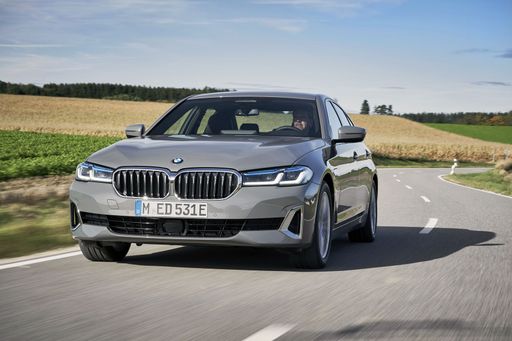
BMW 5 Series Saloon
BMW 5 Series Saloon
Aston Martin DBS Superleggera Coupe
Costs and Consumption
View detailed analysis
View detailed analysis
Engine and Performance
View detailed analysis
View detailed analysis
Dimensions and Body
View detailed analysis
View detailed analysis
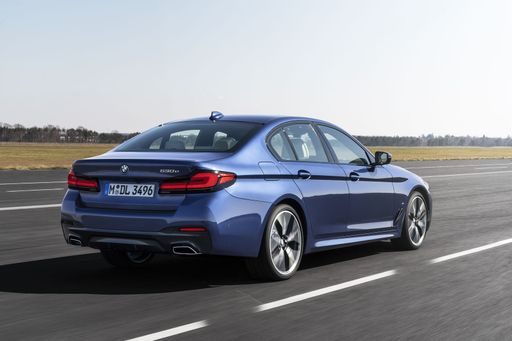
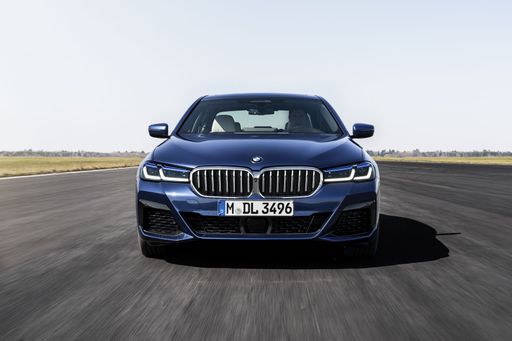
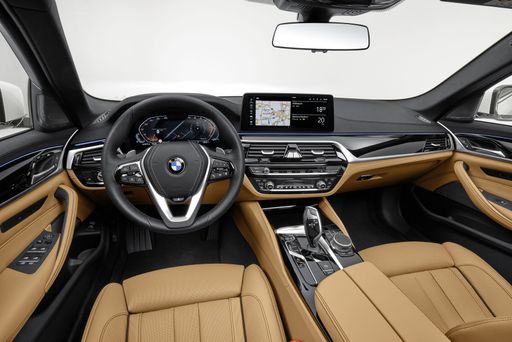
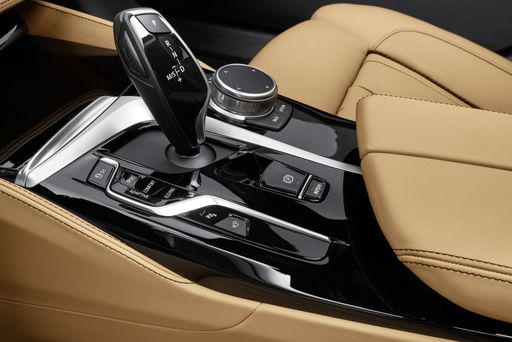
BMW 5 Series Saloon
The BMW 5 Series Saloon blends executive poise with a driver's instinct, delivering a supple, refined cabin and a chassis that prefers composed authority over bravado. For buyers who want a grown-up commuter that still enjoys a twisty road, it’s the kind of car that keeps your colleagues impressed and your weekend grin intact.
details
Aston Martin DBS Superleggera Coupe
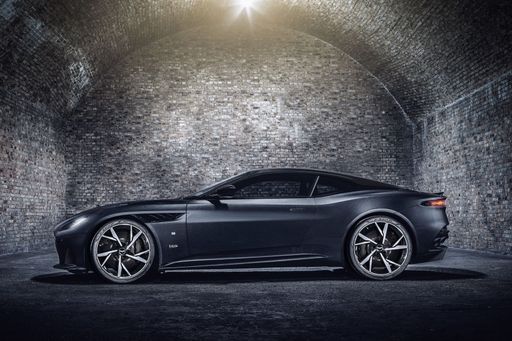
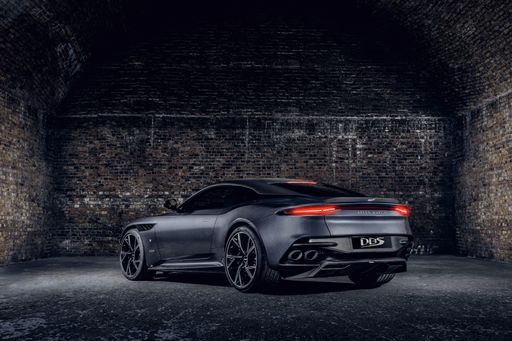
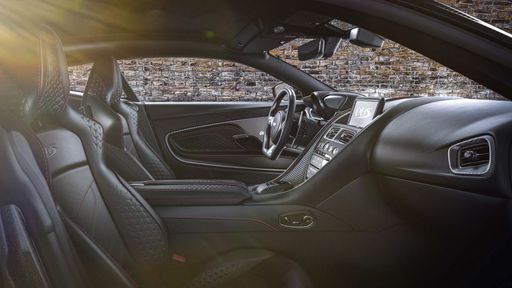
The Aston Martin DBS Superleggera Coupe looks like it was chiseled by a sculptor with a need for speed, pairing aristocratic elegance with a deliberately brutal stance. It delivers a mood‑altering soundtrack and intoxicating shove that turns ordinary drives into cinematic escapes — perfect for buyers who want drama without sacrificing refinement.
details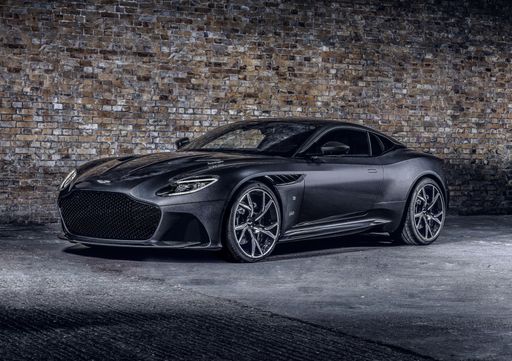
BMW 5 Series Saloon
Aston Martin DBS Superleggera Coupe
Costs and Consumption |
|
|---|---|
|
Price
51,400 - 124,500 £
|
Price
306,000 £
|
|
Consumption L/100km
2.1 - 5.8 L/100km
|
Consumption L/100km
13.5 L/100km
|
|
Consumption kWh/100km
-
|
Consumption kWh/100km
-
|
|
Electric Range
67 - 105 km
|
Electric Range
-
|
|
Battery Capacity
-
|
Battery Capacity
-
|
|
co2
48 - 152 g/km
|
co2
314 g/km
|
|
Fuel tank capacity
-
|
Fuel tank capacity
75 L
|
Dimensions and Body |
|
|---|---|
|
Body Type
Sedan
|
Body Type
Coupe
|
|
Seats
5
|
Seats
4
|
|
Doors
-
|
Doors
3
|
|
Curb weight
1,800 - 2,515 kg
|
Curb weight
1,845 kg
|
|
Trunk capacity
466 - 520 L
|
Trunk capacity
270 L
|
|
Length
-
|
Length
4,715 mm
|
|
Width
1,900 - 1,970 mm
|
Width
1,970 mm
|
|
Height
-
|
Height
1,285 mm
|
|
Max trunk capacity
-
|
Max trunk capacity
-
|
|
Payload
425 - 600 kg
|
Payload
420 kg
|
Engine and Performance |
|
|---|---|
|
Engine Type
Diesel MHEV, Petrol MHEV, Plug-in Hybrid
|
Engine Type
Petrol
|
|
Transmission
Automatic
|
Transmission
Automatic
|
|
Transmission Detail
Automatic Gearbox
|
Transmission Detail
Automatic Gearbox
|
|
Drive Type
Rear-Wheel Drive, All-Wheel Drive
|
Drive Type
Rear-Wheel Drive
|
|
Power HP
197 - 727 HP
|
Power HP
770 HP
|
|
Acceleration 0-100km/h
3.5 - 7.5 s
|
Acceleration 0-100km/h
3.4 s
|
|
Max Speed
-
|
Max Speed
338 km/h
|
|
Torque
330 - 1,000 Nm
|
Torque
900 Nm
|
|
Number of Cylinders
4 - 8
|
Number of Cylinders
12
|
|
Power kW
145 - 535 kW
|
Power kW
566 kW
|
|
Engine capacity
1,995 - 4,395 cm3
|
Engine capacity
5,204 cm3
|
General |
|
|---|---|
|
Model Year
2,023 - 2,026
|
Model Year
2023
|
|
CO2 Efficiency Class
D, E, B, C
|
CO2 Efficiency Class
G
|
|
Brand
BMW
|
Brand
Aston Martin
|
DriveDuel uses data analysis and artificial intelligence to evaluate vehicle data and create content. Content is regularly reviewed and improved.
The displayed prices are estimates based on German list prices, adjusted to the respective country’s VAT. Country-specific registration taxes are not included. This information is not legally binding.