@ BMW Group Press
@ Mercedes-Benz Group Media
VS

BMW X1 vs Mercedes B Class – Which one offers the better deal?

Both models have their strengths – but which one suits you more?
Compare performance, efficiency, price and space directly: BMW X1 or Mercedes B Class?

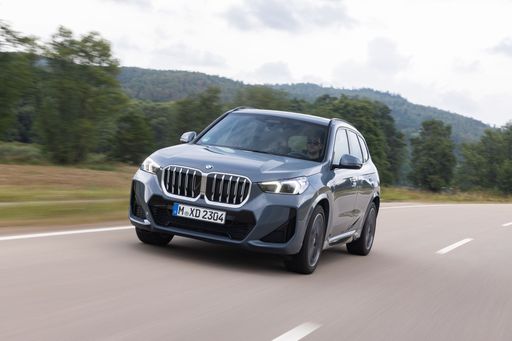
X1 @ BMW Group Press

Battle of the Titans: BMW X1 vs. Mercedes B-Klasse

In the highly competitive landscape of compact premium vehicles, two brands have always stood out for their blend of luxury, performance, and innovative engineering: BMW and Mercedes-Benz. This comparison pits the BMW X1 against the Mercedes B-Klasse, two vehicles that, while different in form and philosophy, offer much to the discerning driver. Let's delve into their technical aspects and innovations to see how they stack up against each other.

B Class @ Mercedes-Benz Group Media

Performance and Powertrains

The BMW X1 offers versatility with a range of engine options, including diesel, petrol, mild hybrid electric vehicles (MHEV), and a plug-in hybrid variant. Boasting up to 326 HP and an efficient electric range of 83 km, the X1 addresses both power and eco-friendliness. The top acceleration speed of the X1 is 5.4 seconds from 0 to 100 km/h, making it quite the agile performer. Coupled with optional all-wheel drive and dual-clutch automatic transmission, it's tailored for those seeking an exhilarating driving experience.

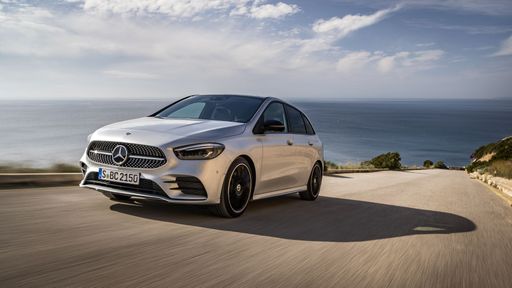
On the other hand, the Mercedes B-Klasse focuses on a balance of practicality and performance. Available with petrol MHEV, diesel, and plug-in hybrid engines, it provides a diverse range for different driving needs. The B-Klasse can rock up to 238 HP, offering a fair share of power with a steady max speed of 250 km/h on select models. Though slightly more gradual than the X1, B-Klasse manages a respectable acceleration of 7.3 seconds from 0 to 100 km/h, complemented by its front-wheel and all-wheel drive options, making it well-suited for everyday cruising.


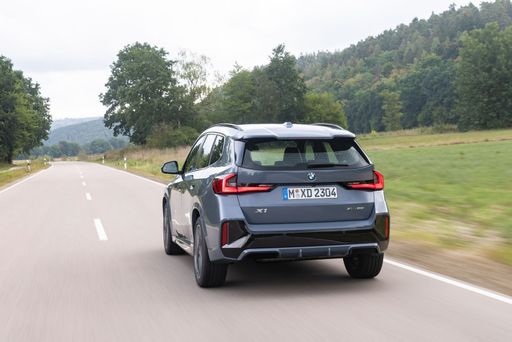
X1 @ BMW Group Press

Economy and Efficiency

Efficiency is a key highlight in both models. The BMW X1 presents a commendable range of fuel consumption figures, from a thrifty 4.6 L/100 km in its diesel variant to a mere 0.8 L/100 km in the hybrid option, spotlighting its low-emission capability with CO2 emissions as low as 17 g/km.

The Mercedes B-Klasse is not too far behind, with fuel consumption figures starting at 5.1 L/100 km for diesel options and 0.8 L/100 km for the plug-in hybrid, showcasing a solid performance in terms of efficiency. Its CO2 emissions run as low as 18 g/km in the most eco-conscious versions, aligning well with the modern demands for sustainability and lower carbon footprints.

B Class @ Mercedes-Benz Group Media

Dimensions and Design

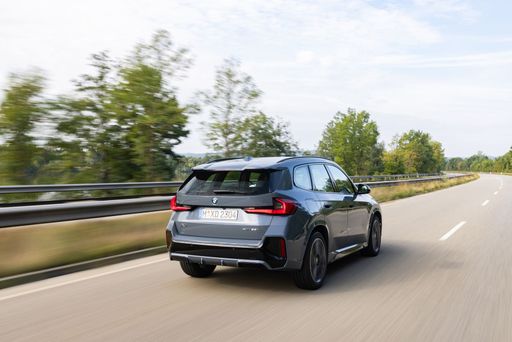
While performance and efficiency are critical, dimensions and design play a pivotal role in driver experience. The BMW X1, with a length of 4500 mm, width of 1845 mm, and height of 1630 mm, offers a spacious interior without compromising its sleek, sporty exterior. It also boasts a trunk capacity of up to 540 liters, ideal for those road trips requiring additional luggage space.

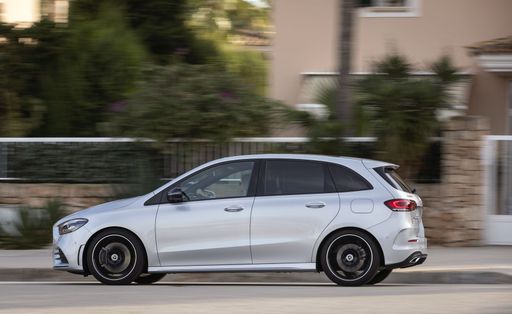
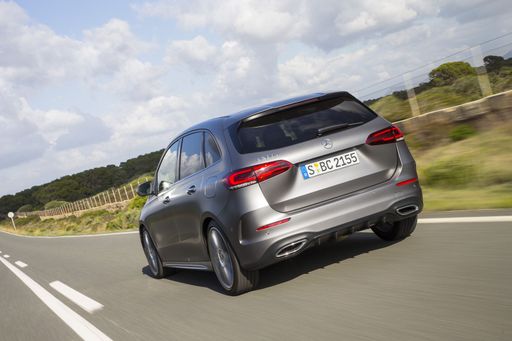
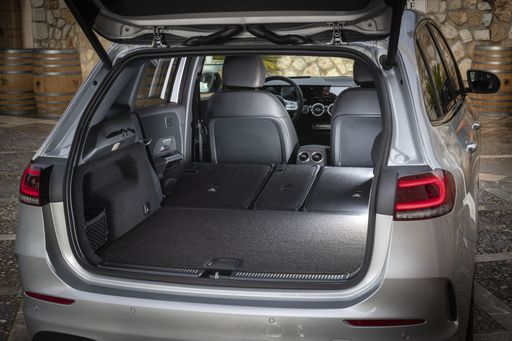
The Mercedes B-Klasse is slightly more compact, measuring 4419 mm in length, 1796 mm in width, and 1562 mm in height, ideal for city driving while still providing ample interior comfort. Its trunk, slightly smaller at 455 liters, is nonetheless sufficient for daily commutes and weekend getaways.

X1 @ BMW Group Press

Technological Innovations

The BMW X1 packs the latest BMW iDrive technology, offering a user-friendly interface for navigation and infotainment, coupled with various driving assistant features that enhance safety and comfort. The introduction of the plug-in hybrid model further solidifies its place in the eco-conscious segment of drivers.

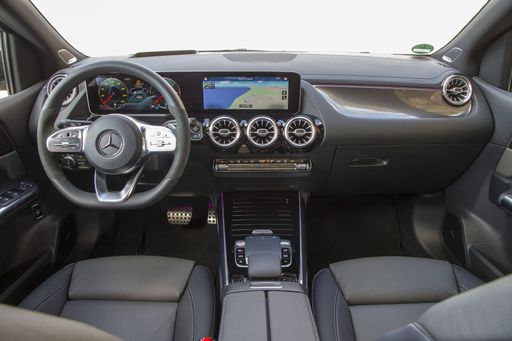
Mercedes offers the B-Klasse with its MERCEDES-Benz User Experience (MBUX), providing an intelligent and customizable interface that interacts with the driver via natural language processing. The brand's focus on safety is further emphasized with numerous active safety systems embedded within the vehicle.

B Class @ Mercedes-Benz Group Media

Conclusion: Choosing Your Path

In the end, the decision between the BMW X1 and the Mercedes B-Klasse boils down to personal preference and lifestyle needs. The X1 appeals to those who crave performance, innovation, and a dash of sportiness, while the B-Klasse stands as a beacon of practicality, comfort, and efficiency. Whichever your choice, both models offer a compelling suite of features befitting the premium badge they proudly wear.

Here’s where it gets real: The technical differences in detail

X1 @ BMW Group Press

Costs and Efficiency:

Looking at overall running costs, both models reveal some interesting differences in everyday economy.

Mercedes B Class has a somewhat advantage in terms of price – it starts at 33100 £, while the BMW X1 costs 38200 £. That’s a price difference of around 5099 £.

Both cars consume an average of 2.50 L per 100 km – no difference here.

As for range, the Mercedes B Class performs slight better – achieving up to 83 km, about 2 km more than the BMW X1.

B Class @ Mercedes-Benz Group Media

Engine and Performance:

Power, torque and acceleration say a lot about how a car feels on the road. This is where you see which model delivers more driving dynamics.

When it comes to engine power, the BMW X1 has a noticeable edge – offering 326 HP compared to 238 HP. That’s roughly 88 HP more horsepower.

In acceleration from 0 to 100 km/h, the BMW X1 is evident quicker – completing the sprint in 5.40 s, while the Mercedes B Class takes 6.50 s. That’s about 1.10 s faster.

There’s no difference in top speed – both reach 250 km/h.

There’s also a difference in torque: BMW X1 pulls minimal stronger with 477 Nm compared to 450 Nm. That’s about 27 Nm difference.

X1 @ BMW Group Press

Space and Everyday Use:

Beyond pure performance, interior space and usability matter most in daily life. This is where you see which car is more practical and versatile.

Both vehicles offer seating for 5 people.

In curb weight, Mercedes B Class is a bit lighter – 1405 kg compared to 1575 kg. The difference is around 170 kg.

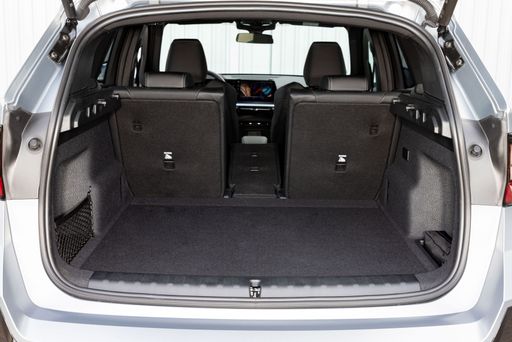
In terms of boot space, the BMW X1 offers a bit more room – 540 L compared to 455 L. That’s a difference of about 85 L.

In maximum load capacity, the BMW X1 performs slight better – up to 1600 L, which is about 60 L more than the Mercedes B Class.

When it comes to payload, Mercedes B Class barely noticeable takes the win – 550 kg compared to 500 kg. That’s a difference of about 50 kg.

Who wins the race?

The BMW X1 proves to be dominates this comparison and therefore becomes our DriveDuel Champion!
BMW X1 is the better all-rounder in this comparison.

from about £38,200
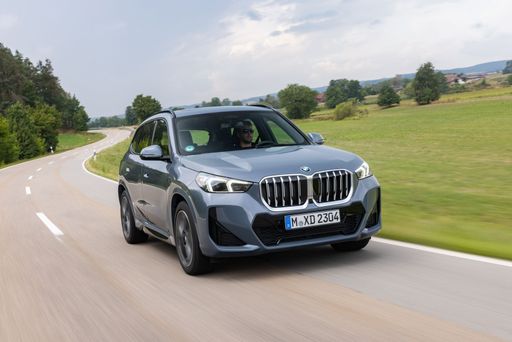
X1 @ BMW Group Press

BMW X1

  • Engine Type : Diesel MHEV, Petrol MHEV, Petrol, Diesel, Plugin Hybrid
  • Transmission : Automatic
  • Drive Type : Front-Wheel Drive, All-Wheel Drive
  • Power HP : 136 - 326 HP
  • Consumption L/100km : 2.5 - 7.7 L
  • Electric Range : 81 km

BMW X1

3.7 (3)
rate

The BMW X1 brings a premium feel to compact crossover life, wrapping practical space and agile handling into a tidy, upscale package. It’s ideal for buyers who want BMW driving dynamics without the bulk, offering everyday comfort and a few clever tricks to keep the commute interesting.

details

Mercedes B Class

5 (2)
rate

The Mercedes B-Class is a smart, grown-up compact people carrier that dresses everyday practicality in a near‑premium polish, perfect for buyers who want comfort and a classy badge without the theatrics. It won’t set your pulse racing on a back road, but it will make school runs, commutes and grocery hauls feel pleasantly civilized — a reliable, slightly posh companion for real life.

details
BMW X1
Mercedes B Class
X1 @ BMW Group Press
B Class @ Mercedes-Benz Group Media

Costs and Consumption

Price
38200 - 55500 £
Price
33100 - 52500 £
Consumption L/100km
2.5 - 7.7 L
Consumption L/100km
2.5 - 6.9 L
Consumption kWh/100km
-
Consumption kWh/100km
-
Electric Range
81 km
Electric Range
83 km
Battery Capacity
14.20 kWh
Battery Capacity
12.90 kWh
co2
57 - 175 g/km
co2
56 - 156 g/km
Fuel tank capacity
47 - 54 L
Fuel tank capacity
35 - 51 L

Dimensions and Body

Body Type
SUV
Body Type
MPV
Seats
5
Seats
5
Doors
5
Doors
5
Curb weight
1575 - 1935 kg
Curb weight
1405 - 1745 kg
Trunk capacity
490 - 540 L
Trunk capacity
405 - 455 L
Length
4500 - 4505 mm
Length
4419 mm
Width
1845 mm
Width
1796 mm
Height
1622 - 1642 mm
Height
1562 mm
Max trunk capacity
1495 - 1600 L
Max trunk capacity
1440 - 1540 L
Payload
490 - 500 kg
Payload
505 - 550 kg

Engine and Performance

Engine Type
Diesel MHEV, Petrol MHEV, Petrol, Diesel, Plugin Hybrid
Engine Type
Plugin Hybrid, Petrol MHEV, Diesel
Transmission
Automatic
Transmission
Automatic
Transmission Detail
Dual-Clutch Automatic
Transmission Detail
Dual-Clutch Automatic
Drive Type
Front-Wheel Drive, All-Wheel Drive
Drive Type
Front-Wheel Drive, All-Wheel Drive
Power HP
136 - 326 HP
Power HP
116 - 238 HP
Acceleration 0-100km/h
5.4 - 9.2 s
Acceleration 0-100km/h
6.5 - 10 s
Max Speed
190 - 250 km/h
Max Speed
200 - 250 km/h
Torque
230 - 477 Nm
Torque
200 - 450 Nm
Number of Cylinders
3 - 4
Number of Cylinders
4
Power kW
100 - 240 kW
Power kW
85 - 175 kW
Engine capacity
1499 - 1998 cm3
Engine capacity
1332 - 1991 cm3

General

Model Year
2024 - 2025
Model Year
2024 - 2025
CO2 Efficiency Class
D, E, F, B
CO2 Efficiency Class
B, D, E, F
Brand
BMW
Brand
Mercedes-Benz
Is the BMW X1 offered with different drivetrains?

The BMW X1 is offered with Front-Wheel Drive or All-Wheel Drive.

The prices and data displayed are estimates based on German list prices and may vary by country. This information is not legally binding.