@ BMW Group Press
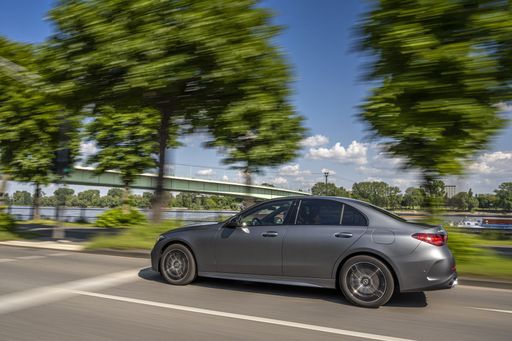
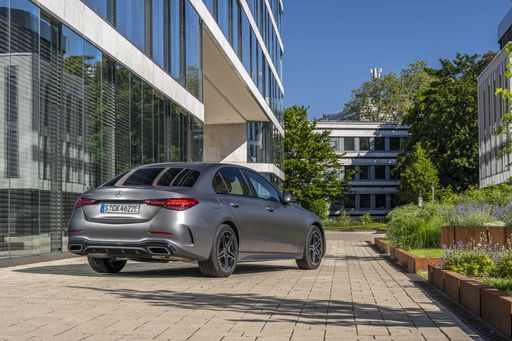
@ Mercedes-Benz Group Media
VS

BMW X1 vs Mercedes C-Class Sedan – Which one offers the better deal?

Everyday use, family trips or long-distance drives – here’s where the differences show.
Discover whether BMW X1 or Mercedes C-Class Sedan fits your lifestyle better.

X1 @ BMW Group Press

A Tale of Two Titans: BMW X1 vs Mercedes C-Klasse Limousine

When it comes to luxury automobiles, both BMW and Mercedes-Benz exemplify the pinnacle of German engineering and prestige. Yet, comparing the BMW X1 and the Mercedes C-Klasse Limousine offers an interesting juxtaposition of a sporty SUV against a classic luxury sedan. Dive into the detailed comparison of these automotive goliaths and discover which reigns supreme.
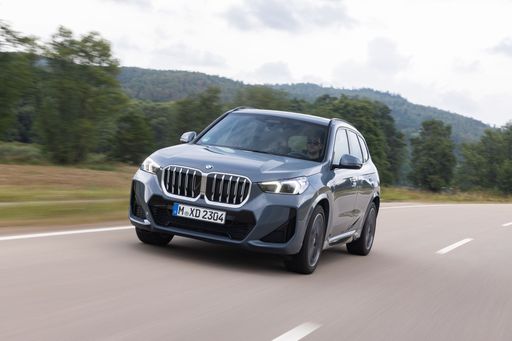
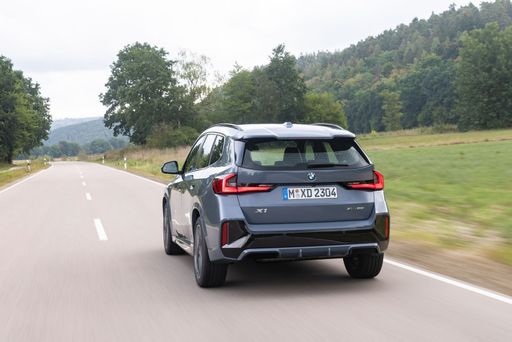
C-Class Sedan @ Mercedes-Benz Group Media

Performance and Engine Options

The BMW X1 comes with a versatile range of engines. Buyers can choose from several options including diesel, petrol, diesel MHEV, and hybrid engines. This SUV also offers an option for front-wheel or all-wheel drive, supported by a dual-clutch automatic transmission. With power ranging from 136 HP to a robust 326 HP, the BMW X1 can accelerate from 0 to 100 km/h in as little as 5.4 seconds.

On the other hand, the Mercedes C-Klasse Limousine is no slouch in the performance department either. Offering petrol MHEV, diesel MHEV, and plug-in hybrid engines, this sedan caters to those who appreciate refinement and power. Mercedez-Benz provides a sophisticated automatic gearbox with both rear-wheel and all-wheel drive options. It boasts a power output starting from 183 HP and surges up to a thrilling 680 HP, making acceleration from 0 to 100 km/h possible in a lightning-fast 3.4 seconds.

X1 @ BMW Group Press

Fuel Efficiency and Electric Range

Efficiency is a crucial aspect of modern vehicles, and both the BMW X1 and Mercedes C-Klasse Limousine rise to the challenge in their own ways. The BMW X1 hybrid variant flaunts an impressive electric range of up to 83 km, thanks to a 14.2 kWh battery. Its fuel consumption ranges from an economical 0.8 L/100 km to 7.7 L/100 km, depending on the chosen engine.

Meanwhile, the Mercedes C-Klasse Limousine stands out with a slightly longer electric range of up to 116 km, supported by a larger 19.5 kWh battery. Its overall consumption rates span from a mere 0.4 L/100 km in hybrid mode to 8.9 L/100 km for conventional engines, offering both eco-conscious drivers and performance lovers a tailored experience.

C-Class Sedan @ Mercedes-Benz Group Media

Design and Comfort

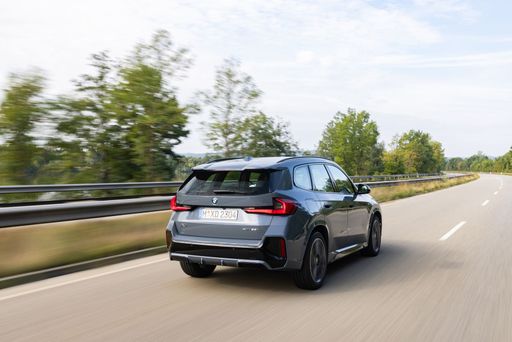
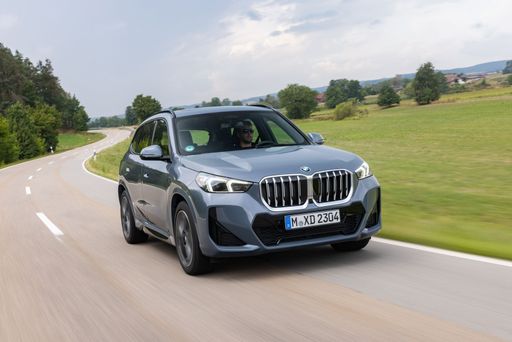
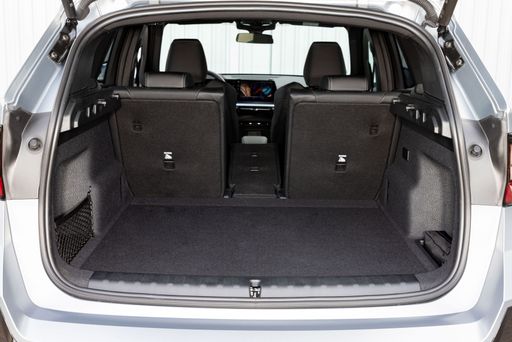
As an SUV, the BMW X1 offers a commanding presence on the road with a body width of 1845 mm and height of up to 1642 mm. It boasts an impressive trunk capacity of up to 540 liters, catering to families or adventure seekers needing ample storage. Inside, it provides comfortable seating for five passengers.

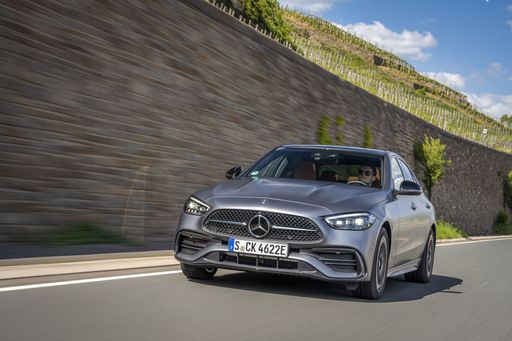
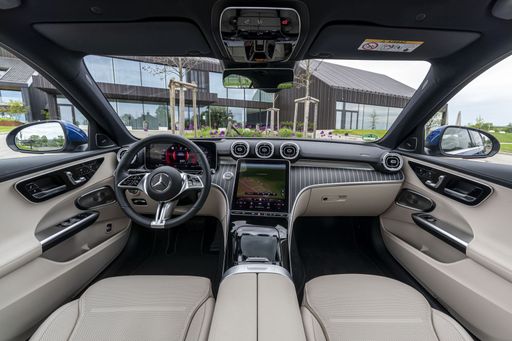
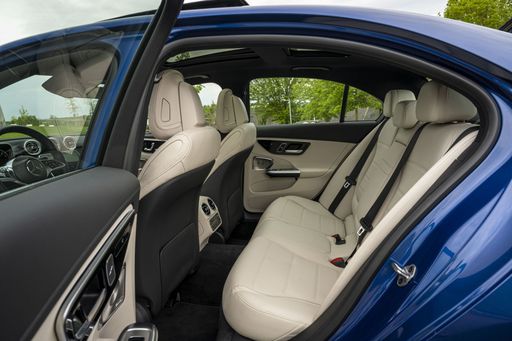
Conversely, the Mercedes C-Klasse Limousine exemplifies elegance and tradition with its sedan styling. With a slimmer width of 1820 mm to 1900 mm and height ranging from 1438 mm to 1458 mm, it slips through the urban environment with grace. The trunk offers a respectable 455 liters, fitting the needs of those prioritizing luxury over utility. Like the X1, it comfortably seats five occupants, wrapped in the opulence typical of Mercedes-Benz interiors.

X1 @ BMW Group Press

Conclusion: Choosing Your Champion

While both the BMW X1 and the Mercedes C-Klasse Limousine embody excellence in engineering and design, the choice between these two models ultimately comes down to personal preference. The BMW X1 shines as a versatile and sporty SUV ideal for those with an adventurous spirit. In contrast, the Mercedes C-Klasse Limousine appeals to those who favor timeless elegance and breathtaking performance.

Deciding between these titans is no small feat, yet one thing remains clear: whether you choose the dynamic allure of the BMW X1 or the sumptuous sophistication of the Mercedes C-Klasse Limousine, both vehicles stand as testaments to the innovation and luxury that define German automaking.

Here’s where it gets real: The technical differences in detail

C-Class Sedan @ Mercedes-Benz Group Media

Costs and Efficiency:

When it comes to price and running costs, the biggest differences usually appear. This is often where you see which car fits your budget better in the long run.

BMW X1 has a hardly perceptible advantage in terms of price – it starts at 38200 £, while the Mercedes C-Class Sedan costs 41200 £. That’s a price difference of around 2938 £.

Fuel consumption also shows a difference: Mercedes C-Class Sedan manages with 1.60 L and is therefore decisively more efficient than the BMW X1 with 2.50 L. The difference is about 0.90 L per 100 km.

As for range, the Mercedes C-Class Sedan performs evident better – achieving up to 117 km, about 36 km more than the BMW X1.

X1 @ BMW Group Press

Engine and Performance:

Power, torque and acceleration are the classic benchmarks for car enthusiasts – and here, some clear differences start to show.

When it comes to engine power, the Mercedes C-Class Sedan has a clearly edge – offering 680 HP compared to 326 HP. That’s roughly 354 HP more horsepower.

In acceleration from 0 to 100 km/h, the Mercedes C-Class Sedan is clearly quicker – completing the sprint in 3.40 s, while the BMW X1 takes 5.40 s. That’s about 2 s faster.

In terms of top speed, the Mercedes C-Class Sedan performs to a small extent better – reaching 280 km/h, while the BMW X1 tops out at 250 km/h. The difference is around 30 km/h.

There’s also a difference in torque: Mercedes C-Class Sedan pulls convincingly stronger with 1020 Nm compared to 477 Nm. That’s about 543 Nm difference.

C-Class Sedan @ Mercedes-Benz Group Media

Space and Everyday Use:

Whether family car or daily driver – which one offers more room, flexibility and comfort?

Both vehicles offer seating for 5 people.

In curb weight, BMW X1 is slight lighter – 1575 kg compared to 1695 kg. The difference is around 120 kg.

In terms of boot space, the BMW X1 offers to a small extent more room – 540 L compared to 455 L. That’s a difference of about 85 L.

When it comes to payload, Mercedes C-Class Sedan slightly takes the win – 570 kg compared to 500 kg. That’s a difference of about 70 kg.

Who comes out on top?

Overall, the Mercedes C-Class Sedan shows itself to be is largely superior and secures the title of DriveDuel Champion.
It convinces with the more balanced overall package and proves to be the more versatile choice for everyday use.

from about £41,200
C-Class Sedan @ Mercedes-Benz Group Media

Mercedes C-Class Sedan

  • Engine Type : Petrol MHEV, Plugin Hybrid, Diesel MHEV
  • Transmission : Automatic
  • Drive Type : Rear-Wheel Drive, All-Wheel Drive
  • Power HP : 183 - 680 HP
  • Consumption L/100km : 1.6 - 9 L
  • Electric Range : 11 - 117 km

BMW X1

3.7 (3)
rate

The BMW X1 brings a premium feel to compact crossover life, wrapping practical space and agile handling into a tidy, upscale package. It’s ideal for buyers who want BMW driving dynamics without the bulk, offering everyday comfort and a few clever tricks to keep the commute interesting.

details

Mercedes C-Class Sedan

The Mercedes C‑Class is the compact executive that dresses like it owns the boulevard, with an interior that blends modern elegance and plush comfort to make everyday driving feel unexpectedly special. On the road it pairs poise with a hint of cheeky agility, rewarding drivers who want refinement without forfeiting a touch of fun — and yes, it still looks great in the driveway.

details
BMW X1
Mercedes C-Class Sedan
X1 @ BMW Group Press
C-Class Sedan @ Mercedes-Benz Group Media

Costs and Consumption

Price
38200 - 55500 £
Price
41200 - 103100 £
Consumption L/100km
2.5 - 7.7 L
Consumption L/100km
1.6 - 9 L
Consumption kWh/100km
-
Consumption kWh/100km
-
Electric Range
81 km
Electric Range
11 - 117 km
Battery Capacity
14.20 kWh
Battery Capacity
19.50 kWh
co2
57 - 175 g/km
co2
41 - 205 g/km
Fuel tank capacity
47 - 54 L
Fuel tank capacity
40 - 66 L

Dimensions and Body

Body Type
SUV
Body Type
Sedan
Seats
5
Seats
5
Doors
5
Doors
4
Curb weight
1575 - 1935 kg
Curb weight
1695 - 2195 kg
Trunk capacity
490 - 540 L
Trunk capacity
280 - 455 L
Length
4500 - 4505 mm
Length
4751 - 4842 mm
Width
1845 mm
Width
1820 - 1900 mm
Height
1622 - 1642 mm
Height
1438 - 1458 mm
Max trunk capacity
1495 - 1600 L
Max trunk capacity
-
Payload
490 - 500 kg
Payload
480 - 570 kg

Engine and Performance

Engine Type
Diesel MHEV, Petrol MHEV, Petrol, Diesel, Plugin Hybrid
Engine Type
Petrol MHEV, Plugin Hybrid, Diesel MHEV
Transmission
Automatic
Transmission
Automatic
Transmission Detail
Dual-Clutch Automatic
Transmission Detail
Automatic Gearbox
Drive Type
Front-Wheel Drive, All-Wheel Drive
Drive Type
Rear-Wheel Drive, All-Wheel Drive
Power HP
136 - 326 HP
Power HP
183 - 680 HP
Acceleration 0-100km/h
5.4 - 9.2 s
Acceleration 0-100km/h
3.4 - 8.6 s
Max Speed
190 - 250 km/h
Max Speed
230 - 280 km/h
Torque
230 - 477 Nm
Torque
250 - 1020 Nm
Number of Cylinders
3 - 4
Number of Cylinders
4
Power kW
100 - 240 kW
Power kW
135 - 500 kW
Engine capacity
1499 - 1998 cm3
Engine capacity
1496 - 1999 cm3

General

Model Year
2024 - 2025
Model Year
2024 - 2025
CO2 Efficiency Class
D, E, F, B
CO2 Efficiency Class
E, B, D, G
Brand
BMW
Brand
Mercedes-Benz
Is the BMW X1 offered with different drivetrains?

The BMW X1 is offered with Front-Wheel Drive or All-Wheel Drive.

The prices and data displayed are estimates based on German list prices and may vary by country. This information is not legally binding.