VS

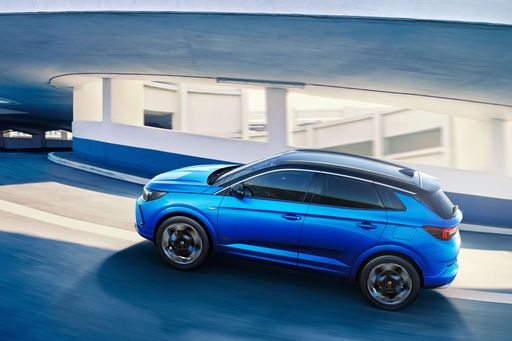
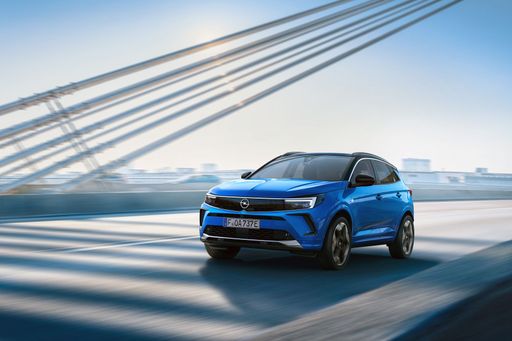
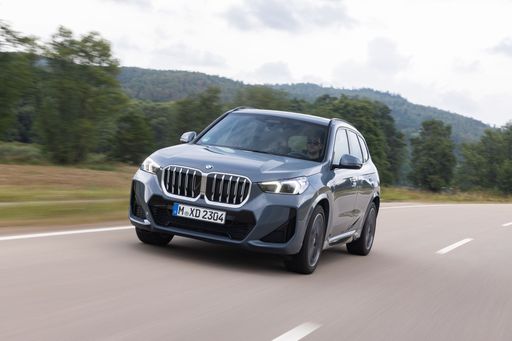
BMW X1 vs Vauxhall Grandland comparison

Compare performance (326 HP vs 325 HP), boot space and price (38,700 £ vs 35,600 £ ) at a glance. Find out which car is the better choice for you – BMW X1 or Vauxhall Grandland?

BMW X1 vs Vauxhall Grandland: Key differences

BMW X1

4.3 (7 Reviews)
rate
  • barely more power
  • only slightly more efficient
  • slightly quicker 0–100 km/h
  • marginally lighter
details

Vauxhall Grandland

4.7 (2 Reviews)
rate
  • only slightly cheaper
  • substantially more electric range
  • marginally more trunk space
details

All details on performance, efficiency, range and trunk space can be found in the technical comparison below – including user reviews for both models.

By Achim Sedelmaier

X1

Battle of the Compact SUVs: BMW X1 vs. Vauxhall Grandland

The compact SUV segment is a thriving battlefield, with manufacturers striving to offer the best balance between performance, technology, and everyday practicality. Among the fierce competitors are the BMW X1 and the Vauxhall Grandland. Both models boast incredible innovations and specifications but cater to slightly different audiences. Let's dive into their technical aspects to see what each SUV brings to the table.
Grandland

Under the Hood: Engine Choices and Performance

The BMW X1 offers a versatile range of engine options, including diesel, petrol, mild hybrid (MHEV), and plug-in hybrid variants. Power outputs range from 136 HP in the petrol variants to a robust 326 HP in the plug-in hybrid, providing plenty of choice depending on your driving needs. With a torque of up to 477 Nm and a 0-100 km/h acceleration time of just 5.4 seconds on certain models, the X1 ensures a thrilling drive.

On the other hand, Vauxhall Grandland keeps it simple with petrol MHEV, plug-in hybrid, and fully electric versions. Maximum power output is pegged at 213 HP in the electric variant, and the impressive torque goes up to 350 Nm. The Grandland accelerates from 0-100 km/h in 7.8 seconds, showcasing that it isn't just a practical choice but also an engaging one.

X1

Efficiency and Range: A Green Perspective

The BMW X1's plug-in hybrid boasts an electric range of 83 km, thanks to its 14.2 kWh battery, while maintaining a fuel consumption as low as 0.8 L/100 km. Such efficiency is matched with a CO2 efficiency class rating of B, reflecting its lower carbon footprint in the hybrid variant.

Vauxhall Grandland shines in its electric form with a remarkable electric range of up to 585 km, supported by the CO2 emission-free driving offered by this variant. This impressive zero-emission option makes the Grandland a great candidate for eco-conscious drivers.

Grandland

Spacious Interiors: Comfort and Practicality

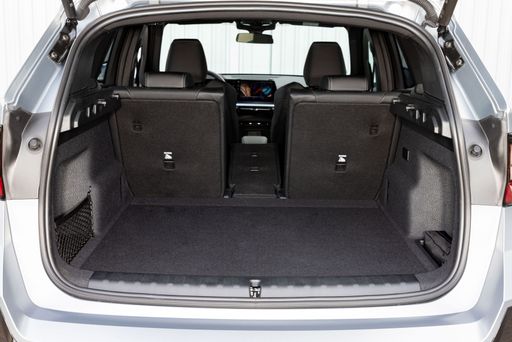
Both SUVs are designed with practicality in mind. The BMW X1 accommodates five passengers comfortably, with ample trunk space offering up to 540 liters, catering perfectly to family needs or long trips with a lot of luggage.

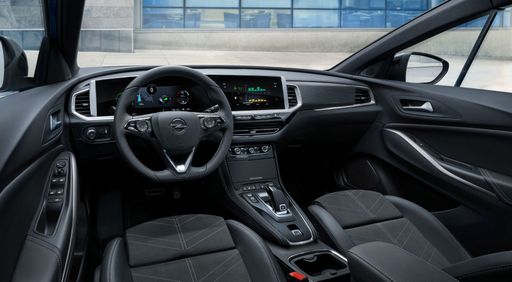
The Vauxhall Grandland also provides seating for five occupants and an even larger trunk capacity of 550 liters. Its slightly larger dimensions — 4650 mm in length compared to the X1's 4500 mm — mean that passengers can enjoy a bit more legroom and overall space.

X1

Driving Dynamics: Transmission and Drive Type

BMW offers the X1 with a dual-clutch automatic transmission and options for front-wheel or all-wheel drive, allowing drivers to pick a configuration that best suits their driving style and conditions. This enhances the SUV’s adaptability to various terrains and driving preferences.

Conversely, the Vauxhall Grandland comes with a dual-clutch automatic or a reduction gearbox for the electric variant, with all models featuring front-wheel drive. While it may not have an all-wheel-drive option, it maintains smooth handling suited for urban and highway environments.

Grandland

Conclusion: Choosing Between the X1 and the Grandland

The choice between the BMW X1 and Vauxhall Grandland largely depends on individual priorities. If performance, a wide range of powertrains, and all-wheel drive are vital, the BMW X1 emerges as a robust contender. For those prioritizing long electric range, no emissions, and a slightly larger interior, the Vauxhall Grandland stands out as an ideal option.

Ultimately, both models offer stylish and tech-savvy packages, sure to appeal to the modern SUV enthusiast. Whether you lean towards the premium allure of BMW or the versatile practicality of Vauxhall, either choice promises a satisfying driving experience.

Here’s where it gets real: The technical differences in detail

X1

Costs and Efficiency:

When it comes to price and running costs, the biggest differences usually appear. This is often where you see which car fits your budget better in the long run.

Vauxhall Grandland is only slightly cheaper – starting at 35,600 £ , while the BMW X1 costs 38,700 £ . That’s a price difference of around 3,043 £.

Fuel consumption also shows a difference: the BMW X1 uses 2.5 L/100km and is only slightly more efficient than the Vauxhall Grandland with 2.6 L/100km. The difference is about 0.1 L/100km.

As for electric range, the Vauxhall Grandland offers substantially more range – reaching up to 694 km, about 613 km more than the BMW X1.

Grandland

Engine and Performance:

Under the bonnet, it becomes clear which model is tuned for sportiness and which one takes the lead when you hit the accelerator.

When it comes to engine power, the BMW X1 offers barely more power – delivering 326 HP compared to 325 HP. That’s roughly 1 HP more horsepower.

When accelerating from 0 to 100 km/h, the BMW X1 is slightly quicker – completing the sprint in 5.4 s, while the Vauxhall Grandland takes 6.1 s. That’s about 0.7 s quicker.

There’s also a difference in torque: the Vauxhall Grandland delivers only slightly more torque with 509 Nm compared to 477 Nm. That’s about 32 Nm more.

X1

Space and Everyday Use:

Whether family car or daily driver – which one offers more room, flexibility and comfort?

Both vehicles offer seating for 5 people.

In terms of curb weight, BMW X1 is marginally lighter – 1,575 kg compared to 1,675 kg. The difference is around 100 kg.

Looking at boot space, the Vauxhall Grandland offers marginally more boot space – 550 L compared to 540 L. That’s a difference of about 10 L.

When it comes to payload, the BMW X1 carries marginally more – 500 kg compared to 495 kg. That’s a difference of about 5 kg.

Who wins the race in the data check?

The Vauxhall Grandland is decisively ahead in the objective data comparison.
This result only shows which model scores more points on paper – not which of the two cars feels right for you.

from £35,600
Grandland

Vauxhall Grandland

  • Engine Type Electric, Plugin Hybrid, Petrol MHEV
  • Transmission Automatic
  • Drive Type Front-Wheel Drive, All-Wheel Drive
  • Power HP 145 - 325 HP
  • Consumption L/100km 2.6 - 5.6 L/100km
  • Consumption kWh/100km 17.8 - 18.6 kWh/100km
  • Electric Range 82 - 694 km
BMW X1
Vauxhall Grandland

Costs and Consumption

View detailed analysis

Engine and Performance

View detailed analysis

Dimensions and Body

View detailed analysis

BMW X1

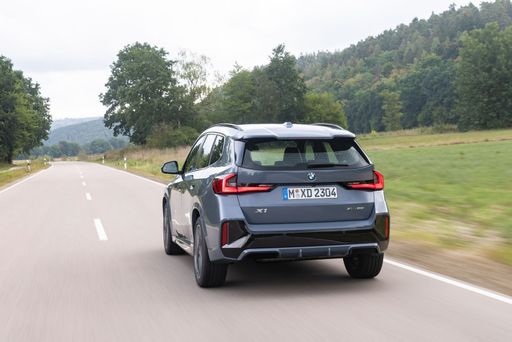
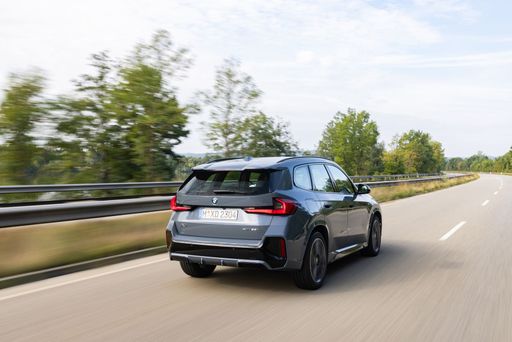
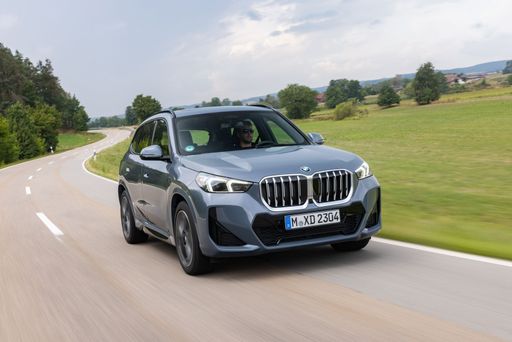
The BMW X1 delivers BMW's sporty driving character in a compact premium crossover package, making daily driving both engaging and practical. With a refined cabin, flexible cargo space and composed handling, it's a smart choice for buyers who want luxury and versatility without compromise.

details

Vauxhall Grandland

The Opel Grandland feels like a sensible, well-rounded SUV — neat styling, a spacious cabin and a composed ride that turns daily driving into a quietly pleasant experience. It’s a smart choice for buyers who want modern tech, good economy and a dash of German practicality without shouting for attention.

details
BMW X1
Vauxhall Grandland

Costs and Consumption

Price
38,700 - 56,200 £
Price
35,600 - 51,400 £
Consumption L/100km
2.5 - 7.7 L/100km
Consumption L/100km
2.6 - 5.6 L/100km
Consumption kWh/100km
-
Consumption kWh/100km
17.8 - 18.6 kWh/100km
Electric Range
81 km
Electric Range
82 - 694 km
Battery Capacity
-
Battery Capacity
-
co2
57 - 175 g/km
co2
0 - 126 g/km
Fuel tank capacity
-
Fuel tank capacity
-

Dimensions and Body

Body Type
SUV
Body Type
SUV
Seats
5
Seats
5
Doors
-
Doors
-
Curb weight
1,575 - 1,935 kg
Curb weight
1,675 - 2,325 kg
Trunk capacity
490 - 540 L
Trunk capacity
485 - 550 L
Length
-
Length
-
Width
1,845 mm
Width
1,905 mm
Height
-
Height
-
Max trunk capacity
-
Max trunk capacity
-
Payload
490 - 500 kg
Payload
425 - 495 kg

Engine and Performance

Engine Type
Diesel MHEV, Petrol MHEV, Petrol, Diesel, Plugin Hybrid
Engine Type
Electric, Plugin Hybrid, Petrol MHEV
Transmission
Automatic
Transmission
Automatic
Transmission Detail
Dual-Clutch Automatic
Transmission Detail
Reduction Gearbox, Dual-Clutch Automatic
Drive Type
Front-Wheel Drive, All-Wheel Drive
Drive Type
Front-Wheel Drive, All-Wheel Drive
Power HP
136 - 326 HP
Power HP
145 - 325 HP
Acceleration 0-100km/h
5.4 - 9.2 s
Acceleration 0-100km/h
6.1 - 10.2 s
Max Speed
-
Max Speed
-
Torque
230 - 477 Nm
Torque
230 - 509 Nm
Number of Cylinders
3 - 4
Number of Cylinders
3 - 4
Power kW
100 - 240 kW
Power kW
107 - 239 kW
Engine capacity
1,499 - 1,998 cm3
Engine capacity
1,199 - 1,598 cm3

General

Model Year
2,024 - 2,025
Model Year
2,024 - 2,025
CO2 Efficiency Class
D, E, F, B
CO2 Efficiency Class
A, B, D
Brand
BMW
Brand
Vauxhall
DriveDuel uses data analysis and artificial intelligence to evaluate vehicle data and create content. Content is regularly reviewed and improved. The displayed prices are estimates based on German list prices, adjusted to the respective country’s VAT. Country-specific registration taxes are not included. This information is not legally binding.