@ BMW Group Press
@ SEAT S.A. / SEAT Media Center
VS

BMW X1 vs SEAT Arona – Which car suits you better?

Both models have their strengths – but which one suits you more?
Compare performance, efficiency, price and space directly: BMW X1 or SEAT Arona?

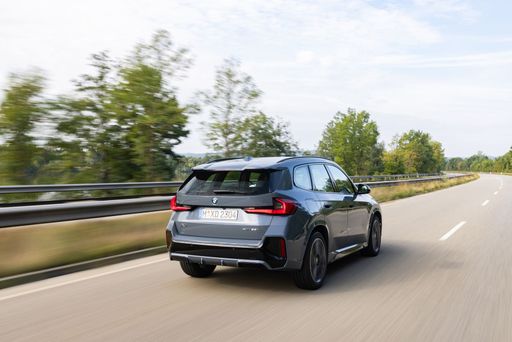
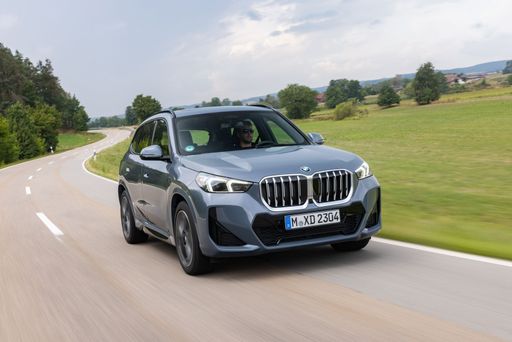
X1 @ BMW Group Press

The Compact SUV Showdown: BMW X1 vs. SEAT Arona

The compact SUV market is fiercely competitive, offering consumers a blend of style, comfort, and practicality. Today, we delve into two contenders in this segment: the BMW X1 and the SEAT Arona. Both models boast impressive features and distinct characteristics, but which one offers the best package for you? Let's dive into the technical aspects and innovations of these two vehicles.
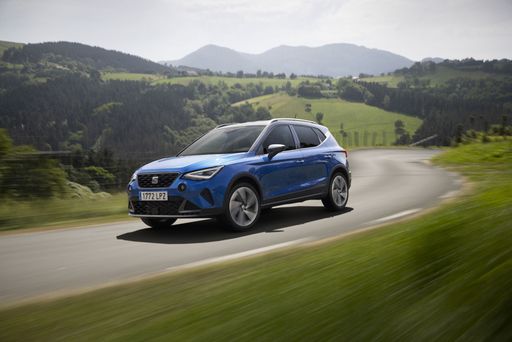
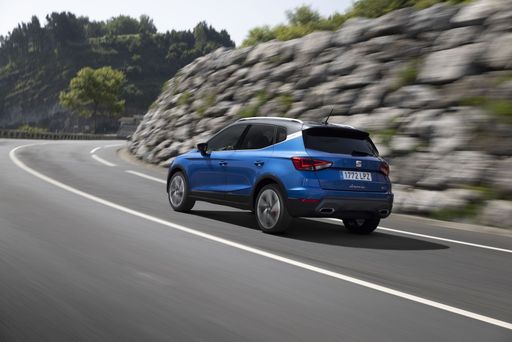
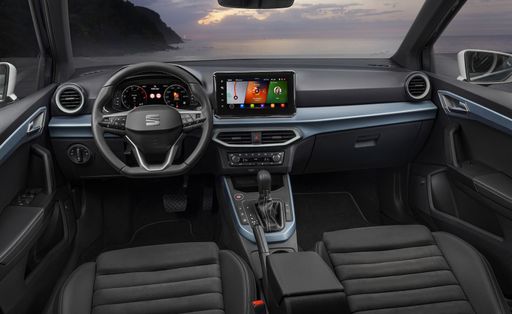
Arona @ SEAT S.A. / SEAT Media Center

Engine and Performance

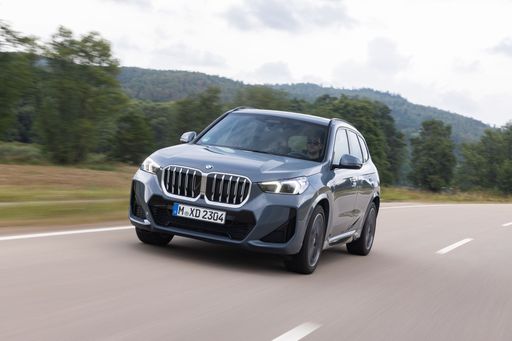
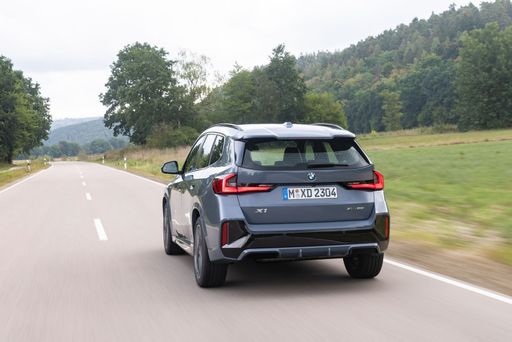
When it comes to engine variety and performance, the BMW X1 stands tall with a wide range of options. The X1 offers diesel, petrol, MHEV (Mild Hybrid Electric Vehicles), and PHEV (Plug-in Hybrid Electric Vehicle) variants. Power output spans from 136 to 326 HP, with the notable PHEV variant providing an electric range of 83 km. This emphasizes BMW's commitment to catering to diverse consumer preferences and regulatory standards. The X1 features a dual-clutch automatic transmission, with the option between front-wheel drive and all-wheel drive configurations.

In comparison, the SEAT Arona, while offering fewer options, focuses on simplicity and efficiency. It exclusively offers petrol engines with power outputs ranging from 95 to 150 HP. The Arona provides both manual and dual-clutch automatic transmissions, with all models featuring front-wheel drive which fits perfectly for urban driving. While it doesn’t match the X1’s power range, the Arona's light curb weight (as low as 1188 kg) ensures a nimble driving experience, especially in city environments.

X1 @ BMW Group Press

Fuel Efficiency and Environmental Considerations

Fuel efficiency is crucial in today's automotive landscape, and both vehicles offer eco-friendly options. The PHEV variant of the BMW X1 shines with a fuel consumption of just 0.8 L/100 km and a CO2 emission as low as 17 g/km, scoring a B in the CO2 efficiency class. This makes it a great choice for environmentally-conscious drivers.

On the other hand, the SEAT Arona focuses on petrol efficiency, with its engines consuming between 5.4 to 5.6 L/100 km and CO2 emissions ranging from 122 to 128 g/km. Though it scores a D in CO2 efficiency, its simplicity and fuel consumption make it a reliable choice for those focusing on conventional petrol use.

Arona @ SEAT S.A. / SEAT Media Center

Dimensions and Practicality

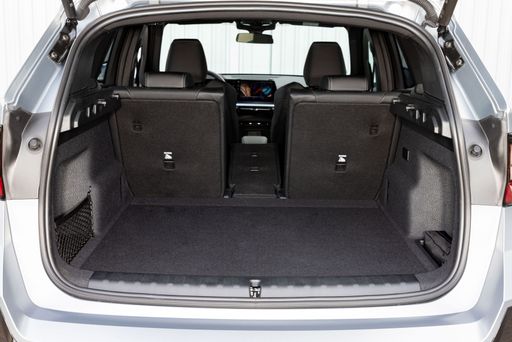
Both the BMW X1 and the SEAT Arona offer practicality for everyday use, but the differences are notable. The BMW X1, with a trunk capacity reaching up to 540 liters and slightly larger dimensions (4505 mm in length, 1845 mm in width, and 1642 mm in height), is better suited for families needing versatility and extra space.

The SEAT Arona is more compact, measuring 4153 mm in length, 1780 mm in width, and 1537 mm in height. Its trunk capacity is 400 liters, making it highly maneuverable and ideal for urban commuters who often face parking and space constraints.

X1 @ BMW Group Press

Conclusion: Which One to Choose?

Choosing between the BMW X1 and the SEAT Arona ultimately depends on your priorities. If you seek a high-performing vehicle with a variety of engine options, including electrified variants, and need extra space for family outings, the BMW X1 is an excellent choice. Its innovation in hybrid technologies and luxurious features reflect BMW’s legacy of excellence.

Conversely, if you desire a practical, efficient, and easy-to-drive vehicle for city adventures, the SEAT Arona fits the bill. It is a cost-effective alternative that does not compromise on essential comfort and style, catering perfectly to the young, urban audience.

Both SUVs offer compelling packages in their rights, and the choice between the two could depend on your lifestyle and driving needs. Visit a dealership to experience these vehicles firsthand and make an informed decision based on what matters most to you.

Here’s where it gets real: The technical differences in detail

Arona @ SEAT S.A. / SEAT Media Center

Costs and Efficiency:

Price and efficiency are key factors when choosing a car – and this is often where the real differences emerge.

SEAT Arona has a decisively advantage in terms of price – it starts at 19300 £, while the BMW X1 costs 38200 £. That’s a price difference of around 18926 £.

Fuel consumption also shows a difference: BMW X1 manages with 2.50 L and is therefore decisively more efficient than the SEAT Arona with 5.40 L. The difference is about 2.90 L per 100 km.

X1 @ BMW Group Press

Engine and Performance:

Power, torque and acceleration are the classic benchmarks for car enthusiasts – and here, some clear differences start to show.

When it comes to engine power, the BMW X1 has a convincingly edge – offering 326 HP compared to 150 HP. That’s roughly 176 HP more horsepower.

In acceleration from 0 to 100 km/h, the BMW X1 is convincingly quicker – completing the sprint in 5.40 s, while the SEAT Arona takes 8.40 s. That’s about 3 s faster.

In terms of top speed, the BMW X1 performs a bit better – reaching 250 km/h, while the SEAT Arona tops out at 210 km/h. The difference is around 40 km/h.

There’s also a difference in torque: BMW X1 pulls significantly stronger with 477 Nm compared to 250 Nm. That’s about 227 Nm difference.

Arona @ SEAT S.A. / SEAT Media Center

Space and Everyday Use:

Whether family car or daily driver – which one offers more room, flexibility and comfort?

Both vehicles offer seating for 5 people.

In curb weight, SEAT Arona is evident lighter – 1188 kg compared to 1575 kg. The difference is around 387 kg.

In terms of boot space, the BMW X1 offers distinct more room – 540 L compared to 400 L. That’s a difference of about 140 L.

In maximum load capacity, the BMW X1 performs a bit better – up to 1600 L, which is about 320 L more than the SEAT Arona.

When it comes to payload, SEAT Arona minimal takes the win – 522 kg compared to 500 kg. That’s a difference of about 22 kg.

Who wins the race?

The BMW X1 proves to be outperforms in nearly all aspects and therefore becomes our DriveDuel Champion!
BMW X1 is the better all-rounder in this comparison.

from about £38,200
X1 @ BMW Group Press

BMW X1

  • Engine Type : Diesel MHEV, Petrol MHEV, Petrol, Diesel, Plugin Hybrid
  • Transmission : Automatic
  • Drive Type : Front-Wheel Drive, All-Wheel Drive
  • Power HP : 136 - 326 HP
  • Consumption L/100km : 2.5 - 7.7 L
  • Electric Range : 81 km

BMW X1

3.7 (3)
rate

The BMW X1 brings a premium feel to compact crossover life, wrapping practical space and agile handling into a tidy, upscale package. It’s ideal for buyers who want BMW driving dynamics without the bulk, offering everyday comfort and a few clever tricks to keep the commute interesting.

details

SEAT Arona

The SEAT Arona is a cheeky urban crossover that mixes sharp styling with sensible practicality, making it an appealing choice for buyers who want personality without fuss. It’s zippy in traffic, comfortable enough for daily driving, and brings enough character to make routine journeys feel a little more fun.

details
BMW X1
SEAT Arona
X1 @ BMW Group Press
Arona @ SEAT S.A. / SEAT Media Center

Costs and Consumption

Price
38200 - 55500 £
Price
19300 - 29300 £
Consumption L/100km
2.5 - 7.7 L
Consumption L/100km
5.4 - 5.6 L
Consumption kWh/100km
-
Consumption kWh/100km
-
Electric Range
81 km
Electric Range
-
Battery Capacity
14.20 kWh
Battery Capacity
-
co2
57 - 175 g/km
co2
122 - 128 g/km
Fuel tank capacity
47 - 54 L
Fuel tank capacity
40 L

Dimensions and Body

Body Type
SUV
Body Type
SUV
Seats
5
Seats
5
Doors
5
Doors
5
Curb weight
1575 - 1935 kg
Curb weight
1188 - 1268 kg
Trunk capacity
490 - 540 L
Trunk capacity
400 L
Length
4500 - 4505 mm
Length
4153 mm
Width
1845 mm
Width
1780 mm
Height
1622 - 1642 mm
Height
1537 mm
Max trunk capacity
1495 - 1600 L
Max trunk capacity
1280 L
Payload
490 - 500 kg
Payload
502 - 522 kg

Engine and Performance

Engine Type
Diesel MHEV, Petrol MHEV, Petrol, Diesel, Plugin Hybrid
Engine Type
Petrol
Transmission
Automatic
Transmission
Manuel, Automatic
Transmission Detail
Dual-Clutch Automatic
Transmission Detail
Manual Gearbox, Dual-Clutch Automatic
Drive Type
Front-Wheel Drive, All-Wheel Drive
Drive Type
Front-Wheel Drive
Power HP
136 - 326 HP
Power HP
95 - 150 HP
Acceleration 0-100km/h
5.4 - 9.2 s
Acceleration 0-100km/h
8.4 - 11.3 s
Max Speed
190 - 250 km/h
Max Speed
182 - 210 km/h
Torque
230 - 477 Nm
Torque
175 - 250 Nm
Number of Cylinders
3 - 4
Number of Cylinders
3 - 4
Power kW
100 - 240 kW
Power kW
70 - 110 kW
Engine capacity
1499 - 1998 cm3
Engine capacity
999 - 1498 cm3

General

Model Year
2024 - 2025
Model Year
2025
CO2 Efficiency Class
D, E, F, B
CO2 Efficiency Class
D
Brand
BMW
Brand
SEAT
Is the BMW X1 offered with different drivetrains?

The BMW X1 is offered with Front-Wheel Drive or All-Wheel Drive.

The prices and data displayed are estimates based on German list prices and may vary by country. This information is not legally binding.