VS

BMW X2 vs Audi A3 Sportback comparison

Compare performance (300 HP vs 400 HP), boot space and price (41,200 £ vs 27,000 £ ) at a glance. Find out which car is the better choice for you – BMW X2 or Audi A3 Sportback?

BMW X2 vs Audi A3 Sportback: Key differences

BMW X2

4.6 (1 Reviews)
rate
  • noticeably more trunk space

Audi A3 Sportback

3.9 (1 Reviews)
rate
  • substantially cheaper
  • clearly more power
  • clearly more efficient
  • clearly quicker 0–100 km/h
  • visibly lighter

All details on performance, efficiency, range and trunk space can be found in the technical comparison below – including user reviews for both models.

X2

A Closer Look at the Audi A3 Sportback and BMW X2

In the ever-evolving world of compact cars, two models stand out for their unique offerings: the Audi A3 Sportback and the BMW X2. Both vehicles combine innovative engineering with attractive designs and advanced technologies. In this comparison, we delve into their technical specifications and innovations to help you decide which model might be the right fit for you.
A3 Sportback

Engine Options and Performance

The Audi A3 Sportback offers a range of engine choices, including petrol, diesel, and hybrid options. Power outputs range from a modest 116 HP to a robust 400 HP for the high-performance variants. The MHEV technology present in some models enhances efficiency without sacrificing performance, while the acceleration from 0 to 100 km/h can be achieved in as low as 3.8 seconds with the top-of-the-line variant.

On the other hand, the BMW X2 features a slightly more limited range of engine types, focusing mainly on petrol and diesel options. Power outputs span from 150 to 300 HP, with the X2's acceleration peaking at a swift 5.4 seconds for its most powerful model. What makes the X2 intriguing is its hybrid powertrain that employs MHEV technology, aiming for an impressive balance of power and fuel efficiency.

X2

Fuel Efficiency and Environmental Considerations

When it comes to fuel efficiency, the A3 Sportback boasts competitive figures, with some models achieving as low as 4.8 L/100 km. This efficiency is complemented by its different engine options, which come with CO2 emissions fluctuating between 120 g/km and 211 g/km, depending on the variant.

In contrast, the BMW X2 also delivers commendable fuel consumption rates, with figures as low as 4.6 L/100 km. The X2 exhibits a lower range of CO2 emissions, sitting around 120 g/km to 179 g/km, reflecting its commitment to minimizing environmental impact while providing a thrilling driving experience.

A3 Sportback

Interior Space and Comfort

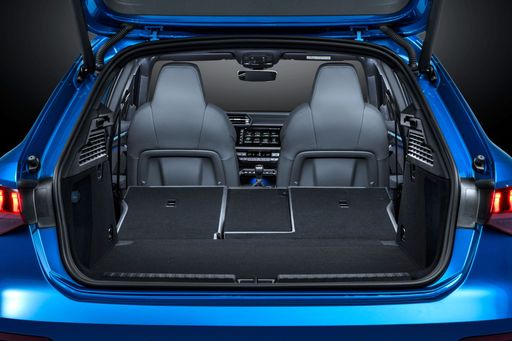
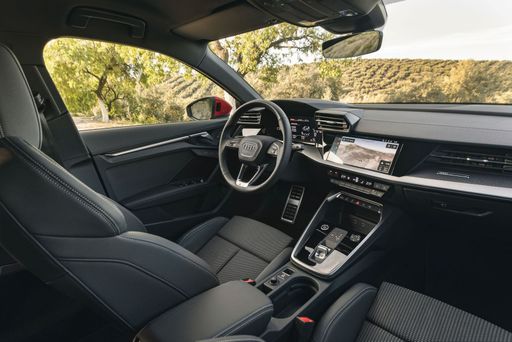
Both vehicles offer spacious interiors, but they cater to slightly different needs. The Audi A3 Sportback features a trunk capacity of 380 liters, ideal for everyday use and occasional road trips. Its five-seater layout prioritizes comfort, with high-quality materials and an engaging infotainment system.

On the other hand, the BMW X2 shines in terms of cargo capacity, providing a generous 560 liters of trunk space, making it an appealing choice for those who prioritize storage. The SUV’s higher stance and spacious cabin contribute to a commanding driving position, further enhancing comfort and accessibility.

X2

Technological Innovations

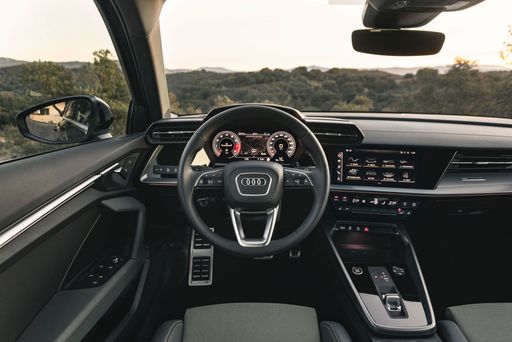
Technologically, both the Audi A3 Sportback and BMW X2 are equipped with the latest features to enhance the driving experience. The A3 Sportback boasts the latest MMI infotainment system, offering intuitive controls and connectivity options such as Apple CarPlay and Android Auto. Advanced driver-assistance systems, including adaptive cruise control and lane-keeping assistance, are also available.

Conversely, the BMW X2 showcases its iDrive system, pairing its infotainment platform with responsive touch-screen functionality and gesture control for an intuitive user experience. It also features an array of safety and convenience technologies, enhancing driver confidence and vehicle security.

A3 Sportback

Conclusion

In summary, both the Audi A3 Sportback and BMW X2 represent the best in their respective categories, each offering unique strengths. The A3 Sportback is best suited for those seeking a sporty hatchback with superior performance and superior technology. In contrast, the BMW X2 appeals to buyers looking for a stylish and versatile SUV with ample space for everyday needs.

Ultimately, your choice will rest on personal preferences regarding style, practicality, and driving experiences. Whichever model you choose, both ensure a gratifying ride in a competitive automotive landscape.

Here’s where it gets real: The technical differences in detail

X2

Costs and Efficiency:

Price and efficiency are often the first things buyers look at. Here it becomes clear which model has the long-term edge – whether at the pump, the plug, or in purchase price.

Audi A3 Sportback is substantially cheaper – starting at 27,000 £ , while the BMW X2 costs 41,200 £ . That’s a price difference of around 14,228 £.

Fuel consumption also shows a difference: the Audi A3 Sportback uses 1.1 L/100km and is clearly more efficient than the BMW X2 with 4.5 L/100km. The difference is about 3.4 L/100km.

A3 Sportback

Engine and Performance:

Under the bonnet, it becomes clear which model is tuned for sportiness and which one takes the lead when you hit the accelerator.

When it comes to engine power, the Audi A3 Sportback offers clearly more power – delivering 400 HP compared to 300 HP. That’s roughly 100 HP more horsepower.

When accelerating from 0 to 100 km/h, the Audi A3 Sportback is clearly quicker – completing the sprint in 3.8 s, while the BMW X2 takes 5.4 s. That’s about 1.6 s quicker.

Looking at top speed, the Audi A3 Sportback is slightly faster – reaching 237 km/h, while the BMW X2 tops out at 213 km/h. The difference is around 24 km/h.

There’s also a difference in torque: the Audi A3 Sportback delivers somewhat more torque with 500 Nm compared to 400 Nm. That’s about 100 Nm more.

X2

Space and Everyday Use:

Beyond pure performance, interior space and usability matter most in daily life. This is where you see which car is more practical and versatile.

Both vehicles offer seating for 5 people.

In terms of curb weight, Audi A3 Sportback is visibly lighter – 1,360 kg compared to 1,645 kg. The difference is around 285 kg.

Looking at boot space, the BMW X2 offers noticeably more boot space – 560 L compared to 380 L. That’s a difference of about 180 L.

For maximum load capacity, the BMW X2 offers markedly more capacity – up to 1,470 L, about 370 L more than the Audi A3 Sportback.

When it comes to payload, the BMW X2 carries barely more – 510 kg compared to 480 kg. That’s a difference of about 30 kg.

Who wins the race in the data check?

The Audi A3 Sportback is far ahead overall in the objective data comparison.
This result only shows which model scores more points on paper – not which of the two cars feels right for you.

from £27,000
A3 Sportback

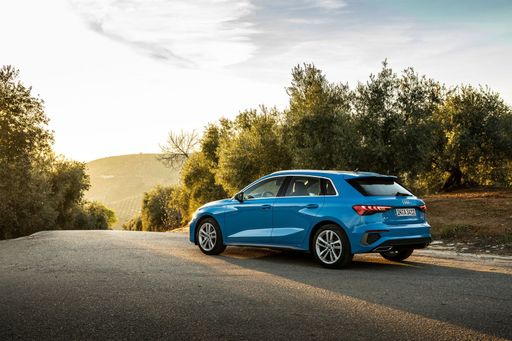
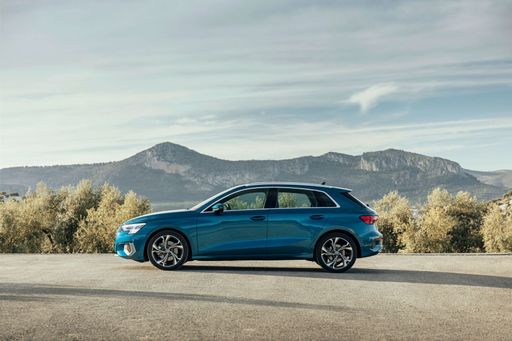
Audi A3 Sportback

  • Engine Type : Petrol, Petrol MHEV, Diesel, Plugin Hybrid
  • Transmission : Manuel, Automatic
  • Drive Type : Front-Wheel Drive, All-Wheel Drive
  • Power HP : 116 - 400 HP
  • Consumption L/100km : 1.1 - 9.3 L/100km
  • Electric Range : 134 - 141 km
BMW X2
Audi A3 Sportback

Costs and Consumption

View detailed analysis

Engine and Performance

View detailed analysis

Dimensions and Body

View detailed analysis

BMW X2

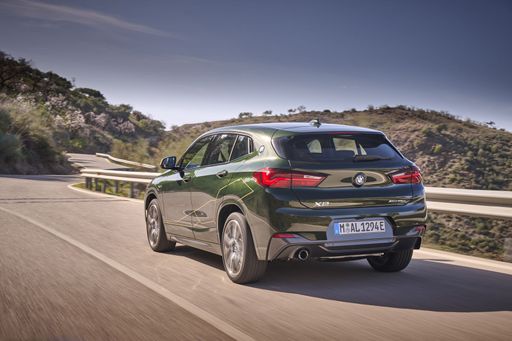
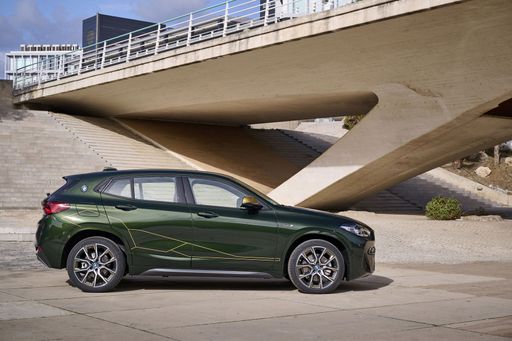
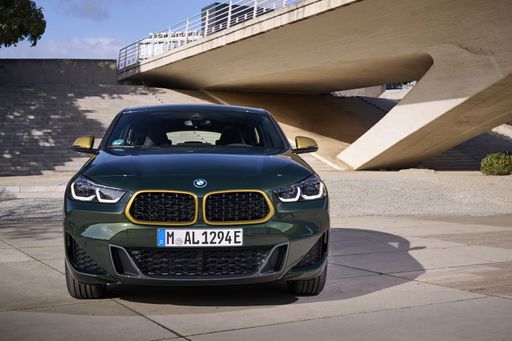
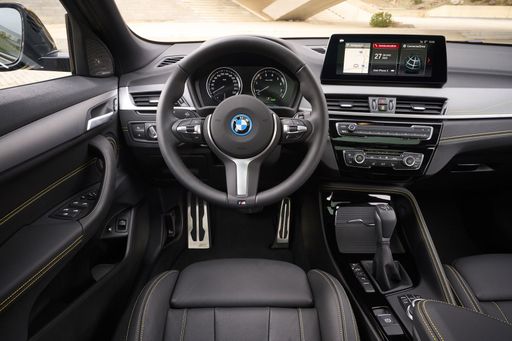
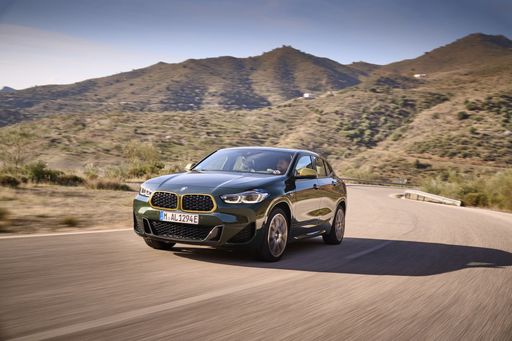
The BMW X2 feels like a sporty coupe dressed as an SUV, with sharp styling and a cheeky, youthful attitude that stands out in traffic. Inside it's driver-focused and compact but smartly packaged, perfect for city life and buyers who want BMW flair without the usual SUV bulk.

details

Audi A3 Sportback

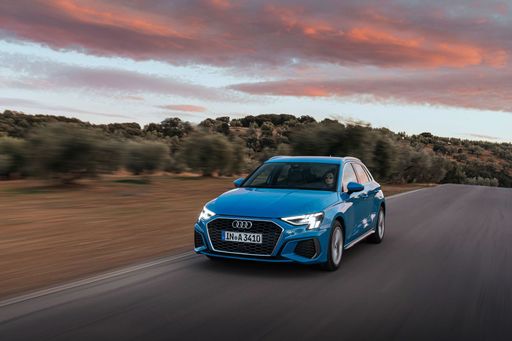
The Audi A3 Sportback wraps premium materials and crisp German design into a practical hatchback package that makes daily driving feel smart rather than showy. It’s nimble in the city, composed on longer trips, and carries just enough swagger to satisfy buyers who want quality without shouting about it.

details
BMW X2
Audi A3 Sportback

Costs and Consumption

Price
41,200 - 59,600 £
Price
27,000 - 56,600 £
Consumption L/100km
4.5 - 7.7 L/100km
Consumption L/100km
1.1 - 9.3 L/100km
Consumption kWh/100km
-
Consumption kWh/100km
-
Electric Range
-
Electric Range
134 - 141 km
Battery Capacity
-
Battery Capacity
19.7 kWh
co2
118 - 174 g/km
co2
25 - 211 g/km
Fuel tank capacity
45 L
Fuel tank capacity
40 L

Dimensions and Body

Body Type
SUV
Body Type
Hatchback
Seats
5
Seats
5
Doors
5
Doors
5
Curb weight
1,645 - 1,780 kg
Curb weight
1,360 - 1,685 kg
Trunk capacity
515 - 560 L
Trunk capacity
280 - 380 L
Length
4,554 mm
Length
4,352 - 4,353 mm
Width
1,845 mm
Width
1,816 - 1,851 mm
Height
1,590 mm
Height
1,441 - 1,470 mm
Max trunk capacity
1,400 - 1,470 L
Max trunk capacity
1,100 L
Payload
495 - 510 kg
Payload
410 - 480 kg

Engine and Performance

Engine Type
Diesel MHEV, Petrol MHEV, Diesel, Petrol
Engine Type
Petrol, Petrol MHEV, Diesel, Plugin Hybrid
Transmission
Automatic
Transmission
Manuel, Automatic
Transmission Detail
Dual-Clutch Automatic
Transmission Detail
Manual Gearbox, Dual-Clutch Automatic
Drive Type
Front-Wheel Drive, All-Wheel Drive
Drive Type
Front-Wheel Drive, All-Wheel Drive
Power HP
150 - 300 HP
Power HP
116 - 400 HP
Acceleration 0-100km/h
5.4 - 8.9 s
Acceleration 0-100km/h
3.8 - 10.1 s
Max Speed
207 - 213 km/h
Max Speed
225 - 237 km/h
Torque
280 - 400 Nm
Torque
220 - 500 Nm
Number of Cylinders
3 - 4
Number of Cylinders
4 - 5
Power kW
110 - 221 kW
Power kW
85 - 294 kW
Engine capacity
1,499 - 1,998 cm3
Engine capacity
1,498 - 2,480 cm3

General

Model Year
2,024
Model Year
2,025
CO2 Efficiency Class
D, F
CO2 Efficiency Class
D, F, E, G, B
Brand
BMW
Brand
Audi
DriveDuel uses data analysis and artificial intelligence to evaluate vehicle data and create content. Content is regularly reviewed and improved. The displayed prices are estimates based on German list prices, adjusted to the respective country’s VAT. Country-specific registration taxes are not included. This information is not legally binding.