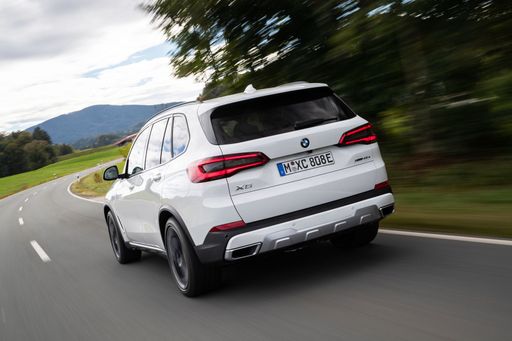
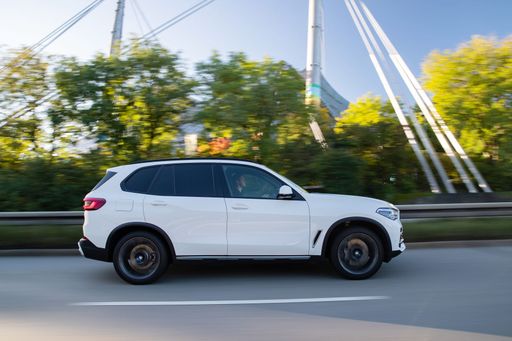
@ BMW Group Press
@ Dr. Ing. h.c. F. Porsche AG
VS

BMW X5 vs Porsche Panamera – Which one offers the better deal?

Two cars, one duel: BMW X5 meets Porsche Panamera.
Which one wins in performance, efficiency and value for money? Find out now!

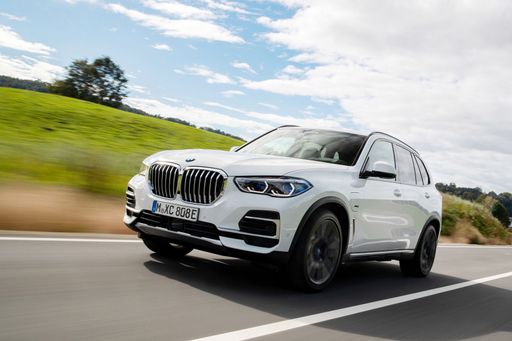
X5 @ BMW Group Press

Performance Showdown: BMW X5 vs. Porsche Panamera

The automotive world has always been a stage for magnificent match-ups, but few are as intriguing and contrasting as the luxury SUV versus the sleek sports hatchback. In this head-to-head, we scrutinize the BMW X5 and the Porsche Panamera, both renowned for their unique blends of performance, technology, and luxury. Let's dive into the exhilarating world of these vehicles and unravel what sets them apart.
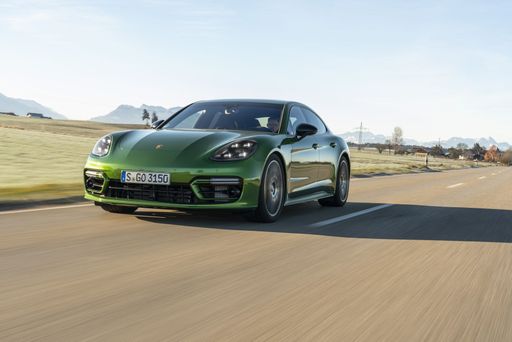
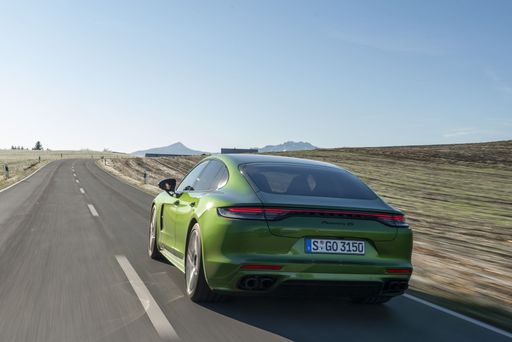
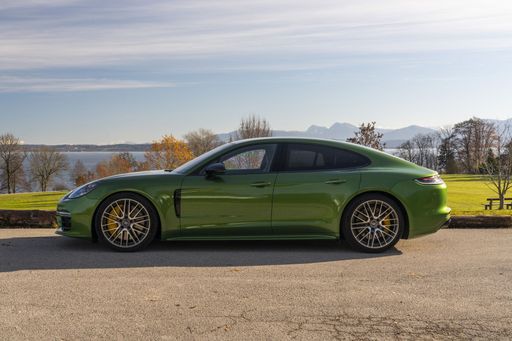
Panamera @ Dr. Ing. h.c. F. Porsche AG

Powertrain and Performance

The BMW X5 offers a versatile lineup of engine options tailored for various driving styles. Spanning from a diesel mild hybrid to a powerful plug-in hybrid, the X5 offers power outputs ranging from 298 HP to an exhilarating 625 HP. Drivers can enjoy rapid acceleration, with a 0-100 km/h time starting at 6.1 seconds and dropping to as little as 3.9 seconds for top variants. The X5 is equipped with an all-wheel-drive system, ensuring superior grip and handling across various terrains.

In contrast, the Porsche Panamera emphasizes sports car sensibilities. With a dual-clutch automatic transmission and multiple powertrains, it pushes the envelope with power variants up to 782 HP. Its agile performance is highlighted by an impressive 0-100 km/h time as quick as 2.9 seconds. The Panamera balances this with efficient plug-in hybrid options achieving up to 91 km of pure electric range, while its more conventional models hit a top speed of 325 km/h.

X5 @ BMW Group Press

Technological Innovations

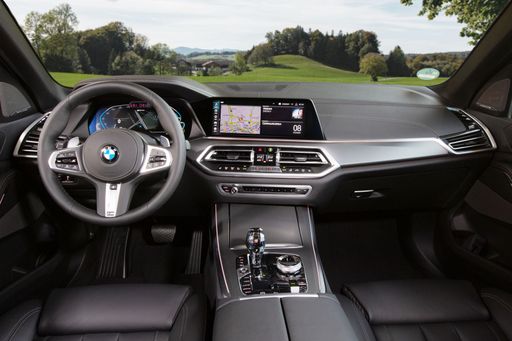
Both vehicles do not skimp on innovations, integrating technology seamlessly into their driving experience. The BMW X5 is packed with cutting-edge features such as adaptive cruise control, parking assistance, and a state-of-the-art infotainment system, offering both practicality and luxury.

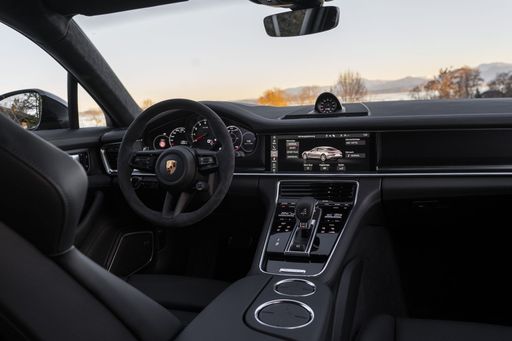
Porsche, as expected, imbues the Panamera with driver-centric technology. The advanced cockpit offers intuitive controls, a digital interface, and connectivity features that elevate the driving experience. Additionally, Porsche's emphasis on safety and performance is reflected in its adaptive suspension system and myriad driving modes tailored to different driving conditions.

Panamera @ Dr. Ing. h.c. F. Porsche AG

Interior and Comfort

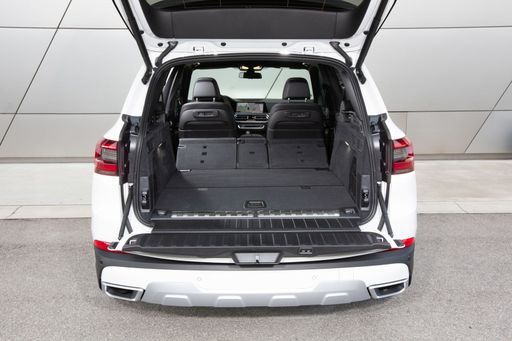
Inside the BMW X5, passengers are treated to a spacious cabin that comfortably seats five, with a generous trunk capacity of 650 liters, which can accommodate adventurous luggage needs. Premium materials and thoughtful design combine to create a welcoming environment.

On the other hand, the Porsche Panamera's interior is a testament to luxury and sportiness. With seating for four, the Panamera leans towards an intimate cabin arrangement, complemented by high-quality finishes and ergonomically designed seating. Although the trunk capacity is less than the X5's at 494 liters, it remains practical for a sports car design.

X5 @ BMW Group Press

Efficiency and Environmental Impact

Efficiency plays a pivotal role in today's automotive decision-making. The BMW X5's ability to blend power with hybrid efficiency is notable, achieving consumption as low as 0.9 L/100km for hybrid models, with a CO2 efficiency class rating ranging from B to G.

The Porsche Panamera's innovative hybrids hover around a consumption of 1.0 L/100km, displaying remarkable environmental intelligence with CO2 outputs as low as 23 g/km, reflecting its commitment to performance without compromising green objectives. Its efficiency class also spans B to G, depending on the variant.

Panamera @ Dr. Ing. h.c. F. Porsche AG

Conclusion

Choosing between the BMW X5 and the Porsche Panamera boils down to preference and lifestyle. The X5 caters to those seeking versatility and all-around capability, while the Panamera appeals to aficionados of sporty performance and luxury refinement. Each symbolizes a harmonized blend of cutting-edge technology and captivating design, ensuring that drivers of either model will command attention on the road.

Here’s where it gets real: The technical differences in detail

X5 @ BMW Group Press

Costs and Efficiency:

When it comes to price and running costs, the biggest differences usually appear. This is often where you see which car fits your budget better in the long run.

BMW X5 has a noticeable advantage in terms of price – it starts at 77100 £, while the Porsche Panamera costs 99800 £. That’s a price difference of around 22714 £.

Both cars consume an average of 3 L per 100 km – no difference here.

As for range, the BMW X5 performs minimal better – achieving up to 105 km, about 8 km more than the Porsche Panamera.

Panamera @ Dr. Ing. h.c. F. Porsche AG

Engine and Performance:

Power, torque and acceleration are the classic benchmarks for car enthusiasts – and here, some clear differences start to show.

When it comes to engine power, the Porsche Panamera has a evident edge – offering 782 HP compared to 625 HP. That’s roughly 157 HP more horsepower.

In acceleration from 0 to 100 km/h, the Porsche Panamera is evident quicker – completing the sprint in 2.90 s, while the BMW X5 takes 3.90 s. That’s about 1 s faster.

In terms of top speed, the Porsche Panamera performs clearly perceptible better – reaching 325 km/h, while the BMW X5 tops out at 250 km/h. The difference is around 75 km/h.

There’s also a difference in torque: Porsche Panamera pulls noticeable stronger with 1000 Nm compared to 750 Nm. That’s about 250 Nm difference.

X5 @ BMW Group Press

Space and Everyday Use:

Whether family car or daily driver – which one offers more room, flexibility and comfort?

Seats: BMW X5 offers to a small extent more seating capacity – 5 vs 4.

In curb weight, Porsche Panamera is to a small extent lighter – 1960 kg compared to 2240 kg. The difference is around 280 kg.

In terms of boot space, the BMW X5 offers clearly perceptible more room – 650 L compared to 494 L. That’s a difference of about 156 L.

In maximum load capacity, the BMW X5 performs noticeable better – up to 1870 L, which is about 485 L more than the Porsche Panamera.

When it comes to payload, BMW X5 distinct takes the win – 705 kg compared to 545 kg. That’s a difference of about 160 kg.

Who wins the race?

The BMW X5 proves to be edges out slightly and therefore becomes our DriveDuel Champion!
BMW X5 is the better all-rounder in this comparison.

from about £77,100
X5 @ BMW Group Press

BMW X5

  • Engine Type : Petrol MHEV, Diesel MHEV, Plugin Hybrid
  • Transmission : Automatic
  • Drive Type : All-Wheel Drive
  • Power HP : 298 - 625 HP
  • Consumption L/100km : 3 - 12.8 L
  • Electric Range : 105 km

BMW X5

The BMW X5 blends athletic handling with a roomy, premium interior, feeling equally at home on twisty country roads and the school-run car park. Its executive-lounge cabin and confident road presence make it a tempting choice for buyers who want comfort, capability and just a little bit of bragging rights.

details

Porsche Panamera

The Porsche Panamera stands as a testament to the seamless fusion of luxury and performance in the automotive world. With its sleek design and powerful engine, it offers an exhilarating driving experience that is hard to rival. Inside, the Panamera boasts a meticulously crafted interior with top-of-the-line materials, ensuring comfort and sophistication on every journey.

details
BMW X5
Porsche Panamera
X5 @ BMW Group Press
Panamera @ Dr. Ing. h.c. F. Porsche AG

Costs and Consumption

Price
77100 - 143500 £
Price
99800 - 212100 £
Consumption L/100km
3 - 12.8 L
Consumption L/100km
3 - 12 L
Consumption kWh/100km
-
Consumption kWh/100km
-
Electric Range
105 km
Electric Range
83 - 97 km
Battery Capacity
25.70 kWh
Battery Capacity
21.80 kWh
co2
68 - 289 g/km
co2
69 - 274 g/km
Fuel tank capacity
69 - 83 L
Fuel tank capacity
75 - 90 L

Dimensions and Body

Body Type
SUV
Body Type
Hatchback
Seats
5
Seats
4
Doors
5
Doors
5
Curb weight
2240 - 2495 kg
Curb weight
1960 - 2535 kg
Trunk capacity
500 - 650 L
Trunk capacity
421 - 494 L
Length
4935 - 4948 mm
Length
5052 - 5204 mm
Width
2004 - 2015 mm
Width
1937 mm
Height
1755 - 1765 mm
Height
1415 - 1428 mm
Max trunk capacity
1720 - 1870 L
Max trunk capacity
1255 - 1385 L
Payload
565 - 705 kg
Payload
340 - 545 kg

Engine and Performance

Engine Type
Petrol MHEV, Diesel MHEV, Plugin Hybrid
Engine Type
Petrol, Plugin Hybrid
Transmission
Automatic
Transmission
Automatic
Transmission Detail
Automatic Gearbox
Transmission Detail
Dual-Clutch Automatic
Drive Type
All-Wheel Drive
Drive Type
Rear-Wheel Drive, All-Wheel Drive
Power HP
298 - 625 HP
Power HP
353 - 782 HP
Acceleration 0-100km/h
3.9 - 6.1 s
Acceleration 0-100km/h
2.9 - 5.3 s
Max Speed
233 - 250 km/h
Max Speed
270 - 325 km/h
Torque
540 - 750 Nm
Torque
500 - 1000 Nm
Number of Cylinders
6 - 8
Number of Cylinders
6 - 8
Power kW
219 - 460 kW
Power kW
260 - 575 kW
Engine capacity
2993 - 4395 cm3
Engine capacity
2894 - 3996 cm3

General

Model Year
2025
Model Year
2025
CO2 Efficiency Class
G, B
CO2 Efficiency Class
G, B, C
Brand
BMW
Brand
Porsche
Is the BMW X5 offered with different drivetrains?

The BMW X5 is available as All-Wheel Drive.

The prices and data displayed are estimates based on German list prices and may vary by country. This information is not legally binding.