
 Deutschland
 France
 Nederland
 Great Britain
 Sverige
 Norge
Norge Danmark
 Suomi
Suomi Italia
 Polska
 España
VS
BYD Seal vs Maxus Deliver 3 - Differences and prices compared
Seal
@ BYD Auto / BYD Global Media
Costs and Efficiency:
Price and efficiency are key factors when choosing a car – and this is often where the real differences emerge.
Maxus Deliver 3 has a slightly advantage in terms of price – it starts at 33600 £, while the BYD Seal costs 40300 £. That’s a price difference of around 6628 £.
In terms of energy consumption, the advantage goes to the BYD Seal: with 15.40 kWh per 100 km, it’s distinct more efficient than the Maxus Deliver 3 with 20.20 kWh. That’s a difference of about 4.80 kWh.
As for range, the BYD Seal performs decisively better – achieving up to 570 km, about 301 km more than the Maxus Deliver 3.
Seal
@ BYD Auto / BYD Global Media
Engine and Performance:
Power, torque and acceleration say a lot about how a car feels on the road. This is where you see which model delivers more driving dynamics.
When it comes to engine power, the BYD Seal has a convincingly edge – offering 530 HP compared to 160 HP. That’s roughly 370 HP more horsepower.
In acceleration from 0 to 100 km/h, the BYD Seal is decisively quicker – completing the sprint in 3.80 s, while the Maxus Deliver 3 takes 8.90 s. That’s about 5.10 s faster.
In terms of top speed, the BYD Seal performs significantly better – reaching 220 km/h, while the Maxus Deliver 3 tops out at 120 km/h. The difference is around 100 km/h.
There’s also a difference in torque: BYD Seal pulls convincingly stronger with 670 Nm compared to 225 Nm. That’s about 445 Nm difference.
Seal
@ BYD Auto / BYD Global Media
Space and Everyday Use:
Beyond pure performance, interior space and usability matter most in daily life. This is where you see which car is more practical and versatile.
Seats: BYD Seal offers convincingly more seating capacity – 5 vs 2.
In curb weight, Maxus Deliver 3 is a bit lighter – 1690 kg compared to 1907 kg. The difference is around 217 kg.
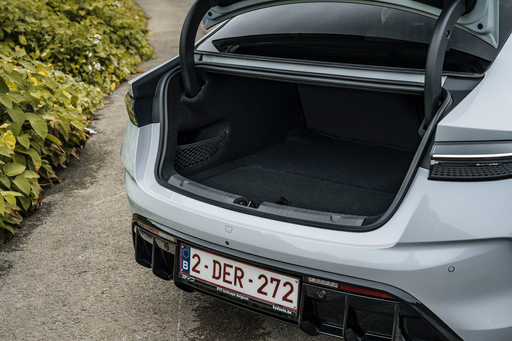
When it comes to payload, Maxus Deliver 3 significantly takes the win – 970 kg compared to 473 kg. That’s a difference of about 497 kg.
Who comes out on top?
Overall, the BYD Seal shows itself to be dominates this comparison and secures the title of DriveDuel Champion.
It convinces with the more balanced overall package and proves to be the more versatile choice for everyday use.
from about £40,300
 @ BYD Auto / BYD Global Media
BYD Seal
BYD Seal
Maxus Deliver 3
Costs and Consumption
View detailed analysis
View detailed analysis
Engine and Performance
View detailed analysis
View detailed analysis
Dimensions and Body
View detailed analysis
View detailed analysis
BYD Seal
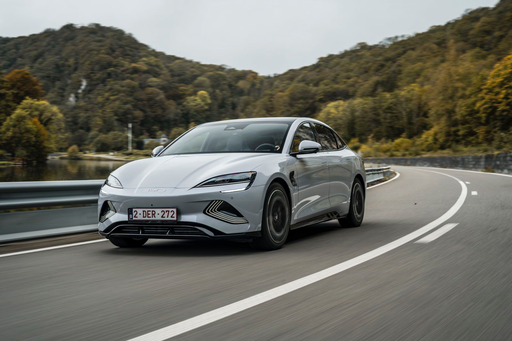
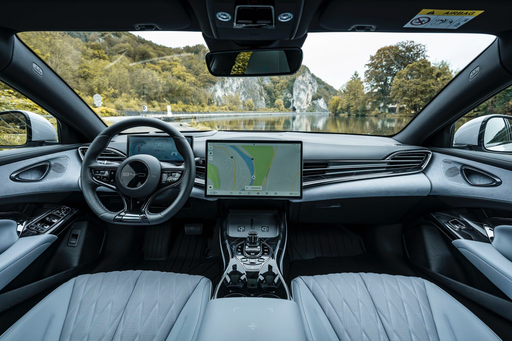
The BYD Seal is a sleek electric fastback that punches above its class with sporty looks and a surprisingly premium cabin, offering a very modern alternative for buyers who want style and substance without the badge snobbery. On the road it feels composed and eager, packed with tech and everyday practicality—ideal for shoppers after eco-friendly performance with a cheeky wink.
details
@ BYD Auto / BYD Global Media
 @ BYD Auto / BYD Global Media
 @ BYD Auto / BYD Global Media
 @ BYD Auto / BYD Global Media
 @ BYD Auto / BYD Global Media
Maxus Deliver 3
The Maxus Deliver 3 arrives as a sensible, modern workhorse that swaps diesel grime for electric smoothness, offering a roomy cargo bay and a tidy, driver-friendly cabin that makes daily runs feel less like a chore. For small businesses and urban couriers it’s a pragmatic, cost-conscious choice that’s easy to live with — and yes, it even makes parking and tight city turns feel almost enjoyable.
details
BYD Seal
Maxus Deliver 3
|
@ BYD Auto / BYD Global Media
|
|
|
|
|
Costs and Consumption |
|
|---|---|
|
Price
40300 - 45400 £
|
Price
33600 £
|
|
Consumption L/100km
-
|
Consumption L/100km
-
|
|
Consumption kWh/100km
15.4 - 18.2 kWh
|
Consumption kWh/100km
20.20 kWh
|
|
Electric Range
460 - 570 km
|
Electric Range
269 km
|
|
Battery Capacity
-
|
Battery Capacity
-
|
|
co2
0 g/km
|
co2
0 g/km
|
|
Fuel tank capacity
-
|
Fuel tank capacity
-
|
Dimensions and Body |
|
|---|---|
|
Body Type
Sedan
|
Body Type
Cargo Van
|
|
Seats
5
|
Seats
2
|
|
Doors
4
|
Doors
4
|
|
Curb weight
1907 - 2185 kg
|
Curb weight
1690 kg
|
|
Trunk capacity
400 L
|
Trunk capacity
-
|
|
Length
4800 mm
|
Length
4555 mm
|
|
Width
1875 mm
|
Width
1780 mm
|
|
Height
1460 mm
|
Height
1900 mm
|
|
Max trunk capacity
-
|
Max trunk capacity
4800 L
|
|
Payload
446 - 473 kg
|
Payload
970 kg
|
Engine and Performance |
|
|---|---|
|
Engine Type
Electric
|
Engine Type
Electric
|
|
Transmission
Automatic
|
Transmission
Automatic
|
|
Transmission Detail
Reduction Gearbox
|
Transmission Detail
Reduction Gearbox
|
|
Drive Type
Rear-Wheel Drive, All-Wheel Drive
|
Drive Type
Front-Wheel Drive
|
|
Power HP
231 - 530 HP
|
Power HP
160 HP
|
|
Acceleration 0-100km/h
3.8 - 7.5 s
|
Acceleration 0-100km/h
8.90 s
|
|
Max Speed
180 - 220 km/h
|
Max Speed
120 km/h
|
|
Torque
360 - 670 Nm
|
Torque
225 Nm
|
|
Number of Cylinders
-
|
Number of Cylinders
-
|
|
Power kW
170 - 390 kW
|
Power kW
118 kW
|
|
Engine capacity
-
|
Engine capacity
-
|
General |
|
|---|---|
|
Model Year
2023 - 2025
|
Model Year
2023
|
|
CO2 Efficiency Class
A
|
CO2 Efficiency Class
A
|
|
Brand
BYD
|
Brand
Maxus
|
What drive types are available for the BYD Seal?
The BYD Seal is available as Rear-Wheel Drive or All-Wheel Drive.
The prices and data displayed are estimates based on German list prices and may vary by country. This information is not legally binding.