
 Deutschland
 France
 Nederland
 Great Britain
 Sverige
 Danmark
 Suomi
Suomi Italia
 Polska
 España
VS
BYD Seal vs NIO EL8 comparison
Compare performance (530 HP vs 653 HP), boot space and price (40300 £ vs 71100 £ ) at a glance. Find out which car is the better choice for you – BYD Seal or NIO EL8?
Seal
Costs and Efficiency:
Looking at overall running costs, both models reveal some interesting differences in everyday economy.
BYD Seal has a convincingly advantage in terms of price – it starts at 40300 £ , while the NIO EL8 costs 71100 £ . That’s a price difference of around 30780 £.
In terms of energy consumption, the advantage goes to the BYD Seal: with 15.40 kWh per 100 km, it’s clearly perceptible more efficient than the NIO EL8 with 21.20 kWh. That’s a difference of about 5.80 kWh.
As for electric range, the BYD Seal performs slightly better – achieving up to 570 km, about 60 km more than the NIO EL8.
EL8
Engine and Performance:
Under the bonnet, it becomes clear which model is tuned for sportiness and which one takes the lead when you hit the accelerator.
When it comes to engine power, the NIO EL8 has a to a small extent edge – offering 653 HP compared to 530 HP. That’s roughly 123 HP more horsepower.
In acceleration from 0 to 100 km/h, the BYD Seal is slight quicker – completing the sprint in 3.80 s, while the NIO EL8 takes 4.10 s. That’s about 0.30 s faster.
In terms of top speed, the NIO EL8 performs slight better – reaching 200 km/h, while the BYD Seal tops out at 180 km/h. The difference is around 20 km/h.
There’s also a difference in torque: NIO EL8 pulls noticeable stronger with 850 Nm compared to 670 Nm. That’s about 180 Nm difference.
Seal
Space and Everyday Use:
Whether family car or daily driver – which one offers more room, flexibility and comfort?
Seats: NIO EL8 offers slightly more seating capacity – 6 vs 5.
In curb weight, BYD Seal is evident lighter – 1907 kg compared to 2613 kg. The difference is around 706 kg.
In terms of boot space, the BYD Seal offers clearly perceptible more room – 400 L compared to 265 L. That’s a difference of about 135 L.
When it comes to payload, NIO EL8 slightly takes the win – 577 kg compared to 473 kg. That’s a difference of about 104 kg.
Who wins the race in the data check?
The BYD Seal holds a decisive overall lead in the objective data comparison.
This result only shows which model scores more points on paper – not which of the two cars feels right for you.
BYD Seal
NIO EL8
Costs and Consumption
View detailed analysis
View detailed analysis
Engine and Performance
View detailed analysis
View detailed analysis
Dimensions and Body
View detailed analysis
View detailed analysis
from about £40,300
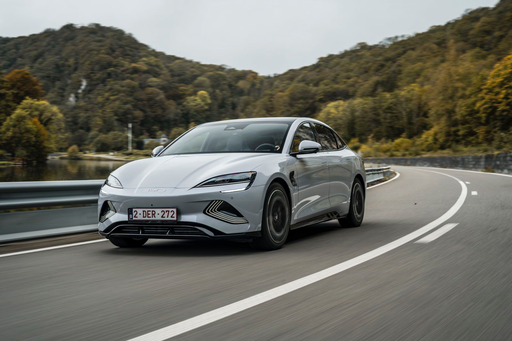
BYD Seal
BYD Seal
The BYD Seal is a sleek electric fastback that punches above its class with sporty looks and a surprisingly premium cabin, offering a very modern alternative for buyers who want style and substance without the badge snobbery. On the road it feels composed and eager, packed with tech and everyday practicality—ideal for shoppers after eco-friendly performance with a cheeky wink.
details


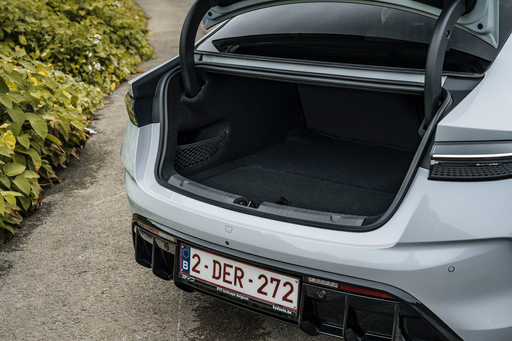
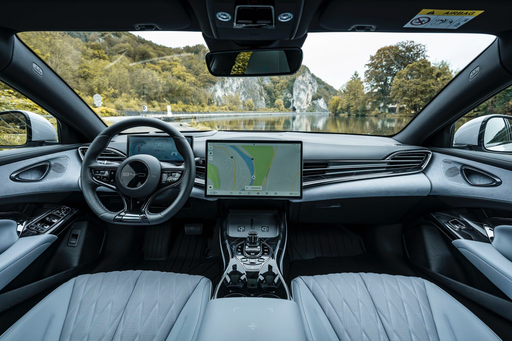
NIO EL8
The NIO EL8 feels like a tech-savvy living room on wheels, blending upscale comfort with playful design for buyers who want electric refinement without the clinical vibe. It’s roomy, packed with clever features and a relaxed driving character that turns everyday trips into something a little more fun.
details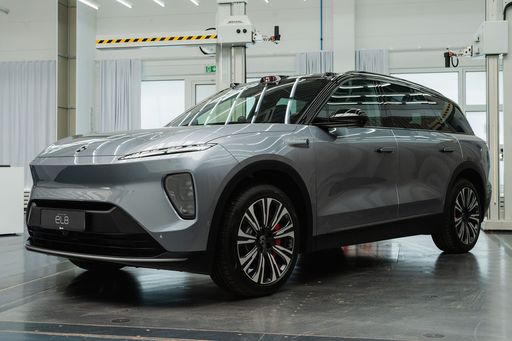
BYD Seal
NIO EL8
Costs and Consumption |
|
|---|---|
|
Price
40300 - 45400 £
|
Price
71100 - 90800 £
|
|
Consumption L/100km
-
|
Consumption L/100km
-
|
|
Consumption kWh/100km
15.4 - 18.2 kWh
|
Consumption kWh/100km
21.2 - 22 kWh
|
|
Electric Range
460 - 570 km
|
Electric Range
390 - 510 km
|
|
Battery Capacity
-
|
Battery Capacity
73.5 - 90 kWh
|
|
co2
0 g/km
|
co2
0 g/km
|
|
Fuel tank capacity
-
|
Fuel tank capacity
-
|
Dimensions and Body |
|
|---|---|
|
Body Type
Sedan
|
Body Type
SUV
|
|
Seats
5
|
Seats
6
|
|
Doors
4
|
Doors
5
|
|
Curb weight
1907 - 2185 kg
|
Curb weight
2613 - 2633 kg
|
|
Trunk capacity
400 L
|
Trunk capacity
265 L
|
|
Length
4800 mm
|
Length
5099 mm
|
|
Width
1875 mm
|
Width
1989 mm
|
|
Height
1460 mm
|
Height
1750 mm
|
|
Max trunk capacity
-
|
Max trunk capacity
810 L
|
|
Payload
446 - 473 kg
|
Payload
557 - 577 kg
|
Engine and Performance |
|
|---|---|
|
Engine Type
Electric
|
Engine Type
Electric
|
|
Transmission
Automatic
|
Transmission
Automatic
|
|
Transmission Detail
Reduction Gearbox
|
Transmission Detail
Reduction Gearbox
|
|
Drive Type
Rear-Wheel Drive, All-Wheel Drive
|
Drive Type
All-Wheel Drive
|
|
Power HP
231 - 530 HP
|
Power HP
653 HP
|
|
Acceleration 0-100km/h
3.8 - 7.5 s
|
Acceleration 0-100km/h
4.10 s
|
|
Max Speed
180 km/h
|
Max Speed
200 km/h
|
|
Torque
360 - 670 Nm
|
Torque
850 Nm
|
|
Number of Cylinders
-
|
Number of Cylinders
-
|
|
Power kW
170 - 390 kW
|
Power kW
480 kW
|
|
Engine capacity
-
|
Engine capacity
-
|
General |
|
|---|---|
|
Model Year
2023 - 2025
|
Model Year
2024
|
|
CO2 Efficiency Class
A
|
CO2 Efficiency Class
A
|
|
Brand
BYD
|
Brand
NIO
|
What drive types are available for the BYD Seal?
The BYD Seal is available as Rear-Wheel Drive or All-Wheel Drive.
The prices shown are estimates based on German list prices, adjusted for local VAT. Local registration taxes (e.g. NoVA, BPM or CO2 malus) are not included. This information is not legally binding.