@ BYD Auto / BYD Global Media
VS

BYD Tang vs Hongqi E-HS9 – Performance, range & efficiency compared

Two cars, one duel: BYD Tang meets Hongqi E-HS9.
Which one wins in performance, efficiency and value for money? Find out now!

BYD Tang

Hongqi E-HS9

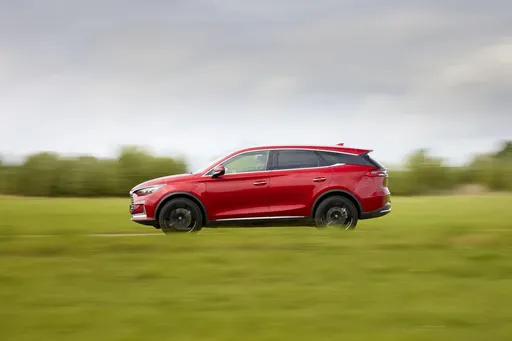
Tang @ BYD Auto / BYD Global Media

Overview: BYD Tang vs. Hongqi E-HS9

The race is on, as two electric SUVs from China's automotive powerhouses, BYD and Hongqi, take center stage in the crossover market. The BYD Tang and the Hongqi E-HS9 both aim to set benchmarks in performance and design for 2024, offering sustainable alternatives without compromising luxury and power. Let’s dig deeper into what each vehicle brings to the table.
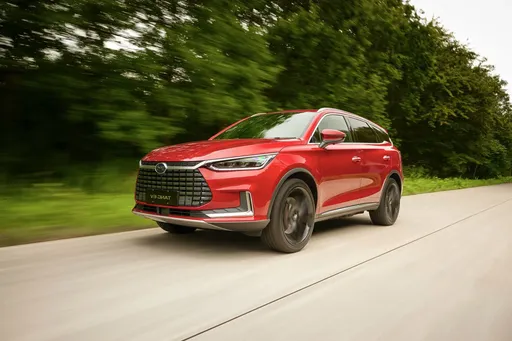
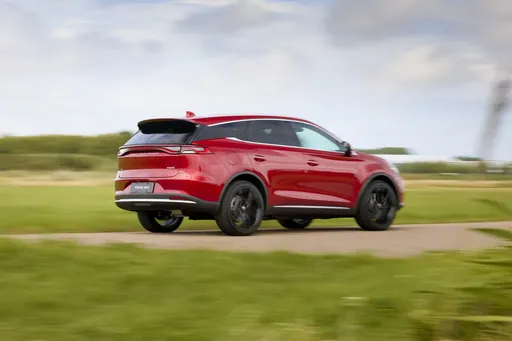
Tang @ BYD Auto / BYD Global Media

Performance and Powertrain

The BYD Tang is equipped with an all-wheel-drive system that delivers 517 HP and a torque of 680 Nm through its electric motors. It boasts a rapid acceleration time from 0 to 100 km/h in just 4.9 seconds. The Tang's power comes from a 380 kW setup, operating with a consumption rate of 24 kWh per 100 km and offering an impressive electric range of 530 km.

On the other hand, the Hongqi E-HS9 showcases slightly more horsepower at 551 HP, with torque numbers reaching 670 Nm. Surpassing its competitor in speed, the E-HS9 hits a top speed of 200 km/h, compared to Tang’s 190 km/h. It too accelerates from 0 to 100 km/h in 4.9 seconds. The dual battery options provide flexibility, with a consumption as low as 19.4 kWh per 100 km, enabling a range between 465 to 515 km, depending on battery choice.

Tang @ BYD Auto / BYD Global Media

Innovative Features and Technology

Both vehicles emphasize cutting-edge technology and eco-friendly performance. The BYD Tang is particularly noted for its efficient power distribution and reduction gearbox transmission, ensuring power is harnessed to deliver optimal torque and speed without wasting energy. With a CO2 efficiency class of A, it proudly boasts zero emissions.

The Hongqi E-HS9 pushes innovation a step further with its larger battery capacity options at both 90 kWh and 111 kWh, offering generous ranges and rapid charging capabilities. Its all-wheel-drive system is skillfully tuned for agility and comfort, making it a formidable contender in urban and off-road settings alike.

Tang @ BYD Auto / BYD Global Media

Design and Dimensions

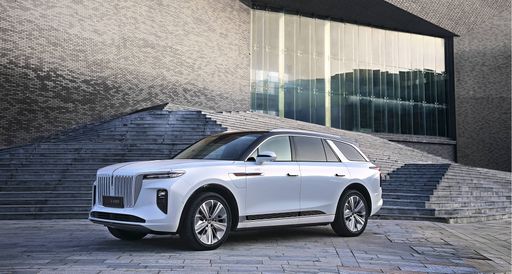
Standing at 4970 mm in length, 1955 mm in width, and 1745 mm in height, the BYD Tang presents a compellingly sleek profile, designed for both aesthetics and aerodynamics. In contrast, the E-HS9, at 5209 mm long and 2010 mm wide, makes its presence felt with a more imposing posture, catering to drivers who prefer a grander and more luxurious appearance.

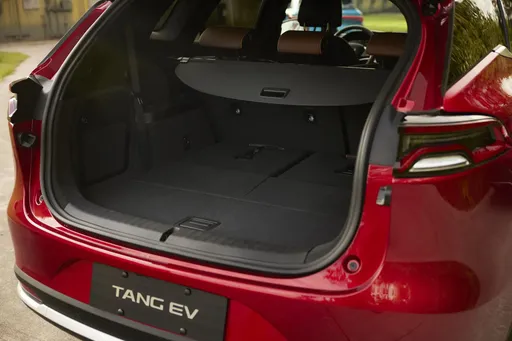
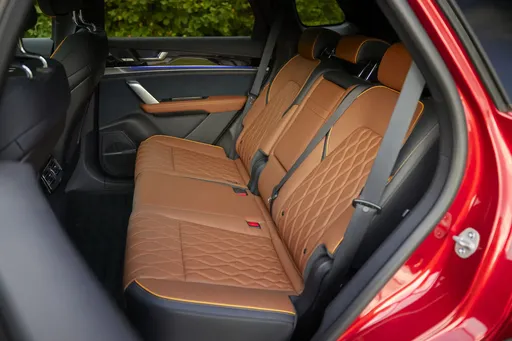
Both vehicles provide ample interior space with seven-seat configurations, allowing flexibility and comfort for family trips and urban explorations. The Tang covers practical needs with a trunk capacity of 235 liters, whereas the E-HS9 seems to prioritize passenger space, resulting in a lower emphasis on storage capacity.

Tang @ BYD Auto / BYD Global Media

Conclusion: Choosing the Right Fit

Ultimately, the choice between the BYD Tang and Hongqi E-HS9 depends largely on the buyer's preferences for power, design, and range. The Tang may attract those looking for slightly better range and reduced operational costs, while the E-HS9 appeals to consumers who prioritize top speed and battery capacity options. Both models demonstrate that the future of SUVs is indeed electric, offering sustainable performance with no compromise on luxury or power.

Here’s where it gets real: The technical differences in detail

Costs and Efficiency:

Looking at overall running costs, both models reveal some interesting differences in everyday economy.

BYD Tang has a minimal advantage in terms of price – it starts at 64300 £, while the Hongqi E-HS9 costs 68600 £. That’s a price difference of around 4282 £.

In terms of energy consumption, the advantage goes to the Hongqi E-HS9: with 19.40 kWh per 100 km, it’s distinct more efficient than the BYD Tang with 24 kWh. That’s a difference of about 4.60 kWh.

As for range, the BYD Tang performs hardly perceptible better – achieving up to 530 km, about 15 km more than the Hongqi E-HS9.

Engine and Performance:

Under the bonnet, it becomes clear which model is tuned for sportiness and which one takes the lead when you hit the accelerator.

When it comes to engine power, the Hongqi E-HS9 has a slight edge – offering 551 HP compared to 517 HP. That’s roughly 34 HP more horsepower.

Both models accelerate almost equally fast – 4.90 s from 0 to 100 km/h.

In terms of top speed, the Hongqi E-HS9 performs minimal better – reaching 200 km/h, while the BYD Tang tops out at 190 km/h. The difference is around 10 km/h.

There’s also a difference in torque: BYD Tang pulls hardly perceptible stronger with 680 Nm compared to 670 Nm. That’s about 10 Nm difference.

Space and Everyday Use:

Beyond pure performance, interior space and usability matter most in daily life. This is where you see which car is more practical and versatile.

Both vehicles offer seating for 7 people.

In curb weight, BYD Tang is minimal lighter – 2630 kg compared to 2705 kg. The difference is around 75 kg.

In terms of boot space, the BYD Tang offers convincingly more room – 235 L compared to 0 L. That’s a difference of about 235 L.

When it comes to payload, BYD Tang slightly takes the win – 575 kg compared to 475 kg. That’s a difference of about 100 kg.

Who wins the race?

The BYD Tang proves to be outperforms in nearly all aspects and therefore becomes our DriveDuel Champion!
BYD Tang is the better all-rounder in this comparison.

BYD Tang
Hongqi E-HS9

Costs and Consumption

View detailed analysis

Engine and Performance

View detailed analysis

Dimensions and Body

View detailed analysis
about £64,285
Tang @ BYD Auto / BYD Global Media

BYD Tang

  • Engine Type : Electric
  • Transmission : Automatic
  • Drive Type : All-Wheel Drive
  • Power HP : 517 HP
  • Consumption kWh/100km : 24 kWh
  • Electric Range : 530 km

BYD Tang

The BYD Tang is a bold, tech-loaded SUV that blends striking design with roomy practicality, making it equally at home on the school run and the open road. Packed with clever tech and a powertrain that mixes efficiency with eager performance, it’s a smart, value-focused pick for buyers who want electric-age comfort without the premium-brand fuss.

details

Hongqi E-HS9

The Hongqi E-HS9 arrives like a modern state limousine rewired into an electric SUV, all imposing chrome, tall presence and an interior that aims to cocoon occupants in luxury. It's serenely quiet and packed with tech, offering a compelling, slightly quirky alternative to established European luxury SUVs for buyers who want drama as much as comfort.

details
BYD Tang
Hongqi E-HS9
Tang @ BYD Auto / BYD Global Media

Costs and Consumption

Price
64300 £
Price
68600 - 88300 £
Consumption L/100km
-
Consumption L/100km
-
Consumption kWh/100km
24 kWh
Consumption kWh/100km
19.40 kWh
Electric Range
530 km
Electric Range
465 - 515 km
Battery Capacity
-
Battery Capacity
90 - 111 kWh
co2
0 g/km
co2
0 g/km
Fuel tank capacity
-
Fuel tank capacity
-

Dimensions and Body

Body Type
SUV
Body Type
SUV
Seats
7
Seats
6 - 7
Doors
5
Doors
5
Curb weight
2630 kg
Curb weight
2705 - 2777 kg
Trunk capacity
235 L
Trunk capacity
0 L
Length
4970 mm
Length
5209 mm
Width
1955 mm
Width
2010 mm
Height
1745 mm
Height
1713 - 1731 mm
Max trunk capacity
1655 L
Max trunk capacity
-
Payload
575 kg
Payload
455 - 475 kg

Engine and Performance

Engine Type
Electric
Engine Type
Electric
Transmission
Automatic
Transmission
Automatic
Transmission Detail
Reduction Gearbox
Transmission Detail
Reduction Gearbox
Drive Type
All-Wheel Drive
Drive Type
All-Wheel Drive
Power HP
517 HP
Power HP
551 HP
Acceleration 0-100km/h
4.90 s
Acceleration 0-100km/h
4.90 s
Max Speed
190 km/h
Max Speed
200 km/h
Torque
680 Nm
Torque
670 Nm
Number of Cylinders
-
Number of Cylinders
-
Power kW
380 kW
Power kW
405 kW
Engine capacity
-
Engine capacity
-

General

Model Year
2024
Model Year
2024
CO2 Efficiency Class
A
CO2 Efficiency Class
A
Brand
BYD
Brand
Hongqi
Is the BYD Tang offered with different drivetrains?

The BYD Tang is available as All-Wheel Drive.

The prices and data displayed are estimates based on German list prices and may vary by country. This information is not legally binding.

do not click