
 Deutschland
 France
 Nederland
 Great Britain
 Sverige
 Danmark
 Suomi
Suomi Italia
 Polska
 Česko
Česko España
G9
VS
XPeng G9 vs Hongqi E-HS9 comparison
Compare performance (575 HP vs 551 HP), boot space and price (51,100 £ vs 68,600 £ ) at a glance. Find out which car is the better choice for you – XPeng G9 or Hongqi E-HS9?
E-HS9
An Overview of the Contenders
As the automotive industry marches into the future with the electrification of vehicles, two titans have emerged to capture the spotlight in the electric SUV segment: the XPeng G9 and the Hongqi E-HS9. Both cars epitomize cutting-edge technology, luxury, and performance. Let's delve into a detailed comparative analysis of these two impressive electric SUVs.
G9
Power and Performance
The XPeng G9 offers a diverse power output ranging from 313 HP to a stunning 551 HP, with torque figures scaling up to 717 Nm, depending on the variation. It boasts a respectable acceleration rate, sprinting from 0 to 100 km/h in as little as 3.9 seconds in its top-spec version. On the other hand, the Hongqi E-HS9 stands neck-to-neck with a consistent power output of 551 HP and torque at 670 Nm, achieving 0 to 100 km/h in 4.9 seconds.
Both models feature a maximum speed of 200 km/h, yet they distinguish themselves through different drive systems: the G9 offers both rear-wheel and all-wheel drive variants, while the E-HS9 opts exclusively for all-wheel drive.
Battery and Range
The G9's flexibility extends into its battery offerings with capacities between 75.8 kWh and 93.1 kWh. This results in an electric range spanning from 460 km to an impressive 570 km, ensuring it remains competitive for longer journeys. Meanwhile, the E-HS9 provides slightly larger battery options of 90 kWh and 111 kWh, yielding an electric range of up to 515 km.
Both vehicles efficiently consume power at 19.4 kWh/100 km, keeping energy consumption at bay and highlighting their eco-friendly credentials.
Design and Dimensions
The XPeng G9 carries its elegance in a compact form with dimensions of 4891 mm in length, 1937 mm in width, and a height variation between 1670 mm and 1680 mm. Its spacious interior accommodates up to five passengers, offering a generous 660-liter trunk capacity for all forms of luggage.
In contrast, the Hongqi E-HS9 magnifies its luxury appeal with larger dimensions—5209 mm in length and 2010 mm in width, coupled with heights ranging from 1713 mm to 1731 mm. This SUV caters to big families with configurations supporting six to seven seats, although its design sacrifices trunk space.
Luxury and Practicality
Both models come fully equipped with automatic transmissions, ensuring a smooth drive. The zero-emission commitment remains upheld through their A-class CO2 efficiency, emitting no CO2 per kilometer.
Despite their sophistication, they carry significant weights: the G9's curb weight varies between 2210 kg and 2340 kg, while the E-HS9 is heftier, ranging from 2705 kg to 2777 kg, reflecting their robust build and incorporation of advanced technology.
Conclusion
Choosing between the XPeng G9 and the Hongqi E-HS9 ultimately comes down to individual needs—whether you prioritize a longer electric range, agile maneuverability, and trunk space or seek excellent seating capacity and luxurious dimensions. Either way, both models stand proud as exemplary representatives of modern electric SUVs, combining technology, luxury, and ecological mindfulness.
Here’s where it gets real: The technical differences in detail
G9
Costs and Efficiency:
Price and efficiency are key factors when choosing a car – and this is often where the real differences emerge.
XPeng G9 is noticeably cheaper – starting at 51,100 £ , while the Hongqi E-HS9 costs 68,600 £ . That’s a price difference of around 17,482 £.
In terms of energy consumption, the XPeng G9 is marginally more efficient: consuming 18.4 kWh/100km compared to 19.4 kWh/100km for the Hongqi E-HS9. That’s a difference of about 1 kWh/100km.
As for electric range, the XPeng G9 offers a bit more range – reaching up to 585 km, about 70 km more than the Hongqi E-HS9.
E-HS9
Engine and Performance:
Power, torque and acceleration say a lot about how a car feels on the road. This is where you see which model delivers more driving dynamics.
When it comes to engine power, the XPeng G9 offers only slightly more power – delivering 575 HP compared to 551 HP. That’s roughly 24 HP more horsepower.
When accelerating from 0 to 100 km/h, the XPeng G9 is a bit quicker – completing the sprint in 4.2 s, while the Hongqi E-HS9 takes 4.9 s. That’s about 0.7 s quicker.
There’s also a difference in torque: the XPeng G9 delivers only slightly more torque with 695 Nm compared to 670 Nm. That’s about 25 Nm more.
G9
Space and Everyday Use:
Beyond pure performance, interior space and usability matter most in daily life. This is where you see which car is more practical and versatile.
Seats: Hongqi E-HS9 offers more seats – 7 vs 5.
In terms of curb weight, XPeng G9 is clearly lighter – 2,210 kg compared to 2,705 kg. The difference is around 495 kg.
Looking at boot space, the XPeng G9 offers significantly more boot space – 660 L compared to 0 L. That’s a difference of about 660 L.
When it comes to payload, the XPeng G9 carries only slightly more – 520 kg compared to 475 kg. That’s a difference of about 45 kg.
Who wins the race in the data check?
The XPeng G9 stands well ahead of its rival in the objective data comparison.
This result only shows which model scores more points on paper – not which of the two cars feels right for you.
from £51,100
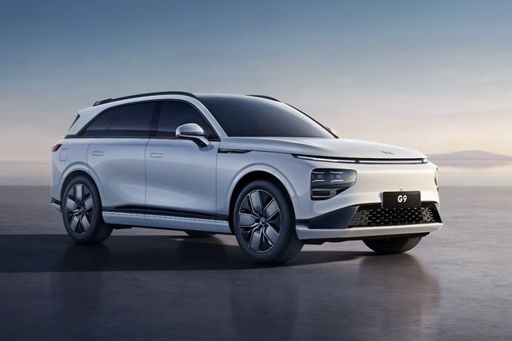
XPeng G9
XPeng G9
Hongqi E-HS9
Costs and Consumption
View detailed analysis
View detailed analysis
Engine and Performance
View detailed analysis
View detailed analysis
Dimensions and Body
View detailed analysis
View detailed analysis
XPeng G9
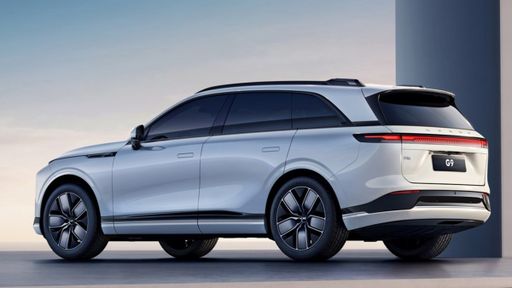
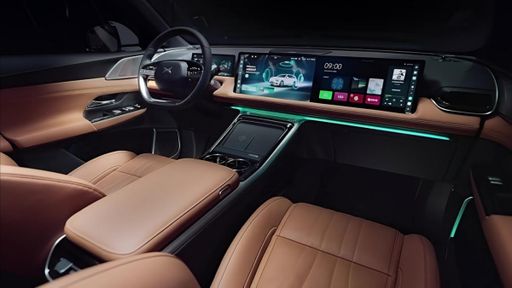
The XPeng G9 is a spacious, tech-forward electric SUV that pairs a calm, refined ride with responsive performance and a high-quality, minimalist cabin. With strong emphasis on connectivity and advanced driving assistance, it’s a compelling choice if you want modern EV features and generous practicality without a legacy badge.
details
Hongqi E-HS9
The Hongqi E-HS9 arrives like a modern state limousine rewired into an electric SUV, all imposing chrome, tall presence and an interior that aims to cocoon occupants in luxury. It's serenely quiet and packed with tech, offering a compelling, slightly quirky alternative to established European luxury SUVs for buyers who want drama as much as comfort.
details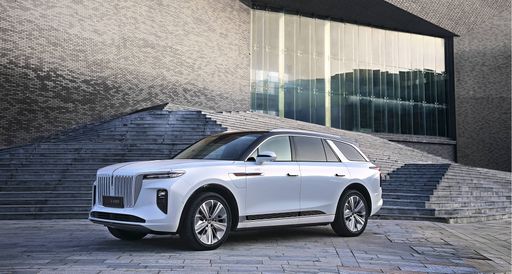
XPeng G9
Hongqi E-HS9
Costs and Consumption |
|
|---|---|
|
Price
51,100 - 62,200 £
|
Price
68,600 - 88,300 £
|
|
Consumption L/100km
-
|
Consumption L/100km
-
|
|
Consumption kWh/100km
18.4 - 20.1 kWh/100km
|
Consumption kWh/100km
19.4 kWh/100km
|
|
Electric Range
502 - 585 km
|
Electric Range
465 - 515 km
|
|
Battery Capacity
-
|
Battery Capacity
-
|
|
co2
0 g/km
|
co2
0 g/km
|
|
Fuel tank capacity
-
|
Fuel tank capacity
-
|
Dimensions and Body |
|
|---|---|
|
Body Type
SUV
|
Body Type
SUV
|
|
Seats
5
|
Seats
6 - 7
|
|
Doors
-
|
Doors
-
|
|
Curb weight
2,210 - 2,395 kg
|
Curb weight
2,705 - 2,777 kg
|
|
Trunk capacity
660 L
|
Trunk capacity
0 L
|
|
Length
-
|
Length
-
|
|
Width
1,937 mm
|
Width
2,010 mm
|
|
Height
-
|
Height
-
|
|
Max trunk capacity
-
|
Max trunk capacity
-
|
|
Payload
515 - 520 kg
|
Payload
455 - 475 kg
|
Engine and Performance |
|
|---|---|
|
Engine Type
Electric
|
Engine Type
Electric
|
|
Transmission
Automatic
|
Transmission
Automatic
|
|
Transmission Detail
Reduction Gearbox
|
Transmission Detail
Reduction Gearbox
|
|
Drive Type
Rear-Wheel Drive, All-Wheel Drive
|
Drive Type
All-Wheel Drive
|
|
Power HP
351 - 575 HP
|
Power HP
551 HP
|
|
Acceleration 0-100km/h
4.2 - 6.6 s
|
Acceleration 0-100km/h
4.9 s
|
|
Max Speed
-
|
Max Speed
-
|
|
Torque
465 - 695 Nm
|
Torque
670 Nm
|
|
Number of Cylinders
-
|
Number of Cylinders
-
|
|
Power kW
258 - 423 kW
|
Power kW
405 kW
|
|
Engine capacity
-
|
Engine capacity
-
|
General |
|
|---|---|
|
Model Year
2025
|
Model Year
2024
|
|
CO2 Efficiency Class
A
|
CO2 Efficiency Class
A
|
|
Brand
XPeng
|
Brand
Hongqi
|
DriveDuel uses data analysis and artificial intelligence to evaluate vehicle data and create content. Content is regularly reviewed and improved.
The displayed prices are estimates based on German list prices, adjusted to the respective country’s VAT. Country-specific registration taxes are not included. This information is not legally binding.