VS

BYD Tang vs Mercedes G Class comparison

Compare performance (517 HP vs 605 HP), boot space and price (64,300 £ vs 106,600 £ ) at a glance. Find out which car is the better choice for you – BYD Tang or Mercedes G Class?

BYD Tang vs Mercedes G Class: Key differences

BYD Tang

  • considerably cheaper
  • a bit more efficient
  • very slightly more electric range
details

Mercedes G Class

  • slightly more power
  • slightly quicker 0–100 km/h
  • only slightly lighter
  • clearly more trunk space
details

By Achim Sedelmaier

Tang

Electrifying Performance vs. Rugged Luxury: BYD Tang vs. Mercedes G-Klasse

The automotive market offers a diverse range of vehicles designed to meet the needs of today’s consumers, from cutting-edge electric SUVs to luxurious off-roaders. This article compares the BYD Tang, an all-wheel-drive electric SUV, with the iconic Mercedes G-Klasse, known for its powerful presence and off-road capabilities. Let's dive into the technical details and innovations that define these models.
G Class

Powertrain and Performance

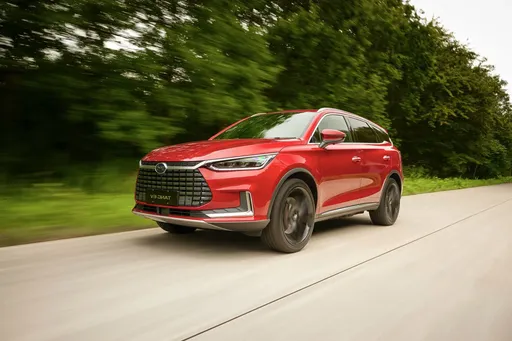
The BYD Tang leverages its electric prowess to deliver an impressive 517 horsepower (380 kW) and 680 Nm of torque, ensuring rapid acceleration from 0 to 100 km/h in just 4.9 seconds. Thanks to its automatic transmission and reduction gearbox, the Tang's all-wheel drive offers smooth handling across various terrains.

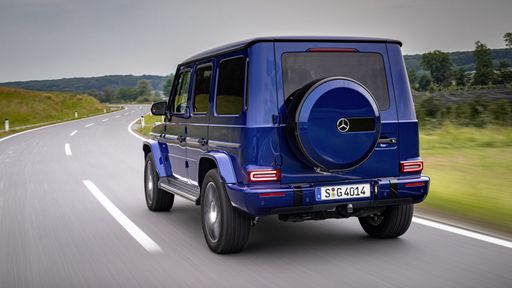
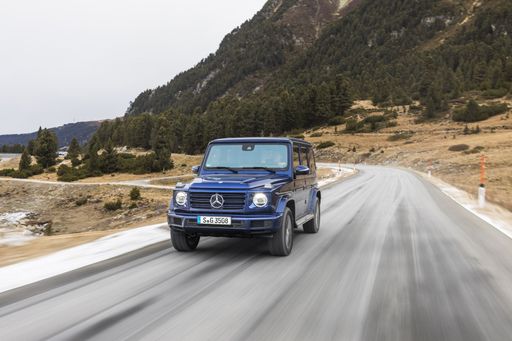
Meanwhile, the Mercedes G-Klasse, a symbol of robust luxury, offers a variety of engine types including petrol MHEV, electric, and diesel MHEV. Its most potent variant reaches up to 605 horsepower (445 kW) and a breathtaking 1050 Nm of torque. Acceleration ranges from 4.4 to 5.8 seconds to reach 100 km/h, depending on the chosen power unit, confirming its status as a powerhouse on and off the road.

Tang

Range and Efficiency

The BYD Tang boasts a significant electric range of 530 km, courtesy of a consumption rate of 24 kWh/100 km and zero CO2 emissions, placing it in the ‘A’ efficiency class. This makes it not only efficient but a sustainable option for environmentally conscious drivers.

On the other hand, the all-electric variant of the G-Klasse offers a range of up to 468 km, with higher consumption figures ranging between 28 and 28.9 kWh/100 km, depending on the variant. Its CO2 output varies widely among different engine configurations, from zero to as much as 336 g/km, highlighting its versatility in catering to different customer preferences.

G Class

Interior Comfort and Capacity

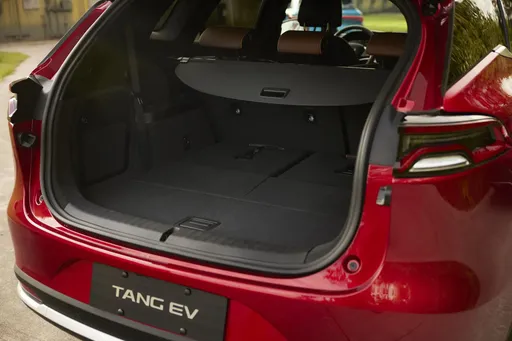
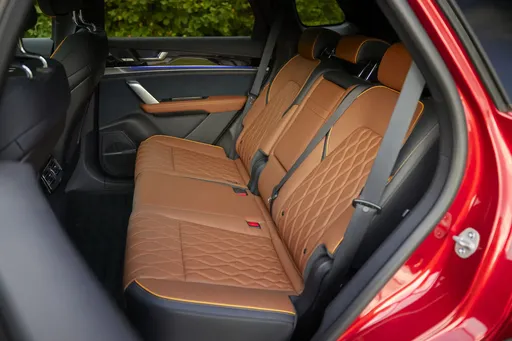
Both vehicles emphasize spacious and luxurious interiors, though they cater to different needs. The BYD Tang, with a seating capacity for seven and a trunk space of 235 L, is designed to accommodate larger families comfortably. Its dimensions stand at 4970 mm in length, 1955 mm in width, and a height of 1745 mm, emphasizing its spacious design.

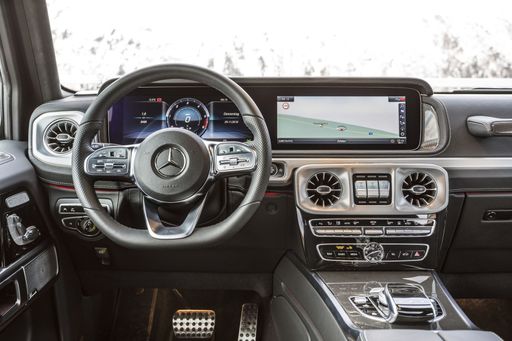
In contrast, the Mercedes G-Klasse comfortably seats five and offers a trunk capacity between 620 and 640 L, perfect for those seeking a blend of luxury and utility. Its dimensions, reaching up to 4873 mm in length, 1984 mm in width, and a towering height of 1983 mm, give it a formidable road presence.

Tang

Groundbreaking Innovations

The BYD Tang and Mercedes G-Klasse each embrace a future-facing approach in their own unique ways. The Tang’s design maximizes electric efficiency without sacrificing power or range, making it a leader in sustainable mobility. By contrast, the G-Klasse combines a robust off-road capability with luxurious appointments, a testament to Mercedes-Benz's commitment to innovation within the luxury segment.

G Class

Final Thoughts

Choosing between the BYD Tang and the Mercedes G-Klasse depends greatly on buyer priorities. The Tang is an excellent choice for those seeking an eco-friendly, high-performance electric SUV, while the G-Klasse appeals to those desiring luxurious versatility and potent performance both on-road and off. Whichever way you lean, both vehicles exemplify cutting-edge advancements in their segments.

Here’s where it gets real: The technical differences in detail

Tang

Costs and Efficiency:

Price and efficiency are often the first things buyers look at. Here it becomes clear which model has the long-term edge – whether at the pump, the plug, or in purchase price.

BYD Tang is considerably cheaper – starting at 64,300 £ , while the Mercedes G Class costs 106,600 £ . That’s a price difference of around 42,305 £.

In terms of energy consumption, the BYD Tang is a bit more efficient: consuming 24 kWh/100km compared to 28 kWh/100km for the Mercedes G Class. That’s a difference of about 4 kWh/100km.

As for electric range, the BYD Tang offers very slightly more range – reaching up to 530 km, about 51 km more than the Mercedes G Class.

G Class

Engine and Performance:

Power, torque and acceleration are the classic benchmarks for car enthusiasts – and here, some clear differences start to show.

When it comes to engine power, the Mercedes G Class offers slightly more power – delivering 605 HP compared to 517 HP. That’s roughly 88 HP more horsepower.

When accelerating from 0 to 100 km/h, the Mercedes G Class is slightly quicker – completing the sprint in 4.4 s, while the BYD Tang takes 4.9 s. That’s about 0.5 s quicker.

There’s also a difference in torque: the Mercedes G Class delivers clearly more torque with 1,164 Nm compared to 680 Nm. That’s about 484 Nm more.

Tang

Space and Everyday Use:

Whether family car or daily driver – which one offers more room, flexibility and comfort?

Seats: BYD Tang offers more seats – 7 vs 5.

In terms of curb weight, Mercedes G Class is only slightly lighter – 2,485 kg compared to 2,630 kg. The difference is around 145 kg.

Looking at boot space, the Mercedes G Class offers clearly more boot space – 640 L compared to 235 L. That’s a difference of about 405 L.

When it comes to payload, the Mercedes G Class carries somewhat more – 715 kg compared to 575 kg. That’s a difference of about 140 kg.

Who wins the race in the data check?

The Mercedes G Class stands out in the key areas in the objective data comparison.
This result only shows which model scores more points on paper – not which of the two cars feels right for you.

from £106,600
G Class

Mercedes G Class

  • Engine Type : Petrol MHEV, Diesel MHEV, Electric
  • Transmission : Automatic
  • Drive Type : All-Wheel Drive
  • Power HP : 387 - 605 HP
  • Consumption L/100km : 8.7 - 14.7 L/100km
  • Consumption kWh/100km : 28 kWh/100km
  • Electric Range : 479 km
BYD Tang
Mercedes G Class

Costs and Consumption

View detailed analysis

Engine and Performance

View detailed analysis

Dimensions and Body

View detailed analysis

BYD Tang

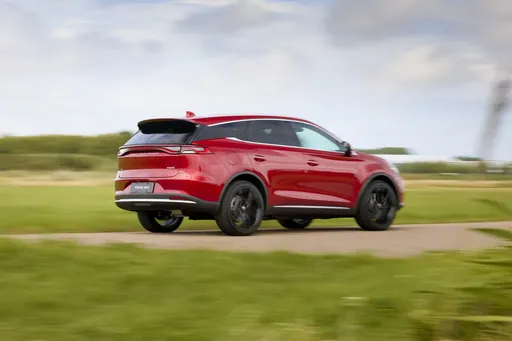
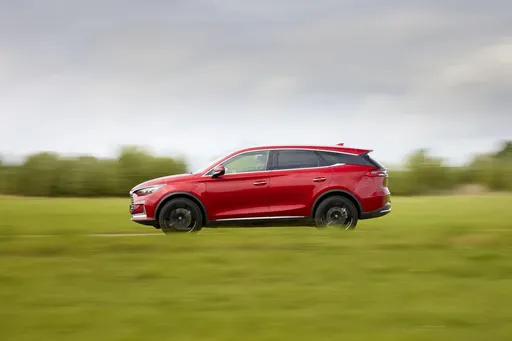
The BYD Tang is a bold, tech-loaded SUV that blends striking design with roomy practicality, making it equally at home on the school run and the open road. Packed with clever tech and a powertrain that mixes efficiency with eager performance, it’s a smart, value-focused pick for buyers who want electric-age comfort without the premium-brand fuss.

details

Mercedes G Class

The G-Class, often called the G‑Wagen, is a blocky icon that blends unapologetic off-road prowess with a plush, modern cabin, announcing your arrival before you even step out. It’s equally at home crawling over rocks or cruising city streets, and owning one feels like adopting a very expensive, very capable personality.

details
BYD Tang
Mercedes G Class

Costs and Consumption

Price
64,300 £
Price
106,600 - 171,000 £
Consumption L/100km
-
Consumption L/100km
8.7 - 14.7 L/100km
Consumption kWh/100km
24 kWh/100km
Consumption kWh/100km
28 kWh/100km
Electric Range
530 km
Electric Range
479 km
Battery Capacity
-
Battery Capacity
-
co2
0 g/km
co2
0 - 336 g/km
Fuel tank capacity
-
Fuel tank capacity
-

Dimensions and Body

Body Type
SUV
Body Type
Off-Roader
Seats
7
Seats
5
Doors
-
Doors
-
Curb weight
2,630 kg
Curb weight
2,485 - 3,085 kg
Trunk capacity
235 L
Trunk capacity
640 L
Length
-
Length
-
Width
1,955 mm
Width
1,931 - 1,984 mm
Height
-
Height
-
Max trunk capacity
-
Max trunk capacity
-
Payload
575 kg
Payload
115 - 715 kg

Engine and Performance

Engine Type
Electric
Engine Type
Petrol MHEV, Diesel MHEV, Electric
Transmission
Automatic
Transmission
Automatic
Transmission Detail
Reduction Gearbox
Transmission Detail
Automatic Gearbox, Reduction Gearbox
Drive Type
All-Wheel Drive
Drive Type
All-Wheel Drive
Power HP
517 HP
Power HP
387 - 605 HP
Acceleration 0-100km/h
4.9 s
Acceleration 0-100km/h
4.4 - 5.8 s
Max Speed
-
Max Speed
-
Torque
680 Nm
Torque
760 - 1,164 Nm
Number of Cylinders
-
Number of Cylinders
6 - 8
Power kW
380 kW
Power kW
285 - 445 kW
Engine capacity
-
Engine capacity
2,989 - 3,982 cm3

General

Model Year
2024
Model Year
2,025 - 2,026
CO2 Efficiency Class
A
CO2 Efficiency Class
G, A
Brand
BYD
Brand
Mercedes-Benz
DriveDuel uses data analysis and artificial intelligence to evaluate vehicle data and create content. Content is regularly reviewed and improved. The displayed prices are estimates based on German list prices, adjusted to the respective country’s VAT. Country-specific registration taxes are not included. This information is not legally binding.