
@ Mercedes-Benz Group Media
VS

Citroen Jumpy Transporter vs Mercedes Vito Transporter – Differences & prices compared

Compare performance, boot capacity, efficiency and price at a glance.
Find out which car is the better choice for you – Citroen Jumpy Transporter or Mercedes Vito Transporter?

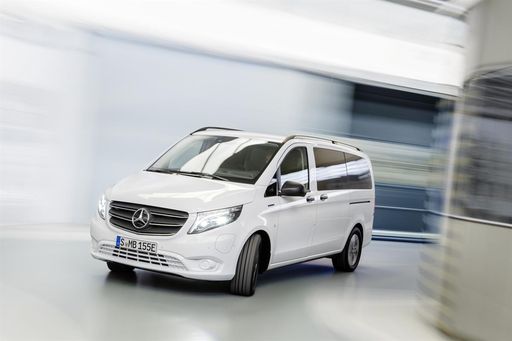
Vito Transporter @ Mercedes-Benz Group Media

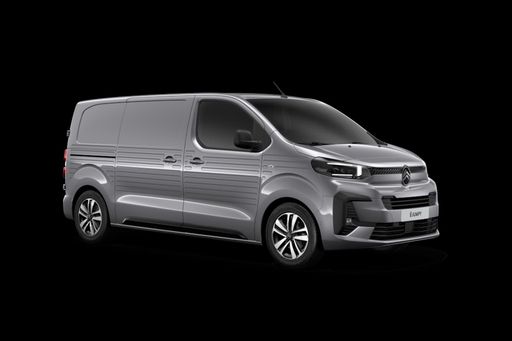
In the competitive realm of commercial vehicles, the Citroen Jumpy Transporter and the Mercedes Vito Transporter stand out as formidable options for businesses and personal use alike. Both models cater to the needs of van buyers looking for reliability, efficiency, and innovation, but they each bring unique strengths to the table. This article delves into the technical aspects and innovations of these two popular cargo vans.
Performance Comparison

The Citroen Jumpy Transporter offers a versatile choice with both diesel and electric engines, providing various power options ranging from 120 HP to an impressive 177 HP. This allows users to select the model that best suits their requirements. The diesel engines exhibit fuel consumption figures between 6.6 L/100 km to 7.7 L/100 km, while the electric version boasts an efficiency of approximately 24.5 kWh/100 km and has an electric range of up to 328 km.

On the other hand, the Mercedes Vito Transporter showcases a broader power range, with engine outputs ranging from 102 HP to a robust 237 HP, accommodating different driving needs from city delivery to long-haul transportation. With diesel consumption figures ranging from 6.8 L/100 km to 7.9 L/100 km and an electric variant featuring a range of up to 313 km, the Vito aligns well with modern demands for eco-friendly transport solutions.

Transmission and Drive Options

Both models feature multiple transmission options, including manual and automatic gearboxes, catering to various driver preferences. The Citroen Jumpy offers a front-wheel-drive setup, which is advantageous for efficient load handling and maneuverability in tight spaces. Meanwhile, the Vito Transporter provides versatility with rear-wheel-drive, front-wheel-drive, and all-wheel-drive options. This flexibility allows for optimized performance based on load and driving conditions.

Dimensions and Payload Capacity

When it comes to dimensions, the Citroen Jumpy measures 5309 mm in length and 1920 mm in width, providing a considerable payload capacity of up to 1333 kg. This makes it perfect for larger payloads while maintaining a manageable size for urban environments.

The Mercedes Vito, slightly longer at 5370 mm, offers a width of 1928 mm. However, its payload capacity ranges around 950 kg to 1000 kg, depending on the variant chosen. Both vans provide ample cargo space, making them suitable for a variety of business applications.

Safety and Innovation Features

Both brands emphasize safety and innovation in their design. The Citroen Jumpy Transporter includes advanced safety features like lane departure warning and emergency braking systems, critical for urban driving scenarios. The innovative electric variant of the Jumpy also showcases Citroen's commitment to ecological considerations, allowing businesses to reduce their carbon footprint significantly.

Contrastingly, the Mercedes Vito showcases the brand's reputation for luxury and innovation even in commercial vehicles. With features like adaptive cruise control, parking assistance, and a modern infotainment system, it presents a blend of comfort and practicality. The safety systems, including traction control and stability systems, help enhance driver confidence on the road.

Conclusion

In summary, both the Citroen Jumpy Transporter and the Mercedes Vito Transporter cater to the demands of modern business with their blend of performance, efficiency, and safety features. The choice between the two will largely depend on the specific needs of the user – whether it’s the excellent payload capacity and eco-friendly options from the Jumpy or the reliable performance and advanced technology of the Vito. Ultimately, both vehicles represent the best of what the commercial vehicle segment has to offer.

Here’s where it gets real: The technical differences in detail

Costs and Efficiency:

Price and efficiency are often the first things buyers look at. Here it becomes clear which model has the long-term edge – whether at the pump, the plug, or in purchase price.

Mercedes Vito Transporter has a to a small extent advantage in terms of price – it starts at 28800 £, while the Citroen Jumpy Transporter costs 32100 £. That’s a price difference of around 3348 £.

Fuel consumption also shows a difference: Citroen Jumpy Transporter manages with 6.20 L and is therefore slight more efficient than the Mercedes Vito Transporter with 6.80 L. The difference is about 0.60 L per 100 km.

In terms of energy consumption, the advantage goes to the Mercedes Vito Transporter: with 21.20 kWh per 100 km, it’s slightly more efficient than the Citroen Jumpy Transporter with 23.60 kWh. That’s a difference of about 2.40 kWh.

As for range, the Mercedes Vito Transporter performs distinct better – achieving up to 474 km, about 146 km more than the Citroen Jumpy Transporter.

Engine and Performance:

Power, torque and acceleration say a lot about how a car feels on the road. This is where you see which model delivers more driving dynamics.

When it comes to engine power, the Mercedes Vito Transporter has a evident edge – offering 237 HP compared to 180 HP. That’s roughly 57 HP more horsepower.

In terms of top speed, the Citroen Jumpy Transporter performs somewhat better – reaching 160 km/h, while the Mercedes Vito Transporter tops out at 140 km/h. The difference is around 20 km/h.

There’s also a difference in torque: Mercedes Vito Transporter pulls a bit stronger with 500 Nm compared to 400 Nm. That’s about 100 Nm difference.

Space and Everyday Use:

Cabin size, boot volume and payload all play a role in everyday practicality. Here, comfort and flexibility make the difference.

Seats: Citroen Jumpy Transporter offers a bit more seating capacity – 6 vs 5.

In curb weight, Citroen Jumpy Transporter is slightly lighter – 1722 kg compared to 1916 kg. The difference is around 194 kg.

In maximum load capacity, the Mercedes Vito Transporter performs barely noticeable better – up to 6600 L, which is about 500 L more than the Citroen Jumpy Transporter.

When it comes to payload, Citroen Jumpy Transporter evident takes the win – 1226 kg compared to 884 kg. That’s a difference of about 342 kg.

Who comes out on top?

Overall, the Mercedes Vito Transporter shows itself to be wins solidly and secures the title of DriveDuel Champion.
It convinces with the more balanced overall package and proves to be the more versatile choice for everyday use.

from about £28,800
Vito Transporter @ Mercedes-Benz Group Media

Mercedes Vito Transporter

  • Engine Type : Diesel, Electric, Petrol
  • Transmission : Manuel, Automatic
  • Drive Type : Rear-Wheel Drive, Front-Wheel Drive, All-Wheel Drive
  • Power HP : 102 - 237 HP
  • Consumption L/100km : 6.8 - 9.7 L
  • Consumption kWh/100km : 21.2 - 26.5 kWh
  • Electric Range : 304 - 474 km

Citroen Jumpy Transporter

The Citroen Jumpy Transporter exemplifies versatility and practicality, making it an ideal choice for both urban and long-distance driving. With its spacious interior and advanced features, it caters to a range of commercial needs while ensuring comfort for the driver. The Jumpy also boasts a contemporary design, reflecting Citroen's commitment to style and functionality.

details

Mercedes Vito Transporter

The Mercedes-Benz Vito Transporter combines practicality with the refined elegance characteristic of its brand. Known for its robust performance, this vehicle offers an impressively versatile interior space, making it ideal for both commercial use and everyday driving. The advanced safety features and modern technological enhancements ensure that the Vito remains a reliable and comfortable choice for drivers.

details
Citroen Jumpy Transporter
Mercedes Vito Transporter
Vito Transporter @ Mercedes-Benz Group Media

Costs and Consumption

Price
32100 - 52000 £
Price
28800 - 51600 £
Consumption L/100km
6.2 - 6.5 L
Consumption L/100km
6.8 - 9.7 L
Consumption kWh/100km
23.6 - 24.7 kWh
Consumption kWh/100km
21.2 - 26.5 kWh
Electric Range
222 - 328 km
Electric Range
304 - 474 km
Battery Capacity
-
Battery Capacity
60 - 90 kWh
co2
0 - 199 g/km
co2
0 - 222 g/km
Fuel tank capacity
69 L
Fuel tank capacity
57 - 70 L

Dimensions and Body

Body Type
Cargo Van
Body Type
Cargo Van
Seats
3 - 6
Seats
2 - 5
Doors
4
Doors
4
Curb weight
1722 - 2188 kg
Curb weight
1916 - 2518 kg
Trunk capacity
-
Trunk capacity
-
Length
4959 - 5309 mm
Length
4895 - 5390 mm
Width
1920 mm
Width
1928 mm
Height
1895 - 1935 mm
Height
1910 - 1945 mm
Max trunk capacity
3200 - 6100 L
Max trunk capacity
3100 - 6600 L
Payload
881 - 1226 kg
Payload
547 - 884 kg

Engine and Performance

Engine Type
Electric, Diesel
Engine Type
Diesel, Electric, Petrol
Transmission
Automatic, Manuel
Transmission
Manuel, Automatic
Transmission Detail
Reduction Gearbox, Manual Gearbox, Automatic Gearbox
Transmission Detail
Manual Gearbox, Reduction Gearbox, Automatic Gearbox
Drive Type
Front-Wheel Drive
Drive Type
Rear-Wheel Drive, Front-Wheel Drive, All-Wheel Drive
Power HP
120 - 180 HP
Power HP
102 - 237 HP
Acceleration 0-100km/h
12.1 - 13.3 s
Acceleration 0-100km/h
-
Max Speed
130 - 160 km/h
Max Speed
120 - 140 km/h
Torque
260 - 400 Nm
Torque
270 - 500 Nm
Number of Cylinders
4
Number of Cylinders
4
Power kW
88 - 132 kW
Power kW
75 - 174 kW
Engine capacity
1499 - 2184 cm3
Engine capacity
1950 - 1999 cm3

General

Model Year
2024 - 2025
Model Year
2024 - 2025
CO2 Efficiency Class
A, F, G
CO2 Efficiency Class
G, A
Brand
Citroen
Brand
Mercedes-Benz
What drive types are available for the Citroen Jumpy Transporter?

Available configurations include Front-Wheel Drive.

The prices and data displayed are estimates based on German list prices and may vary by country. This information is not legally binding.








