
@ Mercedes-Benz Group Media
VS

Mercedes Vito Transporter vs Renault Trafic Transporter – Which model is better for everyday use?

Both models have their strengths – but which one suits you more?
Compare performance, efficiency, price and space directly: Mercedes Vito Transporter or Renault Trafic Transporter?

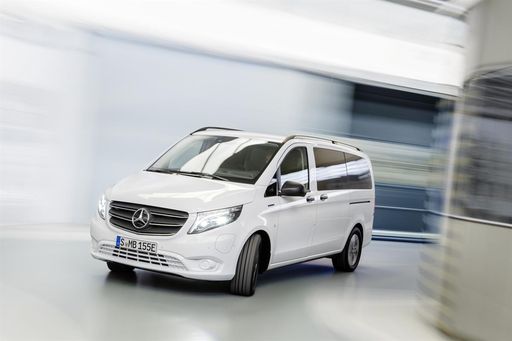
Vito Transporter @ Mercedes-Benz Group Media

Style and Substance: Mercedes Vito Transporter vs. Renault Trafic Transporter

In the competitive world of cargo vans, the Mercedes Vito and Renault Trafic stand out as leading contenders. Both vehicles offer distinct strengths tailored to different types of drivers and businesses. Let's delve deep into their technical details and innovations to see what sets them apart.
Engine and Performance

The Mercedes Vito offers a versatile range of powertrains, with both diesel and electric options available. Diesel engines range from 102 to 237 HP, supported by an engine capacity of 1950 cm3. For those opting for an environmentally-conscious drive, the electric version boasts an impressive electric range of 310-313 km with a battery capacity of 60 kWh.

On the other hand, the Renault Trafic keeps things interesting with a variety of diesel engines, offering between 110 to 170 HP. Its engine capacity slightly surpasses the Vito at 1997 cm3. In the electric realm, the Trafic provides a range of 289-292 km, which, while slightly lesser than the Vito, remains competitive.

Transmission and Drive Dynamics

Mercedes Vito offers a range of transmission options: manual, automatic, and reduction gearbox, paired with rear-wheel, front-wheel, or all-wheel drive. This variety ensures that drivers can find a configuration that suits their specific needs, whether it’s for navigating city streets or rugged roads.

The Renault Trafic provides manual, dual-clutch automatic, and reduction gearbox options with a focus on front-wheel drive, offering straightforward handling that's ideal for urban commutes and reliable highway driving.

Fuel Economy and Efficiency

For diesel, the Vito's consumption varies between 6.8 to 7.9 liters per 100 km, promoting a balance of power and efficiency. Meanwhile, Renault Trafic matches this efficiency with a consumption rate of 6.7 to 7.8 liters per 100 km, showcasing its commitment to fuel economy.

In electric mode, the Vito's consumption is slightly more efficient at 20.7 to 21.1 kWh/100 km, compared to the Trafic's 21.3 to 21.5 kWh/100 km, marking a minor edge in energy consumption.

Size and Payload Capacity

The Mercedes Vito offers a range of body lengths from 4895 mm to 5370 mm, delivering overall width and height dimensions of 1928 mm and up to 1945 mm respectively. The payload capacity ranges between 849 to 1000 kg, making it suitable for a variety of cargo needs.

Renault Trafic's dimensions range from 5080 mm to 5480 mm in length, with a width of 1956 mm and variable height up to 2509 mm in some versions. It edges out the Vito in payload capacity, offering between 867 to 1185 kg, which is ideal for businesses requiring more substantial cargo options.

Innovative Features

Mercedes-Benz continues to prioritize innovation with the Vito, incorporating features like advanced driver-assistance systems and enhanced connectivity options, ideal for fleet management and business utility.

Renault, meanwhile, has equipped the Trafic with essential tech features that streamline the driver's experience, from intuitive dashboards to smart storage solutions, ensuring practicality meets digital advancement.

Conclusion

Both the Mercedes Vito and Renault Trafic offer compelling packages for the discerning buyer. While Mercedes leans towards a more luxurious and tech-savvy drive with versatile engine offerings, Renault provides a focus on practicality and payload capacity. Your choice will depend largely on whether you prioritize high-end features and diverse driving configurations or efficient transport with exceptional payload capabilities.

Here’s where it gets real: The technical differences in detail

Costs and Efficiency:

When it comes to price and running costs, the biggest differences usually appear. This is often where you see which car fits your budget better in the long run.

Mercedes Vito Transporter has a somewhat advantage in terms of price – it starts at 28800 £, while the Renault Trafic Transporter costs 33200 £. That’s a price difference of around 4419 £.

Fuel consumption also shows a difference: Renault Trafic Transporter manages with 6.60 L and is therefore minimal more efficient than the Mercedes Vito Transporter with 6.80 L. The difference is about 0.20 L per 100 km.

When it comes to electricity consumption, both models perform equally – each averaging 21.20 kWh per 100 km.

As for range, the Mercedes Vito Transporter performs distinct better – achieving up to 474 km, about 156 km more than the Renault Trafic Transporter.

Engine and Performance:

Under the bonnet, it becomes clear which model is tuned for sportiness and which one takes the lead when you hit the accelerator.

When it comes to engine power, the Mercedes Vito Transporter has a clearly perceptible edge – offering 237 HP compared to 170 HP. That’s roughly 67 HP more horsepower.

In terms of top speed, the Renault Trafic Transporter performs distinct better – reaching 180 km/h, while the Mercedes Vito Transporter tops out at 140 km/h. The difference is around 40 km/h.

There’s also a difference in torque: Mercedes Vito Transporter pulls distinct stronger with 500 Nm compared to 380 Nm. That’s about 120 Nm difference.

Space and Everyday Use:

Whether family car or daily driver – which one offers more room, flexibility and comfort?

Seats: Renault Trafic Transporter offers slightly more seating capacity – 6 vs 5.

In curb weight, Renault Trafic Transporter is minimal lighter – 1848 kg compared to 1916 kg. The difference is around 68 kg.

In maximum load capacity, the Renault Trafic Transporter performs distinct better – up to 8900 L, which is about 2300 L more than the Mercedes Vito Transporter.

When it comes to payload, Renault Trafic Transporter distinct takes the win – 1222 kg compared to 884 kg. That’s a difference of about 338 kg.

Who comes out on top?

Overall, the Mercedes Vito Transporter shows itself to be has a very small edge and secures the title of DriveDuel Champion.
It convinces with the more balanced overall package and proves to be the more versatile choice for everyday use.

from about £28,800
Vito Transporter @ Mercedes-Benz Group Media

Mercedes Vito Transporter

  • Engine Type : Diesel, Electric, Petrol
  • Transmission : Manuel, Automatic
  • Drive Type : Rear-Wheel Drive, Front-Wheel Drive, All-Wheel Drive
  • Power HP : 102 - 237 HP
  • Consumption L/100km : 6.8 - 9.7 L
  • Consumption kWh/100km : 21.2 - 26.5 kWh
  • Electric Range : 304 - 474 km

Mercedes Vito Transporter

The Mercedes-Benz Vito Transporter combines practicality with the refined elegance characteristic of its brand. Known for its robust performance, this vehicle offers an impressively versatile interior space, making it ideal for both commercial use and everyday driving. The advanced safety features and modern technological enhancements ensure that the Vito remains a reliable and comfortable choice for drivers.

details

Renault Trafic Transporter

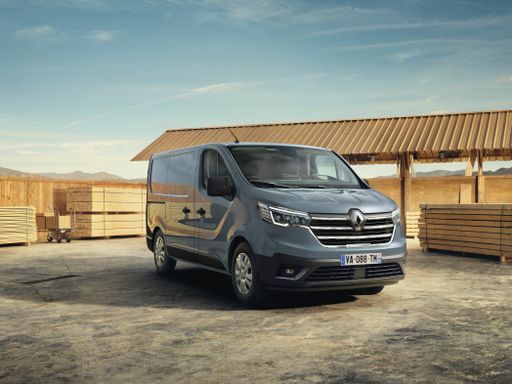
The Renault Trafic Transporter is a versatile vehicle known for its spacious interior and functional design, ideal for both business and personal use. Its stylish exterior combined with practical features offers a perfect balance between form and function, making it a popular choice among van enthusiasts. The driving experience is enhanced by its smooth handling and advanced technology, providing comfort and convenience for any journey.

details
Mercedes Vito Transporter
Renault Trafic Transporter
Vito Transporter @ Mercedes-Benz Group Media

Costs and Consumption

Price
28800 - 51600 £
Price
33200 - 43500 £
Consumption L/100km
6.8 - 9.7 L
Consumption L/100km
6.6 - 7.8 L
Consumption kWh/100km
21.2 - 26.5 kWh
Consumption kWh/100km
21.2 - 22.2 kWh
Electric Range
304 - 474 km
Electric Range
240 - 318 km
Battery Capacity
60 - 90 kWh
Battery Capacity
-
co2
0 - 222 g/km
co2
0 - 206 g/km
Fuel tank capacity
57 - 70 L
Fuel tank capacity
80 L

Dimensions and Body

Body Type
Cargo Van
Body Type
Cargo Van
Seats
2 - 5
Seats
3 - 6
Doors
4
Doors
4
Curb weight
1916 - 2518 kg
Curb weight
1848 - 2075 kg
Trunk capacity
-
Trunk capacity
-
Length
4895 - 5390 mm
Length
5080 - 5480 mm
Width
1928 mm
Width
1956 mm
Height
1910 - 1945 mm
Height
1967 - 2509 mm
Max trunk capacity
3100 - 6600 L
Max trunk capacity
3300 - 8900 L
Payload
547 - 884 kg
Payload
848 - 1222 kg

Engine and Performance

Engine Type
Diesel, Electric, Petrol
Engine Type
Diesel, Electric
Transmission
Manuel, Automatic
Transmission
Manuel, Automatic
Transmission Detail
Manual Gearbox, Reduction Gearbox, Automatic Gearbox
Transmission Detail
Manual Gearbox, Reduction Gearbox, Automatic Gearbox
Drive Type
Rear-Wheel Drive, Front-Wheel Drive, All-Wheel Drive
Drive Type
Front-Wheel Drive
Power HP
102 - 237 HP
Power HP
110 - 170 HP
Acceleration 0-100km/h
-
Acceleration 0-100km/h
10.8 - 15.1 s
Max Speed
120 - 140 km/h
Max Speed
110 - 180 km/h
Torque
270 - 500 Nm
Torque
245 - 380 Nm
Number of Cylinders
4
Number of Cylinders
4
Power kW
75 - 174 kW
Power kW
81 - 125 kW
Engine capacity
1950 - 1999 cm3
Engine capacity
1997 cm3

General

Model Year
2024 - 2025
Model Year
2022 - 2025
CO2 Efficiency Class
G, A
CO2 Efficiency Class
F, G, A
Brand
Mercedes-Benz
Brand
Renault
What drive types are available for the Mercedes Vito Transporter?

The Mercedes Vito Transporter is available as Rear-Wheel Drive, Front-Wheel Drive or All-Wheel Drive.

The prices and data displayed are estimates based on German list prices and may vary by country. This information is not legally binding.








