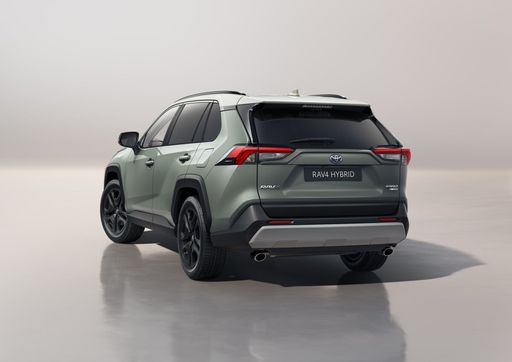
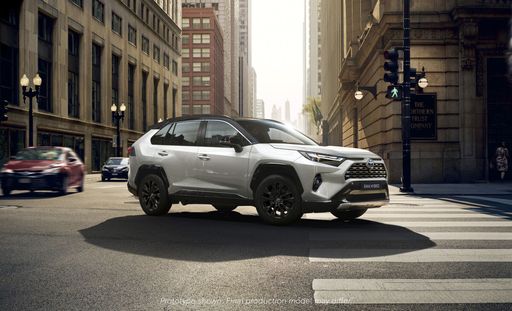
VS

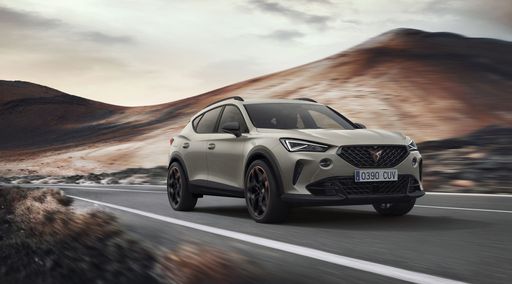
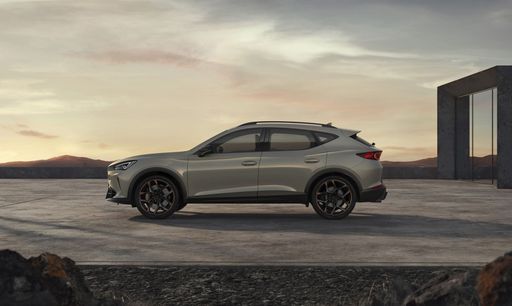
CUPRA Formentor vs Toyota RAV4 comparison

Compare performance (390 HP vs 309 HP), boot space and price (35,200 £ vs 37,700 £ ) at a glance. Find out which car is the better choice for you – CUPRA Formentor or Toyota RAV4?

CUPRA Formentor vs Toyota RAV4: Key differences

CUPRA Formentor

4.9 (2 Reviews)
rate
  • marginally cheaper
  • noticeably more power
  • markedly quicker 0–100 km/h
  • moderately lighter
details

Toyota RAV4

4.8 (8 Reviews)
rate
  • only slightly more efficient
  • only slightly more electric range
  • moderately more trunk space
details

All details on performance, efficiency, range and trunk space can be found in the technical comparison below – including user reviews for both models.

By Achim Sedelmaier

Formentor

Overview: CUPRA Formentor VS Toyota RAV4 — sport versus sense

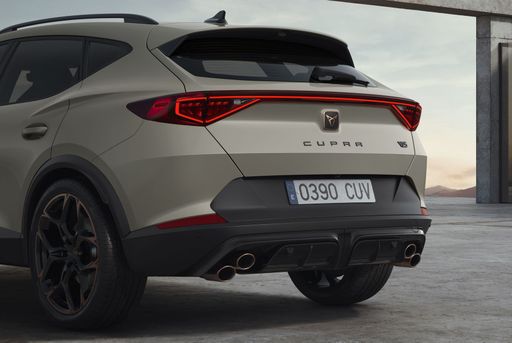
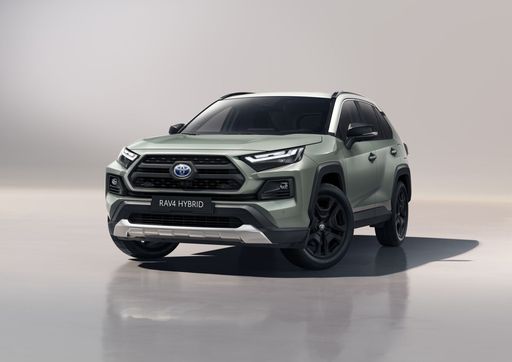
CUPRA Formentor and Toyota RAV4 represent two distinct philosophies in the compact‑SUV segment: the Formentor pushes sportiness and style, while the RAV4 prioritises calm efficiency and everyday space. Readership and reviewer consensus show the Formentor winning applause for steering sharpness and visual character, and the RAV4 earning praise for low running costs and a roomy rear seat. This comparison focuses on real‑world differences — how each car feels day to day, where practical compromises appear, and which buyers will likely prefer which traits. We translate common test impressions and recurring annoyances into clear buyer guidance before the technical figures. Think of it as a usability lens: personality first, specs second.
RAV4

Driving character and engagement

On the road the CUPRA Formentor comes across as taut and engaging, with precise turn‑in and a chassis that rewards brisk cornering, while the Toyota RAV4 is composed and deliberately restrained. Formentor drivers will notice sharper feedback and a livelier drive, especially in the stronger variants, making it more fun on twisty commutes. The RAV4 trades that edge for predictability and ease, delivering a secure, confidence‑first experience that many daily drivers prefer. If you favour an involved driving position the Formentor leans in; if you want effortless progression and low‑stress handling the RAV4 suits better. Keep in mind that the Formentor’s punchier driving tends to raise fuel use under spirited driving, while the RAV4’s hybrid systems default toward economy in everyday use.

Formentor

Comfort and long‑distance behavior

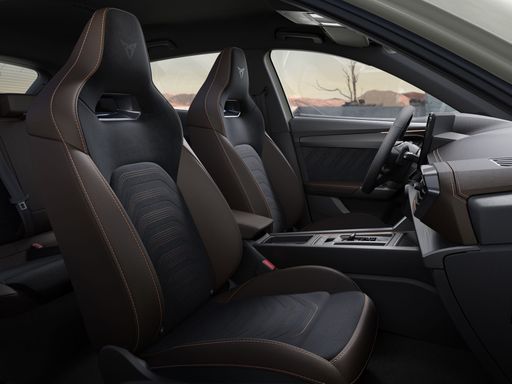
Long trips expose the biggest practical split: the CUPRA Formentor’s sports seats and firmer damping keep occupants well held but let wind and tyre noise through at motorway speeds. The Toyota RAV4 offers a quieter, more forgiving cabin for sustained cruising with suspension tuned to isolate imperfections and reduce fatigue. That makes the Formentor excellent for drivers who want engagement without abandoning comfort, whereas the RAV4 is kinder to passengers on long hauls and week‑to‑week commuting. Choose the Formentor if lively driving and strong lateral support matter on your routes; choose the RAV4 if you prioritise a calm, low‑fatigue environment. Over many thousands of miles the RAV4’s relaxed manners tend to feel less wearing than the Formentor’s firmer setup.

RAV4

Cabin feel, infotainment and perceived quality

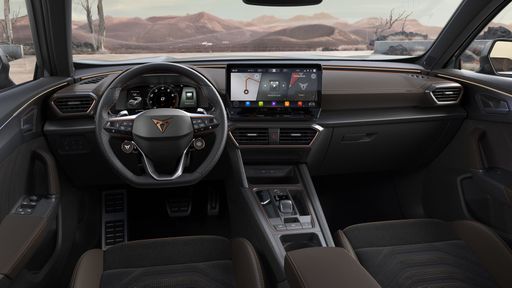
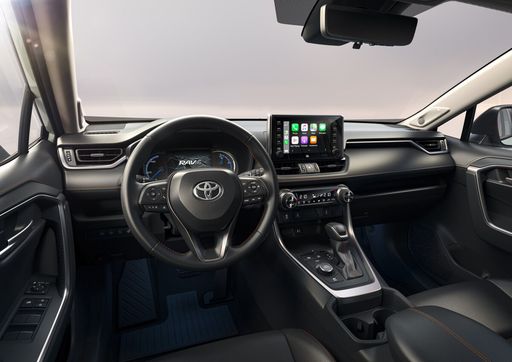
Inside, the CUPRA Formentor aims for a sporty, slightly premium mood with upgraded contact materials and a larger touchscreen, but its touch‑slider controls and occasional software quirks frustrate those who prefer tactile knobs. The Toyota RAV4’s interior reads more pragmatic: robust plastics and a logical layout feel durable and simple to live with, though they lack flair. In practice the Formentor looks and feels trendier and more modern, while the RAV4 trades style for straightforward ergonomics that most families appreciate. Both have improved infotainment, yet the Formentor’s system feels flashier and the RAV4’s implementation feels more conservative and stable. If haptic satisfaction and visual appeal are priorities, try the Formentor; if durability and fuss‑free operation matter, the RAV4 will feel reassuring.

Formentor

Practicality, cargo and family usability

When it comes to luggage and daily family use the Toyota RAV4 generally delivers the more usable, squarer boot and easier loading, making weekend trips and child seats less of a compromise. The CUPRA Formentor can still manage family duties but its cargo space and layout vary noticeably by drivetrain, and sportier or PHEV versions reduce practical volume. That produces a clear trade‑off: opt for the Formentor if cabin style and driving dynamics top your list, or pick the RAV4 for predictable luggage space and higher passenger comfort for taller occupants. Rear‑seat room leans toward the RAV4 for three passengers and long legs, while the Formentor prioritises lateral support for two adults on spirited drives. Practical buyers should test with real luggage and child seats because advertised numbers mask everyday usability differences.

RAV4

City friendliness, buyer fit and what to check next

In urban life the CUPRA Formentor’s compact footprint and direct steering make it nimble in traffic, but its long bonnet and firmer ride mean low‑speed maneuvers and parking feel slightly less effortless than in the Toyota RAV4. The RAV4 excels in town with an upright view, gentle hybrid take‑off and controls that reduce daily friction for commuters and families. So the Formentor will appeal to buyers seeking a design‑forward, engaging crossover and those who value stronger seat support and a sportier feel, while the RAV4 suits buyers prioritising efficiency, rear‑seat space and low running costs. Use this contrast to match the car to your routine: short dynamic runs and brand flair point to the Formentor; long commutes, kids and cost‑conscious ownership point to the RAV4. The technical comparison that follows breaks down power delivery, consumption, charging behavior and exact cargo figures so you can map these practical impressions to measured numbers.

Here’s where it gets real: The technical differences in detail

Formentor

Costs and Efficiency:

When it comes to price and running costs, the biggest differences usually appear. This is often where you see which car fits your budget better in the long run.

CUPRA Formentor is marginally cheaper – starting at 35,200 £ , while the Toyota RAV4 costs 37,700 £ . That’s a price difference of around 2,464 £.

Fuel consumption also shows a difference: the Toyota RAV4 uses 1.3 L/100km and is only slightly more efficient than the CUPRA Formentor with 1.4 L/100km. The difference is about 0.1 L/100km.

As for electric range, the Toyota RAV4 offers only slightly more range – reaching up to 137 km, about 11 km more than the CUPRA Formentor.

RAV4

Engine and Performance:

Power, torque and acceleration are the classic benchmarks for car enthusiasts – and here, some clear differences start to show.

When it comes to engine power, the CUPRA Formentor offers noticeably more power – delivering 390 HP compared to 309 HP. That’s roughly 81 HP more horsepower.

When accelerating from 0 to 100 km/h, the CUPRA Formentor is markedly quicker – completing the sprint in 4.2 s, while the Toyota RAV4 takes 5.8 s. That’s about 1.6 s quicker.

Formentor

Space and Everyday Use:

Whether family car or daily driver – which one offers more room, flexibility and comfort?

Both vehicles offer seating for 5 people.

In terms of curb weight, CUPRA Formentor is moderately lighter – 1,434 kg compared to 1,655 kg. The difference is around 221 kg.

Looking at boot space, the Toyota RAV4 offers moderately more boot space – 514 L compared to 450 L. That’s a difference of about 64 L.

When it comes to payload, the Toyota RAV4 carries slightly more – 610 kg compared to 526 kg. That’s a difference of about 84 kg.

Who wins the race in the data check?

The CUPRA Formentor is far ahead overall in the objective data comparison.
This result only shows which model scores more points on paper – not which of the two cars feels right for you.

from £35,200
Formentor

CUPRA Formentor

  • Engine Type : Petrol, Petrol MHEV, Diesel, Plugin Hybrid
  • Transmission : Automatic, Manuel
  • Drive Type : Front-Wheel Drive, All-Wheel Drive
  • Power HP : 150 - 390 HP
  • Consumption L/100km : 1.4 - 10.1 L/100km
  • Electric Range : 117 - 126 km
CUPRA Formentor
Toyota RAV4

Costs and Consumption

View detailed analysis

Engine and Performance

View detailed analysis

Dimensions and Body

View detailed analysis

CUPRA Formentor

The CUPRA Formentor blends sporty driving dynamics with crossover practicality, delivering sharp handling and an engaging character that makes it fun on twisty roads as well as in daily driving. Inside, it pairs a driver-focused cabin and premium materials with clever practicality, offering a confident, distinctive alternative to conventional SUVs.

details

Toyota RAV4

The Toyota RAV4 is a well-rounded compact SUV that pairs everyday practicality with a comfortable, composed ride and generous cargo space, making it a sensible choice for families and active lifestyles. Its strong reputation for reliability, efficient drivetrains, and straightforward technology gives it wide appeal whether you value economy, comfort, or capability.

details
CUPRA Formentor
Toyota RAV4

Costs and Consumption

Price
35,200 - 62,500 £
Price
37,700 - 54,200 £
Consumption L/100km
1.4 - 10.1 L/100km
Consumption L/100km
1.3 - 5.3 L/100km
Consumption kWh/100km
-
Consumption kWh/100km
-
Electric Range
117 - 126 km
Electric Range
133 - 137 km
Battery Capacity
-
Battery Capacity
-
co2
32 - 229 g/km
co2
30 - 121 g/km
Fuel tank capacity
-
Fuel tank capacity
-

Dimensions and Body

Body Type
SUV
Body Type
SUV
Seats
5
Seats
5
Doors
-
Doors
-
Curb weight
1,434 - 1,742 kg
Curb weight
1,655 - 1,960 kg
Trunk capacity
345 - 450 L
Trunk capacity
446 - 514 L
Length
-
Length
-
Width
1,839 - 1,852 mm
Width
1,880 mm
Height
-
Height
-
Max trunk capacity
-
Max trunk capacity
-
Payload
439 - 526 kg
Payload
515 - 610 kg

Engine and Performance

Engine Type
Petrol, Petrol MHEV, Diesel, Plugin Hybrid
Engine Type
Full Hybrid, Plugin Hybrid
Transmission
Automatic, Manuel
Transmission
Automatic
Transmission Detail
Dual-Clutch Automatic, Manual Gearbox
Transmission Detail
CVT
Drive Type
Front-Wheel Drive, All-Wheel Drive
Drive Type
Front-Wheel Drive, All-Wheel Drive
Power HP
150 - 390 HP
Power HP
185 - 309 HP
Acceleration 0-100km/h
4.2 - 9 s
Acceleration 0-100km/h
5.8 - 8 s
Max Speed
-
Max Speed
-
Torque
250 - 480 Nm
Torque
-
Number of Cylinders
4 - 5
Number of Cylinders
4
Power kW
110 - 287 kW
Power kW
136 - 227 kW
Engine capacity
1,498 - 2,480 cm3
Engine capacity
2,487 cm3

General

Model Year
2,024 - 2,026
Model Year
2026
CO2 Efficiency Class
G, E, D, F, B
CO2 Efficiency Class
C, D, B
Brand
CUPRA
Brand
Toyota
DriveDuel uses data analysis and artificial intelligence to evaluate vehicle data and create content. Content is regularly reviewed and improved. The displayed prices are estimates based on German list prices, adjusted to the respective country’s VAT. Country-specific registration taxes are not included. This information is not legally binding.