VS

CUPRA Formentor vs VW Tiguan comparison

Compare performance (390 HP vs 272 HP), boot space and price (35,800 £ vs 33,600 £ ) at a glance. Find out which car is the better choice for you – CUPRA Formentor or VW Tiguan?

CUPRA Formentor vs VW Tiguan: Key differences

CUPRA Formentor

4.8 (3 Reviews)
rate
  • clearly more power
  • clearly quicker 0–100 km/h
  • a bit lighter
details

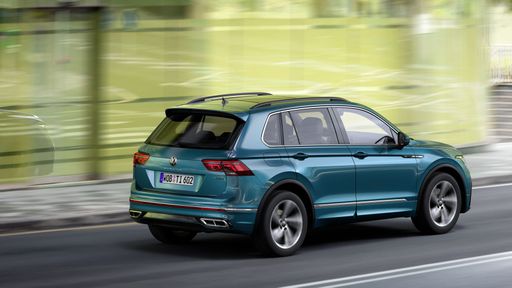
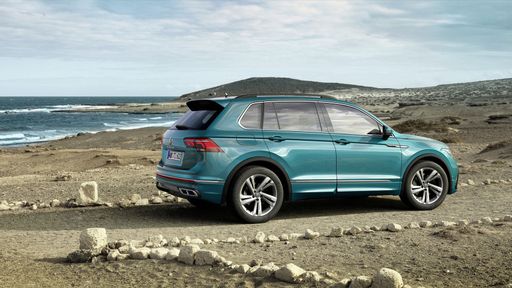
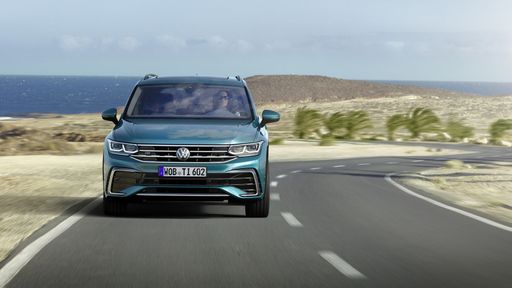
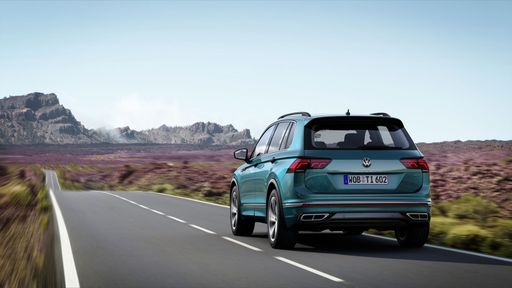
VW Tiguan

4.2 (12 Reviews)
rate
  • very slightly cheaper
  • clearly more trunk space
details

All details on performance, efficiency, range and trunk space can be found in the technical comparison below – including user reviews for both models.

Formentor

Head-to-head: CUPRA Formentor and VW Tiguan

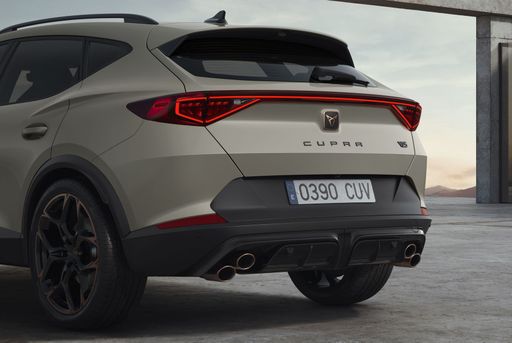
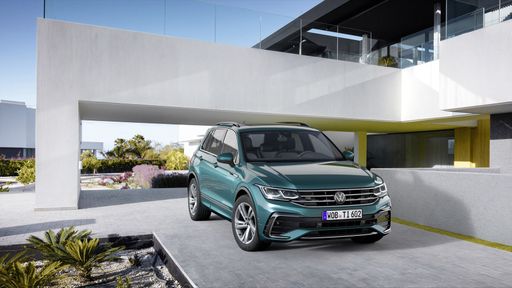
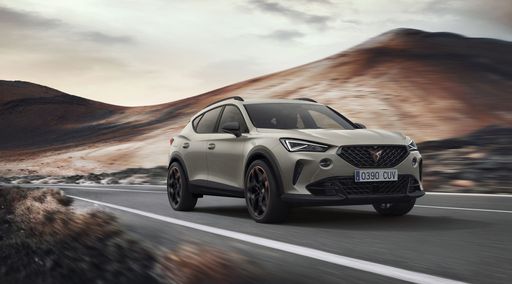
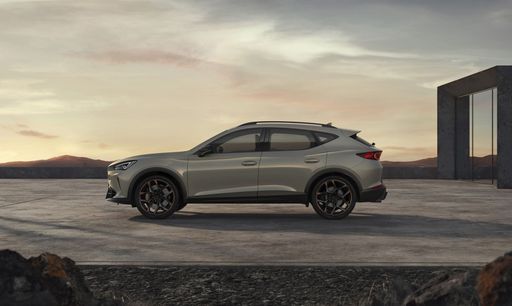
CUPRA Formentor and VW Tiguan present two distinct takes on the compact SUV, and in this CUPRA Formentor VS VW Tiguan comparison we’re looking beyond specs to how each car behaves for real owners. The Formentor leans into sportiness and a sharper chassis feel, while the Tiguan emphasises space, composure and long-distance comfort. Rather than a spec fight, this comparison focuses on character, cabin usability, everyday practicality and how each car will age in routine use. Think of it as a buyer’s guide for people deciding between a lively, design-forward crossover and a more conventional, family-oriented SUV.
Tiguan

Driving character and on-road manners

The CUPRA Formentor drives like a compact performance crossover: direct steering, a taut chassis and a lineup of engines that reward brisk inputs. That sharper setup feels engaging in corners and city on-ramps, but it also exposes wind and road noise sooner than a comfort-tuned rival. The VW Tiguan takes the opposite approach, tuning for calm and predictability — the steering and suspension encourage relaxed progress rather than enthusiasm. You get less drama in the Tiguan but more composure on long runs and when the car is loaded, a trade-off that matters if you spend a lot of time on motorways. If you value crisp responses and stronger acceleration, the Formentor clearly leans that way; if you prefer a forgiving, undemanding drive, the Tiguan makes more sense.

Formentor

Comfort, cabin feel and perceived quality

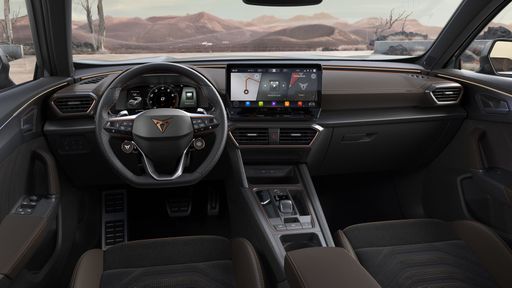
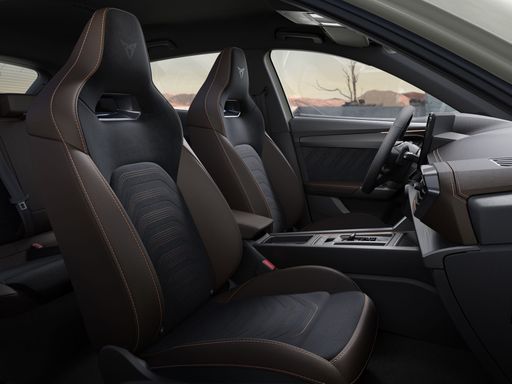
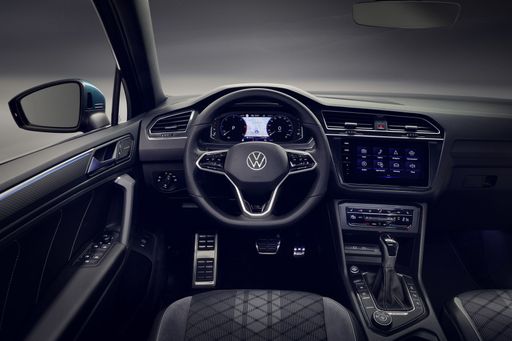
Inside, the CUPRA Formentor aims for a sporty, textured ambience with heavily bolstered seats and sharper cockpit cues that feel tactile and purposeful. Those sports seats are great for enthusiastic drivers but can feel snug for big rear passengers or when you need flexible load space. The VW Tiguan trades some of that flair for outright roominess and slightly more conservative material choices that read as solid and reassuring. Both cabins have shifted toward larger screens and fewer physical knobs, but the Formentor’s illuminated touch-sliders are still a different feel to the Tiguan’s cleaner menu-driven touchscreen — neither will please haptic purists entirely. Perceived quality favours the Tiguan for its quietness and overall refinement, while the Formentor wins on sport-focused details and a stronger first impression.

Tiguan

Practicality and family usability

Practicality is where the VW Tiguan asserts itself: more usable rear space, a sliding bench and a noticeably larger boot make daily family life easier. The CUPRA Formentor manages everyday tasks but its cargo capacity changes depending on drivetrain and the PHEV or AWD versions bite into boot space. That matters in real life — pushchairs, holiday luggage and bulky sports gear fit more comfortably in the Tiguan without creative packing. Conversely, the Formentor’s compact exterior and sporty packaging suit two-adult households or drivers who prioritise style and dynamics over maximum load flexibility.

Formentor

City friendliness and long-distance behavior

In the city the CUPRA Formentor’s compact length and sharp steering make it feel nimble and more engaging to place in traffic. Its PHEV versions also have an advantage for short, everyday electric-only trips when you can charge regularly. On long distances the VW Tiguan is the more forgiving companion: quieter at speed, with suspension options that widen the comfort spread for motorway miles. The Tiguan’s calmer character also helps when you’re loaded with passengers and luggage, while the Formentor will reward highway overtakes with crisper acceleration at the cost of a firmer ride and more cabin noise.

Tiguan

Buyer fit and what to test next

Which to pick depends squarely on priorities: choose the CUPRA Formentor if you want a lively, design-forward compact crossover that feels like a driver’s car. Opt for the VW Tiguan if rear-seat space, boot practicality and low-effort long-distance cruising top your list. Both models offer a range of engines and plug-in choices, so variant selection will materially change real-world fuel use, cargo and noise — test the specific version you intend to buy. Read on to the technical comparison for the detailed variant-to-variant trade-offs that turn these character differences into concrete numbers and practical buying decisions.

Here’s where it gets real: The technical differences in detail

Formentor

Costs and Efficiency:

Looking at overall running costs, both models reveal some interesting differences in everyday economy.

VW Tiguan is very slightly cheaper – starting at 33,600 £ , while the CUPRA Formentor costs 35,800 £ . That’s a price difference of around 2,173 £.

Both cars consume an average of 1.4 L/100km – no difference here.

The electric range is almost identical – both manage about 126 km on a single charge.

Tiguan

Engine and Performance:

Power, torque and acceleration say a lot about how a car feels on the road. This is where you see which model delivers more driving dynamics.

When it comes to engine power, the CUPRA Formentor offers clearly more power – delivering 390 HP compared to 272 HP. That’s roughly 118 HP more horsepower.

When accelerating from 0 to 100 km/h, the CUPRA Formentor is clearly quicker – completing the sprint in 4.2 s, while the VW Tiguan takes 5.9 s. That’s about 1.7 s quicker.

There’s also a difference in torque: the CUPRA Formentor delivers a bit more torque with 480 Nm compared to 400 Nm. That’s about 80 Nm more.

Formentor

Space and Everyday Use:

Beyond pure performance, interior space and usability matter most in daily life. This is where you see which car is more practical and versatile.

Both vehicles offer seating for 5 people.

In terms of curb weight, CUPRA Formentor is a bit lighter – 1,434 kg compared to 1,599 kg. The difference is around 165 kg.

Looking at boot space, the VW Tiguan offers clearly more boot space – 652 L compared to 450 L. That’s a difference of about 202 L.

When it comes to payload, the VW Tiguan carries very slightly more – 556 kg compared to 526 kg. That’s a difference of about 30 kg.

Who wins the race in the data check?

The CUPRA Formentor stands well ahead of its rival in the objective data comparison.
This result only shows which model scores more points on paper – not which of the two cars feels right for you.

from £35,800
Formentor

CUPRA Formentor

  • Engine Type Petrol, Petrol MHEV, Diesel, Plug-in Hybrid
  • Transmission Automatic, Manual
  • Drive Type Front-Wheel Drive, All-Wheel Drive
  • Power HP 150 - 390 HP
  • Consumption L/100km 1.4 - 10.1 L/100km
  • Electric Range 117 - 126 km
CUPRA Formentor
VW Tiguan

Costs and Consumption

View detailed analysis

Engine and Performance

View detailed analysis

Dimensions and Body

View detailed analysis

CUPRA Formentor

The CUPRA Formentor blends sporty driving dynamics with crossover practicality, delivering sharp handling and an engaging character that makes it fun on twisty roads as well as in daily driving. Inside, it pairs a driver-focused cabin and premium materials with clever practicality, offering a confident, distinctive alternative to conventional SUVs.

details

VW Tiguan

The VW Tiguan is a well-rounded compact SUV that delivers a comfortable cabin, composed ride and practical space suited to everyday family life. Its straightforward tech and clever storage make it easy to live with, leaning toward sensible refinement rather than flash.

details
CUPRA Formentor
VW Tiguan

Costs and Consumption

Price
35,800 - 62,500 £
Price
33,600 - 54,600 £
Consumption L/100km
1.4 - 10.1 L/100km
Consumption L/100km
1.4 - 8.4 L/100km
Consumption kWh/100km
-
Consumption kWh/100km
-
Electric Range
117 - 126 km
Electric Range
118 - 126 km
Battery Capacity
-
Battery Capacity
-
co2
32 - 229 g/km
co2
32 - 190 g/km
Fuel tank capacity
-
Fuel tank capacity
-

Dimensions and Body

Body Type
SUV
Body Type
SUV
Seats
5
Seats
5
Doors
-
Doors
-
Curb weight
1,434 - 1,742 kg
Curb weight
1,599 - 1,879 kg
Trunk capacity
345 - 450 L
Trunk capacity
490 - 652 L
Length
-
Length
-
Width
1,839 - 1,852 mm
Width
1,842 - 1,859 mm
Height
-
Height
-
Max trunk capacity
-
Max trunk capacity
-
Payload
439 - 526 kg
Payload
499 - 556 kg

Engine and Performance

Engine Type
Petrol, Petrol MHEV, Diesel, Plug-in Hybrid
Engine Type
Petrol MHEV, Petrol, Diesel, Plug-in Hybrid
Transmission
Automatic, Manual
Transmission
Automatic
Transmission Detail
Dual-Clutch Automatic, Manual Gearbox
Transmission Detail
Dual-Clutch Automatic
Drive Type
Front-Wheel Drive, All-Wheel Drive
Drive Type
Front-Wheel Drive, All-Wheel Drive
Power HP
150 - 390 HP
Power HP
130 - 272 HP
Acceleration 0-100km/h
4.2 - 9 s
Acceleration 0-100km/h
5.9 - 10.2 s
Max Speed
-
Max Speed
-
Torque
250 - 480 Nm
Torque
220 - 400 Nm
Number of Cylinders
4 - 5
Number of Cylinders
4
Power kW
110 - 287 kW
Power kW
96 - 200 kW
Engine capacity
1,498 - 2,480 cm3
Engine capacity
1,498 - 1,984 cm3

General

Model Year
2,024 - 2,026
Model Year
2,024 - 2,026
CO2 Efficiency Class
G, E, D, F, B
CO2 Efficiency Class
D, E, F, B, G
Brand
CUPRA
Brand
VW
DriveDuel uses data analysis and artificial intelligence to evaluate vehicle data and create content. Content is regularly reviewed and improved. The displayed prices are estimates based on German list prices, adjusted to the respective country’s VAT. Country-specific registration taxes are not included. This information is not legally binding.