VS

Dacia Jogger vs Citroen C3 Aircross comparison

Compare performance (158 HP vs 145 HP), boot space and price (15,400 £ vs 16,400 £ ) at a glance. Find out which car is the better choice for you – Dacia Jogger or Citroen C3 Aircross?

Dacia Jogger vs Citroen C3 Aircross: Key differences

Dacia Jogger

4.4 (4 Reviews)
rate
  • barely cheaper
  • very slightly more power
  • somewhat more efficient
  • clearly quicker 0–100 km/h
  • very slightly lighter
  • markedly more trunk space
details

Citroen C3 Aircross

4.4 (2 Reviews)
rate
details

All details on performance, efficiency, range and trunk space can be found in the technical comparison below – including user reviews for both models.

By Achim Sedelmaier

Jogger

A Clash of Practicality: Citroen C3 Aircross VS Dacia Jogger

In the bustling world of subcompact crossovers and multipurpose vehicles, the Citroen C3 Aircross and Dacia Jogger make a compelling case for practicality and innovation. Both models, well-poised to capture versatile utility, offer distinctive attributes tailored for drivers seeking a blend of comfort, efficiency, and space.
C3 Aircross

Design & Dimensions

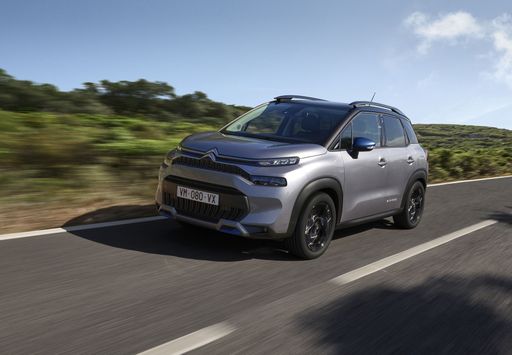
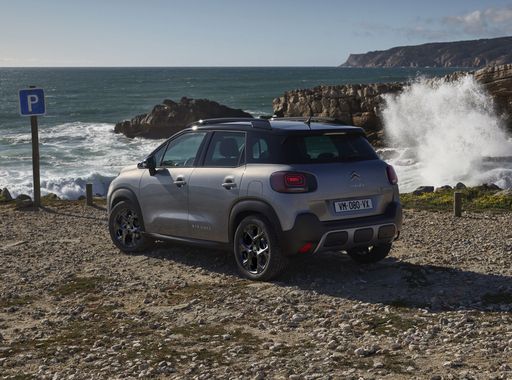
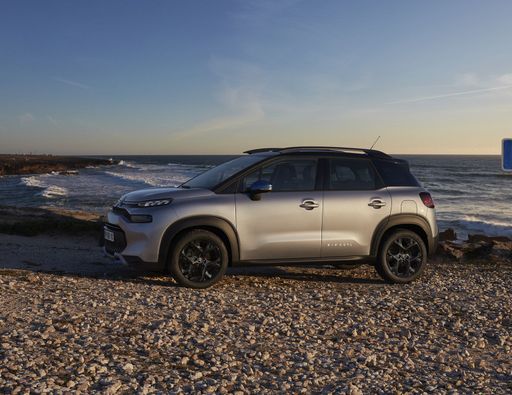
The Citroen C3 Aircross embraces an SUV aesthetic, capturing attention with its modern design and robust stance. Measuring 4,395 mm in length, 1,795 mm in width, and 1,660 mm in height, it commands an assertive presence on the road. With a 5-seater configuration and a roomy trunk capacity of 460 liters, it caters to those who require ample space for both passengers and cargo.

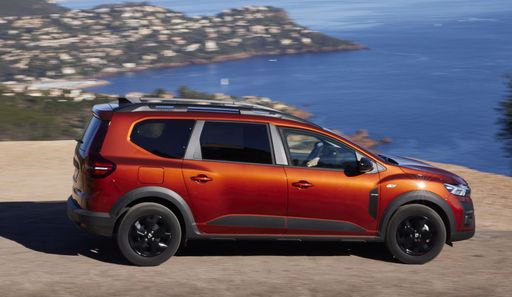
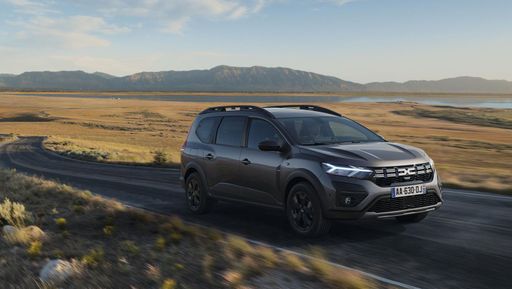
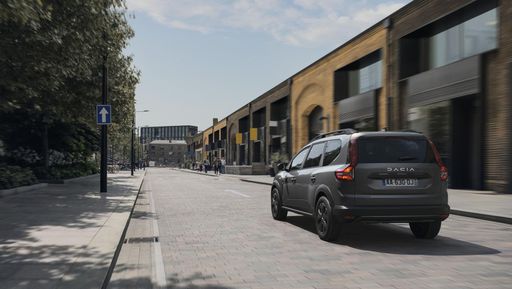
Conversely, the Dacia Jogger is built as an MPV, reflecting its emphasis on extended utility. With a longer body at 4,547 mm, a slightly narrower width of 1,784 mm, and a taller height of 1,674 mm, it offers flexibility between a 5 or 7-seater arrangement. Notably, its trunk capacity can expand up to 607 liters, accommodating the needs of larger families and long-haul travelers alike.

Jogger

Powertrains & Performance

The Citroen C3 Aircross presents a spectrum of engine choices, including petrol MHEV, petrol, and fully electric variants. With power outputs ranging from 101 HP to 136 HP and CO2 emissions between 0 to 139 g/km, it offers an eco-conscious driving experience. Its electric version delivers a commendable range of up to 306 km and accelerates from 0-100 km/h in just 11 to 11.4 seconds.

The Dacia Jogger offers a different strategy, leveraging full hybrid, LPG, and petrol engine configurations. Output varies between 91 HP and 140 HP, with commendable fuel consumption rates, particularly the hybrid variant at 4.7 L/100km. The model excels in its CO2 efficiency, achieving as low as 105 g/km, and delivers solid performance with acceleration times ranging from 9.8 to 13.2 seconds.

C3 Aircross

Technology & Features

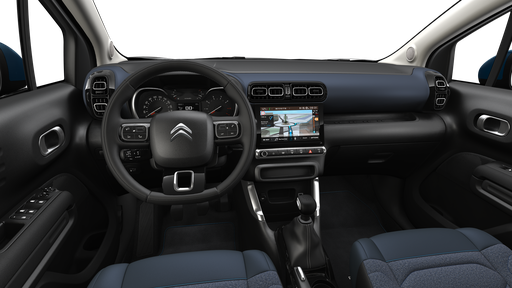
Citroen has infused the C3 Aircross with cutting-edge tech, such as advanced driver assistance systems and dual-clutch automatic transmission options. The electric model showcases innovative solutions like a reduction gearbox and regenerative braking to maximize efficiency.

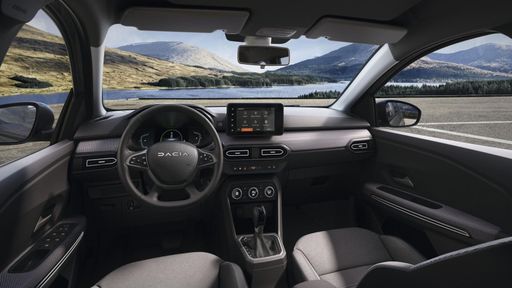
Dacia, known for its no-frills approach, provides the Jogger with a suite of practical features, such as an easy-fold seating system and adaptable cargo space configurations. The focus is on user-friendliness and reliability rather than luxurious embellishments, appealing to budget-conscious consumers.

Jogger

Price & Value Proposition

Both cars are designed to offer excellent value. The Citroen C3 Aircross, with its diverse engine lineup and electric innovation, might appeal more to those looking for modern aesthetics and advanced technologies. The Dacia Jogger, on the other hand, stands as a testament to practicality with extra seating capacity and economical running costs, appealing to families and utility-minded drivers.

C3 Aircross

The Verdict

Choosing between the Citroen C3 Aircross and Dacia Jogger ultimately boils down to individual lifestyle needs. If cutting-edge technology and an SUV feel are central to your preferences, the C3 Aircross might be your match. For those prioritizing spacious interiors and affordability, the Jogger distinctively stands out. Either way, both models represent the automotive world's adaptive response to contemporary consumer demands for versatility and eco-efficiency.

Here’s where it gets real: The technical differences in detail

Jogger

Costs and Efficiency:

When it comes to price and running costs, the biggest differences usually appear. This is often where you see which car fits your budget better in the long run.

Dacia Jogger is barely cheaper – starting at 15,400 £ , while the Citroen C3 Aircross costs 16,400 £ . That’s a price difference of around 1,028 £.

Fuel consumption also shows a difference: the Dacia Jogger uses 4.5 L/100km and is somewhat more efficient than the Citroen C3 Aircross with 5.3 L/100km. The difference is about 0.8 L/100km.

C3 Aircross

Engine and Performance:

Power, torque and acceleration say a lot about how a car feels on the road. This is where you see which model delivers more driving dynamics.

When it comes to engine power, the Dacia Jogger offers very slightly more power – delivering 158 HP compared to 145 HP. That’s roughly 13 HP more horsepower.

When accelerating from 0 to 100 km/h, the Dacia Jogger is clearly quicker – completing the sprint in 8.9 s, while the Citroen C3 Aircross takes 12.3 s. That’s about 3.4 s quicker.

There’s also a difference in torque: the Citroen C3 Aircross delivers moderately more torque with 230 Nm compared to 200 Nm. That’s about 30 Nm more.

Jogger

Space and Everyday Use:

Beyond pure performance, interior space and usability matter most in daily life. This is where you see which car is more practical and versatile.

Seats: Dacia Jogger offers more seats – 7 vs 5.

In terms of curb weight, Dacia Jogger is very slightly lighter – 1,268 kg compared to 1,312 kg. The difference is around 44 kg.

Looking at boot space, the Dacia Jogger offers markedly more boot space – 607 L compared to 460 L. That’s a difference of about 147 L.

When it comes to payload, the Dacia Jogger carries somewhat more – 559 kg compared to 462 kg. That’s a difference of about 97 kg.

Who wins the race in the data check?

The Dacia Jogger holds a decisive overall lead in the objective data comparison.
This result only shows which model scores more points on paper – not which of the two cars feels right for you.

from £15,400
Jogger

Dacia Jogger

  • Engine Type Petrol, Full Hybrid, LPG
  • Transmission Manuel, Automatic
  • Drive Type Front-Wheel Drive
  • Power HP 110 - 158 HP
  • Consumption L/100km 4.5 - 7.6 L/100km
Dacia Jogger
Citroen C3 Aircross

Costs and Consumption

View detailed analysis

Engine and Performance

View detailed analysis

Dimensions and Body

View detailed analysis

Dacia Jogger

The Dacia Jogger is a no-nonsense family mover that stretches the idea of value with cavernous practicality and flexible space, perfect for buyers who need a sensible, everyday Swiss Army knife on wheels. It doesn’t try to be glamorous — instead it wins hearts with cheerful thrift, durable materials and honest engineering, giving you useful transport without the pretence.

details

Citroen C3 Aircross

The Citroën C3 Aircross is a compact crossover that stands out with its quirky, friendly styling and a tall, airy cabin that prioritizes comfort. It suits buyers who value flexible interior space, good visibility and easy urban driving over sporty performance.

details
Dacia Jogger
Citroen C3 Aircross

Costs and Consumption

Price
15,400 - 23,500 £
Price
16,400 - 29,000 £
Consumption L/100km
4.5 - 7.6 L/100km
Consumption L/100km
5.3 - 5.9 L/100km
Consumption kWh/100km
-
Consumption kWh/100km
16.1 - 18.1 kWh/100km
Electric Range
-
Electric Range
307 - 400 km
Battery Capacity
-
Battery Capacity
-
co2
103 - 138 g/km
co2
0 - 134 g/km
Fuel tank capacity
-
Fuel tank capacity
-

Dimensions and Body

Body Type
MPV
Body Type
SUV
Seats
5 - 7
Seats
5
Doors
-
Doors
-
Curb weight
1,268 - 1,463 kg
Curb weight
1,312 - 1,608 kg
Trunk capacity
160 - 607 L
Trunk capacity
460 L
Length
-
Length
-
Width
1,784 mm
Width
1,795 mm
Height
-
Height
-
Max trunk capacity
-
Max trunk capacity
-
Payload
384 - 559 kg
Payload
407 - 462 kg

Engine and Performance

Engine Type
Petrol, Full Hybrid, LPG
Engine Type
Electric, Petrol, Petrol MHEV
Transmission
Manuel, Automatic
Transmission
Automatic, Manuel
Transmission Detail
Manual Gearbox, Automatic Gearbox, Dual-Clutch Automatic
Transmission Detail
Reduction Gearbox, Manual Gearbox, Dual-Clutch Automatic
Drive Type
Front-Wheel Drive
Drive Type
Front-Wheel Drive
Power HP
110 - 158 HP
Power HP
101 - 145 HP
Acceleration 0-100km/h
8.9 - 12 s
Acceleration 0-100km/h
12.3 - 13 s
Max Speed
-
Max Speed
-
Torque
190 - 200 Nm
Torque
125 - 230 Nm
Number of Cylinders
3 - 4
Number of Cylinders
3
Power kW
81 - 116 kW
Power kW
74 - 107 kW
Engine capacity
999 - 1,789 cm3
Engine capacity
1,199 cm3

General

Model Year
2025
Model Year
2,024 - 2,026
CO2 Efficiency Class
D, E, C
CO2 Efficiency Class
A, D
Brand
Dacia
Brand
Citroen
DriveDuel uses data analysis and artificial intelligence to evaluate vehicle data and create content. Content is regularly reviewed and improved. The displayed prices are estimates based on German list prices, adjusted to the respective country’s VAT. Country-specific registration taxes are not included. This information is not legally binding.