VS

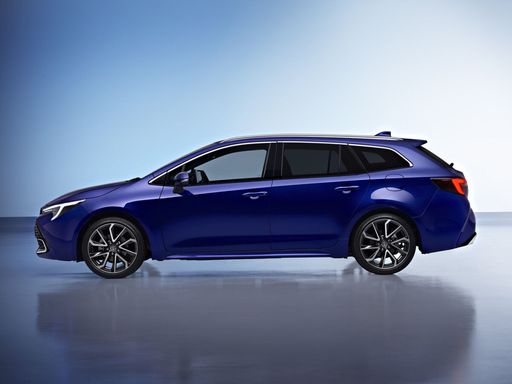
Dacia Jogger vs Toyota Corolla Touring Sports comparison

Compare performance (158 HP vs 178 HP), boot space and price (15,400 £ vs 29,600 £ ) at a glance. Find out which car is the better choice for you – Dacia Jogger or Toyota Corolla Touring Sports?

Dacia Jogger vs Toyota Corolla Touring Sports: Key differences

Dacia Jogger

4.3 (3 Reviews)
rate
  • clearly cheaper
  • slightly lighter
  • very slightly more trunk space
details

Toyota Corolla Touring Sports

4.4 (2 Reviews)
rate
  • slightly more power
  • marginally more efficient
  • a bit quicker 0–100 km/h
details

All details on performance, efficiency, range and trunk space can be found in the technical comparison below – including user reviews for both models.

By Achim Sedelmaier

Jogger

Introduction: The Family Space Race

When it comes to family-friendly vehicles, the Dacia Jogger and the Toyota Corolla Touring Sports stand out as two compelling options. Each offers unique features, exceptional utility, and innovative technology, perfect for modern families on the go. In this detailed comparison, we will explore how these vehicles measure up in terms of technical specifications, innovations, and overall value.
Corolla Touring Sports

Design and Dimensions

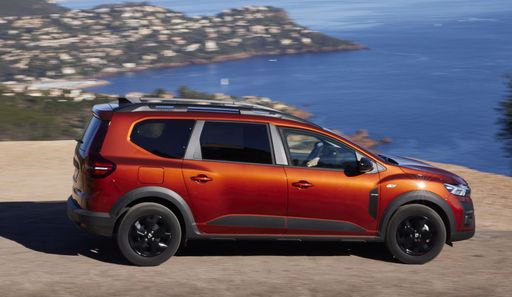
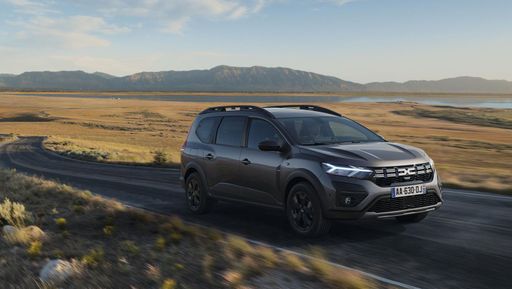
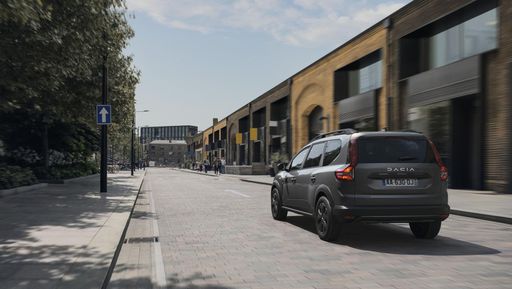
The Dacia Jogger, classified as an MPV, boasts dimensions that cater to spacious family needs. Measuring 4547 mm in length, 1784 mm in width, and 1674 mm in height, the Jogger is designed for practicality, offering substantial trunk capacity of up to 607 liters.

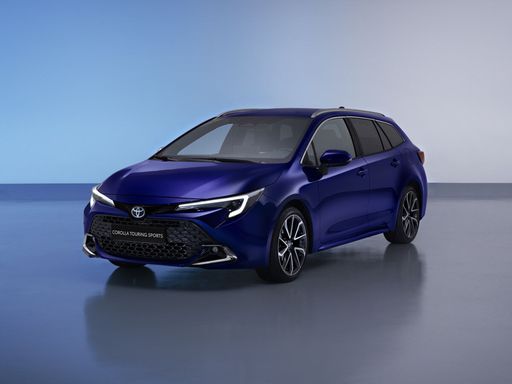
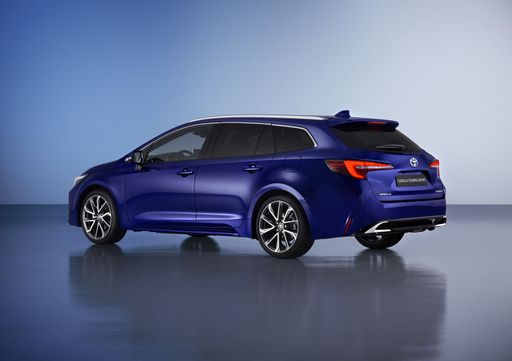
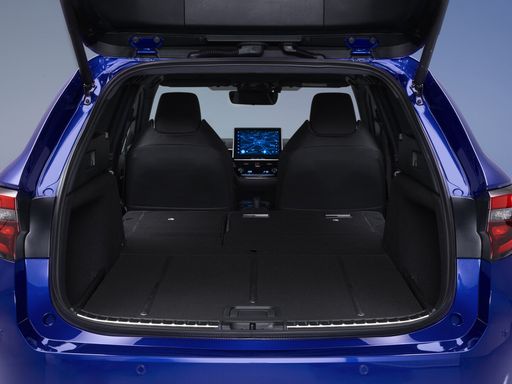
In contrast, the Toyota Corolla Touring Sports, a striking wagon, comes in at 4650 mm long, 1790 mm wide, and 1435 mm high, providing excellent aerodynamics. With a slightly smaller trunk capacity of 596 liters, it still offers ample space for luggage and groceries, making it suitable for family adventures.

Jogger

Power and Performance

Under the hood, the Dacia Jogger offers a versatile range of engines. Its lineup includes petrol, LPG, and full hybrid options, with power output varying from 91 HP to 140 HP. With a maximum torque of up to 200 Nm and acceleration times ranging from 9.8 to 13.2 seconds for 0-100 km/h, the Jogger presents a solid performance for everyday driving.

The Toyota Corolla Touring Sports takes a more refined approach to power with its full hybrid engine, boasting up to 196 HP and maximum torque of 144 Nm. The acceleration figures are impressive, ranging from 7.5 seconds to 9.2 seconds for 0-100 km/h. This efficient engine setup also contributes to its lower fuel consumption ratings of around 4.4 to 4.6 L/100km, making it a great choice for eco-conscious drivers.

Corolla Touring Sports

Fuel Efficiency and Emissions

Fuel efficiency is a strong point for both models. The Dacia Jogger showcases consumption figures from 5.7 to 7.7 L/100km depending on the engine choice, demonstrating its practicality in fuel costs. The CO2 emissions for the Jogger range from 105 g/km to 137 g/km, reflecting its decent environmental credentials.

The Corolla Touring Sports, on the other hand, leads the way with more competitive fuel consumption figures of 4.4 to 4.6 L/100km, paired with remarkable CO2 emissions of just 100 g/km. This illustrates Toyota's commitment to sustainability and makes the Corolla an attractive choice for families prioritizing lower environmental impact.

Jogger

Interior Comfort and Technology

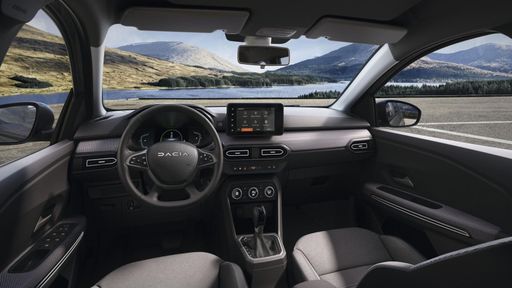
Inside the Dacia Jogger, the focus is on functionality. The spacious cabin can accommodate either five or seven seats, depending on configuration, with practical storage solutions throughout. The 2024 model sees enhancements in comfort, including improved upholstery and infotainment systems, although it may not offer the most cutting-edge technology on the market.

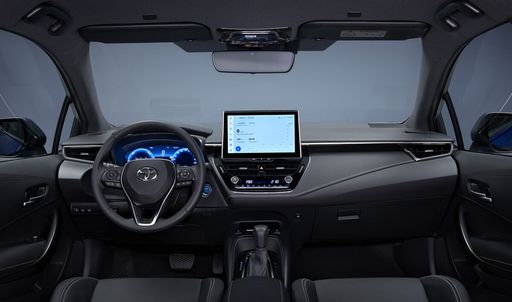
Conversely, the Toyota Corolla Touring Sports excels in providing a premium experience. Its interior features plush materials, an intuitive infotainment system, and ample legroom for all passengers. The introduction of advanced safety features and smart driving aids reinforces Toyota's reputation for reliability and innovation.

Corolla Touring Sports

Safety Features

Safety is a crucial consideration for family vehicles. The Dacia Jogger offers essential safety features, although it may not be as advanced as the competition. With standard airbags, ABS, and optional driver-assist technologies, it serves its purpose well for everyday use.

The Toyota Corolla Touring Sports raises the bar with an array of advanced safety features, including Toyota Safety Sense, which provides adaptive cruise control, lane departure alert, and pre-collision systems. These innovations underline Toyota's commitment to driver and passenger safety, making it a leading choice in the wagon segment.

Jogger

Conclusion: Which Should You Choose?

The Dacia Jogger and Toyota Corolla Touring Sports present compelling alternatives in the family vehicle sector, each with its strengths. The Jogger is priced more affordably, making it a practical choice for larger families needing extra space. Meanwhile, the Corolla Touring Sports offers a blend of efficiency, premium comfort, and cutting-edge safety features, catering to those who seek a more refined driving experience.

Your choice ultimately hinges on what you value most—space and affordability with the Dacia Jogger, or efficiency and premium features with the Toyota Corolla Touring Sports. Regardless of your pick, both models promise to make your family journeys enjoyable and memorable.

Here’s where it gets real: The technical differences in detail

Jogger

Costs and Efficiency:

Price and efficiency are often the first things buyers look at. Here it becomes clear which model has the long-term edge – whether at the pump, the plug, or in purchase price.

Dacia Jogger is clearly cheaper – starting at 15,400 £ , while the Toyota Corolla Touring Sports costs 29,600 £ . That’s a price difference of around 14,185 £.

Fuel consumption also shows a difference: the Toyota Corolla Touring Sports uses 4.4 L/100km and is marginally more efficient than the Dacia Jogger with 4.5 L/100km. The difference is about 0.1 L/100km.

Corolla Touring Sports

Engine and Performance:

Power, torque and acceleration are the classic benchmarks for car enthusiasts – and here, some clear differences start to show.

When it comes to engine power, the Toyota Corolla Touring Sports offers slightly more power – delivering 178 HP compared to 158 HP. That’s roughly 20 HP more horsepower.

When accelerating from 0 to 100 km/h, the Toyota Corolla Touring Sports is a bit quicker – completing the sprint in 7.5 s, while the Dacia Jogger takes 8.9 s. That’s about 1.4 s quicker.

Jogger

Space and Everyday Use:

Whether family car or daily driver – which one offers more room, flexibility and comfort?

Seats: Dacia Jogger offers more seats – 7 vs 5.

In terms of curb weight, Dacia Jogger is slightly lighter – 1,268 kg compared to 1,485 kg. The difference is around 217 kg.

Looking at boot space, the Dacia Jogger offers very slightly more boot space – 607 L compared to 596 L. That’s a difference of about 11 L.

When it comes to payload, the Dacia Jogger carries markedly more – 559 kg compared to 440 kg. That’s a difference of about 119 kg.

Who wins the race in the data check?

The Dacia Jogger is clearly superior overall in the objective data comparison.
This result only shows which model scores more points on paper – not which of the two cars feels right for you.

from £15,400
Jogger

Dacia Jogger

  • Engine Type Petrol, Full Hybrid, LPG
  • Transmission Manuel, Automatic
  • Drive Type Front-Wheel Drive
  • Power HP 110 - 158 HP
  • Consumption L/100km 4.5 - 7.6 L/100km
Dacia Jogger
Toyota Corolla Touring Sports

Costs and Consumption

View detailed analysis

Engine and Performance

View detailed analysis

Dimensions and Body

View detailed analysis

Dacia Jogger

The Dacia Jogger is a no-nonsense family mover that stretches the idea of value with cavernous practicality and flexible space, perfect for buyers who need a sensible, everyday Swiss Army knife on wheels. It doesn’t try to be glamorous — instead it wins hearts with cheerful thrift, durable materials and honest engineering, giving you useful transport without the pretence.

details

Toyota Corolla Touring Sports

The Toyota Corolla Touring Sports is a sensible yet stylish estate that blends everyday practicality with Toyota's trademark reliability, making it the kind of car that quietly gets on with family life without drama. Inside it's cleverly packaged for luggage and kids' gear and feels calm and comfortable on the road — sensible rather than flashy, but with enough character to make daily drives more enjoyable.

details
Dacia Jogger
Toyota Corolla Touring Sports

Costs and Consumption

Price
15,400 - 23,500 £
Price
29,600 - 36,400 £
Consumption L/100km
4.5 - 7.6 L/100km
Consumption L/100km
4.4 L/100km
Consumption kWh/100km
-
Consumption kWh/100km
-
Electric Range
-
Electric Range
-
Battery Capacity
-
Battery Capacity
-
co2
103 - 138 g/km
co2
100 g/km
Fuel tank capacity
-
Fuel tank capacity
43 L

Dimensions and Body

Body Type
MPV
Body Type
Estate
Seats
5 - 7
Seats
5
Doors
-
Doors
5
Curb weight
1,268 - 1,463 kg
Curb weight
1,485 - 1,515 kg
Trunk capacity
160 - 607 L
Trunk capacity
581 - 596 L
Length
-
Length
4,650 mm
Width
1,784 mm
Width
1,790 mm
Height
-
Height
1,435 mm
Max trunk capacity
-
Max trunk capacity
1,591 - 1,606 L
Payload
384 - 559 kg
Payload
400 - 440 kg

Engine and Performance

Engine Type
Petrol, Full Hybrid, LPG
Engine Type
Full Hybrid
Transmission
Manuel, Automatic
Transmission
Automatic
Transmission Detail
Manual Gearbox, Automatic Gearbox, Dual-Clutch Automatic
Transmission Detail
CVT
Drive Type
Front-Wheel Drive
Drive Type
Front-Wheel Drive
Power HP
110 - 158 HP
Power HP
140 - 178 HP
Acceleration 0-100km/h
8.9 - 12 s
Acceleration 0-100km/h
7.5 - 9.2 s
Max Speed
-
Max Speed
180 km/h
Torque
190 - 200 Nm
Torque
-
Number of Cylinders
3 - 4
Number of Cylinders
4
Power kW
81 - 116 kW
Power kW
103 - 131 kW
Engine capacity
999 - 1,789 cm3
Engine capacity
1,798 - 1,987 cm3

General

Model Year
2025
Model Year
2025
CO2 Efficiency Class
D, E, C
CO2 Efficiency Class
C
Brand
Dacia
Brand
Toyota
DriveDuel uses data analysis and artificial intelligence to evaluate vehicle data and create content. Content is regularly reviewed and improved. The displayed prices are estimates based on German list prices, adjusted to the respective country’s VAT. Country-specific registration taxes are not included. This information is not legally binding.