VS

DS Automobiles DS 7 vs Peugeot 5008 comparison

Compare performance (130 HP vs 325 HP), boot space and price (41,900 £ vs 39,300 £ ) at a glance. Find out which car is the better choice for you – DS Automobiles DS 7 or Peugeot 5008?

DS Automobiles DS 7 vs Peugeot 5008: Key differences

DS Automobiles DS 7

4.7 (3 Reviews)
rate
  • marginally lighter
  • clearly more trunk space
details

Peugeot 5008

4.7 (1 Reviews)
rate
  • only slightly cheaper
  • considerably more power
  • substantially more efficient
  • clearly quicker 0–100 km/h
details

All details on performance, efficiency, range and trunk space can be found in the technical comparison below – including user reviews for both models.

By Achim Sedelmaier

DS 7

DS Automobiles DS 7 Crossback vs Peugeot 5008: An In-Depth Comparison

In today's automotive landscape, SUV enthusiasts are spoilt for choice. Among the competition, the DS 7 Crossback and the Peugeot 5008 stand out not just for their aesthetics but also for their innovative engineering and performance capabilities. This article delves into a detailed comparison of these two crossover SUVs, examining key technical aspects, innovations, and user-centric features.
5008

Performance and Engine Options

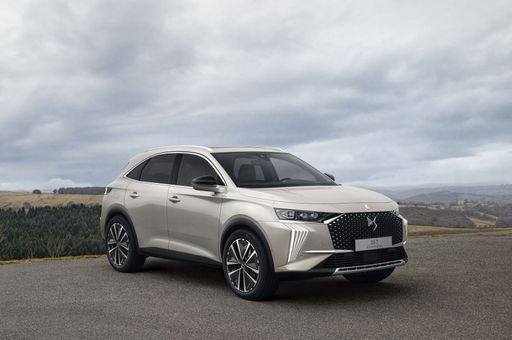
The DS 7 Crossback offers a range of engine options catering to diverse preferences, including Diesel and Plug-in Hybrid variants. The power output ranges from a practical 130 HP to an exhilarating 360 HP in the top-tier version, matched with either Front-Wheel Drive or All-Wheel Drive configurations. With a remarkable acceleration time of just 5.7 seconds from 0 to 100 km/h, the Crossback ensures a thrilling drive.

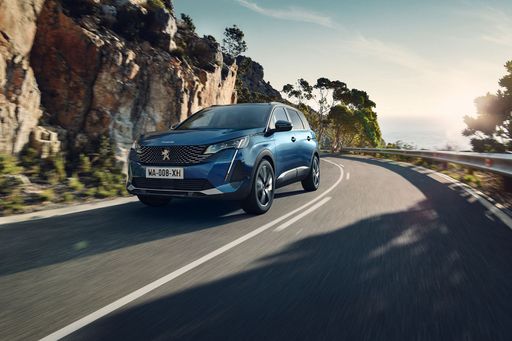
Conversely, the Peugeot 5008 is equipped with a range of Petrol MHEV, Plug-in Hybrid, and Electric engines, producing up to 231 HP. While it may not have the high-end performance figures of the DS 7 Crossback, it manages respectable 0-100 km/h times, topping out at 8.8 seconds. The 5008 also benefits from a lighter curb weight compared to the DS, enhancing its agility.

DS 7

Fuel Efficiency and Range

When it comes to fuel economy, the DS 7 Crossback excels with its Plug-in Hybrid variants, achieving consumption as low as 1.3 L/100 km. Its electric range peaks at 65 km, making it suitable for short daily commutes without relying on the internal combustion engine.

On the other hand, the Peugeot 5008 boasts impressive fuel efficiency figures as well, especially in its Electric variant, which offers an electric range of up to 664 km. The 5008's hybrid configurations also provide an average consumption as low as 1 L/100 km, making it a strong contender for eco-conscious drivers.

5008

Interior Comfort and Space

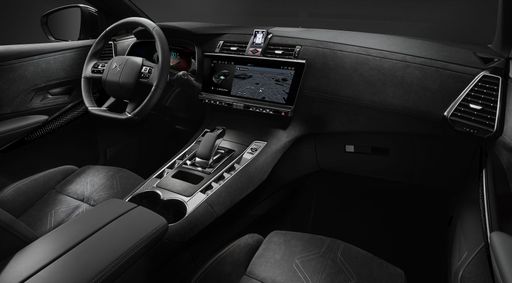
Inside, the DS 7 Crossback showcases luxurious materials and cutting-edge technology designed for comfort and sophistication. With a spacious trunk capacity of 555 liters, it offers ample room for luggage while hosting five passengers comfortably. The attention to detail and custom finishes set it apart in the luxury SUV segment.

In contrast, the Peugeot 5008 shines in practicality with three rows of seating, accommodating up to seven passengers. The interior space is cleverly designed to provide maximum versatility, achieving a trunk capacity of 748 liters when the third row is folded down. This flexibility makes the 5008 an excellent family-friendly option.

DS 7

Technological Innovations

The DS 7 Crossback is implemented with state-of-the-art technologies, including advanced driver-assistance systems and an intuitive infotainment setup. Features such as adaptive cruise control, lane-keeping assist, and collision warning systems elevate its safety profile.

Meanwhile, the Peugeot 5008 integrates its i-Cockpit technology, which enhances driver engagement through a compact steering wheel and customizable digital display. It also includes features like a panoramic sunroof, advanced parking assistance, and a host of connectivity options, making it a tech-savvy choice for modern families.

5008

Conclusion: Which One to Choose?

Choosing between the DS 7 Crossback and the Peugeot 5008 ultimately boils down to specific needs and preferences. If you prioritize luxury and high-performance driving, the DS 7 Crossback might be the vehicle for you. However, if you value practicality, spaciousness, and excellent fuel economy, the Peugeot 5008 emerges as a well-rounded choice.

Both SUVs represent their brands' commitment to innovation and performance, ensuring they are solid contenders in the crowded SUV market. Whichever you choose, both vehicles promise an engaging driving experience with a focus on comfort and technology.

Here’s where it gets real: The technical differences in detail

DS 7

Costs and Efficiency:

When it comes to price and running costs, the biggest differences usually appear. This is often where you see which car fits your budget better in the long run.

Peugeot 5008 is only slightly cheaper – starting at 39,300 £ , while the DS Automobiles DS 7 costs 41,900 £ . That’s a price difference of around 2,614 £.

Fuel consumption also shows a difference: the Peugeot 5008 uses 2.7 L/100km and is substantially more efficient than the DS Automobiles DS 7 with 5.5 L/100km. The difference is about 2.8 L/100km.

5008

Engine and Performance:

Power, torque and acceleration say a lot about how a car feels on the road. This is where you see which model delivers more driving dynamics.

When it comes to engine power, the Peugeot 5008 offers considerably more power – delivering 325 HP compared to 130 HP. That’s roughly 195 HP more horsepower.

When accelerating from 0 to 100 km/h, the Peugeot 5008 is clearly quicker – completing the sprint in 6.5 s, while the DS Automobiles DS 7 takes 11.9 s. That’s about 5.4 s quicker.

There’s also a difference in torque: the Peugeot 5008 delivers substantially more torque with 511 Nm compared to 300 Nm. That’s about 211 Nm more.

DS 7

Space and Everyday Use:

Cabin size, boot volume and payload all play a role in everyday practicality. Here, comfort and flexibility make the difference.

Seats: Peugeot 5008 offers more seats – 7 vs 5.

In terms of curb weight, DS Automobiles DS 7 is marginally lighter – 1,651 kg compared to 1,700 kg. The difference is around 49 kg.

Looking at boot space, the DS Automobiles DS 7 offers clearly more boot space – 555 L compared to 348 L. That’s a difference of about 207 L.

When it comes to payload, the Peugeot 5008 carries visibly more – 640 kg compared to 399 kg. That’s a difference of about 241 kg.

Who wins the race in the data check?

The Peugeot 5008 stands well ahead of its rival in the objective data comparison.
This result only shows which model scores more points on paper – not which of the two cars feels right for you.

from £39,300
5008

Peugeot 5008

  • Engine Type Electric, Petrol MHEV, Plugin Hybrid
  • Transmission Automatic
  • Drive Type Front-Wheel Drive, All-Wheel Drive
  • Power HP 145 - 325 HP
  • Consumption L/100km 2.7 - 5.6 L/100km
  • Consumption kWh/100km 17.8 - 18.1 kWh/100km
  • Electric Range 78 - 669 km
DS Automobiles DS 7
Peugeot 5008

Costs and Consumption

View detailed analysis

Engine and Performance

View detailed analysis

Dimensions and Body

View detailed analysis

DS Automobiles DS 7

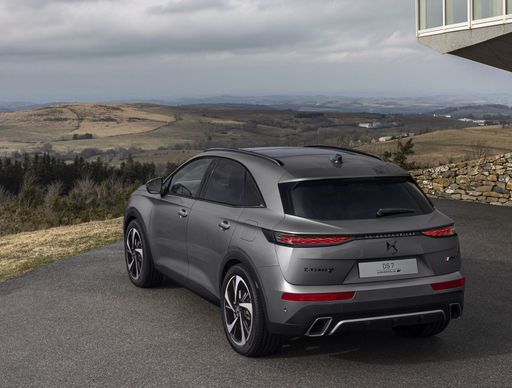
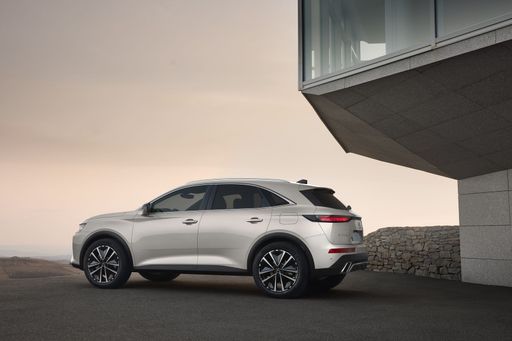
The DS 7 wraps Parisian elegance into SUV practicality, with sculpted surfaces, a jewel-like grille and an interior that feels more boutique lounge than family transporter. It appeals to buyers who want style and comfort without shouting, delivering a refined ride and clever tech that make daily driving feel a little more special — and yes, it’ll turn heads in the school run.

details

Peugeot 5008

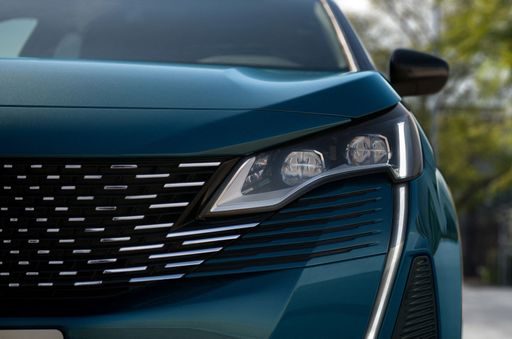
The Peugeot 5008 blends Peugeot's sharp design with the space and versatility families actually need, wrapping clever packaging and a premium-feeling cabin in a crisp, SUV-like silhouette. It drives with more poise than you'd expect from a people carrier, serves up practical touches and flexible seating for everyday chaos, and still looks good when parked outside the school gates.

details
DS Automobiles DS 7
Peugeot 5008

Costs and Consumption

Price
41,900 - 46,100 £
Price
39,300 - 54,300 £
Consumption L/100km
5.5 L/100km
Consumption L/100km
2.7 - 5.6 L/100km
Consumption kWh/100km
-
Consumption kWh/100km
17.8 - 18.1 kWh/100km
Electric Range
-
Electric Range
78 - 669 km
Battery Capacity
-
Battery Capacity
-
co2
145 g/km
co2
0 - 127 g/km
Fuel tank capacity
-
Fuel tank capacity
-

Dimensions and Body

Body Type
SUV
Body Type
SUV
Seats
5
Seats
7
Doors
-
Doors
-
Curb weight
1,651 kg
Curb weight
1,700 - 2,344 kg
Trunk capacity
555 L
Trunk capacity
294 - 348 L
Length
-
Length
-
Width
1,891 mm
Width
1,895 mm
Height
-
Height
-
Max trunk capacity
-
Max trunk capacity
-
Payload
399 kg
Payload
596 - 640 kg

Engine and Performance

Engine Type
Diesel
Engine Type
Electric, Petrol MHEV, Plugin Hybrid
Transmission
Automatic
Transmission
Automatic
Transmission Detail
Automatic Gearbox
Transmission Detail
Reduction Gearbox, Dual-Clutch Automatic
Drive Type
Front-Wheel Drive
Drive Type
Front-Wheel Drive, All-Wheel Drive
Power HP
130 HP
Power HP
145 - 325 HP
Acceleration 0-100km/h
11.9 s
Acceleration 0-100km/h
6.5 - 10.2 s
Max Speed
-
Max Speed
-
Torque
300 Nm
Torque
230 - 511 Nm
Number of Cylinders
4
Number of Cylinders
3 - 4
Power kW
96 kW
Power kW
107 - 239 kW
Engine capacity
1,499 cm3
Engine capacity
1,199 - 1,598 cm3

General

Model Year
2025
Model Year
2,024 - 2,026
CO2 Efficiency Class
E
CO2 Efficiency Class
A, D, B
Brand
DS Automobiles
Brand
Peugeot
DriveDuel uses data analysis and artificial intelligence to evaluate vehicle data and create content. Content is regularly reviewed and improved. The displayed prices are estimates based on German list prices, adjusted to the respective country’s VAT. Country-specific registration taxes are not included. This information is not legally binding.