VS

Fiat Grande Panda vs Hyundai Inster comparison

Compare performance (113 HP vs 115 HP), boot space and price (16,300 £ vs 20,900 £ ) at a glance. Find out which car is the better choice for you – Fiat Grande Panda or Hyundai Inster?

Fiat Grande Panda vs Hyundai Inster: Key differences

Fiat Grande Panda

3.8 (1 Reviews)
rate
  • visibly cheaper
  • only slightly lighter
  • markedly more trunk space
details

Hyundai Inster

4.8 (2 Reviews)
rate
  • only slightly more power
  • a bit more efficient
  • somewhat more electric range
  • only slightly quicker 0–100 km/h
details

By Achim Sedelmaier

Grande Panda

Fiat Grande Panda and Hyundai Inster: a clear-cut urban duel

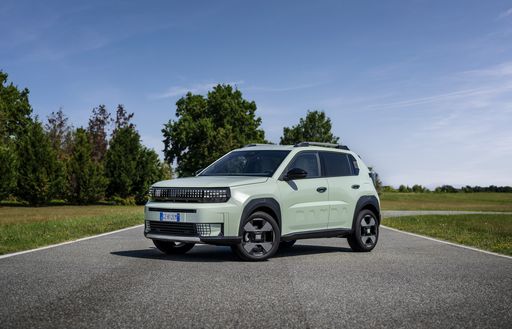
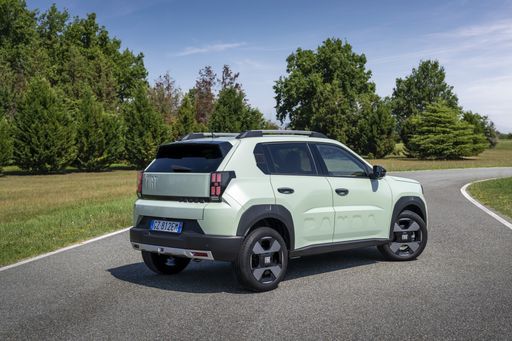
The Fiat Grande Panda and the Hyundai Inster start from the same brief—small, electric-friendly cars for everyday life—but they aim at different buyers. This Fiat Grande Panda VS Hyundai Inster comparison looks less at spec sheets and more at how each behaves in traffic, on trips and in real households. The Grande Panda leans into characterful simplicity and maximum usable space for the money, while the Inster trades some cargo room for modern assistance and efficiency. Read on to see which set of compromises suits your daily routine best.
Inster

Character and cabin feel: charm versus modern restraint

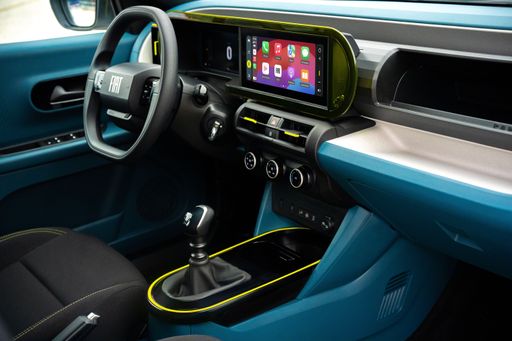
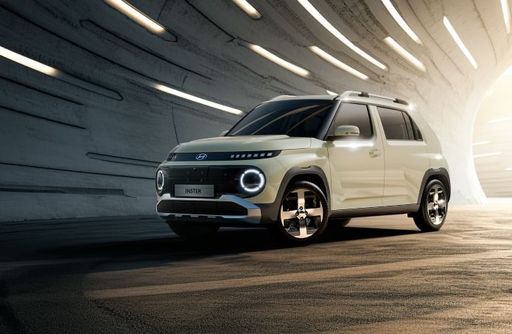
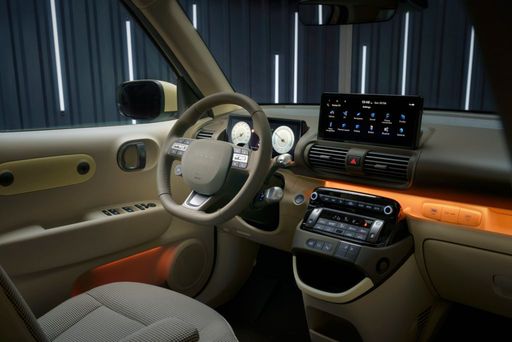
The Fiat Grande Panda wears its personality on its sleeve with retro touches and a practical, straightforward interior that puts usability above polish. The Hyundai Inster feels more contemporary and controlled inside, with a calmer, more organized layout and a clearer focus on tech-led convenience. If you prize tactile warmth and quirky styling the Grande Panda will reward you; if you prefer a tidier, quieter cabin with more driver aids the Inster will feel more grown-up. Neither is premium-feeling, but the Panda trades some perceived quality for charm and packed practicality while the Inster trades a bit of soul for a neater, more modern ambience.

Grande Panda

Comfort and long-distance behaviour: everyday comfort vs. motorway realism

In the city the Fiat Grande Panda’s soft suspension and light controls make it an easy-going companion for stop-start life, and its seats and ride bias favour short-to-medium trips. The Hyundai Inster is surprisingly composed around town too, and it rewards steady driving with lower energy use and sophisticated recuperation that reduces range anxiety for daily commuters. On longer motorways the Panda starts to show its limits more clearly—higher noise and rising consumption make long hauls feel like compromises—while the Inster holds its efficiency better but can become wind-noisy and feels engineered for steady cruising rather than brisk overtakes. Both will do motorway miles if needed, but the trade-offs (noise, speed reserve, and true range) are different and worth a test drive if you regularly do long distances.

Inster

Practicality and cargo: real-world load-carrying matters

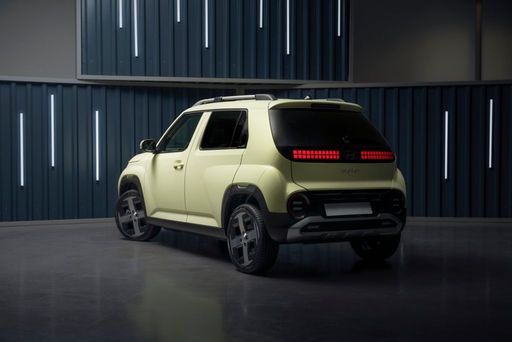
The Fiat Grande Panda wins on sheer usable space and payload: its boot and clever everyday details make packing groceries, pushchairs or weekend kit noticeably easier. The Hyundai Inster counters with a very flexible interior—sliding and folding seats that let you reconfigure for gear or occasional long items—but it sacrifices a full fifth seat and some trunk volume in the process. Practicalities like a low-cost entry price and integrated charging conveniences tip everyday running in the Panda’s favour if you often carry family stuff, while the Inster’s clever seat tricks benefit active singles or couples who prize adaptability over raw luggage capacity. Pay attention to sill heights and cable storage when you load either car; those small, annoying moments define ownership more than peak numbers.

Grande Panda

City friendliness and day-to-day usability: tight streets, simple controls

Both cars are excellent city actors, but they get there differently: the Grande Panda is compact, easy to park and blessed with straightforward physical controls that most drivers will find refreshingly simple. The Hyundai Inster brings more electronic help—one‑pedal driving, adaptive cruise and finer regenerative braking—that reduces workload and improves efficiency on predictable urban runs. If you want minimal fuss and tactile switches the Panda’s approach is appealing; if you want to lean on tech to reduce stress on daily commutes the Inster’s systems are genuinely useful. Note that the Panda’s simpler base trims can feel spartan next to an Inster that already includes several driver aids and convenience features as standard.

Inster

Buyer fit and the trade-offs to weigh before you buy

Choose the Fiat Grande Panda if you need the best practical value: more boot, five seats, a friendlier purchase price and an interior that prioritises useful details over gadgetry. Opt for the Hyundai Inster if daily efficiency, modern driver assistance and a flexible, tech-forward cabin are higher on your checklist—and you can accept a smaller boot and only four seats. Both are strong city cars; the decision comes down to whether you want roomy, no-nonsense practicality (Grande Panda) or tighter, tech-rich efficiency for urban life (Inster). The technical comparison that follows drills into range, efficiency, charging and cargo figures so you can match these real-world impressions to the numbers that matter for your use case.

Here’s where it gets real: The technical differences in detail

Grande Panda

Costs and Efficiency:

Price and efficiency are key factors when choosing a car – and this is often where the real differences emerge.

Fiat Grande Panda is visibly cheaper – starting at 16,300 £ , while the Hyundai Inster costs 20,900 £ . That’s a price difference of around 4,637 £.

In terms of energy consumption, the Hyundai Inster is a bit more efficient: consuming 14.3 kWh/100km compared to 16.8 kWh/100km for the Fiat Grande Panda. That’s a difference of about 2.5 kWh/100km.

As for electric range, the Hyundai Inster offers somewhat more range – reaching up to 370 km, about 50 km more than the Fiat Grande Panda.

Inster

Engine and Performance:

Power, torque and acceleration are the classic benchmarks for car enthusiasts – and here, some clear differences start to show.

When it comes to engine power, the Hyundai Inster offers only slightly more power – delivering 115 HP compared to 113 HP. That’s roughly 2 HP more horsepower.

When accelerating from 0 to 100 km/h, the Hyundai Inster is only slightly quicker – completing the sprint in 10.6 s, while the Fiat Grande Panda takes 11.2 s. That’s about 0.6 s quicker.

There’s also a difference in torque: the Fiat Grande Panda delivers markedly more torque with 205 Nm compared to 147 Nm. That’s about 58 Nm more.

Grande Panda

Space and Everyday Use:

Beyond pure performance, interior space and usability matter most in daily life. This is where you see which car is more practical and versatile.

Seats: Fiat Grande Panda offers more seats – 5 vs 4.

In terms of curb weight, Fiat Grande Panda is only slightly lighter – 1,295 kg compared to 1,380 kg. The difference is around 85 kg.

Looking at boot space, the Fiat Grande Panda offers markedly more boot space – 412 L compared to 280 L. That’s a difference of about 132 L.

When it comes to payload, the Fiat Grande Panda carries visibly more – 453 kg compared to 357 kg. That’s a difference of about 96 kg.

Who wins the race in the data check?

The Fiat Grande Panda is far ahead overall in the objective data comparison.
This result only shows which model scores more points on paper – not which of the two cars feels right for you.

from £16,300
Grande Panda

Fiat Grande Panda

  • Engine Type Electric, Petrol MHEV, Petrol
  • Transmission Automatic, Manuel
  • Drive Type Front-Wheel Drive
  • Power HP 100 - 113 HP
  • Consumption L/100km 5.1 - 5.7 L/100km
  • Consumption kWh/100km 16.8 kWh/100km
  • Electric Range 320 km
Fiat Grande Panda
Hyundai Inster

Costs and Consumption

View detailed analysis

Engine and Performance

View detailed analysis

Dimensions and Body

View detailed analysis

Fiat Grande Panda

The Grande Panda is a delightful blend of practicality and charm, making it a popular choice for urban dwellers and families alike. With its compact design, the car navigates city streets effortlessly while providing ample interior space for passengers and cargo. Its quirky styling and user-friendly features make the Grande Panda not just a mode of transport, but a fun driving experience.

details

Hyundai Inster

The Inster has quickly captured the attention of automotive enthusiasts with its striking design and dynamic performance. This model seamlessly blends advanced technology with comfort, making it an ideal choice for both daily commutes and adventurous road trips. With its spacious interior and innovative features, the Inster promises an exhilarating driving experience that doesn’t compromise on practicality.

details
Fiat Grande Panda
Hyundai Inster

Costs and Consumption

Price
16,300 - 25,700 £
Price
20,900 - 26,200 £
Consumption L/100km
5.1 - 5.7 L/100km
Consumption L/100km
-
Consumption kWh/100km
16.8 kWh/100km
Consumption kWh/100km
14.3 - 15.1 kWh/100km
Electric Range
320 km
Electric Range
327 - 370 km
Battery Capacity
-
Battery Capacity
-
co2
0 - 131 g/km
co2
0 g/km
Fuel tank capacity
-
Fuel tank capacity
-

Dimensions and Body

Body Type
SUV
Body Type
SUV
Seats
5
Seats
4
Doors
-
Doors
-
Curb weight
1,295 - 1,554 kg
Curb weight
1,380 - 1,433 kg
Trunk capacity
361 - 412 L
Trunk capacity
238 - 280 L
Length
-
Length
-
Width
1,763 mm
Width
1,610 mm
Height
-
Height
-
Max trunk capacity
-
Max trunk capacity
-
Payload
353 - 453 kg
Payload
317 - 357 kg

Engine and Performance

Engine Type
Electric, Petrol MHEV, Petrol
Engine Type
Electric
Transmission
Automatic, Manuel
Transmission
Automatic
Transmission Detail
Reduction Gearbox, Dual-Clutch Automatic, Manual Gearbox
Transmission Detail
Reduction Gearbox
Drive Type
Front-Wheel Drive
Drive Type
Front-Wheel Drive
Power HP
100 - 113 HP
Power HP
97 - 115 HP
Acceleration 0-100km/h
11.2 - 11.5 s
Acceleration 0-100km/h
10.6 - 11.7 s
Max Speed
-
Max Speed
-
Torque
122 - 205 Nm
Torque
147 Nm
Number of Cylinders
3
Number of Cylinders
-
Power kW
74 - 83 kW
Power kW
71 - 85 kW
Engine capacity
1,199 cm3
Engine capacity
-

General

Model Year
2025
Model Year
2025
CO2 Efficiency Class
A, D
CO2 Efficiency Class
A
Brand
Fiat
Brand
Hyundai
DriveDuel uses data analysis and artificial intelligence to evaluate vehicle data and create content. Content is regularly reviewed and improved. The displayed prices are estimates based on German list prices, adjusted to the respective country’s VAT. Country-specific registration taxes are not included. This information is not legally binding.