VS

Fiat Topolino vs Fiat 500 comparison

Compare performance (8 HP vs 118 HP), boot space and price (8,500 £ vs 17,100 £ ) at a glance. Find out which car is the better choice for you – Fiat Topolino or Fiat 500?

Fiat Topolino vs Fiat 500: Key differences

Fiat Topolino

4.3 (2 Reviews)
rate
  • substantially cheaper
  • significantly lighter
details

Fiat 500

3.7 (1 Reviews)
rate
  • substantially more power
  • clearly more electric range
  • significantly more trunk space
details

All details on performance, efficiency, range and trunk space can be found in the technical comparison below – including user reviews for both models.

By Achim Sedelmaier

Topolino

Fiat 500 VS Fiat Topolino: urban choices with very different briefs

The Fiat 500 and the Fiat Topolino address the same city problem from opposite directions: the Fiat 500 aims to be a stylish, compact electric car you can live with every day, while the Fiat Topolino is a tiny, moped‑car focused on absolute urban minimalism. Think of the Fiat 500 as a compact lifestyle car with real car conveniences, and the Fiat Topolino as a clever, park‑friendly alternative to a scooter. Both wear charming retro styling, but they ask you to accept very different compromises on speed, space and comfort. This comparison highlights those trade‑offs so you can match the car to how and where you really drive.
500

Character and city driving: sprightly EV versus micro‑car nimbleness

The Fiat 500 feels lively from the traffic light and is tuned for city traffic with responsive electric torque and user‑friendly controls, whereas the Fiat Topolino trades outright pace for an ultra‑small footprint and razor‑sharp manoeuvrability. In tight city lanes the Topolino's tiny dimensions and turning ability make parking and weaving effortless, but it feels very rudimentary to drive compared with the more refined steering and throttle of the Fiat 500. Noise and refinement also set them apart: the Fiat 500 is quieter and more civilised in town, while the Topolino is rawer and more mechanical, which you quickly notice on anything but very short hops. Choose the Fiat 500 if you want peppy, civilized urban driving; choose the Fiat Topolino if squeezing into the smallest spots and simplicity are the priority.

Comfort and long‑distance use: where limits become daily annoyances

The Fiat 500 is the more comfortable companion for anything beyond a handful of kilometres, with seats and suspension that cope reasonably well in town but tire on longer, faster runs; motorway noise and firmer ride qualities remind you it's primarily a city car. The Fiat Topolino is unapologetically short‑trip hardware — hard seats, a bouncy ride and a top speed that makes anything beyond neighborhood errands impractical and often unpleasant. Neither is built for relaxed long highway stretches, but the Fiat 500 stretches that brief further before comfort breaks down, while the Fiat Topolino signals its limitations almost immediately. If you plan regular longer runs or motorway commutes, the Fiat 500 will annoy you less; if your days are short loops, the Topolino's compromises are easier to accept.

Usability and practicality: seats, luggage and real‑world chores

Practicality is where the two diverge most obviously: the Fiat 500 gives you four seats and a recognisable trunk, though both are modest and the rear is tight for adults, while the Fiat Topolino is strictly a two‑seater with very limited dedicated luggage space. For grocery runs, weekend bags or ferrying a second passenger occasionally, the Fiat 500 is the more forgiving tool; the Topolino forces a rethink — shopping often sits in the passenger footwell or requires an external carrier. Loading ergonomics matter too: the Fiat 500's boot access can be fiddly because of a high sill, whereas the Topolino simply asks you to live with minimal cargo solutions. If you regularly carry stuff or people, the Fiat 500 keeps life practical; if your priority is tiny footprint and parking, the Topolino wins on convenience of placement, not capacity.

Cabin feel and perceived quality: charm versus straightforwardness

Step inside the Fiat 500 and you get deliberate retro styling, cleaner materials and a modern infotainment experience that feels like a proper small car; the cabin deliberately aims for personality and a touch of polish. The Fiat Topolino, by contrast, trades refinement for simplicity: hard plastics, a sparse console and a smartphone‑centric interface that keeps tech minimal and functional. Sound insulation and cabin quiet underline that difference — the Fiat 500 muffles the city more effectively, while the Topolino is louder and more reverberant, which affects perceived quality on every trip. Both cabins have charm, but the Fiat 500 reads as a more conventional, higher‑quality small car, whereas the Topolino reads as an economical, characterful micro‑vehicle.

Which buyer fits each car: concrete guidance before the technical details

If you want a daily small electric with enough comfort for occasional longer drives, a proper infotainment setup and the option to carry more than one passenger, the Fiat 500 fits better — especially if you can charge at home or work and value style alongside usability. If your world is tiny‑radius city trips, tight parking, low running costs and the simplicity of a vehicle that can be driven with minimal licensing or as a scooter replacement, the Fiat Topolino will make more sense and feel more natural day‑to‑day. These are different tools: the Fiat 500 leans toward usable city motoring with touches of lifestyle, the Fiat Topolino toward the purest urban minimalism — use that split to decide which technical priorities to examine next. The technical comparison that follows will help you translate these real‑world differences into specifics.

Here’s where it gets real: The technical differences in detail

Topolino

Costs and Efficiency:

When it comes to price and running costs, the biggest differences usually appear. This is often where you see which car fits your budget better in the long run.

Fiat Topolino is substantially cheaper – starting at 8,500 £ , while the Fiat 500 costs 17,100 £ . That’s a price difference of around 8,657 £.

As for electric range, the Fiat 500 offers clearly more range – reaching up to 331 km, about 256 km more than the Fiat Topolino.

500

Engine and Performance:

Power, torque and acceleration say a lot about how a car feels on the road. This is where you see which model delivers more driving dynamics.

When it comes to engine power, the Fiat 500 offers substantially more power – delivering 118 HP compared to 8 HP. That’s roughly 110 HP more horsepower.

There’s also a difference in torque: the Fiat 500 delivers significantly more torque with 220 Nm compared to 44 Nm. That’s about 176 Nm more.

Space and Everyday Use:

Whether family car or daily driver – which one offers more room, flexibility and comfort?

Seats: Fiat 500 offers more seats – 4 vs 2.

In terms of curb weight, Fiat Topolino is significantly lighter – 562 kg compared to 1,130 kg. The difference is around 568 kg.

Looking at boot space, the Fiat 500 offers significantly more boot space – 185 L compared to 63 L. That’s a difference of about 122 L.

When it comes to payload, the Fiat 500 carries significantly more – 325 kg compared to 138 kg. That’s a difference of about 187 kg.

Who wins the race in the data check?

The Fiat 500 holds a decisive overall lead in the objective data comparison.
This result only shows which model scores more points on paper – not which of the two cars feels right for you.

from £17,100
500

Fiat 500

  • Engine Type Electric, Petrol MHEV
  • Transmission Automatic, Manuel
  • Drive Type Front-Wheel Drive
  • Power HP 65 - 118 HP
  • Consumption L/100km 5.2 - 5.3 L/100km
  • Consumption kWh/100km 13 - 14.7 kWh/100km
  • Electric Range 190 - 331 km
Fiat Topolino
Fiat 500

Costs and Consumption

View detailed analysis

Engine and Performance

View detailed analysis

Dimensions and Body

View detailed analysis

Fiat Topolino

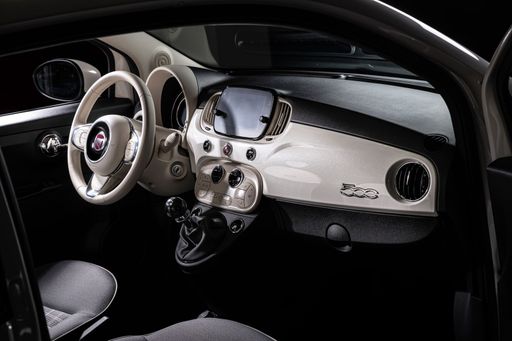
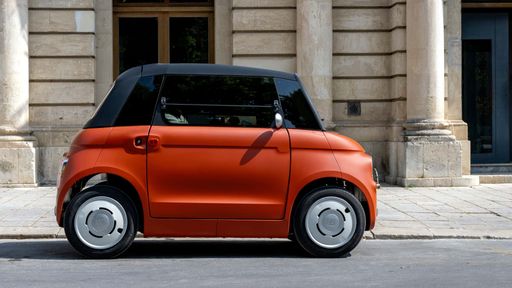
The Fiat Topolino is a pint-sized charmer that turns every commute into a smile-inducing event, marrying vintage Italian flair with a delightfully simple driving experience. For city buyers who prize personality over pace, it offers quirky practicality, effortless parking and an irresistible retro look that feels like a Vespa with four wheels.

details

Fiat 500

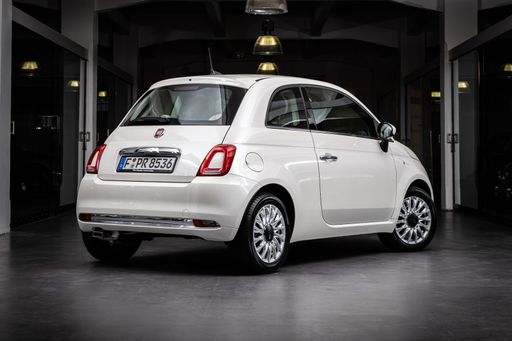
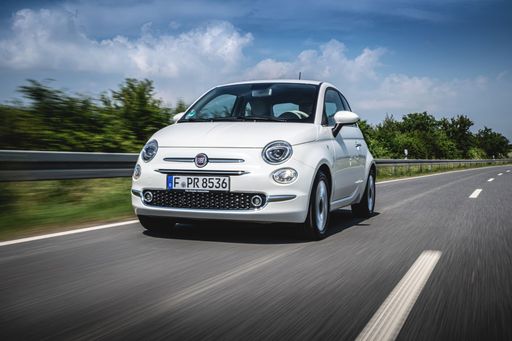
The Fiat 500 is a cheeky, retro‑styled city car that turns heads with its iconic looks and playful personality. Perfect for weaving through tight streets and easing into tiny parking spots, it’s aimed at buyers who want style and character more than grand touring prowess.

details
Fiat Topolino
Fiat 500

Costs and Consumption

Price
8,500 - 8,600 £
Price
17,100 - 27,400 £
Consumption L/100km
-
Consumption L/100km
5.2 - 5.3 L/100km
Consumption kWh/100km
-
Consumption kWh/100km
13 - 14.7 kWh/100km
Electric Range
75 km
Electric Range
190 - 331 km
Battery Capacity
-
Battery Capacity
-
co2
0 g/km
co2
0 - 121 g/km
Fuel tank capacity
-
Fuel tank capacity
-

Dimensions and Body

Body Type
Hatchback
Body Type
Hatchback
Seats
2
Seats
4
Doors
-
Doors
-
Curb weight
562 kg
Curb weight
1,130 - 1,475 kg
Trunk capacity
63 L
Trunk capacity
183 - 185 L
Length
-
Length
-
Width
1,400 mm
Width
1,683 - 1,684 mm
Height
-
Height
-
Max trunk capacity
-
Max trunk capacity
-
Payload
138 kg
Payload
250 - 325 kg

Engine and Performance

Engine Type
Electric
Engine Type
Electric, Petrol MHEV
Transmission
Automatic
Transmission
Automatic, Manuel
Transmission Detail
Reduction Gearbox
Transmission Detail
Reduction Gearbox, Manual Gearbox
Drive Type
Front-Wheel Drive
Drive Type
Front-Wheel Drive
Power HP
8 HP
Power HP
65 - 118 HP
Acceleration 0-100km/h
-
Acceleration 0-100km/h
9 - 16.2 s
Max Speed
-
Max Speed
-
Torque
44 Nm
Torque
92 - 220 Nm
Number of Cylinders
-
Number of Cylinders
3
Power kW
6 kW
Power kW
48 - 87 kW
Engine capacity
-
Engine capacity
999 cm3

General

Model Year
2026
Model Year
2025
CO2 Efficiency Class
A
CO2 Efficiency Class
A, D
Brand
Fiat
Brand
Fiat
DriveDuel uses data analysis and artificial intelligence to evaluate vehicle data and create content. Content is regularly reviewed and improved. The displayed prices are estimates based on German list prices, adjusted to the respective country’s VAT. Country-specific registration taxes are not included. This information is not legally binding.