VS

Ford Tourneo Connect vs Mercedes V Class comparison

Compare performance (150 HP vs 237 HP), boot space and price (27,300 £ vs 48,200 £ ) at a glance. Find out which car is the better choice for you – Ford Tourneo Connect or Mercedes V Class?

Ford Tourneo Connect vs Mercedes V Class: Key differences

Ford Tourneo Connect

4.9 (1 Reviews)
rate
  • clearly cheaper
  • clearly more efficient
  • significantly lighter
details

Mercedes V Class

  • noticeably more power
  • clearly quicker 0–100 km/h
details

By Achim Sedelmaier

Tourneo Connect

The Clash of Comfort and Performance: Ford Tourneo Connect vs. Mercedes V-Klasse

In the ever-evolving world of automotive excellence, the choice between the Ford Tourneo Connect and the Mercedes V-Klasse presents an enticing contrast of practicality versus luxury. Both vehicles, released in their 2024 models, cater to distinct tastes, but how do they stack up against one another in terms of performance, comfort, and innovation? Let's explore these facets in detail.
V Class

Design and Comfort

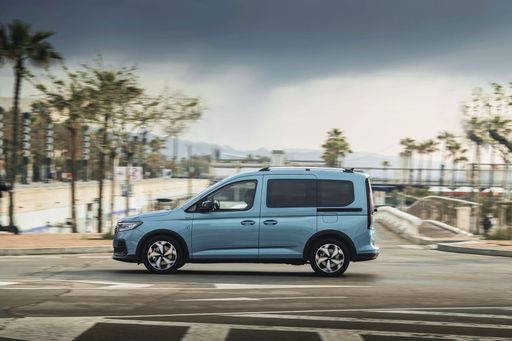
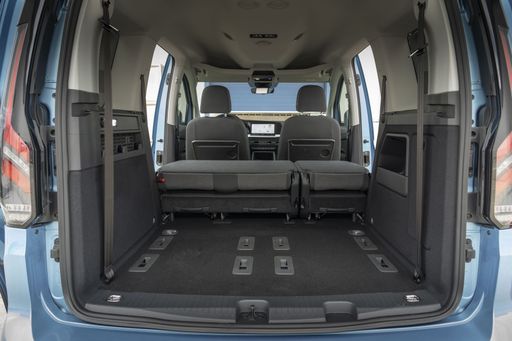
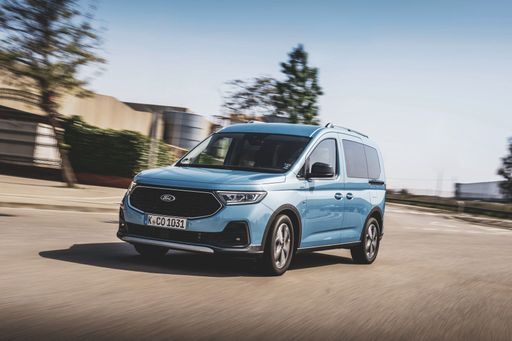
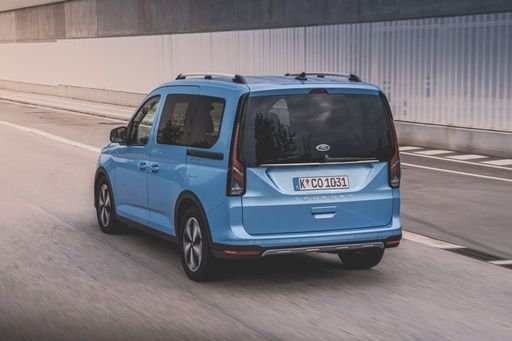
The Ford Tourneo Connect is designed as a high-roof wagon, providing a user-friendly experience with its five-door design and seating for five. Its dimensions, featuring a length of up to 4868 mm, a width of 1855 mm, and a height of 1833 mm, allow for ample space, making it an ideal choice for urban families seeking practicality. The Ford boasts a trunk capacity ranging up to 1720 liters, perfect for those family road trips.

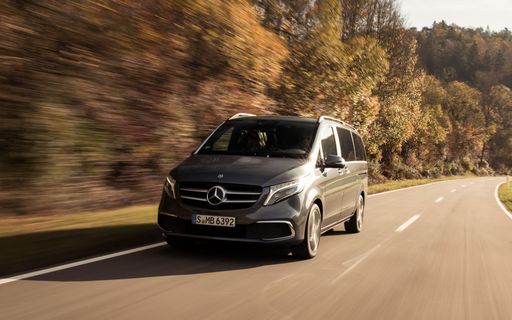
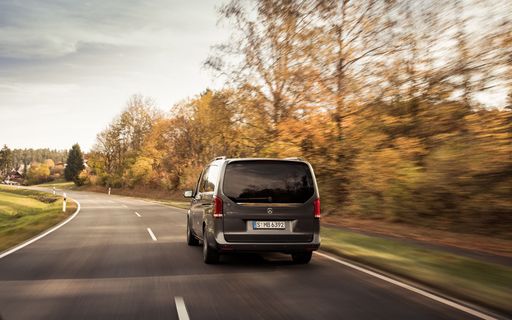
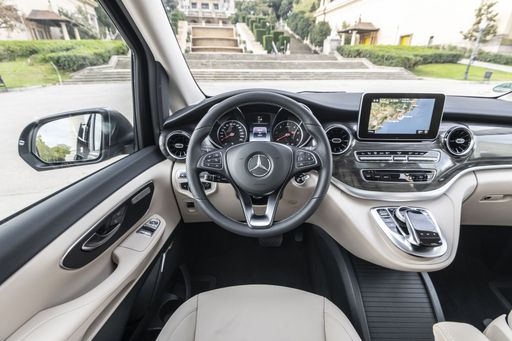
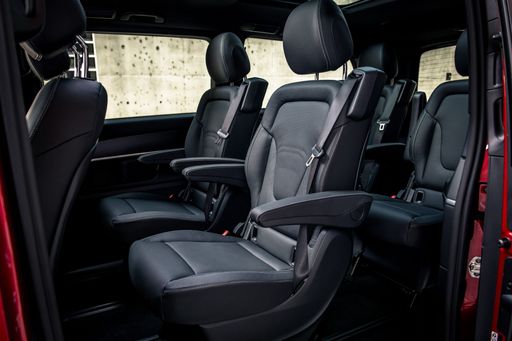
The Mercedes V-Klasse, on the other hand, presents itself as a luxurious bus tailored for those in search of opulence and space. With seating for six and a maximum length of 5370 mm, the V-Klasse offers a grander and more spacious interior. A trunk capacity of up to 1410 liters ensures that even with additional passengers, there's room for luggage, making it a revered option among travel enthusiasts.

Tourneo Connect

Performance and Engine

Under the hood, the Ford Tourneo Connect offers a variety of engine types, including petrol, diesel, and even a plug-in hybrid version. The power output ranges from 102 to 150 HP, and the car provides a choice between a dual-clutch automatic or a manual gearbox. The focus is evident on delivering a versatile performance across various driving conditions, complemented by a front-wheel-drive system and a decent fuel consumption as low as 5.4 L/100km for diesel variants.

The V-Klasse, in contrast, leans towards delivering a powerful drive with diesel and petrol engine options. With power ranging from 163 to 237 HP and a torque reaching up to 500 Nm, this rear-wheel and all-wheel-drive vehicle emphasizes power and control. Combined with an automatic transmission, the V-Klasse is built to conquer both highways and city roads effortlessly. Despite its impressive power, it maintains a moderate consumption ranging from 7.1 to 10.2 L/100km.

V Class

Technology and Innovations

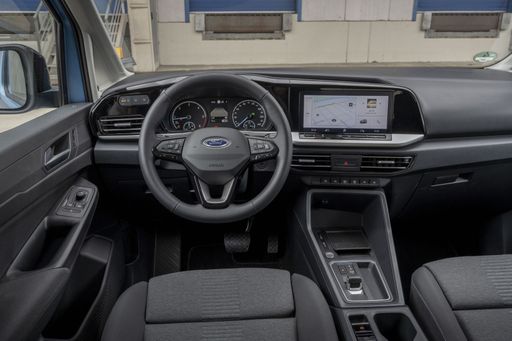
While the Tourneo Connect serves functional and economical purposes with a hybrid option that promotes environmental consciousness, it also provides modern conveniences and connectivity features that are standard expectations today. The CO2 efficiency class remains favorable, with ratings as low as B.

On a more premium end, the Mercedes V-Klasse integrates advanced technology with an emphasis on luxury and environmental considerations, although it's CO2 efficiency floats around class G. Equipped with state-of-the-art infotainment systems and safety innovations, the V-Klasse ensures a premium driving experience. Features like adaptive driving assists and configurable seating cater specifically to a discerning audience seeking both safety and luxury.

Tourneo Connect

Conclusion

Choosing between the Ford Tourneo Connect and the Mercedes V-Klasse ultimately boils down to individual needs and preferences. If practicality, affordability, and efficient hybrid options are on your checklist, the Ford Tourneo Connect emerges as a reliable choice. However, for those pursuing the pinnacle of comfort, space, and performance combined with the assurance of a premium brand, the Mercedes V-Klasse stands unmatched.

Both vehicles exemplify automotive excellence in their respective classes, proving that the future of mobility is not a mere pursuit of speed and power, but a harmonious blend of design, technology, and superior driving experience. Whether it's the pragmatic family journey or the luxurious voyage, both options excel in delivering what they promise.

Here’s where it gets real: The technical differences in detail

Tourneo Connect

Costs and Efficiency:

Looking at overall running costs, both models reveal some interesting differences in everyday economy.

Ford Tourneo Connect is clearly cheaper – starting at 27,300 £ , while the Mercedes V Class costs 48,200 £ . That’s a price difference of around 20,822 £.

Fuel consumption also shows a difference: the Ford Tourneo Connect uses 0.5 L/100km and is clearly more efficient than the Mercedes V Class with 7.1 L/100km. The difference is about 6.6 L/100km.

V Class

Engine and Performance:

Power, torque and acceleration are the classic benchmarks for car enthusiasts – and here, some clear differences start to show.

When it comes to engine power, the Mercedes V Class offers noticeably more power – delivering 237 HP compared to 150 HP. That’s roughly 87 HP more horsepower.

When accelerating from 0 to 100 km/h, the Mercedes V Class is clearly quicker – completing the sprint in 7.4 s, while the Ford Tourneo Connect takes 10.1 s. That’s about 2.7 s quicker.

There’s also a difference in torque: the Mercedes V Class delivers markedly more torque with 500 Nm compared to 350 Nm. That’s about 150 Nm more.

Tourneo Connect

Space and Everyday Use:

Beyond pure performance, interior space and usability matter most in daily life. This is where you see which car is more practical and versatile.

Seats: Mercedes V Class offers more seats – 6 vs 5.

In terms of curb weight, Ford Tourneo Connect is significantly lighter – 1,542 kg compared to 2,192 kg. The difference is around 650 kg.

When it comes to payload, the Mercedes V Class carries barely more – 908 kg compared to 818 kg. That’s a difference of about 90 kg.

Who wins the race in the data check?

The Ford Tourneo Connect is far ahead overall in the objective data comparison.
This result only shows which model scores more points on paper – not which of the two cars feels right for you.

from £27,300
Tourneo Connect

Ford Tourneo Connect

  • Engine Type : Plugin Hybrid, Petrol, Diesel
  • Transmission : Automatic, Manuel
  • Drive Type : Front-Wheel Drive, All-Wheel Drive
  • Power HP : 102 - 150 HP
  • Consumption L/100km : 0.5 - 6.9 L/100km
  • Electric Range : 116 - 119 km
Ford Tourneo Connect
Mercedes V Class

Costs and Consumption

View detailed analysis

Engine and Performance

View detailed analysis

Dimensions and Body

View detailed analysis

Ford Tourneo Connect

The Ford Tourneo Connect is a practical, surprisingly polished people-mover that balances family-friendly flexibility with car-like driving manners. With clever storage, sliding doors and a bright, airy cabin it’s a smart choice for buyers who want sensible versatility without sacrificing everyday comfort — and it’s oddly enjoyable to drive for its size.

details

Mercedes V Class

The V‑Class is the grown-up people mover that blends executive-level comfort with van practicality, ideal for those who want to ferry family and gear without sacrificing luxury. Inside it's plush and flexible, with clever touches that turn long hauls into a comfortable commute and still manage to look serious on the school run.

details
Ford Tourneo Connect
Mercedes V Class

Costs and Consumption

Price
27,300 - 41,900 £
Price
48,200 - 83,300 £
Consumption L/100km
0.5 - 6.9 L/100km
Consumption L/100km
7.1 - 10.2 L/100km
Consumption kWh/100km
-
Consumption kWh/100km
-
Electric Range
116 - 119 km
Electric Range
-
Battery Capacity
-
Battery Capacity
-
co2
11 - 164 g/km
co2
187 - 232 g/km
Fuel tank capacity
-
Fuel tank capacity
-

Dimensions and Body

Body Type
High Roof Estate
Body Type
Bus
Seats
5
Seats
6
Doors
-
Doors
-
Curb weight
1,542 - 1,781 kg
Curb weight
2,192 - 2,464 kg
Trunk capacity
1,213 - 1,720 L
Trunk capacity
-
Length
-
Length
-
Width
1,855 mm
Width
1,928 mm
Height
-
Height
-
Max trunk capacity
-
Max trunk capacity
-
Payload
563 - 818 kg
Payload
636 - 908 kg

Engine and Performance

Engine Type
Plugin Hybrid, Petrol, Diesel
Engine Type
Diesel, Petrol
Transmission
Automatic, Manuel
Transmission
Automatic
Transmission Detail
Dual-Clutch Automatic, Manual Gearbox
Transmission Detail
Automatic Gearbox
Drive Type
Front-Wheel Drive, All-Wheel Drive
Drive Type
Rear-Wheel Drive, All-Wheel Drive
Power HP
102 - 150 HP
Power HP
163 - 237 HP
Acceleration 0-100km/h
10.1 - 13.5 s
Acceleration 0-100km/h
7.4 - 10.7 s
Max Speed
-
Max Speed
-
Torque
220 - 350 Nm
Torque
370 - 500 Nm
Number of Cylinders
4
Number of Cylinders
4
Power kW
75 - 110 kW
Power kW
120 - 174 kW
Engine capacity
1,498 - 1,968 cm3
Engine capacity
1,950 - 1,999 cm3

General

Model Year
2,024 - 2,025
Model Year
2025
CO2 Efficiency Class
B, E, F
CO2 Efficiency Class
G
Brand
Ford
Brand
Mercedes-Benz
DriveDuel uses data analysis and artificial intelligence to evaluate vehicle data and create content. Content is regularly reviewed and improved. The displayed prices are estimates based on German list prices, adjusted to the respective country’s VAT. Country-specific registration taxes are not included. This information is not legally binding.