VS

Mercedes Vito Bus vs Mercedes V Class comparison

Compare performance (237 HP vs 237 HP), boot space and price (36,300 £ vs 48,200 £ ) at a glance. Find out which car is the better choice for you – Mercedes Vito Bus or Mercedes V Class?

Mercedes Vito Bus vs Mercedes V Class: Key differences

Mercedes Vito Bus

  • visibly cheaper
  • only slightly more efficient
  • only slightly lighter

Mercedes V Class

Vito Bus

Two Mercs, Two Missions

The Mercedes Vito Bus and Mercedes V Class both wear the star, but they arrive to different job descriptions: one built to endure the daily grind, the other tuned to transport people in a more cultivated atmosphere. Think of this as a character study rather than a spec sheet duel—each has a personality that shows up the moment you swing a door open. We'll sketch those personalities so you can decide which one fits the life you actually lead.
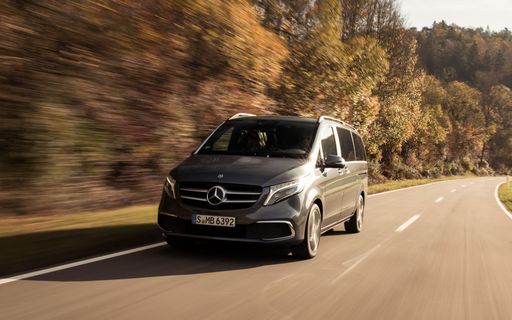
V Class

Workhorse vs Salon: The Vibe Check

The Vito Bus radiates pragmatic toughness, a van’s honesty dressed for people-carrying duty, while the V Class prefers to charm with softer finishes and a composed presence. One tells you it’s here to earn its keep, the other whispers that journeys should be as pleasurable as the destination. The contrast is more attitude than equipment, and it’s immediately obvious when you walk around them.

Daily Life: City Runs, School Runs, and Cross-Country

Everyday routine highlights their different strengths: the Vito Bus thrives on repetitive utility, loading, and straightforward usability, whereas the V Class leans into long-haul calm and passenger comfort on extended trips. In tight urban choreography the V Class’s manners feel tidy; in busy workaday schedules the Vito smiles at hard use and practicality. Both can carry families or groups, but they do so with fundamentally different priorities and temperaments.

Buying for Image or Function

Choosing one is as much about personal narrative as need—the Vito Bus says you prefer function over flourish and want predictable, sensible ownership, while the V Class suggests you enjoy arriving relaxed and well-presented. Each choice carries a defensible story you can tell at the dealer and at the school gate. Ultimately the decision will hinge on whether you prize straightforward utility or a more curated passenger experience.

If what matters to you is straightforward utility...

If what matters to you is straightforward utility and low fuss, the Mercedes Vito Bus makes a persuasive case. You’ll be drawn to sensible packaging, robust usability and a focus on getting people and gear from A to B with minimal drama. Ideal for those who prioritise value and everyday practicality, it rewards owners who put use before show.

If what matters to you is calm presence and passenger polish...

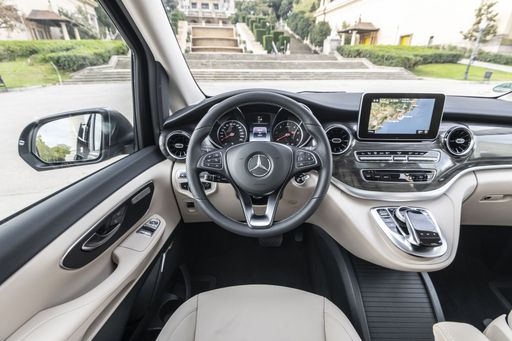
If what matters to you is calm presence, refined comfort and an interior that feels considered, the Mercedes V Class will appeal. It’s tailored to drivers who value passenger comfort, interior quality and a composed long-distance experience, and compared with the Vito Bus it trades some raw utility for a softer, more polished ride. Expect to justify that shift with quieter miles, tidier surfaces and a more executive demeanour every time you step inside.

Here’s where it gets real: The technical differences in detail

Vito Bus

Costs and Efficiency:

When it comes to price and running costs, the biggest differences usually appear. This is often where you see which car fits your budget better in the long run.

Mercedes Vito Bus is visibly cheaper – starting at 36,300 £ , while the Mercedes V Class costs 48,200 £ . That’s a price difference of around 11,834 £.

Fuel consumption also shows a difference: the Mercedes Vito Bus uses 6.7 L/100km and is only slightly more efficient than the Mercedes V Class with 7.1 L/100km. The difference is about 0.4 L/100km.

V Class

Engine and Performance:

Under the bonnet, it becomes clear which model is tuned for sportiness and which one takes the lead when you hit the accelerator.

Both models deliver identical power – 237 HP each.

Both models offer the same torque – 500 Nm.

Space and Everyday Use:

Beyond pure performance, interior space and usability matter most in daily life. This is where you see which car is more practical and versatile.

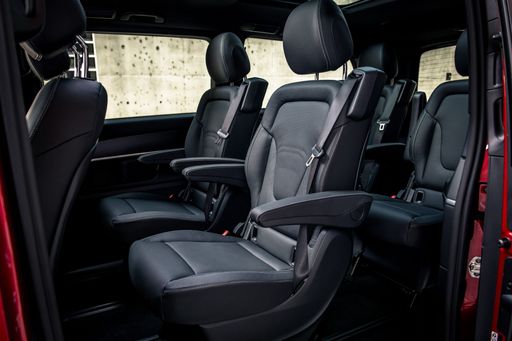
Seats: Mercedes Vito Bus offers more seats – 8 vs 6.

In terms of curb weight, Mercedes Vito Bus is only slightly lighter – 2,023 kg compared to 2,192 kg. The difference is around 169 kg.

When it comes to payload, the Mercedes Vito Bus carries somewhat more – 1,077 kg compared to 908 kg. That’s a difference of about 169 kg.

Who wins the race in the data check?

The Mercedes Vito Bus stands well ahead of its rival in the objective data comparison.
This result only shows which model scores more points on paper – not which of the two cars feels right for you.

from £36,300
Vito Bus

Mercedes Vito Bus

  • Engine Type : Diesel, Electric, Petrol
  • Transmission : Automatic
  • Drive Type : Rear-Wheel Drive, All-Wheel Drive, Front-Wheel Drive
  • Power HP : 136 - 237 HP
  • Consumption L/100km : 6.7 - 10 L/100km
  • Consumption kWh/100km : 26.7 - 26.9 kWh/100km
  • Electric Range : 248 - 370 km
Mercedes Vito Bus
Mercedes V Class

Costs and Consumption

View detailed analysis

Engine and Performance

View detailed analysis

Dimensions and Body

View detailed analysis

Mercedes Vito Bus

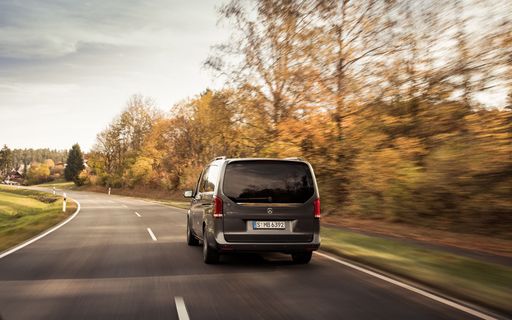
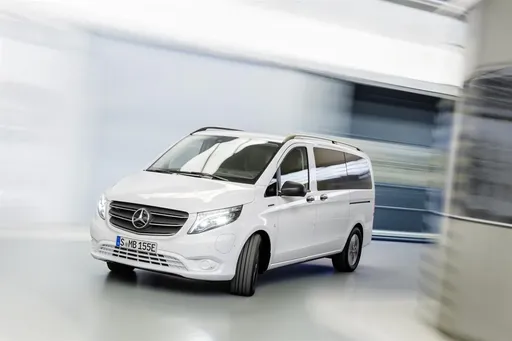
The Mercedes Vito is a sturdy, no-nonsense people carrier that blends commercial practicality with a surprisingly civilised cabin, making long shuttles feel less like a chore. If you need a dependable transporter that swallows luggage, forgives hard use and still looks a touch more premium than a plain van, the Vito is an easy, sensible pick.

details

Mercedes V Class

The V‑Class is the grown-up people mover that blends executive-level comfort with van practicality, ideal for those who want to ferry family and gear without sacrificing luxury. Inside it's plush and flexible, with clever touches that turn long hauls into a comfortable commute and still manage to look serious on the school run.

details
Mercedes Vito Bus
Mercedes V Class

Costs and Consumption

Price
36,300 - 55,900 £
Price
48,200 - 83,300 £
Consumption L/100km
6.7 - 10 L/100km
Consumption L/100km
7.1 - 10.2 L/100km
Consumption kWh/100km
26.7 - 26.9 kWh/100km
Consumption kWh/100km
-
Electric Range
248 - 370 km
Electric Range
-
Battery Capacity
60 - 90 kWh
Battery Capacity
-
co2
0 - 228 g/km
co2
187 - 232 g/km
Fuel tank capacity
57 - 70 L
Fuel tank capacity
-

Dimensions and Body

Body Type
Bus
Body Type
Bus
Seats
8
Seats
6
Doors
4
Doors
-
Curb weight
2,023 - 2,739 kg
Curb weight
2,192 - 2,464 kg
Trunk capacity
580 - 1,390 L
Trunk capacity
-
Length
4,895 - 5,370 mm
Length
-
Width
1,928 mm
Width
1,928 mm
Height
1,890 mm
Height
-
Max trunk capacity
4,190 - 4,990 L
Max trunk capacity
-
Payload
726 - 1,077 kg
Payload
636 - 908 kg

Engine and Performance

Engine Type
Diesel, Electric, Petrol
Engine Type
Diesel, Petrol
Transmission
Automatic
Transmission
Automatic
Transmission Detail
Automatic Gearbox, Reduction Gearbox
Transmission Detail
Automatic Gearbox
Drive Type
Rear-Wheel Drive, All-Wheel Drive, Front-Wheel Drive
Drive Type
Rear-Wheel Drive, All-Wheel Drive
Power HP
136 - 237 HP
Power HP
163 - 237 HP
Acceleration 0-100km/h
-
Acceleration 0-100km/h
7.4 - 10.7 s
Max Speed
140 km/h
Max Speed
-
Torque
330 - 500 Nm
Torque
370 - 500 Nm
Number of Cylinders
4
Number of Cylinders
4
Power kW
100 - 174 kW
Power kW
120 - 174 kW
Engine capacity
1,950 - 1,999 cm3
Engine capacity
1,950 - 1,999 cm3

General

Model Year
2,024
Model Year
2,025
CO2 Efficiency Class
G, A
CO2 Efficiency Class
G
Brand
Mercedes-Benz
Brand
Mercedes-Benz
DriveDuel uses data analysis and artificial intelligence to evaluate vehicle data and create content. Content is regularly reviewed and improved. The displayed prices are estimates based on German list prices, adjusted to the respective country’s VAT. Country-specific registration taxes are not included. This information is not legally binding.