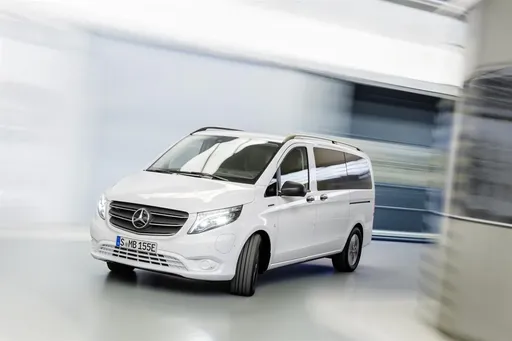
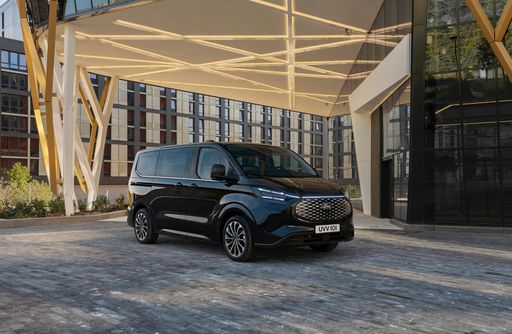
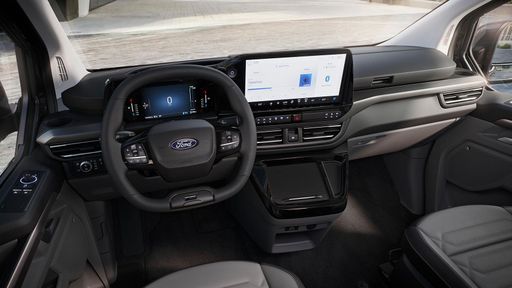
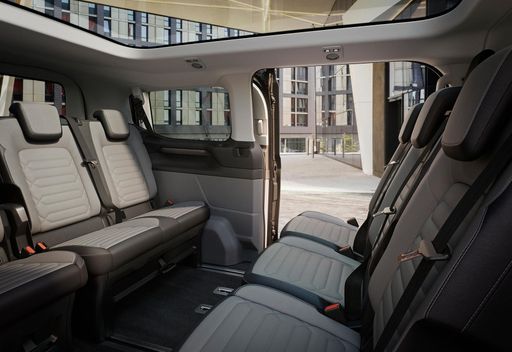
Compare performance (286 HP vs 237 HP), boot space and price (45700 £ vs 36300 £ ) at a glance. Find out which car is the better choice for you – Ford Tourneo Custom or Mercedes Vito Bus?
Price and efficiency are key factors when choosing a car – and this is often where the real differences emerge.
Mercedes Vito Bus has a noticeable advantage in terms of price – it starts at 36300 £ , while the Ford Tourneo Custom costs 45700 £ . That’s a price difference of around 9417 £.
Fuel consumption also shows a difference: Ford Tourneo Custom manages with 4.10 L and is therefore clearly more efficient than the Mercedes Vito Bus with 6.70 L. The difference is about 2.60 L per 100 km.
In terms of energy consumption, the advantage goes to the Ford Tourneo Custom: with 24.20 kWh per 100 km, it’s to a small extent more efficient than the Mercedes Vito Bus with 26.70 kWh. That’s a difference of about 2.50 kWh.
As for electric range, the Mercedes Vito Bus performs a bit better – achieving up to 370 km, about 63 km more than the Ford Tourneo Custom.
Under the bonnet, it becomes clear which model is tuned for sportiness and which one takes the lead when you hit the accelerator.
When it comes to engine power, the Ford Tourneo Custom has a to a small extent edge – offering 286 HP compared to 237 HP. That’s roughly 49 HP more horsepower.
In terms of top speed, the Ford Tourneo Custom performs hardly perceptible better – reaching 150 km/h, while the Mercedes Vito Bus tops out at 140 km/h. The difference is around 10 km/h.
There’s also a difference in torque: Mercedes Vito Bus pulls to a small extent stronger with 500 Nm compared to 415 Nm. That’s about 85 Nm difference.
Beyond pure performance, interior space and usability matter most in daily life. This is where you see which car is more practical and versatile.
Both vehicles offer seating for 8 people.
In curb weight, Mercedes Vito Bus is evident lighter – 2023 kg compared to 2453 kg. The difference is around 430 kg.
In terms of boot space, the Mercedes Vito Bus offers convincingly more room – 1390 L compared to 819 L. That’s a difference of about 571 L.
In maximum load capacity, the Mercedes Vito Bus performs convincingly better – up to 4990 L, which is about 3636 L more than the Ford Tourneo Custom.
When it comes to payload, Mercedes Vito Bus distinct takes the win – 1077 kg compared to 847 kg. That’s a difference of about 230 kg.
The Mercedes Vito Bus holds a decisive overall lead in the objective data comparison.
This result only shows which model scores more points on paper – not which of the two cars feels right for you.
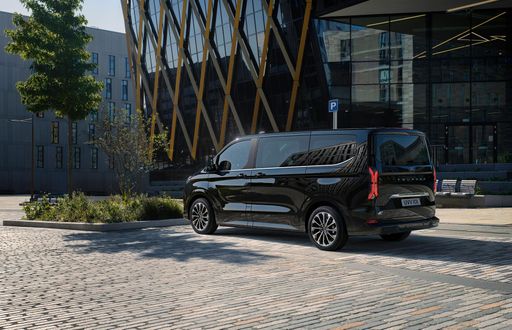
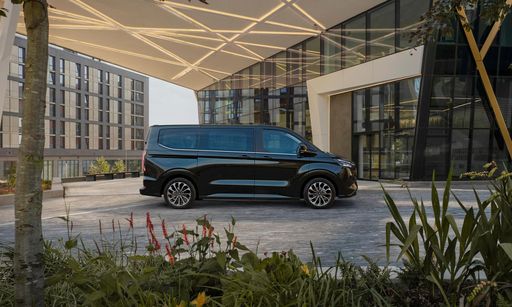
The Ford Tourneo Custom is a practical and polished people‑carrier that turns hauling crew and weekend kit into something surprisingly pleasant, with a composed ride and a cabin built for real life rather than showroom gloss. With clever storage, flexible seating and tech that keeps everyone happy on the road, it’s the sensible choice for families or businesses that want function without sacrificing a bit of style — the van that learnt how to be nice to live with.
detailsThe Mercedes Vito is a sturdy, no-nonsense people carrier that blends commercial practicality with a surprisingly civilised cabin, making long shuttles feel less like a chore. If you need a dependable transporter that swallows luggage, forgives hard use and still looks a touch more premium than a plain van, the Vito is an easy, sensible pick.
detailsCosts and Consumption |
|
|---|---|
|
Price
45700 - 67800 £
|
Price
36300 - 55900 £
|
|
Consumption L/100km
4.1 - 8.6 L
|
Consumption L/100km
6.7 - 10 L
|
|
Consumption kWh/100km
24.2 - 25.2 kWh
|
Consumption kWh/100km
26.7 - 26.9 kWh
|
|
Electric Range
49 - 307 km
|
Electric Range
248 - 370 km
|
|
Battery Capacity
11.8 - 64 kWh
|
Battery Capacity
60 - 90 kWh
|
|
co2
0 - 226 g/km
|
co2
0 - 228 g/km
|
|
Fuel tank capacity
55 - 63 L
|
Fuel tank capacity
57 - 70 L
|
Dimensions and Body |
|
|---|---|
|
Body Type
Bus
|
Body Type
Bus
|
|
Seats
8
|
Seats
8
|
|
Doors
4 - 5
|
Doors
4
|
|
Curb weight
2453 - 2707 kg
|
Curb weight
2023 - 2739 kg
|
|
Trunk capacity
672 - 819 L
|
Trunk capacity
580 - 1390 L
|
|
Length
5050 - 5450 mm
|
Length
4895 - 5370 mm
|
|
Width
2032 mm
|
Width
1928 mm
|
|
Height
1958 - 1959 mm
|
Height
1890 mm
|
|
Max trunk capacity
1045 - 1354 L
|
Max trunk capacity
4190 - 4990 L
|
|
Payload
620 - 847 kg
|
Payload
726 - 1077 kg
|
Engine and Performance |
|
|---|---|
|
Engine Type
Diesel, Plugin Hybrid, Electric
|
Engine Type
Diesel, Electric, Petrol
|
|
Transmission
Manuel, Automatic
|
Transmission
Automatic
|
|
Transmission Detail
Manual Gearbox, Automatic Gearbox, CVT, Reduction Gearbox
|
Transmission Detail
Automatic Gearbox, Reduction Gearbox
|
|
Drive Type
Front-Wheel Drive, All-Wheel Drive, Rear-Wheel Drive
|
Drive Type
Rear-Wheel Drive, All-Wheel Drive, Front-Wheel Drive
|
|
Power HP
136 - 286 HP
|
Power HP
136 - 237 HP
|
|
Acceleration 0-100km/h
-
|
Acceleration 0-100km/h
-
|
|
Max Speed
150 km/h
|
Max Speed
140 km/h
|
|
Torque
360 - 415 Nm
|
Torque
330 - 500 Nm
|
|
Number of Cylinders
4
|
Number of Cylinders
4
|
|
Power kW
100 - 210 kW
|
Power kW
100 - 174 kW
|
|
Engine capacity
1996 - 2488 cm3
|
Engine capacity
1950 - 1999 cm3
|
General |
|
|---|---|
|
Model Year
2023 - 2024
|
Model Year
2024
|
|
CO2 Efficiency Class
G, B, A, C
|
CO2 Efficiency Class
G, A
|
|
Brand
Ford
|
Brand
Mercedes-Benz
|
The Ford Tourneo Custom is available as Front-Wheel Drive, All-Wheel Drive or Rear-Wheel Drive.