Mercedes Vito Bus Bus, starting at 36,300 £

5 (1 Reviews)
rate

The Mercedes Vito is a sturdy, no-nonsense people carrier that blends commercial practicality with a surprisingly civilised cabin, making long shuttles feel less like a chore. If you need a dependable transporter that swallows luggage, forgives hard use and still looks a touch more premium than a plain van, the Vito is an easy, sensible pick.

Reviews & community

All real reviews and experiences about the Mercedes Vito Bus in one place.

To community

Technical data, trims & prices

All technical data, dimensions and equipment details of this model at a glance.

To technical data

Alternative car models

Discover similar models and possible alternatives to this vehicle.

To alternatives

from £36,300
Vito Bus

Mercedes Vito Bus

  • Engine Type Diesel, Electric, Petrol
  • Transmission Automatic
  • Drive Type Rear-Wheel Drive, All-Wheel Drive, Front-Wheel Drive
  • Power HP 136 - 237 HP
  • Consumption L/100km 6.7 - 10 L/100km
  • Consumption kWh/100km 26.7 - 26.9 kWh/100km
  • Electric Range 248 - 370 km

Street Stance and Presence

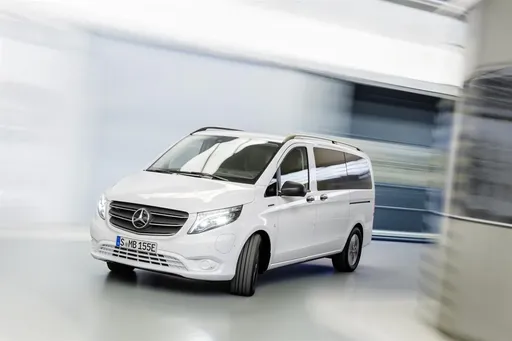
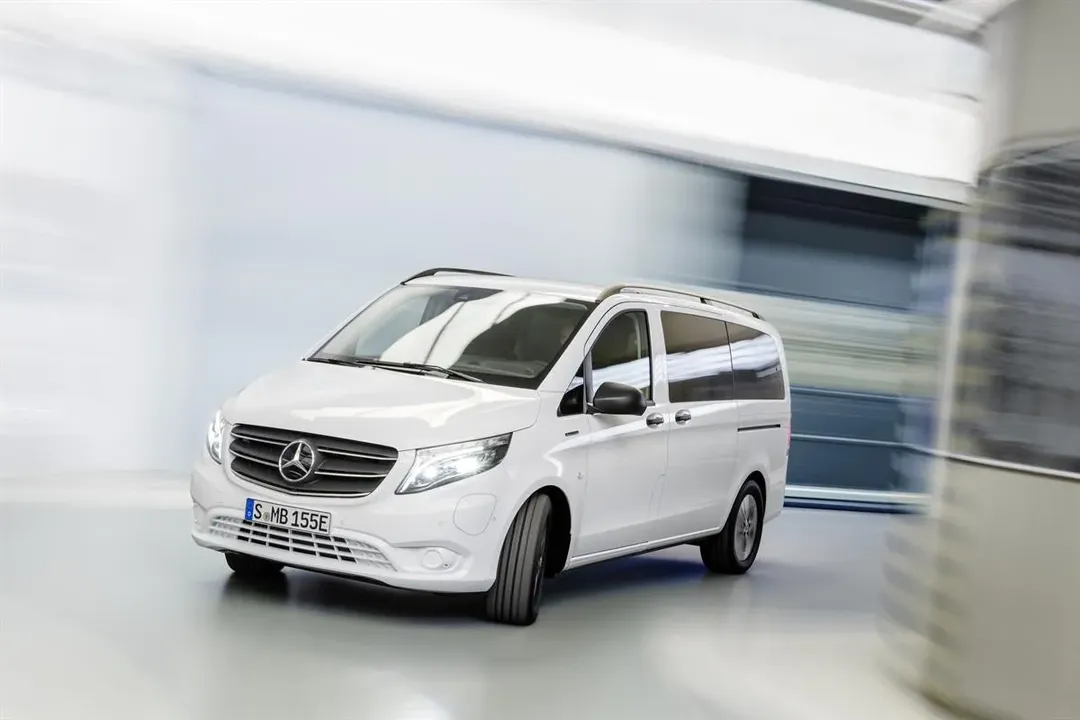
The Mercedes Vito Bus looks every bit the professional: squared-off, purposeful and unmistakably Mercedes-Benz from the front end, with a practical silhouette that hides its true carrying potential. Lengths span from about 4.9 m to 5.37 m, width around 1.93 m and a tidy height near 1.89 m, so it fits urban streets while offering serious interior volume. The visual tone is conservative rather than flashy, which suits hotels, shuttle services and fleets that want presence without drawing unnecessary attention. Current line-up covers diesel, petrol and electric choices — ICE units from 136–237 hp and an eVito at 204 hp with 60/90 kWh battery options and WLTP ranges roughly between 248–370 km.
Cabin: Simple, Solid, Mercedes DNA

The interior follows the brand’s playbook: durable plastics and neatly executed trim that feel well assembled for a vehicle built to work hard. Controls are logically arranged, the seating position is high with good forward visibility and the dashboard carries a calm, functional layout that avoids gimmicks. Options allow more car-like finishes if required, but the baseline is tough and easy to maintain — ideal for repeated shifts and quick clean-outs. For technology, the Vito offers modern infotainment and driver aids without venturing into luxury-sedan territory.

Seats, Space and Loadability

The Vito Bus seats up to 8 passengers as standard and uses its three length choices to tailor legroom and luggage space for different missions, from airport shuttles to family trips. Depending on layout, luggage areas vary widely — small measured trunks start around roughly 580–1,390 L while seats out and modular layouts can free up cargo capacity up to about 4,990 L, so bulky bags and equipment are no problem. Sliding doors, configurable seat rows and tall roofline make entry, loading and stowage straightforward in everyday use. Payload figures typically sit in the 700–1,000 kg band, meaning a full complement of passengers plus luggage is within easy reach for most configurations.

On the Road: Composed and Predictable

Drive manners are aimed at comfort and stability rather than sporty thrills: the Vito soaks up town imperfections, keeps passengers settled on the motorway and tracks predictably through corners without drama. Choice of drive layouts — rear-, all- or front-wheel drive depending on version — and automatic gearboxes across the range make it easy to tailor behaviour for regional roads or winter conditions. Powerplants range from economical 136 hp units to 237 hp variants with torque reaching higher figures for tougher loads, so overtaking and motorway merging are composed rather than urgent. Steering is light for city manoeuvres and tuned for easy driving with a heavy load, at the expense of tactile feedback preferred by enthusiasts.

Running Costs, Fueling and Electric Range

Diesel consumption across the Vito range sits roughly from around 6.7 to 10 L/100 km depending on engine, length and load, while petrol variants push towards the upper end near 9–10 L/100 km; fuel tanks are typically 57–70 L. The eVito consumes in the low 20s kWh per 100 km — about 26.7 kWh/100 km in WLTP figures — and with 60 or 90 kWh packs delivers practical real-world ranges for urban and regional work: the smaller battery suits daily shuttles, the 90 kWh unit eases intercity runs up to roughly 370 km. In everyday terms that means diesel remains best for long, mixed routes with heavy loading, while the eVito shines for predictable city circuits, low running-cost trips and areas with charging infrastructure.

Help from the Tech: Assistance and Infotainment

Safety and convenience tech are appropriately modern: adaptive cruise, lane-keeping aids, traffic sign recognition, and parking sensors or cameras are available to reduce driver fatigue on long shifts. Infotainment systems provide smartphone mirroring, navigation and fleet-friendly connectivity, though screens and graphics favour clarity and reliability over fanciful interfaces. Driver aids are calibrated for monotony-busting reliability rather than sporty intervention, and optional packages add comfort or business-focused features rather than luxury trimmings. For operators, the Vito’s tech is about saving time and headaches — predictable, easy-to-service and integrated with fleet telematics where needed.

Who is it for?

The Mercedes Vito Bus is aimed at operators and buyers who need a tough, flexible people-mover that doesn’t pretend to be a prestige limousine: think hotel shuttles, airport transfers, corporate shuttles, larger families and small tour operators. The broad choice of engines, drive layouts and three lengths makes it a configurable tool for everything from short urban hops to longer intercity duties, and the electric eVito variant gives a compelling low-noise option for cities with charging infrastructure. Overall, it is a pragmatic, well-built solution for anyone who values space, reliability and low fuss over flair and sportscar dynamics.

Costs and Consumption

Price
36,300 - 55,900 £
Consumption L/100km
6.7 - 10 L/100km
Consumption kWh/100km
26.7 - 26.9 kWh/100km
Electric Range
248 - 370 km
Battery Capacity
60 - 90 kWh
co2
0 - 228 g/km
Fuel tank capacity
57 - 70 L

Dimensions and Body

Body Type
Bus
Seats
8
Doors
4
Curb weight
2,023 - 2,739 kg
Trunk capacity
580 - 1,390 L
Length
4,895 - 5,370 mm
Width
1,928 mm
Height
1,890 mm
Max trunk capacity
4,190 - 4,990 L
Payload
726 - 1,077 kg

Engine and Performance

Engine Type
Diesel, Electric, Petrol
Transmission
Automatic
Transmission Detail
Automatic Gearbox, Reduction Gearbox
Drive Type
Rear-Wheel Drive, All-Wheel Drive, Front-Wheel Drive
Power HP
136 - 237 HP
Acceleration 0-100km/h
-
Max Speed
140 km/h
Torque
330 - 500 Nm
Number of Cylinders
4
Power kW
100 - 174 kW
Engine capacity
1,950 - 1,999 cm3

General

Model Year
2024
CO2 Efficiency Class
G, A
Brand
Mercedes-Benz
What drivetrain options does the Mercedes Vito Bus have?

Available configurations include Rear-Wheel Drive, All-Wheel Drive or Front-Wheel Drive.

DriveDuel uses data analysis and artificial intelligence to evaluate vehicle data and create content. Content is regularly reviewed and improved. The displayed prices are estimates based on German list prices, adjusted to the respective country’s VAT. Country-specific registration taxes are not included. This information is not legally binding.