VS

Ford Tourneo Custom vs Toyota Proace Bus comparison

Compare performance (286 HP vs 180 HP), boot space and price (52,900 £ vs 31,600 £ ) at a glance. Find out which car is the better choice for you – Ford Tourneo Custom or Toyota Proace Bus?

Ford Tourneo Custom vs Toyota Proace Bus: Key differences

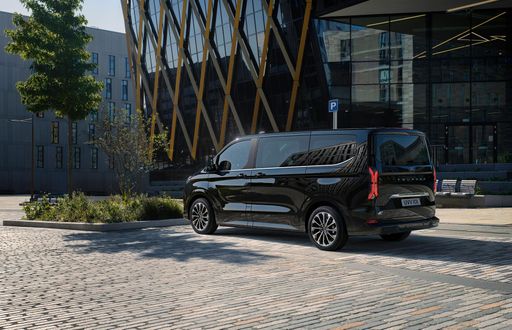
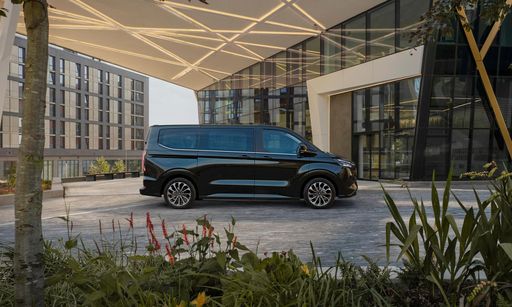
Ford Tourneo Custom

3.9 (1 Reviews)
rate
  • clearly more power
  • only slightly more efficient
details

Toyota Proace Bus

  • clearly cheaper
  • very slightly more electric range
  • significantly lighter
details

All details on performance, efficiency, range and trunk space can be found in the technical comparison below – including user reviews for both models.

By Achim Sedelmaier

Tourneo Custom

Ford Tourneo Custom VS Toyota Proace Bus — which people‑mover fits your life?

The Ford Tourneo Custom VS Toyota Proace Bus matchup pits two giant people‑movers that both promise space but deliver it in different styles. The Ford Tourneo Custom leans into modularity and clever seat engineering, while the Toyota Proace Bus emphasizes straightforward carrying capacity and long‑distance serenity. Both are designed for families, shuttles and small businesses, yet they answer those briefs with different priorities: one prioritises configurable passenger layouts, the other prioritises calm, no‑nonsense hauling. Read on to see how those priorities play out in city traffic, on motorways and in everyday practicality.
Proace Bus

Driving character: city agility versus relaxed cruising

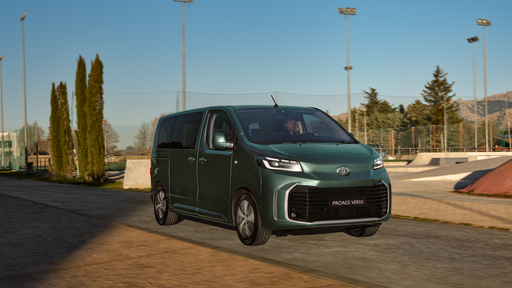
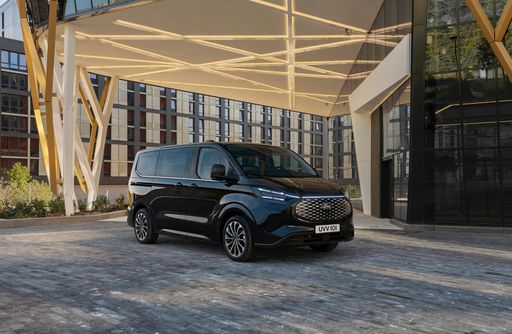
In traffic the Ford Tourneo Custom behaves more like a large passenger car — lighter steering and a more planted feeling when you nudge it through tight streets — whereas the Toyota Proace Bus feels more like a proper bus, a little stiffer in turns and indifferent to cornering enthusiasm. On the motorway the Toyota Proace Bus shows its strength as a composed cruiser with a diesel/automatic pairing that masks motorway miles, while the Tourneo Custom can feel more alive but also more sensitive to wind and tyre noise at higher speeds. Electric and hybrid versions of both quieten the cabin but introduce the usual range considerations that change long‑distance planning. The practical takeaway: choose the Ford if you want easier maneuvering in town and a more car‑like feel, choose the Toyota if you prioritise calm, steady long‑distance cruising with predictable responses.

Tourneo Custom

Comfort and cabin feel: seat quality versus material character

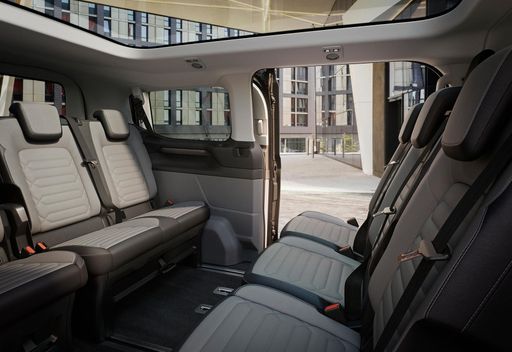
Seat comfort is a tussle: the Toyota Proace Bus tends to offer thicker, motorway‑friendly seats that make long hauls less tiring, while the Ford Tourneo Custom focuses on flexible seating positions that improve everyday ergonomics and family practicality. Interior materials on both remind you that these are utility‑first vehicles — the Toyota often reads as the more sober, robust cabin and the Ford tries to feel more modern with big screens and sculpted panels but exposes hard plastics in places. Noise insulation varies by engine and trim: the Ford can be surprisingly quiet in electrified versions, whereas the Proace Bus’s diesel variants are generally well controlled and feel slightly calmer on long runs. In short, pick the Proace Bus if you spend most time on autobahns and want cushioned seats, pick the Tourneo Custom if seat flexibility and adaptable positions are more valuable than premium finishes.

Practicality and everyday usability: doors, loading and seat systems

Both vans win on accessibility, but they do it differently: the Ford Tourneo Custom’s track‑mounted seats and rotating second row let you create conference or cargo layouts with fewer compromises, while the Toyota Proace Bus brings wide openings and often electric sliding doors that make repeated passenger loading easier. The Tourneo Custom’s lower loading sill and intuitive rail system favour families with strollers and gear, yet its big rear tailgate can be heavy and awkward to manage; the Proace Bus gives you more absolute passenger capacity and simple, workmanlike cargo space but the boot behind three rows is taller and less handy. If you need rapid, repeated door use — think taxis or daycare runs — the Proace Bus’s electric doors and easy openings are a real practical advantage. Conversely, if internal reconfiguration and low sill loading matter, the Tourneo Custom’s modularity wins daily convenience.

Ergonomics, tech and perceived quality: modern screen versus practical simplicity

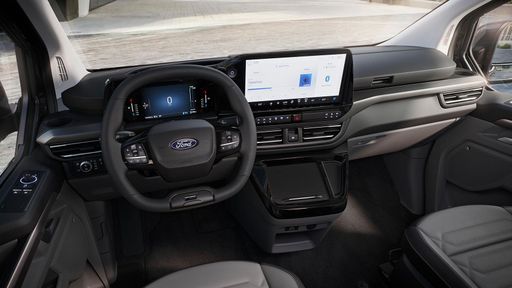
The Ford Tourneo Custom pushes a modern cockpit feel with large displays and more connected features, but that comes at the cost of touch‑centric controls and occasional interface lag that irritates drivers who want physical shortcuts. The Toyota Proace Bus keeps things more straightforward: screens and features are functional rather than flashy, and in many trims systems are simpler but more immediately usable. Perceived quality follows form — the Tourneo Custom often feels fresher and more contemporary, the Proace Bus feels robust and no‑nonsense; neither masquerades as a luxury vehicle, but they reach that conclusion via different routes. For buyers who want a modern UX and don’t mind learning menus, the Tourneo Custom is appealing; for those wanting tried‑and‑true controls and lower fuss, the Proace Bus is easier to live with.

Buyer fit: who should choose which before you dive into specs

If your days revolve around rearranging seats, carrying mixed cargo and fitting into parking garages while still offering car‑like handling, the Ford Tourneo Custom is tailored to that life — its seat rails, rotating chairs and multi‑powertrain choices reward versatility and active households. If your priority is predictable motorway comfort, easy mass passenger loading, lowest‑friction routine operation and upfront value for an 8–9‑seat bus, the Toyota Proace Bus is the practical, lower‑hassle choice. Both can be electrified, which quiets cabins but shifts the conversation to range and charging behaviour — factors worth checking in the technical comparison that follows. Use this matchup to decide which set of compromises you prefer before digging into the numbers and trim specifics.

Here’s where it gets real: The technical differences in detail

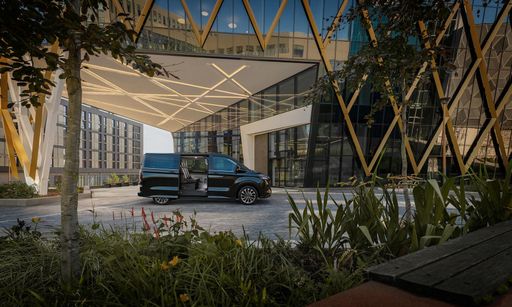
Tourneo Custom

Costs and Efficiency:

Looking at overall running costs, both models reveal some interesting differences in everyday economy.

Toyota Proace Bus is clearly cheaper – starting at 31,600 £ , while the Ford Tourneo Custom costs 52,900 £ . That’s a price difference of around 21,323 £.

In terms of energy consumption, the Ford Tourneo Custom is only slightly more efficient: consuming 24.1 kWh/100km compared to 24.2 kWh/100km for the Toyota Proace Bus. That’s a difference of about 0.1 kWh/100km.

As for electric range, the Toyota Proace Bus offers very slightly more range – reaching up to 343 km, about 4 km more than the Ford Tourneo Custom.

Proace Bus

Engine and Performance:

Power, torque and acceleration are the classic benchmarks for car enthusiasts – and here, some clear differences start to show.

When it comes to engine power, the Ford Tourneo Custom offers clearly more power – delivering 286 HP compared to 180 HP. That’s roughly 106 HP more horsepower.

There’s also a difference in torque: the Ford Tourneo Custom delivers clearly more torque with 630 Nm compared to 400 Nm. That’s about 230 Nm more.

Tourneo Custom

Space and Everyday Use:

Whether family car or daily driver – which one offers more room, flexibility and comfort?

Seats: Toyota Proace Bus offers more seats – 9 vs 8.

In terms of curb weight, Toyota Proace Bus is significantly lighter – 1,835 kg compared to 2,660 kg. The difference is around 825 kg.

When it comes to payload, the Toyota Proace Bus carries substantially more – 1,265 kg compared to 690 kg. That’s a difference of about 575 kg.

Who wins the race in the data check?

The Toyota Proace Bus holds a solid overall lead in the objective data comparison.
This result only shows which model scores more points on paper – not which of the two cars feels right for you.

from £31,600
Proace Bus

Toyota Proace Bus

  • Engine Type Electric, Diesel
  • Transmission Automatic, Manuel
  • Drive Type Front-Wheel Drive
  • Power HP 136 - 180 HP
  • Consumption L/100km 6.5 - 6.7 L/100km
  • Consumption kWh/100km 24.2 - 24.3 kWh/100km
  • Electric Range 218 - 343 km
Ford Tourneo Custom
Toyota Proace Bus

Costs and Consumption

View detailed analysis

Engine and Performance

View detailed analysis

Dimensions and Body

View detailed analysis

Ford Tourneo Custom

The Ford Tourneo Custom is a practical and polished people‑carrier that turns hauling crew and weekend kit into something surprisingly pleasant, with a composed ride and a cabin built for real life rather than showroom gloss. With clever storage, flexible seating and tech that keeps everyone happy on the road, it’s the sensible choice for families or businesses that want function without sacrificing a bit of style — the van that learnt how to be nice to live with.

details

Toyota Proace Bus

The Toyota Proace Bus is a pragmatic people‑mover that swallows passengers and luggage with the kind of everyday practicality fleet managers and large families will appreciate. It may not thrill the enthusiast, but its sensible layout, sturdy build and Toyota badge make it a dependable, no-nonsense choice for anyone needing space and reliability rather than flash.

details
Ford Tourneo Custom
Toyota Proace Bus

Costs and Consumption

Price
52,900 - 69,700 £
Price
31,600 - 57,100 £
Consumption L/100km
-
Consumption L/100km
6.5 - 6.7 L/100km
Consumption kWh/100km
24.1 - 26.6 kWh/100km
Consumption kWh/100km
24.2 - 24.3 kWh/100km
Electric Range
310 - 339 km
Electric Range
218 - 343 km
Battery Capacity
-
Battery Capacity
-
co2
0 g/km
co2
0 - 177 g/km
Fuel tank capacity
-
Fuel tank capacity
-

Dimensions and Body

Body Type
Bus
Body Type
Bus
Seats
8
Seats
5 - 9
Doors
-
Doors
-
Curb weight
2,660 - 2,707 kg
Curb weight
1,835 - 2,140 kg
Trunk capacity
672 - 819 L
Trunk capacity
-
Length
-
Length
-
Width
2,032 mm
Width
1,920 mm
Height
-
Height
-
Max trunk capacity
-
Max trunk capacity
-
Payload
620 - 690 kg
Payload
825 - 1,265 kg

Engine and Performance

Engine Type
Electric
Engine Type
Electric, Diesel
Transmission
Automatic
Transmission
Automatic, Manuel
Transmission Detail
Reduction Gearbox
Transmission Detail
Reduction Gearbox, Manual Gearbox, Automatic Gearbox
Drive Type
Rear-Wheel Drive, All-Wheel Drive
Drive Type
Front-Wheel Drive
Power HP
218 - 286 HP
Power HP
136 - 180 HP
Acceleration 0-100km/h
-
Acceleration 0-100km/h
13.3 s
Max Speed
-
Max Speed
-
Torque
415 - 630 Nm
Torque
260 - 400 Nm
Number of Cylinders
-
Number of Cylinders
4
Power kW
160 - 210 kW
Power kW
100 - 132 kW
Engine capacity
-
Engine capacity
2,184 cm3

General

Model Year
2025
Model Year
2,024 - 2,025
CO2 Efficiency Class
A
CO2 Efficiency Class
A, F, G
Brand
Ford
Brand
Toyota
DriveDuel uses data analysis and artificial intelligence to evaluate vehicle data and create content. Content is regularly reviewed and improved. The displayed prices are estimates based on German list prices, adjusted to the respective country’s VAT. Country-specific registration taxes are not included. This information is not legally binding.