VS

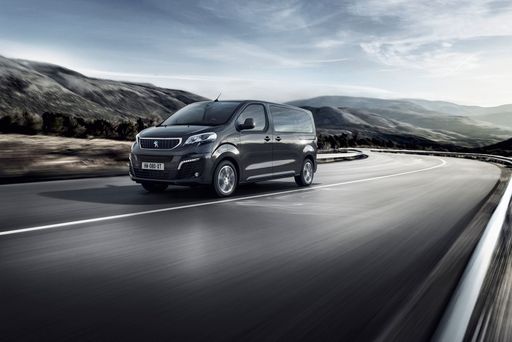
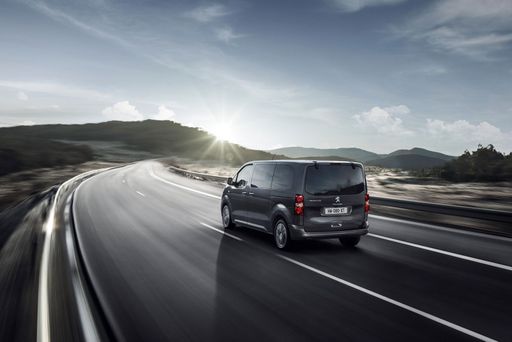
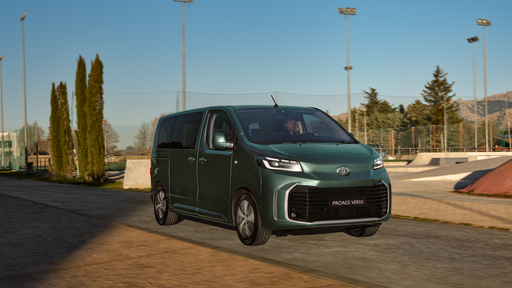
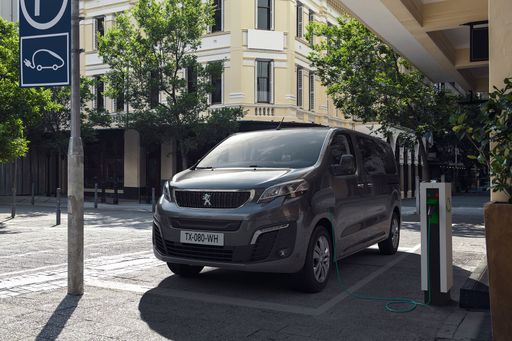
Peugeot Traveller vs Toyota Proace Bus comparison

Compare performance (180 HP vs 180 HP), boot space and price (34,800 £ vs 31,600 £ ) at a glance. Find out which car is the better choice for you – Peugeot Traveller or Toyota Proace Bus?

Peugeot Traveller vs Toyota Proace Bus: Key differences

Peugeot Traveller

  • markedly quicker 0–100 km/h
details

Toyota Proace Bus

  • slightly cheaper
  • marginally more efficient
  • very slightly lighter
details

By Achim Sedelmaier

Traveller

Peugeot Traveller vs Toyota Proace Bus — quick take for shoppers

Peugeot Traveller and Toyota Proace Bus sit in the same family‑van class but play very different roles for real users: one leans toward easy access and a calm highway demeanour, the other toward sheer seating flexibility and no‑nonsense payload. The Traveller pitches itself as a relaxed shuttle with a usable third row and simple, robust controls that make family life straightforward. The Proace Bus answers with a more modular interior, extra seating options and practical details designed for operators and large households. This comparison highlights how those priorities change daily usability rather than listing specs you won’t feel behind the wheel.
Proace Bus

Character and driving manners

The Peugeot Traveller drives like a van built for steady progress — it feels composed at cruising speeds and responds with a touch more eagerness when you ask for a bit of acceleration. The Toyota Proace Bus emphasises steady, effortless forward motion from its smooth gearbox and is happiest when used as a relaxed people‑carrier rather than a rapid mover. Both lack sports‑car feedback: expect soft steering and body roll when you push them, but the Traveller is marginally livelier and the Proace more ponderous and cruise‑oriented. Choose Traveller if you want a van that will move with a little more promptness; pick Proace if you prefer a calmer, heavy‑load confidence on long runs.

Traveller

Cabin feel, comfort and materials

Inside, the Peugeot Traveller favours practicality: large doors, straightforward switchgear and an airy seating layout, but much of the trim is utilitarian hard plastic rather than premium surfaces. The Toyota Proace Bus can feel a touch more finished in higher trims and offers seating options with better long‑distance support, giving it an edge for passengers who spend hours on the road. Infotainment and switchgear are functional in both, with newer variants improving screens and smartphone integration — the difference comes down to trim choice more than fundamental architecture. If perceived quality matters, the Proace lets you move up into a noticeably more polished cabin; if you prioritise easy access and rugged simplicity, the Traveller wins out.

Practicality: seats, cargo and daily use

The Traveller’s third row is genuinely adult‑friendly and its big sliding doors make repeated school‑runs and airport drops less fiddly, but those rear seats are heavy and fiddly to remove when you need a flat load floor. The Proace Bus was designed around modularity: rail‑mounted seats, easier reconfiguration and a higher practical payload make it the better tool for operators or families who regularly swap passengers and luggage. Both produce an awkwardly high, narrow boot with all seats in place, yet the Proace wins where quick conversion and capacity under load matter most. In short, Traveller simplifies passenger comfort; Proace prioritises flexible utility and payload robustness.

Everyday usability and long‑distance behaviour

For city life both vans surprise with manageable turning circles and good visibility — the Traveller’s tall driving position helps with urban confidence while the Proace’s park‑friendly height and optional electric doors make it easier in tight garages. On the motorway both settle into quiet, stable cruising, though the Peugeot feels a touch more composed at steady speeds and the Toyota rewards long days with supporting seats and a smooth automatic when fitted. The electric versions of both are excellent in stop‑and‑go or urban shuttle roles but need more frequent charging on long highway runs, so consider usage patterns before choosing an EV. If your driving is mostly intercity/higher‑speed miles, the Proace’s comfort setups and drivetrain choices may edge it for endurance; for mixed family use with frequent access needs, the Traveller feels more straightforward.

Who should choose which — buyer fit before the specs

If you run a shuttle service, ferry kids and kit often, or need the most flexible seating and payload for the money, the Toyota Proace Bus usually aligns better with those priorities. If your priority is easier entry and exit, an adult‑usable third row and a van that behaves a little more briskly on the road, the Peugeot Traveller is the practical family pick. Both can be optioned to look and feel more premium, but the trade is clear: Traveller trades polish for simplicity and better third‑row ergonomics, Proace trades a bit of character for modularity, capacity and operator friendliness. Read on to the technical comparison to see how the drivetrain, weights and range differences translate into everyday costs and capabilities for your use case.

Here’s where it gets real: The technical differences in detail

Traveller

Costs and Efficiency:

Price and efficiency are key factors when choosing a car – and this is often where the real differences emerge.

Toyota Proace Bus is slightly cheaper – starting at 31,600 £ , while the Peugeot Traveller costs 34,800 £ . That’s a price difference of around 3,261 £.

Fuel consumption also shows a difference: the Toyota Proace Bus uses 6.5 L/100km and is marginally more efficient than the Peugeot Traveller with 7 L/100km. The difference is about 0.5 L/100km.

Proace Bus

Engine and Performance:

Under the bonnet, it becomes clear which model is tuned for sportiness and which one takes the lead when you hit the accelerator.

Both models deliver identical power – 180 HP each.

When accelerating from 0 to 100 km/h, the Peugeot Traveller is markedly quicker – completing the sprint in 10.6 s, while the Toyota Proace Bus takes 13.3 s. That’s about 2.7 s quicker.

Both models offer the same torque – 400 Nm.

Traveller

Space and Everyday Use:

Whether family car or daily driver – which one offers more room, flexibility and comfort?

Seats: Toyota Proace Bus offers more seats – 9 vs 8.

In terms of curb weight, Toyota Proace Bus is very slightly lighter – 1,835 kg compared to 1,953 kg. The difference is around 118 kg.

When it comes to payload, the Toyota Proace Bus carries noticeably more – 1,265 kg compared to 883 kg. That’s a difference of about 382 kg.

Who wins the race in the data check?

The Toyota Proace Bus is clearly superior overall in the objective data comparison.
This result only shows which model scores more points on paper – not which of the two cars feels right for you.

from £31,600
Proace Bus

Toyota Proace Bus

  • Engine Type Electric, Diesel
  • Transmission Automatic, Manuel
  • Drive Type Front-Wheel Drive
  • Power HP 136 - 180 HP
  • Consumption L/100km 6.5 - 6.7 L/100km
  • Consumption kWh/100km 24.2 - 24.3 kWh/100km
  • Electric Range 218 - 343 km
Peugeot Traveller
Toyota Proace Bus

Costs and Consumption

View detailed analysis

Engine and Performance

View detailed analysis

Dimensions and Body

View detailed analysis

Peugeot Traveller

The Peugeot Traveller is a roomy, refined people‑carrier that dresses up everyday practicality with an unexpectedly classy interior. Perfect for family getaways or executive shuttles, it pairs flexible seating and clever storage with a calm, composed ride — useful, sensible, and quietly likeable.

details

Toyota Proace Bus

The Toyota Proace Bus is a pragmatic people‑mover that swallows passengers and luggage with the kind of everyday practicality fleet managers and large families will appreciate. It may not thrill the enthusiast, but its sensible layout, sturdy build and Toyota badge make it a dependable, no-nonsense choice for anyone needing space and reliability rather than flash.

details
Peugeot Traveller
Toyota Proace Bus

Costs and Consumption

Price
34,800 - 42,200 £
Price
31,600 - 57,100 £
Consumption L/100km
7 - 7.1 L/100km
Consumption L/100km
6.5 - 6.7 L/100km
Consumption kWh/100km
-
Consumption kWh/100km
24.2 - 24.3 kWh/100km
Electric Range
-
Electric Range
218 - 343 km
Battery Capacity
-
Battery Capacity
-
co2
183 - 188 g/km
co2
0 - 177 g/km
Fuel tank capacity
-
Fuel tank capacity
-

Dimensions and Body

Body Type
Bus
Body Type
Bus
Seats
8
Seats
5 - 9
Doors
-
Doors
-
Curb weight
1,953 - 1,986 kg
Curb weight
1,835 - 2,140 kg
Trunk capacity
-
Trunk capacity
-
Length
-
Length
-
Width
1,920 mm
Width
1,920 mm
Height
-
Height
-
Max trunk capacity
-
Max trunk capacity
-
Payload
877 - 883 kg
Payload
825 - 1,265 kg

Engine and Performance

Engine Type
Diesel
Engine Type
Electric, Diesel
Transmission
Automatic
Transmission
Automatic, Manuel
Transmission Detail
Automatic Gearbox
Transmission Detail
Reduction Gearbox, Manual Gearbox, Automatic Gearbox
Drive Type
Front-Wheel Drive
Drive Type
Front-Wheel Drive
Power HP
180 HP
Power HP
136 - 180 HP
Acceleration 0-100km/h
10.6 s
Acceleration 0-100km/h
13.3 s
Max Speed
-
Max Speed
-
Torque
400 Nm
Torque
260 - 400 Nm
Number of Cylinders
4
Number of Cylinders
4
Power kW
132 kW
Power kW
100 - 132 kW
Engine capacity
2,184 cm3
Engine capacity
2,184 cm3

General

Model Year
2025
Model Year
2,024 - 2,025
CO2 Efficiency Class
G
CO2 Efficiency Class
A, F, G
Brand
Peugeot
Brand
Toyota
DriveDuel uses data analysis and artificial intelligence to evaluate vehicle data and create content. Content is regularly reviewed and improved. The displayed prices are estimates based on German list prices, adjusted to the respective country’s VAT. Country-specific registration taxes are not included. This information is not legally binding.