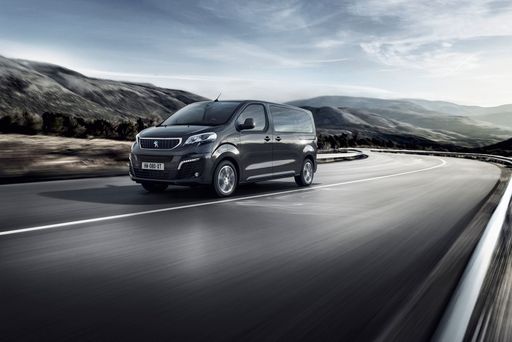
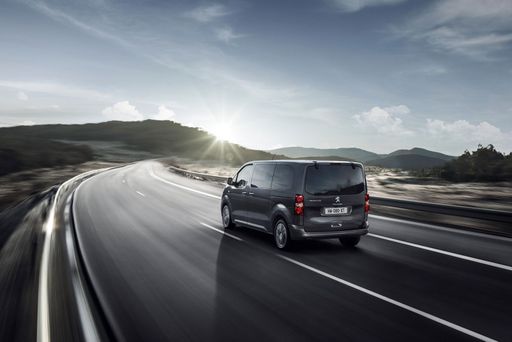
VS

Peugeot Expert Transporter vs Peugeot Traveller comparison

Compare performance (180 HP vs 180 HP), boot space and price (32,100 £ vs 34,800 £ ) at a glance. Find out which car is the better choice for you – Peugeot Expert Transporter or Peugeot Traveller?

Peugeot Expert Transporter vs Peugeot Traveller: Key differences

Peugeot Expert Transporter

5 (1 Reviews)
rate
  • only slightly cheaper
  • moderately more efficient
  • very slightly more efficient
  • marginally more electric range
  • barely quicker 0–100 km/h
  • somewhat lighter

Peugeot Traveller

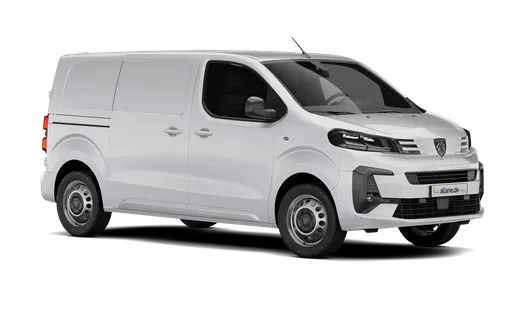
Expert Transporter

Introduction: A Tale of Two Titans

In the world of versatile vehicles, two models stand out from the crowd: the Peugeot Transporter Expert and the Peugeot Traveller. The debate between choosing a cargo van versus a bus often boils down to the specific needs of the driver, but there's more than meets the eye with these two models. Let's dive into a detailed comparison of the technology, performance, and unique features that define the Peugeot Transporter Expert and Traveller for 2024.
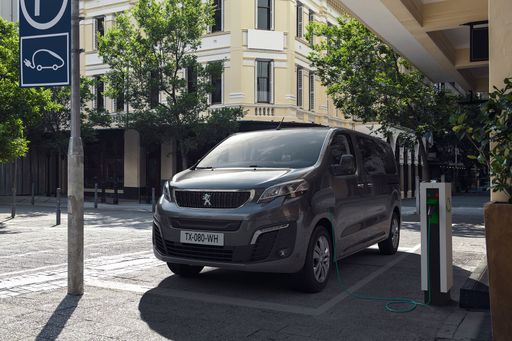
Traveller

Exterior and Dimensions: Style Meets Functionality

At first glance, both the Transporter Expert and the Traveller possess sleek and modern designs, exuding the quintessential Peugeot charm. The Expert, with its body type tailored to cargo duties, measures between 4980 mm and 5330 mm in length and has a height of 1895 mm to 1935 mm, making it slightly taller than the Traveller.

On the other hand, the Traveller, designed as a bus for passenger transportation, has a slightly larger footprint. Its length ranges from 4983 mm to 5333 mm with a consistent height of 1890 mm, offering a harmonious blend of space and practicality.

Powertrains and Performance: Efficient and Dynamic

Both models offer impressive engine choices catering to a variety of preferences. The Transporter Expert boasts both diesel and electric variants. Diesel engines range from 120 HP to 177 HP with efficient consumption between 6.6 L/100km and 7.4 L/100km. Its electric counterpart offers 136 HP, with a consumption of 23.6 kWh/100km to 24 kWh/100km and a commendable electric range of up to 352 km.

The Traveller mirrors some of the Expert’s powertrain diversity. It also offers diesel engines up to 177 HP, slightly elevated on consumption, hovering between 7.3 L/100km and 7.5 L/100km. The electric version, similar to the Expert, presents 136 HP and a range that stretches to 351 km, albeit with a slightly higher consumption of up to 25 kWh/100km.

Interior Comfort and Capacity: Tailored to Your Needs

On the interior front, the difference in seating arrangement sets these vehicles apart. The Transporter Expert goes minimalist with options for 3 to 5 seats, focusing on maximizing cargo space with substantial payloads reaching up to 1270 kg.

In contrast, the Traveller is built to transport passengers in comfort, accommodating up to 8 individuals. While its payload shrinks slightly in comparison, maintaining a balance between luggage capacity and passenger comfort, the Traveller presents an immense trunk capacity reaching up to 2011 liters—ideal for group travel adventures.

Speed and Acceleration: Balanced Dynamics

The Transporter Expert accelerates from 0 to 100 km/h in approximately 10.5 to 11.2 seconds, depending on the version. Its top speed caps at 185 km/h, presenting a slightly sporty edge despite its cargo orientation.

The Traveller, tailored for leisurely journeys, offers acceleration times ranging from 10.6 seconds to a more relaxed 14.2 seconds, with a maximum speed equal to the Expert's diesel counterpart at 185 km/h—ideal for smooth highway cruising.

Technical Innovations: Leading the Way

Both models embrace modern technology with state-of-the-art features such as automatic and reduction gearboxes for seamless driving experiences. The shared four-cylinder engine design across both models ensures a balanced power delivery, while maintaining efficiency and reduced CO2 emissions, with an impressive class "A" efficiency option in their electric versions.

Conclusion: Distinct Vehicles for Distinct Needs

Peugeot's Transporter Expert and Traveller offer distinctly different takes on what a versatile vehicle should be. Whether your priority is moving goods efficiently with the Transporter Expert or ferrying passengers in comfort with the Traveller, both models deliver exceptional performance, ensuring that they meet the varying needs of modern drivers. The choice ultimately depends on whether your focus is on carrying cargo or ferrying more passengers in style.

Here’s where it gets real: The technical differences in detail

Expert Transporter

Costs and Efficiency:

Price and efficiency are often the first things buyers look at. Here it becomes clear which model has the long-term edge – whether at the pump, the plug, or in purchase price.

Peugeot Expert Transporter is only slightly cheaper – starting at 32,100 £ , while the Peugeot Traveller costs 34,800 £ . That’s a price difference of around 2,695 £.

Fuel consumption also shows a difference: the Peugeot Expert Transporter uses 6.2 L/100km and is moderately more efficient than the Peugeot Traveller with 7 L/100km. The difference is about 0.8 L/100km.

In terms of energy consumption, the Peugeot Expert Transporter is very slightly more efficient: consuming 23.6 kWh/100km compared to 24.3 kWh/100km for the Peugeot Traveller. That’s a difference of about 0.7 kWh/100km.

As for electric range, the Peugeot Expert Transporter offers marginally more range – reaching up to 352 km, about 1 km more than the Peugeot Traveller.

Traveller

Engine and Performance:

Under the bonnet, it becomes clear which model is tuned for sportiness and which one takes the lead when you hit the accelerator.

Both models deliver identical power – 180 HP each.

When accelerating from 0 to 100 km/h, the Peugeot Expert Transporter is barely quicker – completing the sprint in 10.5 s, while the Peugeot Traveller takes 10.6 s. That’s about 0.1 s quicker.

There’s no difference in top speed – both reach 130 km/h.

Both models offer the same torque – 400 Nm.

Space and Everyday Use:

Beyond pure performance, interior space and usability matter most in daily life. This is where you see which car is more practical and versatile.

Seats: Peugeot Traveller offers more seats – 8 vs 5.

In terms of curb weight, Peugeot Expert Transporter is somewhat lighter – 1,722 kg compared to 1,953 kg. The difference is around 231 kg.

For maximum load capacity, the Peugeot Expert Transporter offers considerably more capacity – up to 6,600 L, about 3,300 L more than the Peugeot Traveller.

When it comes to payload, the Peugeot Expert Transporter carries visibly more – 1,226 kg compared to 914 kg. That’s a difference of about 312 kg.

Who wins the race in the data check?

The Peugeot Expert Transporter stands well ahead of its rival in the objective data comparison.
This result only shows which model scores more points on paper – not which of the two cars feels right for you.

from £32,100
Expert Transporter

Peugeot Expert Transporter

  • Engine Type : Electric, Diesel
  • Transmission : Automatic, Manuel
  • Drive Type : Front-Wheel Drive
  • Power HP : 120 - 180 HP
  • Consumption L/100km : 6.2 - 6.5 L/100km
  • Consumption kWh/100km : 23.6 - 24 kWh/100km
  • Electric Range : 221 - 352 km
Peugeot Expert Transporter
Peugeot Traveller

Costs and Consumption

View detailed analysis

Engine and Performance

View detailed analysis

Dimensions and Body

View detailed analysis

Peugeot Expert Transporter

The Peugeot Expert is a practical, no-nonsense work van that combines a car‑like driving feel with a tough, flexible load area — perfect for tradespeople who want comfort on the road and durability on the job. It won’t turn heads for glamour, but its sensible packaging, clever storage and dependable nature make it a smart, low-drama choice for buyers who need a proper transporter.

details

Peugeot Traveller

The Peugeot Traveller is a roomy, refined people‑carrier that dresses up everyday practicality with an unexpectedly classy interior. Perfect for family getaways or executive shuttles, it pairs flexible seating and clever storage with a calm, composed ride — useful, sensible, and quietly likeable.

details
Peugeot Expert Transporter
Peugeot Traveller

Costs and Consumption

Price
32,100 - 51,300 £
Price
34,800 - 52,200 £
Consumption L/100km
6.2 - 6.5 L/100km
Consumption L/100km
7 - 7.1 L/100km
Consumption kWh/100km
23.6 - 24 kWh/100km
Consumption kWh/100km
24.3 - 25 kWh/100km
Electric Range
221 - 352 km
Electric Range
217 - 351 km
Battery Capacity
-
Battery Capacity
-
co2
0 - 172 g/km
co2
0 - 188 g/km
Fuel tank capacity
-
Fuel tank capacity
-

Dimensions and Body

Body Type
Cargo Van
Body Type
Bus
Seats
3 - 5
Seats
8
Doors
4
Doors
5
Curb weight
1,722 - 2,260 kg
Curb weight
1,953 - 2,240 kg
Trunk capacity
-
Trunk capacity
1,624 - 2,011 L
Length
4,980 - 5,330 mm
Length
4,983 - 5,333 mm
Width
1,920 mm
Width
1,920 mm
Height
1,895 - 1,935 mm
Height
1,890 mm
Max trunk capacity
3,200 - 6,600 L
Max trunk capacity
2,700 - 3,300 L
Payload
840 - 1,226 kg
Payload
850 - 914 kg

Engine and Performance

Engine Type
Electric, Diesel
Engine Type
Electric, Diesel
Transmission
Automatic, Manuel
Transmission
Automatic
Transmission Detail
Reduction Gearbox, Manual Gearbox, Automatic Gearbox
Transmission Detail
Reduction Gearbox, Automatic Gearbox
Drive Type
Front-Wheel Drive
Drive Type
Front-Wheel Drive
Power HP
120 - 180 HP
Power HP
136 - 180 HP
Acceleration 0-100km/h
10.5 - 11.2 s
Acceleration 0-100km/h
10.6 - 14.2 s
Max Speed
130 km/h
Max Speed
130 km/h
Torque
260 - 400 Nm
Torque
270 - 400 Nm
Number of Cylinders
4
Number of Cylinders
4
Power kW
88 - 132 kW
Power kW
100 - 132 kW
Engine capacity
1,499 - 2,184 cm3
Engine capacity
2,184 cm3

General

Model Year
2,024 - 2,025
Model Year
2,024 - 2,025
CO2 Efficiency Class
A, F
CO2 Efficiency Class
A, G
Brand
Peugeot
Brand
Peugeot
DriveDuel uses data analysis and artificial intelligence to evaluate vehicle data and create content. Content is regularly reviewed and improved. The displayed prices are estimates based on German list prices, adjusted to the respective country’s VAT. Country-specific registration taxes are not included. This information is not legally binding.