VS

Ford Tourneo Custom vs Peugeot Traveller - Differences and prices compared

Compare performance (286 HP vs 180 HP), boot space and price (45700 £ vs 34800 £ ) at a glance. Find out which car is the better choice for you – Ford Tourneo Custom or Peugeot Traveller?

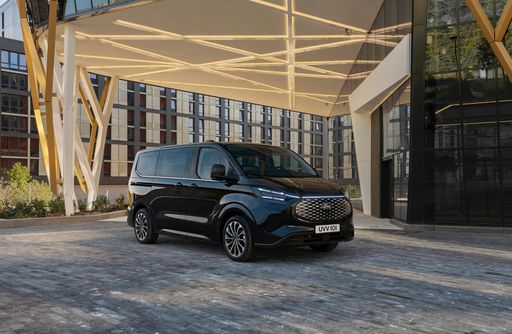
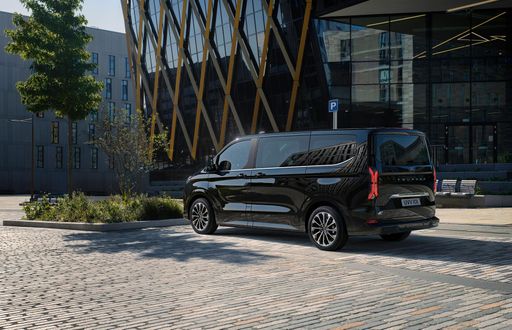
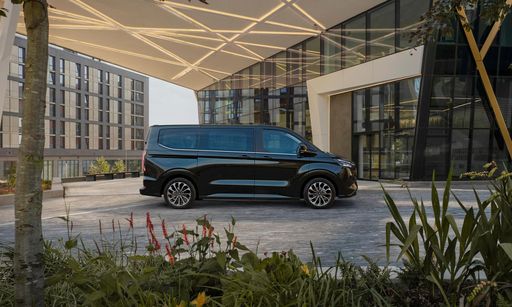
Tourneo Custom

When it comes to versatile and capable multi-purpose vehicles, the Ford Tourneo Custom and the Peugeot Traveller are two key players in the market. Both vehicles are engineered to meet the demands of families, businesses, and leisure activities alike. While they both bring their own set of features to the table, a closer inspection reveals some interesting distinctions that could influence a potential buyer’s decision.

Traveller

Engine and Performance

The Ford Tourneo Custom offers an impressive array of powertrain options, featuring diesel, plug-in hybrid, and full electric variants. With power outputs ranging from 136 HP to a commanding 286 HP, the Tourneo Custom provides flexibility based on user needs. The 1996 to 2488 cm3 engine options come with a choice of manual or automatic transmissions, including a continuously variable automatic transmission (CVT) for a smoother ride.

On the other hand, the Peugeot Traveller sticks primarily to diesel and electric engines, with power outputs up to 177 HP. Its 1997 cm3 engine size paired with an automatic gearbox provides a straightforward driving experience. The Traveller does slightly lag behind in terms of performance variations, but its engines are tuned for efficiency.

Tourneo Custom

Efficiency and Consumption

Fuel efficiency is a critical consideration for buyers, especially those using these vehicles for commercial purposes. The Ford Tourneo Custom achieves fuel consumption figures ranging from 7.3 to 8.6 L/100 km for its diesel variants, while the electric version boasts an impressive consumption of 25.6 kWh/100 km. The all-electric variant has a range of up to 306 km, suitable for urban commuting.

Conversely, the Peugeot Traveller offers a highly competitive fuel consumption range of 7.3 to 7.5 L/100 km for diesel engines. Its electric variants provide a respectable electric range of up to 351 km, making it an appealing choice for environmentally conscious consumers.

Traveller

Dimensions and Cargo Capacity

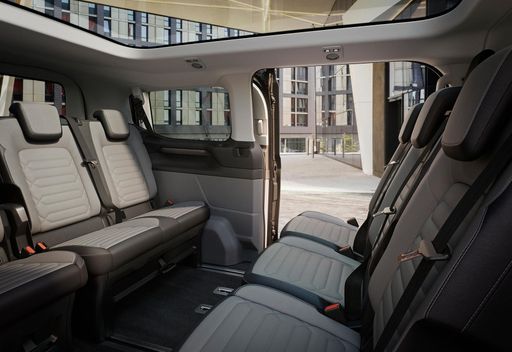
When it comes to dimensions, the Ford Tourneo Custom is slightly larger, measuring between 5050 mm and 5450 mm in length. The width stands at 2032 mm, while the height varies between 1958 and 1959 mm, providing a spacious interior. With cargo capacities ranging from 672 L to 819 L, it’s well-suited for larger loads.

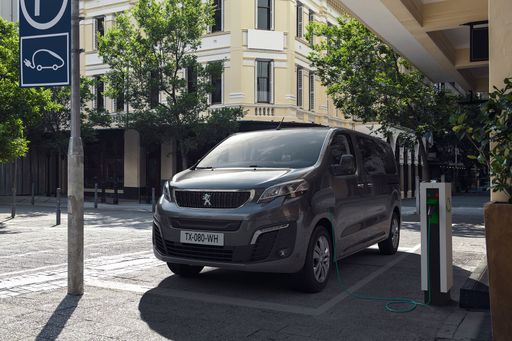
The Peugeot Traveller offers a more compact size, with lengths from 4983 mm to 5333 mm, while its width is narrower at 1920 mm and height at 1890 mm. However, its trunk capacity is superior, boasting options from 1624 L to an expansive 2011 L. This makes the Traveller a great option for those who require ample storage space for passengers and luggage alike.

Tourneo Custom

Safety and Technology Features

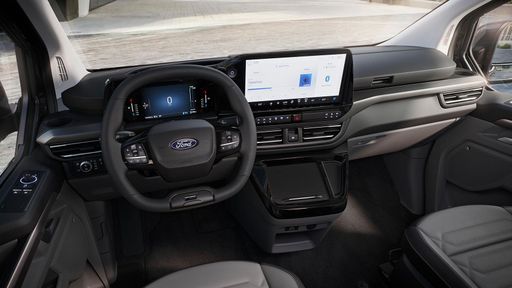
Innovation in safety and technology is another area where both vehicles differentiate themselves. The Ford Tourneo Custom is equipped with Ford's advanced driver-assistance systems, including adaptive cruise control, lane-keeping assist, and a comprehensive infotainment system that integrates seamlessly with smartphones. This model also features a robust safety rating, which is crucial for family or fleet transportation.

On the flip side, the Peugeot Traveller is not lacking in modern tech. It offers a solid suite of safety features, including blind-spot monitoring and an advanced parking assistance system. The touchscreen infotainment system interfaces well with popular navigation and music apps, enhancing the modern driving experience.

Traveller

Verdict: Which One is Right for You?

In summary, both the Ford Tourneo Custom and Peugeot Traveller have their own merits, tailored to different customer needs. The Tourneo Custom stands out with its diverse powertrain options and slightly larger cargo space, whereas the Peugeot Traveller offers an excellent balance of efficiency and advanced storage capacity.

If you prioritize a versatile performance with varied engine options, the Ford Tourneo Custom may be your best bet. However, if exceptional cargo space and eco-friendly electric options appeal to you more, then the Peugeot Traveller is a formidable contender. A test drive of each vehicle could very well clarify the right choice for your needs.

Ford Tourneo Custom

Peugeot Traveller

Here’s where it gets real: The technical differences in detail

Tourneo Custom

Costs and Efficiency:

Price and efficiency are often the first things buyers look at. Here it becomes clear which model has the long-term edge – whether at the pump, the plug, or in purchase price.

Peugeot Traveller has a distinct advantage in terms of price – it starts at 34800 £ , while the Ford Tourneo Custom costs 45700 £ . That’s a price difference of around 10922 £.

Fuel consumption also shows a difference: Ford Tourneo Custom manages with 4.10 L and is therefore clearly more efficient than the Peugeot Traveller with 7 L. The difference is about 2.90 L per 100 km.

In terms of energy consumption, the advantage goes to the Ford Tourneo Custom: with 24.10 kWh per 100 km, it’s slight more efficient than the Peugeot Traveller with 24.30 kWh. That’s a difference of about 0.20 kWh.

As for electric range, the Peugeot Traveller performs barely noticeable better – achieving up to 351 km, about 12 km more than the Ford Tourneo Custom.

Traveller

Engine and Performance:

Under the bonnet, it becomes clear which model is tuned for sportiness and which one takes the lead when you hit the accelerator.

When it comes to engine power, the Ford Tourneo Custom has a clearly perceptible edge – offering 286 HP compared to 180 HP. That’s roughly 106 HP more horsepower.

There’s also a difference in torque: Ford Tourneo Custom pulls distinct stronger with 630 Nm compared to 400 Nm. That’s about 230 Nm difference.

Tourneo Custom

Space and Everyday Use:

Whether family car or daily driver – which one offers more room, flexibility and comfort?

Both vehicles offer seating for 8 people.

In curb weight, Peugeot Traveller is distinct lighter – 1953 kg compared to 2453 kg. The difference is around 500 kg.

In terms of boot space, the Peugeot Traveller offers significantly more room – 2011 L compared to 819 L. That’s a difference of about 1192 L.

In maximum load capacity, the Peugeot Traveller performs decisively better – up to 3300 L, which is about 1946 L more than the Ford Tourneo Custom.

When it comes to payload, Peugeot Traveller barely noticeable takes the win – 914 kg compared to 847 kg. That’s a difference of about 67 kg.

Who wins the race in the data check?

The Peugeot Traveller sits just ahead overall in the objective data comparison.
This result only shows which model scores more points on paper – not which of the two cars feels right for you.

Ford Tourneo Custom
Peugeot Traveller

Costs and Consumption

View detailed analysis

Engine and Performance

View detailed analysis

Dimensions and Body

View detailed analysis
from about £34,800
Traveller

Peugeot Traveller

  • Engine Type : Electric, Diesel
  • Transmission : Automatic
  • Drive Type : Front-Wheel Drive
  • Power HP : 136 - 180 HP
  • Consumption L/100km : 7 - 7.1 L
  • Consumption kWh/100km : 24.3 - 25 kWh
  • Electric Range : 217 - 351 km

Ford Tourneo Custom

The Ford Tourneo Custom is a practical and polished people‑carrier that turns hauling crew and weekend kit into something surprisingly pleasant, with a composed ride and a cabin built for real life rather than showroom gloss. With clever storage, flexible seating and tech that keeps everyone happy on the road, it’s the sensible choice for families or businesses that want function without sacrificing a bit of style — the van that learnt how to be nice to live with.

details

Peugeot Traveller

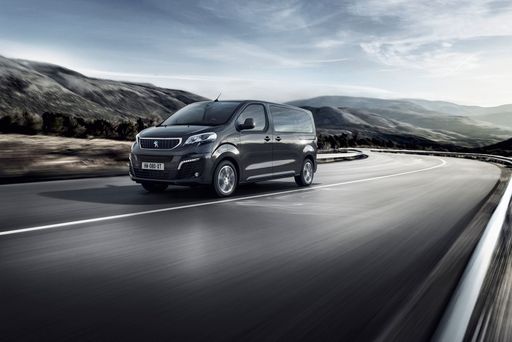
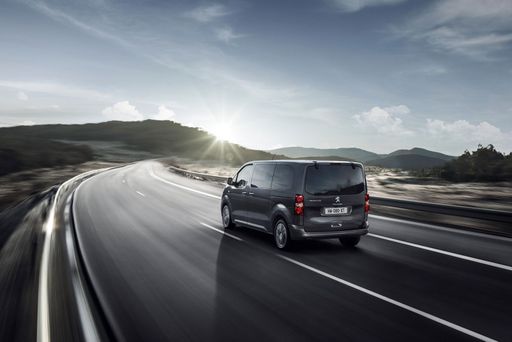
The Peugeot Traveller is a roomy, refined people‑carrier that dresses up everyday practicality with an unexpectedly classy interior. Perfect for family getaways or executive shuttles, it pairs flexible seating and clever storage with a calm, composed ride — useful, sensible, and quietly likeable.

details
Ford Tourneo Custom
Peugeot Traveller

Costs and Consumption

Price
45700 - 69700 £
Price
34800 - 52200 £
Consumption L/100km
4.1 - 8.6 L
Consumption L/100km
7 - 7.1 L
Consumption kWh/100km
24.1 - 26.6 kWh
Consumption kWh/100km
24.3 - 25 kWh
Electric Range
49 - 339 km
Electric Range
217 - 351 km
Battery Capacity
11.80 kWh
Battery Capacity
-
co2
0 - 226 g/km
co2
0 - 188 g/km
Fuel tank capacity
55 - 63 L
Fuel tank capacity
70 L

Dimensions and Body

Body Type
Bus
Body Type
Bus
Seats
8
Seats
8
Doors
4 - 5
Doors
5
Curb weight
2453 - 2707 kg
Curb weight
1953 - 2240 kg
Trunk capacity
672 - 819 L
Trunk capacity
1624 - 2011 L
Length
5050 - 5450 mm
Length
4983 - 5333 mm
Width
2032 mm
Width
1920 mm
Height
1958 - 1959 mm
Height
1890 mm
Max trunk capacity
1045 - 1354 L
Max trunk capacity
2700 - 3300 L
Payload
620 - 847 kg
Payload
850 - 914 kg

Engine and Performance

Engine Type
Diesel, Plugin Hybrid, Electric
Engine Type
Electric, Diesel
Transmission
Manuel, Automatic
Transmission
Automatic
Transmission Detail
Manual Gearbox, Automatic Gearbox, CVT, Reduction Gearbox
Transmission Detail
Reduction Gearbox, Automatic Gearbox
Drive Type
Front-Wheel Drive, All-Wheel Drive, Rear-Wheel Drive
Drive Type
Front-Wheel Drive
Power HP
136 - 286 HP
Power HP
136 - 180 HP
Acceleration 0-100km/h
-
Acceleration 0-100km/h
10.6 - 14.2 s
Max Speed
-
Max Speed
130 - 185 km/h
Torque
360 - 630 Nm
Torque
270 - 400 Nm
Number of Cylinders
4
Number of Cylinders
4
Power kW
100 - 210 kW
Power kW
100 - 132 kW
Engine capacity
1996 - 2488 cm3
Engine capacity
2184 cm3

General

Model Year
2023 - 2025
Model Year
2024 - 2025
CO2 Efficiency Class
G, B, C, A
CO2 Efficiency Class
A, G
Brand
Ford
Brand
Peugeot
What drivetrain options does the Ford Tourneo Custom have?

The Ford Tourneo Custom is available as Front-Wheel Drive, All-Wheel Drive or Rear-Wheel Drive.

The prices shown are estimates based on German list prices, adjusted for local VAT. Local registration taxes (e.g. NoVA, BPM or CO2 malus) are not included. This information is not legally binding.