
VS

Peugeot Expert Transporter vs Renault Trafic Transporter – Performance, range & efficiency compared

Everyday use, family trips or long-distance drives – here’s where the differences show.
Discover whether Peugeot Expert Transporter or Renault Trafic Transporter fits your lifestyle better.

Peugeot Expert Transporter

Renault Trafic Transporter

Peugeot Expert vs Renault Trafic: A Battle of Versatile Transporters

In the competitive arena of cargo vans, two well-regarded models stand out: the Peugeot Expert and the Renault Trafic. Both vans have carved a niche for themselves, targeting businesses that require practical, efficient transportation solutions. This article delves into a head-to-head comparison of these two models, examining technical features, performance specs, and innovations to help you make an informed choice.
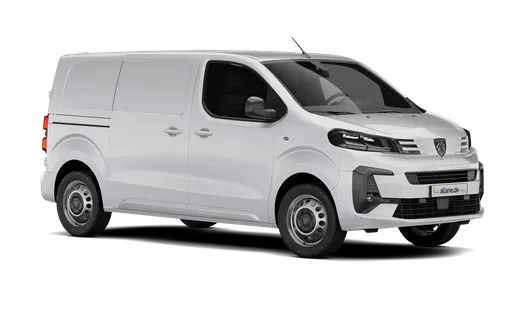
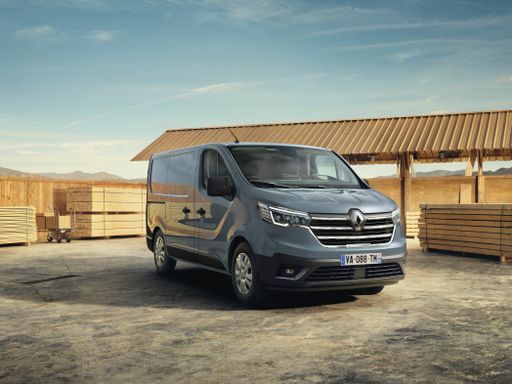
Design & Dimensions

When it comes to dimensions, the Peugeot Expert offers a slightly smaller footprint with lengths ranging from 4980mm to 5330mm and a width of 1920mm. In contrast, the Renault Trafic is slightly more elongated, stretching between 5080mm and 5480mm in length and measuring 1956mm in width. Height is another distinguishing factor, with the Expert standing at 1895mm to 1935mm and the Trafic at a varied 1967mm to 2509mm, depending on configuration. Both vehicles sport the practical cargo van body type, designed to maximize utility.

Engine & Performance

The powertrains are where these two models begin to show their distinct personalities. The Peugeot Expert offers both diesel and electric engines with a power range of 120 to 177 HP and maximum torque up to 400 Nm. It also edges ahead with more options by featuring three different transmissions—Manual, Automatic, and Reduction Gearbox—all with front-wheel drive.

On the other hand, the Renault Trafic, also available in diesel and electric versions, ranges from 110 to 170 HP and offers a slightly lower torque peak of 380 Nm. Its transmission options include Manual, Dual-Clutch Automatic, and Reduction Gearbox. Both models exhibit diverse choices, but the Trafic’s dual-clutch automatic provides a smoother transition, especially useful for urban driving.

Fuel Efficiency & Range

Efficiency is a crucial area for vehicle operation costs, especially when fleet operations are concerned. The Peugeot Expert's diesel engines have a fuel consumption between 6.6 to 7.4 L/100km, with electric versions consuming about 23.6 to 24 kWh/100km. It offers substantial electric-only ranges from 223km to 352km, making it a viable choice for those looking to reduce CO2 emissions with minimal sacrifice of distance.

The Renault Trafic offers slightly less efficient diesel consumption ranging from 6.7 to 7.8 L/100km, with electric variants consuming between 21.3 to 21.5 kWh/100km and electric ranges up to 292km. The Trafic’s diesel options are robust, yet those considering long-range electric use might find the Expert more appealing.

Interior & Cargo Capacity

The cabin setups in both transporters are versatile. The Peugeot Expert can accommodate either 3 or 5 seats, whereas the Renault Trafic offers more flexibility with configurations for 2, 3, or 6 seats. This may cater better to someone seeking high adaptability in seating arrangements.

Payload comparison is a fine balance; the Peugeot Expert offers up to 1270 kg, while Trafic matches with up to 1185 kg. Both models boast impressive cargo capacities tailored for heavy-loading tasks, though Expert goes slightly further in payload advantage.

Innovations & Safety

Both Peugeot and Renault have integrated substantial safety and innovation features in these models. High-tech infotainment, advanced driver-assist systems, and robust safety features like multiple airbags and stability control systems make these vans modern counterparts to older, less safe models.

Conclusion

In the duel between the Peugeot Expert and Renault Trafic transporters, each model presents compelling advantages. The Expert stands out with better electric range and payload capabilities, while Trafic might appeal to those prioritizing slightly more interior versatility and smoother automatic transmission. Ultimately, the choice will depend on your specific needs in a cargo van—from load requirements and distances traveled to the desired balance between diesel and electric performance.

Here’s where it gets real: The technical differences in detail

Costs and Efficiency:

Looking at overall running costs, both models reveal some interesting differences in everyday economy.

Peugeot Expert Transporter has a barely noticeable advantage in terms of price – it starts at 32100 £, while the Renault Trafic Transporter costs 33200 £. That’s a price difference of around 1071 £.

Fuel consumption also shows a difference: Peugeot Expert Transporter manages with 6.20 L and is therefore minimal more efficient than the Renault Trafic Transporter with 6.60 L. The difference is about 0.40 L per 100 km.

In terms of energy consumption, the advantage goes to the Renault Trafic Transporter: with 21.20 kWh per 100 km, it’s to a small extent more efficient than the Peugeot Expert Transporter with 23.60 kWh. That’s a difference of about 2.40 kWh.

As for range, the Peugeot Expert Transporter performs barely noticeable better – achieving up to 352 km, about 34 km more than the Renault Trafic Transporter.

Engine and Performance:

Power, torque and acceleration are the classic benchmarks for car enthusiasts – and here, some clear differences start to show.

When it comes to engine power, the Peugeot Expert Transporter has a barely noticeable edge – offering 180 HP compared to 170 HP. That’s roughly 10 HP more horsepower.

In acceleration from 0 to 100 km/h, the Peugeot Expert Transporter is slight quicker – completing the sprint in 10.50 s, while the Renault Trafic Transporter takes 10.80 s. That’s about 0.30 s faster.

In terms of top speed, the Peugeot Expert Transporter performs minimal better – reaching 185 km/h, while the Renault Trafic Transporter tops out at 180 km/h. The difference is around 5 km/h.

There’s also a difference in torque: Peugeot Expert Transporter pulls minimal stronger with 400 Nm compared to 380 Nm. That’s about 20 Nm difference.

Space and Everyday Use:

Whether family car or daily driver – which one offers more room, flexibility and comfort?

Seats: Renault Trafic Transporter offers to a small extent more seating capacity – 6 vs 5.

In curb weight, Peugeot Expert Transporter is minimal lighter – 1722 kg compared to 1848 kg. The difference is around 126 kg.

In maximum load capacity, the Renault Trafic Transporter performs evident better – up to 8900 L, which is about 2300 L more than the Peugeot Expert Transporter.

When it comes to payload, Peugeot Expert Transporter minimal takes the win – 1226 kg compared to 1222 kg. That’s a difference of about 4 kg.

Who wins the race?

The Renault Trafic Transporter proves to be only a minor advantage and therefore becomes our DriveDuel Champion!
Renault Trafic Transporter is the better all-rounder in this comparison.

Peugeot Expert Transporter
Renault Trafic Transporter

Costs and Consumption

View detailed analysis

Engine and Performance

View detailed analysis

Dimensions and Body

View detailed analysis
from about £33,200
default

Renault Trafic Transporter

  • Engine Type : Diesel, Electric
  • Transmission : Manuel, Automatic
  • Drive Type : Front-Wheel Drive
  • Power HP : 110 - 170 HP
  • Consumption L/100km : 6.6 - 7.8 L
  • Consumption kWh/100km : 21.2 - 22.2 kWh
  • Electric Range : 240 - 318 km

Peugeot Expert Transporter

The Peugeot Expert is a practical, no-nonsense work van that combines a car‑like driving feel with a tough, flexible load area — perfect for tradespeople who want comfort on the road and durability on the job. It won’t turn heads for glamour, but its sensible packaging, clever storage and dependable nature make it a smart, low-drama choice for buyers who need a proper transporter.

details

Renault Trafic Transporter

The Renault Trafic is a practical, workhorse transporter that hides thoughtful cabin comfort behind a tough, utilitarian exterior, so you can tackle a busy week without sacrificing sanity. It’s a sensible choice for buyers who want reliability and clever flexibility rather than flash, with just enough character to make daily hauling feel less like a chore.

details
Peugeot Expert Transporter
Renault Trafic Transporter

Costs and Consumption

Price
32100 - 51300 £
Price
33200 - 43500 £
Consumption L/100km
6.2 - 6.5 L
Consumption L/100km
6.6 - 7.8 L
Consumption kWh/100km
23.6 - 24 kWh
Consumption kWh/100km
21.2 - 22.2 kWh
Electric Range
221 - 352 km
Electric Range
240 - 318 km
Battery Capacity
-
Battery Capacity
-
co2
0 - 172 g/km
co2
0 - 206 g/km
Fuel tank capacity
69 L
Fuel tank capacity
80 L

Dimensions and Body

Body Type
Cargo Van
Body Type
Cargo Van
Seats
3 - 5
Seats
3 - 6
Doors
4
Doors
4
Curb weight
1722 - 2260 kg
Curb weight
1848 - 2075 kg
Trunk capacity
-
Trunk capacity
-
Length
4980 - 5330 mm
Length
5080 - 5480 mm
Width
1920 mm
Width
1956 mm
Height
1895 - 1935 mm
Height
1967 - 2509 mm
Max trunk capacity
3200 - 6600 L
Max trunk capacity
3300 - 8900 L
Payload
840 - 1226 kg
Payload
848 - 1222 kg

Engine and Performance

Engine Type
Electric, Diesel
Engine Type
Diesel, Electric
Transmission
Automatic, Manuel
Transmission
Manuel, Automatic
Transmission Detail
Reduction Gearbox, Manual Gearbox, Automatic Gearbox
Transmission Detail
Manual Gearbox, Reduction Gearbox, Automatic Gearbox
Drive Type
Front-Wheel Drive
Drive Type
Front-Wheel Drive
Power HP
120 - 180 HP
Power HP
110 - 170 HP
Acceleration 0-100km/h
10.5 - 11.2 s
Acceleration 0-100km/h
10.8 - 15.1 s
Max Speed
130 - 185 km/h
Max Speed
110 - 180 km/h
Torque
260 - 400 Nm
Torque
245 - 380 Nm
Number of Cylinders
4
Number of Cylinders
4
Power kW
88 - 132 kW
Power kW
81 - 125 kW
Engine capacity
1499 - 2184 cm3
Engine capacity
1997 cm3

General

Model Year
2024 - 2025
Model Year
2022 - 2025
CO2 Efficiency Class
A, F
CO2 Efficiency Class
F, G, A
Brand
Peugeot
Brand
Renault
Is the Peugeot Expert Transporter offered with different drivetrains?

Available configurations include Front-Wheel Drive.

The prices and data displayed are estimates based on German list prices and may vary by country. This information is not legally binding.

do not click








