VS

Ford Tourneo Connect vs Nissan Townstar comparison

Compare performance (150 HP vs 122 HP), boot space and price (27,300 £ vs 35,800 £ ) at a glance. Find out which car is the better choice for you – Ford Tourneo Connect or Nissan Townstar?

Ford Tourneo Connect vs Nissan Townstar: Key differences

Ford Tourneo Connect

4.9 (1 Reviews)
rate
  • markedly cheaper
  • slightly more power
  • markedly quicker 0–100 km/h
  • noticeably lighter
details

Nissan Townstar

5 (1 Reviews)
rate
  • substantially more electric range
details

All details on performance, efficiency, range and trunk space can be found in the technical comparison below – including user reviews for both models.

By Achim Sedelmaier

Tourneo Connect

Power and Performance: Comparing the Heartbeats

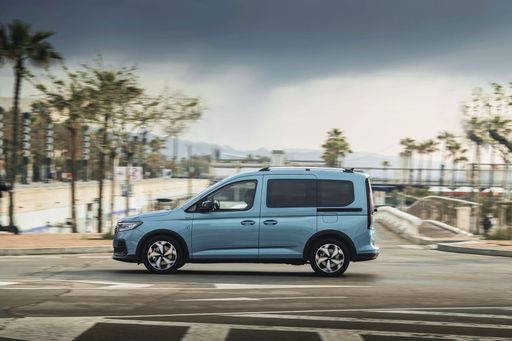
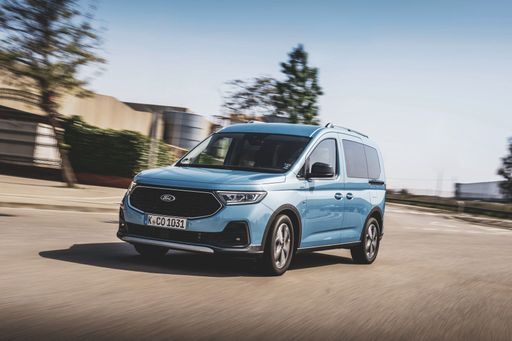
The Ford Tourneo Connect and Nissan Townstar offer diverse powertrain options that cater to different driving preferences. The Ford Tourneo Connect presents a variety of engines, including petrol, diesel, and a plugin hybrid, generating power from 102 HP to an impressive 150 HP. It provides a broad torque band, peaking at 350 Nm for those demanding a robust driving experience.

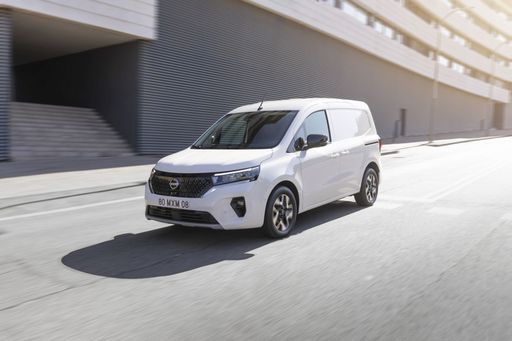
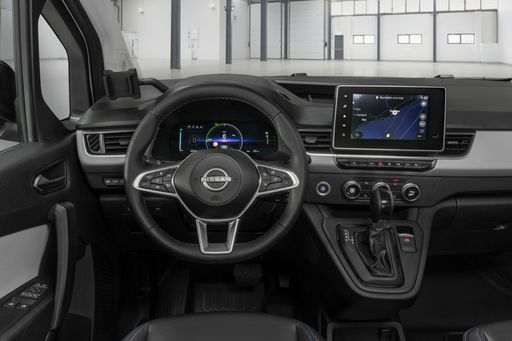
In contrast, the Nissan Townstar is available with an electric motor and a petrol engine, providing power outputs of 122 HP and 130 HP, respectively. The electric variant's instant torque stands at 245 Nm, facilitating virtuous urban maneuverability. Notably, with an electric range of 285 km, the Townstar offers an environmentally friendly alternative to its traditional powertrain counterpart.
Townstar

Innovative Transmission and Drive Dynamics

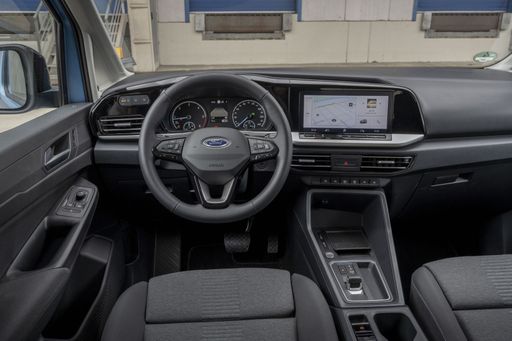
Both vehicles offer flexible transmission options tailored for varied driving scenarios. The Ford Tourneo Connect incorporates both a dual-clutch automatic and a manual gearbox, ensuring a refined or hands-on driving experience. It operates on a front-wheel-drive system, promoting stability and handling efficiency.

Similarly, the Nissan Townstar boasts a reduction gearbox in its electric variant and both manual and dual-clutch automatic options for the petrol version. The front-wheel-drive configuration promises consistent performance across different terrains.

Tourneo Connect

Consumption and Efficiency: Economical Journeys

The Tourneo Connect features consumption rates ranging from 5.4 L/100 km to 7 L/100 km, alongside an impressively efficient 0.5 L/100 km in plugin hybrid mode. Its CO2 emissions span from as low as 10 g/km up to 158 g/km, offering sustainable choices in mobility.

Conversely, the Townstar's petrol version shows a consumption range similar to its competitor at 6.7 to 7 L/100 km, while the electric version utilizes 19.2 kWh/100 km. The electric model's zero CO2 emissions significantly reduce environmental impact, reflecting its efficiency class A rating.

Townstar

Versatility in Space and Comfort

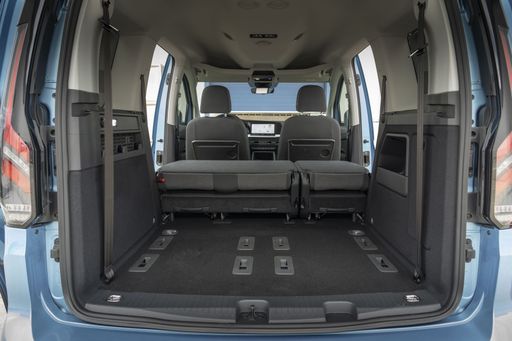
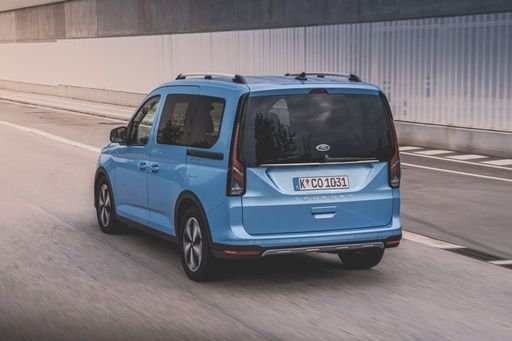
Both models accommodate five passengers, embodying the high-roof wagon category's essence. The Ford Tourneo Connect delivers a maximum trunk capacity of 1,720 L, beneficial for families and businesses alike needing substantial storage space. With curb weights ranging from 1,542 kg to 1,709 kg, it finds a balance between heaviness and robustness.

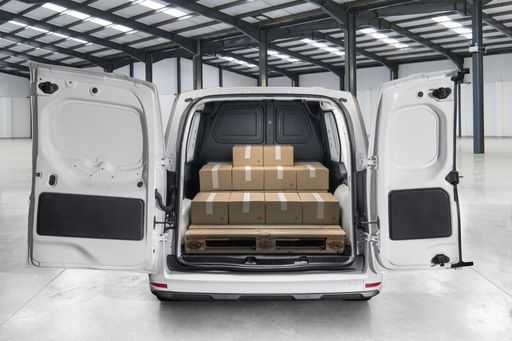
The Nissan Townstar, while offering a slightly lower trunk capacity of up to 775 L, provides practical solutions for everyday cargo needs. Its curb weight ranges between 1,509 kg and 1,872 kg, ensuring a sturdy build optimized for various payloads, climbing to a maximum of 641 kg.

Tourneo Connect

Dimensions and Road Presence

In terms of size, the Tourneo Connect ranges from 4,500 mm to 4,868 mm in length, accompanied by a width of 1,855 mm and a height of 1,833 mm. These dimensions reflect its commanding road presence and spacious interior design.

The Townstar measures between 4,488 mm and 4,911 mm in length, with a width of up to 1,860 mm and a height attainable at 1,869 mm, providing a bulky yet smooth silhouette capable of navigating through varied environments effortlessly.

Townstar

Conclusion: Choosing Your Optimal Companion

In conclusion, the Ford Tourneo Connect and Nissan Townstar serve distinctive purposes, appealing to different types of drivers and needs. While the Tourneo Connect impresses with its hybrid innovation and versatile power offerings, the Townstar carves its niche with an all-electric option and diverse functionalities. Opt your ride based on your driving priorities—be it technological advancement, environmental prudence, or a blend of power and comfort.

Here’s where it gets real: The technical differences in detail

Tourneo Connect

Costs and Efficiency:

Looking at overall running costs, both models reveal some interesting differences in everyday economy.

Ford Tourneo Connect is markedly cheaper – starting at 27,300 £ , while the Nissan Townstar costs 35,800 £ . That’s a price difference of around 8,503 £.

As for electric range, the Nissan Townstar offers substantially more range – reaching up to 265 km, about 146 km more than the Ford Tourneo Connect.

Townstar

Engine and Performance:

Under the bonnet, it becomes clear which model is tuned for sportiness and which one takes the lead when you hit the accelerator.

When it comes to engine power, the Ford Tourneo Connect offers slightly more power – delivering 150 HP compared to 122 HP. That’s roughly 28 HP more horsepower.

When accelerating from 0 to 100 km/h, the Ford Tourneo Connect is markedly quicker – completing the sprint in 10.1 s, while the Nissan Townstar takes 13.3 s. That’s about 3.2 s quicker.

There’s also a difference in torque: the Ford Tourneo Connect delivers clearly more torque with 350 Nm compared to 245 Nm. That’s about 105 Nm more.

Tourneo Connect

Space and Everyday Use:

Cabin size, boot volume and payload all play a role in everyday practicality. Here, comfort and flexibility make the difference.

Seats: Nissan Townstar offers more seats – 7 vs 5.

In terms of curb weight, Ford Tourneo Connect is noticeably lighter – 1,542 kg compared to 2,041 kg. The difference is around 499 kg.

When it comes to payload, the Ford Tourneo Connect carries noticeably more – 818 kg compared to 594 kg. That’s a difference of about 224 kg.

Who wins the race in the data check?

The Ford Tourneo Connect sits just ahead overall in the objective data comparison.
This result only shows which model scores more points on paper – not which of the two cars feels right for you.

from £27,300
Tourneo Connect

Ford Tourneo Connect

  • Engine Type Plugin Hybrid, Petrol, Diesel
  • Transmission Automatic, Manuel
  • Drive Type Front-Wheel Drive, All-Wheel Drive
  • Power HP 102 - 150 HP
  • Consumption L/100km 0.5 - 6.9 L/100km
  • Electric Range 116 - 119 km
Ford Tourneo Connect
Nissan Townstar

Costs and Consumption

View detailed analysis

Engine and Performance

View detailed analysis

Dimensions and Body

View detailed analysis

Ford Tourneo Connect

The Ford Tourneo Connect is a practical, surprisingly polished people-mover that balances family-friendly flexibility with car-like driving manners. With clever storage, sliding doors and a bright, airy cabin it’s a smart choice for buyers who want sensible versatility without sacrificing everyday comfort — and it’s oddly enjoyable to drive for its size.

details

Nissan Townstar

The Nissan Townstar is a pragmatic city companion that blends clever packaging with a calm, easygoing drive, making it ideal for urban errands and small-business hauls. It won't win any style contests, but its tidy interior, sensible features and no-nonsense character make it a genuinely useful buy for people who value practicality over pizzazz.

details
Ford Tourneo Connect
Nissan Townstar

Costs and Consumption

Price
27,300 - 41,900 £
Price
35,800 - 37,700 £
Consumption L/100km
0.5 - 6.9 L/100km
Consumption L/100km
-
Consumption kWh/100km
-
Consumption kWh/100km
20.7 kWh/100km
Electric Range
116 - 119 km
Electric Range
265 km
Battery Capacity
-
Battery Capacity
-
co2
11 - 164 g/km
co2
0 g/km
Fuel tank capacity
-
Fuel tank capacity
-

Dimensions and Body

Body Type
High Roof Estate
Body Type
High Roof Estate
Seats
5
Seats
7
Doors
-
Doors
-
Curb weight
1,542 - 1,781 kg
Curb weight
2,041 kg
Trunk capacity
1,213 - 1,720 L
Trunk capacity
-
Length
-
Length
-
Width
1,855 mm
Width
1,859 mm
Height
-
Height
-
Max trunk capacity
-
Max trunk capacity
-
Payload
563 - 818 kg
Payload
594 kg

Engine and Performance

Engine Type
Plugin Hybrid, Petrol, Diesel
Engine Type
Electric
Transmission
Automatic, Manuel
Transmission
Automatic
Transmission Detail
Dual-Clutch Automatic, Manual Gearbox
Transmission Detail
Reduction Gearbox
Drive Type
Front-Wheel Drive, All-Wheel Drive
Drive Type
Front-Wheel Drive
Power HP
102 - 150 HP
Power HP
122 HP
Acceleration 0-100km/h
10.1 - 13.5 s
Acceleration 0-100km/h
13.3 s
Max Speed
-
Max Speed
-
Torque
220 - 350 Nm
Torque
245 Nm
Number of Cylinders
4
Number of Cylinders
-
Power kW
75 - 110 kW
Power kW
90 kW
Engine capacity
1,498 - 1,968 cm3
Engine capacity
-

General

Model Year
2,024 - 2,025
Model Year
2025
CO2 Efficiency Class
B, E, F
CO2 Efficiency Class
A
Brand
Ford
Brand
Nissan
DriveDuel uses data analysis and artificial intelligence to evaluate vehicle data and create content. Content is regularly reviewed and improved. The displayed prices are estimates based on German list prices, adjusted to the respective country’s VAT. Country-specific registration taxes are not included. This information is not legally binding.