VS

Citroen Berlingo vs Ford Tourneo Connect comparison

Compare performance (136 HP vs 150 HP), boot space and price (20,300 £ vs 27,300 £ ) at a glance. Find out which car is the better choice for you – Citroen Berlingo or Ford Tourneo Connect?

Citroen Berlingo vs Ford Tourneo Connect: Key differences

Citroen Berlingo

  • visibly cheaper
  • considerably more electric range
  • only slightly lighter
details

Ford Tourneo Connect

4.9 (1 Reviews)
rate
  • marginally more power
  • considerably more efficient
  • somewhat quicker 0–100 km/h
  • noticeably more trunk space
details

By Achim Sedelmaier

Berlingo

Citroen Berlingo VS Ford Tourneo Connect — practical vans, different promises

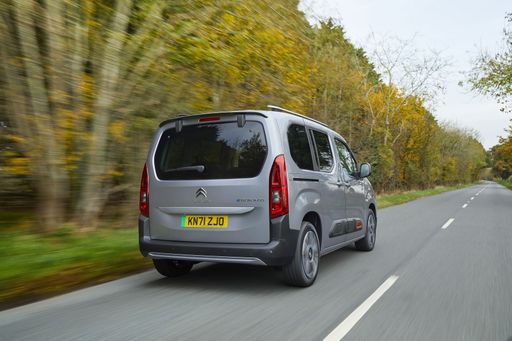
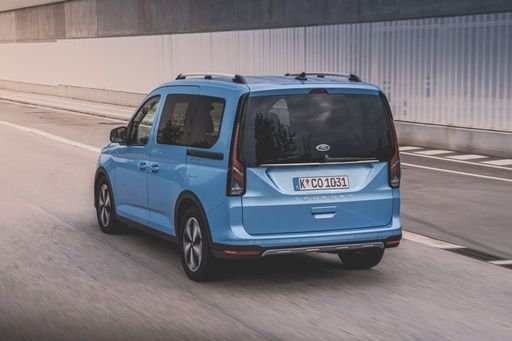
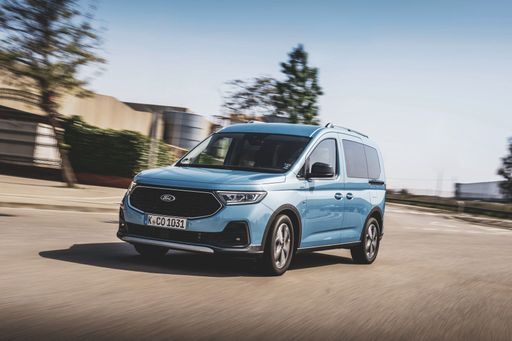
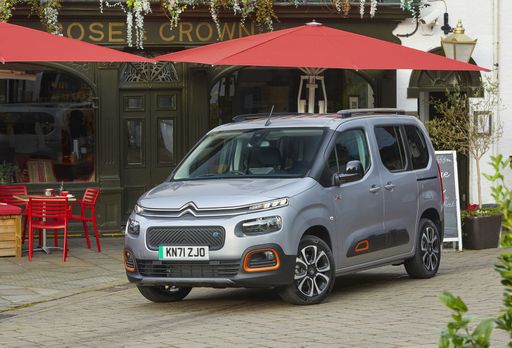
Citroen Berlingo VS Ford Tourneo Connect places two very practical high‑roof compact vans head-to-head: the Berlingo leans into soft comfort and maximum interior cleverness, the Tourneo Connect pushes harder on usable load space and a stronger powertrain package. The Berlingo feels like a family‑first car — relaxed suspension, easy entry and a focus on everyday usefulness — while the Tourneo Connect reads as the more purposeful tool, with a wider bench and drivetrain choices that suit mixed electric/combustion duty. Price and equipment diverge too: the Berlingo tends to give you more space for the money, the Tourneo asks for more but brings stronger real‑world pulling power and a plug‑in option. That sets the tone: one prioritises relaxed habitability, the other prioritises capability and flexibility for varied missions.
Tourneo Connect

Character and driving — float versus purpose

The Citroen Berlingo drives like a comfortable, easygoing van: steerlight, softly sprung and keen to isolate bumps rather than involve the driver. The Ford Tourneo Connect trades some of that softness for a firmer, more controlled response and a more assertive engine character that makes overtaking and loaded motorway driving feel less effortful. In everyday town use the Berlingo’s supple behaviour is a plus, but on faster A‑road trips the Tourneo’s greater shove and composure feel safer and more capable. Buyers who want relaxed, undemanding driving will prefer the Berlingo; those who value brisker, more assured progress — or who tow/load frequently — will tilt toward the Tourneo Connect.

Berlingo

Comfort and long‑distance behaviour — cushioned miles versus composed progress

On long drives the Citroen Berlingo favours passenger comfort: plush seat options and a forgiving suspension make hours in the cabin easier on backs and knees. The Ford Tourneo Connect can be quieter and more planted when its electric or stronger combustion drive is engaged, but short, sharp bumps and road edges are transmitted more readily and the cabin can sound busier at higher speeds. Wind and tyre noise are present in both because of their boxy profiles, yet the Berlingo’s softer tune masks fatigue better over extended journeys. If you regularly cover high‑speed miles with a full load, the Tourneo’s performance edge is useful; if passengers’ comfort is the priority, the Berlingo is the calmer companion.

Tourneo Connect

Practicality and family usability — modular cleverness versus brute cargo capacity

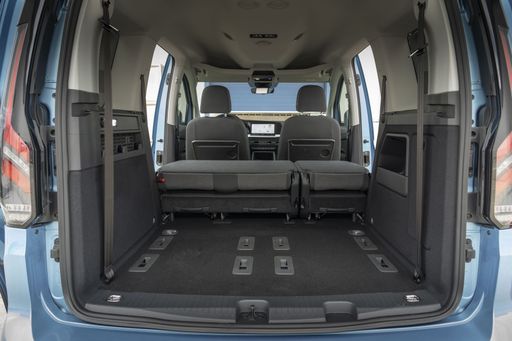
Both cars are built around carrying people and kit, but they go about it differently: the Berlingo maximises interior modularity with individual rear seats, clever stowage and doors that make getting kids and pushchairs in and out painless. The Tourneo Connect answers with a wider rear bench that comfortably accepts three child seats side‑by‑side and a very low loading sill that turns heavy luggage into a one‑person job. Berlingo’s square load bay and clever folding tricks suit awkward, tall gear and workshop‑style use, whereas the Tourneo’s sheer volume and ease of loading are better for frequent large hauls. Families who juggle variable passenger combinations and value simple, practical tricks will like the Berlingo; those who habitually carry wide loads or need three seats across will find the Tourneo Connect more tailored to their days.

Berlingo

Cabin feel and perceived quality — friendly functionality against tidy utility

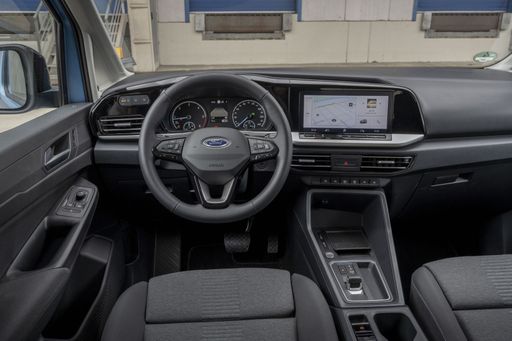
Step inside either car and you feel their workaday origins: hard plastics and pragmatic switchgear dominate both cabins, but the Citroen Berlingo’s layout and seat comfort create a softer, more relaxed ambience. The Ford Tourneo Connect’s finish is crisp and robust with neat panel gaps and a tidier layout, though fiddly touch sliders and deep menus can frustrate at night. Neither car pretends to be premium; the Berlingo trades visual polish for comfort and user‑friendly storage, while the Tourneo plays the competent, slightly more engineered card. If tactile finish and a tidy, Germanic fit‑and‑finish matter, the Tourneo edges ahead; if you prioritise ergonomic practicality and comfy seats, the Berlingo feels more welcoming.

Tourneo Connect

City friendliness and buyer fit — compact, cheap space versus capability with a price

In tight urban life the Citroen Berlingo’s compact footprint, light steering and dual sliding doors give it a usability advantage for kerbside drop‑offs and narrow parking bays. The Ford Tourneo Connect is wider and needs more room for its large tailgate and mirrors, but its low load lip, wide bench and available plug‑in option make it a smarter pick for buyers who need everyday electric driving and bigger hauling capability. Cost is a clear trade‑off: the Berlingo generally delivers more space per pound and a softer value proposition, while the Tourneo asks you to pay up for extra power, a PHEV possibility and larger cargo flexibility. Choose the Berlingo if you want the most relaxed, budget‑wise family mover; pick the Tourneo Connect if your life demands wider seats, stronger real‑world performance or plug‑in versatility — the technical comparison that follows will show exactly how those capability differences are achieved.

Here’s where it gets real: The technical differences in detail

Berlingo

Costs and Efficiency:

Price and efficiency are key factors when choosing a car – and this is often where the real differences emerge.

Citroen Berlingo is visibly cheaper – starting at 20,300 £ , while the Ford Tourneo Connect costs 27,300 £ . That’s a price difference of around 7,011 £.

Fuel consumption also shows a difference: the Ford Tourneo Connect uses 0.5 L/100km and is considerably more efficient than the Citroen Berlingo with 5.3 L/100km. The difference is about 4.8 L/100km.

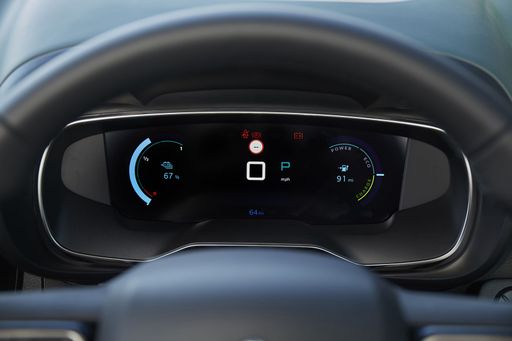
As for electric range, the Citroen Berlingo offers considerably more range – reaching up to 343 km, about 224 km more than the Ford Tourneo Connect.

Tourneo Connect

Engine and Performance:

Under the bonnet, it becomes clear which model is tuned for sportiness and which one takes the lead when you hit the accelerator.

When it comes to engine power, the Ford Tourneo Connect offers marginally more power – delivering 150 HP compared to 136 HP. That’s roughly 14 HP more horsepower.

When accelerating from 0 to 100 km/h, the Ford Tourneo Connect is somewhat quicker – completing the sprint in 10.1 s, while the Citroen Berlingo takes 11.2 s. That’s about 1.1 s quicker.

There’s also a difference in torque: the Ford Tourneo Connect delivers moderately more torque with 350 Nm compared to 300 Nm. That’s about 50 Nm more.

Berlingo

Space and Everyday Use:

Beyond pure performance, interior space and usability matter most in daily life. This is where you see which car is more practical and versatile.

Seats: Citroen Berlingo offers more seats – 7 vs 5.

In terms of curb weight, Citroen Berlingo is only slightly lighter – 1,476 kg compared to 1,542 kg. The difference is around 66 kg.

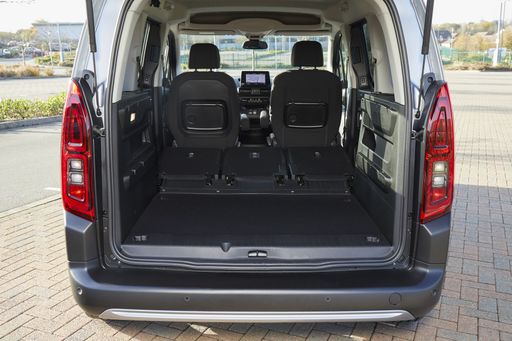
Looking at boot space, the Ford Tourneo Connect offers noticeably more boot space – 1,720 L compared to 1,050 L. That’s a difference of about 670 L.

When it comes to payload, the Citroen Berlingo carries barely more – 840 kg compared to 818 kg. That’s a difference of about 22 kg.

Who wins the race in the data check?

The Ford Tourneo Connect is decisively ahead in the objective data comparison.
This result only shows which model scores more points on paper – not which of the two cars feels right for you.

from £27,300
Tourneo Connect

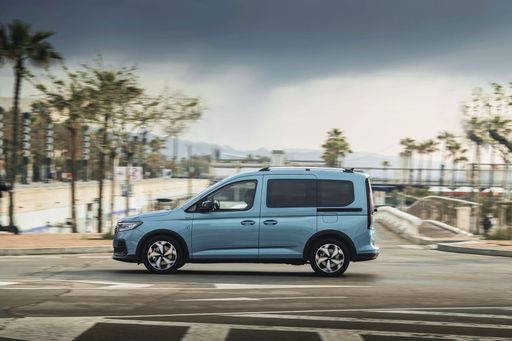
Ford Tourneo Connect

  • Engine Type Plugin Hybrid, Petrol, Diesel
  • Transmission Automatic, Manuel
  • Drive Type Front-Wheel Drive, All-Wheel Drive
  • Power HP 102 - 150 HP
  • Consumption L/100km 0.5 - 6.9 L/100km
  • Electric Range 116 - 119 km
Citroen Berlingo
Ford Tourneo Connect

Costs and Consumption

View detailed analysis

Engine and Performance

View detailed analysis

Dimensions and Body

View detailed analysis

Citroen Berlingo

The Citroën Berlingo is a charming, practical MPV that blends everyday versatility with a comfy ride and clever storage tricks that make life easier for families and small businesses. It won’t star in a sports-car ad, but its sensible layout, enormous load flexibility and friendly demeanor mean it often wins on plain common sense — perfect for school runs, weekend escapes and the odd IKEA mission.

details

Ford Tourneo Connect

The Ford Tourneo Connect is a practical, surprisingly polished people-mover that balances family-friendly flexibility with car-like driving manners. With clever storage, sliding doors and a bright, airy cabin it’s a smart choice for buyers who want sensible versatility without sacrificing everyday comfort — and it’s oddly enjoyable to drive for its size.

details
Citroen Berlingo
Ford Tourneo Connect

Costs and Consumption

Price
20,300 - 34,900 £
Price
27,300 - 41,900 £
Consumption L/100km
5.3 - 6.3 L/100km
Consumption L/100km
0.5 - 6.9 L/100km
Consumption kWh/100km
18 - 18.7 kWh/100km
Consumption kWh/100km
-
Electric Range
334 - 343 km
Electric Range
116 - 119 km
Battery Capacity
-
Battery Capacity
-
co2
0 - 151 g/km
co2
11 - 164 g/km
Fuel tank capacity
-
Fuel tank capacity
-

Dimensions and Body

Body Type
High Roof Estate
Body Type
High Roof Estate
Seats
5 - 7
Seats
5
Doors
-
Doors
-
Curb weight
1,476 - 1,922 kg
Curb weight
1,542 - 1,781 kg
Trunk capacity
775 - 1,050 L
Trunk capacity
1,213 - 1,720 L
Length
-
Length
-
Width
1,848 mm
Width
1,855 mm
Height
-
Height
-
Max trunk capacity
-
Max trunk capacity
-
Payload
509 - 840 kg
Payload
563 - 818 kg

Engine and Performance

Engine Type
Electric, Diesel, Petrol
Engine Type
Plugin Hybrid, Petrol, Diesel
Transmission
Automatic, Manuel
Transmission
Automatic, Manuel
Transmission Detail
Reduction Gearbox, Manual Gearbox, Automatic Gearbox
Transmission Detail
Dual-Clutch Automatic, Manual Gearbox
Drive Type
Front-Wheel Drive
Drive Type
Front-Wheel Drive, All-Wheel Drive
Power HP
102 - 136 HP
Power HP
102 - 150 HP
Acceleration 0-100km/h
11.2 - 14.3 s
Acceleration 0-100km/h
10.1 - 13.5 s
Max Speed
-
Max Speed
-
Torque
205 - 300 Nm
Torque
220 - 350 Nm
Number of Cylinders
3 - 4
Number of Cylinders
4
Power kW
75 - 100 kW
Power kW
75 - 110 kW
Engine capacity
1,199 - 1,499 cm3
Engine capacity
1,498 - 1,968 cm3

General

Model Year
2,024 - 2,026
Model Year
2,024 - 2,025
CO2 Efficiency Class
A, E
CO2 Efficiency Class
B, E, F
Brand
Citroen
Brand
Ford
DriveDuel uses data analysis and artificial intelligence to evaluate vehicle data and create content. Content is regularly reviewed and improved. The displayed prices are estimates based on German list prices, adjusted to the respective country’s VAT. Country-specific registration taxes are not included. This information is not legally binding.