VS

Citroen Berlingo vs Peugeot Rifter comparison

Compare performance (136 HP vs 136 HP), boot space and price (20,300 £ vs 22,900 £ ) at a glance. Find out which car is the better choice for you – Citroen Berlingo or Peugeot Rifter?

Citroen Berlingo vs Peugeot Rifter: Key differences

Citroen Berlingo

  • slightly cheaper
  • very slightly more efficient
  • only slightly more efficient
  • barely more electric range
  • barely quicker 0–100 km/h

Peugeot Rifter

4.7 (1 Reviews)
rate
  • marginally lighter

By Achim Sedelmaier

Berlingo

Room for Life

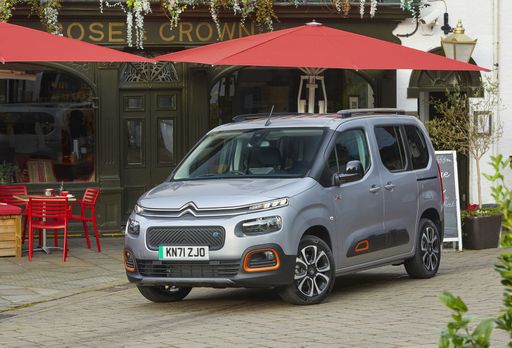
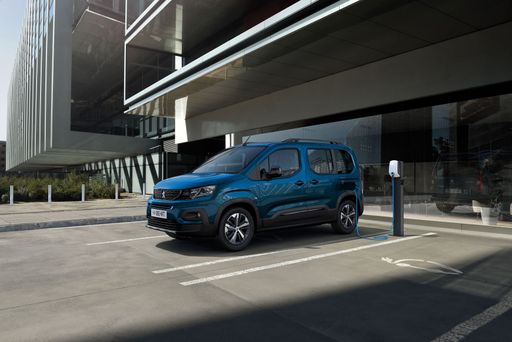
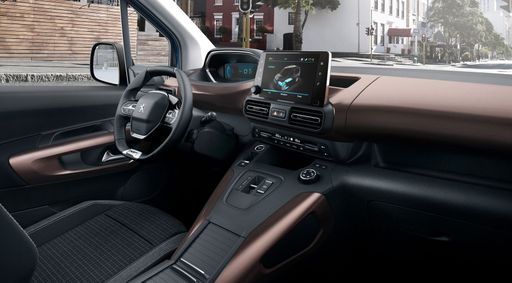
Step inside and the difference in character becomes obvious: the Citroën Berlingo champions function with generous, boxy packaging that makes loading and living easy, while the Peugeot Rifter wraps similar versatility in a slightly more considered, family-friendly layout. Both are practical in different ways — one feels delightfully matter-of-fact, the other aims to feel modern and tidy. For shoppers who prioritise day-to-day utility the choice comes down to whether you prefer blunt practicality or a neater, more family-oriented interior vibe.

Rifter

On the Road

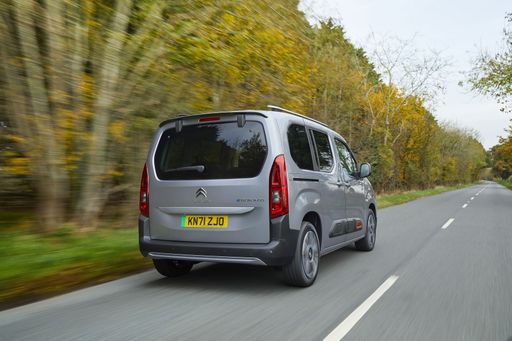
The two share roots but their road manners diverge: the Berlingo favours comfort and composure, smoothing out town bumps with almost diplomatic aplomb, while the Rifter steers with a touch more intent and confidence that rewards a brisk pace. Neither tries to be a sports car, yet one feels more relaxed and bus-like, the other more car-like and engaging. City commuting and lazy weekend cruises suit the Berlingo; drivers who enjoy a bit more feedback will appreciate the Rifter’s poise.

Berlingo

Comfort and Cabin

Seat comfort and cabin ambience tell a similar story: the Berlingo opts for straightforward ergonomics and a welcoming, relaxed seat setup that soothes long stints behind the wheel, while the Rifter lifts the finish a touch with smarter switchgear and a slightly more premium atmosphere. Materials aren’t lavish in either, but the Rifter puts a bit more emphasis on perceived quality. If you spend many hours inside, think about whether you want cushioned, workmanlike comfort or a subtly more refined cockpit.

Rifter

Practicality and Usability

Both models make daily life easier with clever storage, useful door layouts and straightforward loading solutions, yet they approach practicality from different angles: the Berlingo is unabashedly utilitarian with an emphasis on easy access and straightforward cargo thinking, while the Rifter blends that practicality with family-focused touches that make kids and cargo equally happy. In short, one is built for heavy-duty usability, the other for versatile family life with a premium tilt. Your choice should reflect whether you prioritise blank-slate practicality or slightly more refined versatility.

Berlingo

Style and Presence

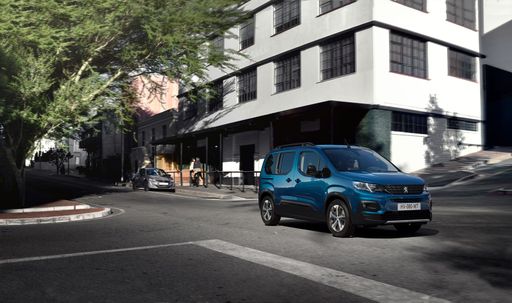
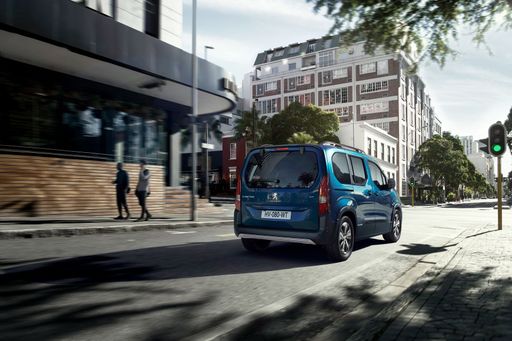
Out on the street the personalities are clear: the Berlingo wears its van heritage proudly with a charmingly honest, boxy silhouette that signals purpose over pretence, whereas the Rifter borrows SUV cues to present a more fashionable, road-going stance. Neither is trying to be glamorous, but the Rifter aims to appeal to buyers who want practical family transport with a modern face. Style-conscious buyers will be drawn to the Rifter’s tidier lines, while those who value character and clarity will smile at the Berlingo’s pragmatic charm.

Rifter

Who should park one in their driveway?

For the commuter or small-business owner who lives by function-first thinking, the Berlingo is an appealing, no-nonsense companion that makes chores less painful and packing simple. Families and drivers who want a more polished everyday experience without giving up versatility will find the Rifter a persuasive compromise between practicality and polish. Choose based on lifestyle: pure utility and comfort, or versatile family usability with a touch of flair.

Berlingo

Keep reading to find out who takes the DriveDuel crown

If you’re undecided, don’t go anywhere — the full DriveDuel verdict will reveal which model earns the title after we weigh up real-world usability, comfort and overall value in the final reckoning.

Here’s where it gets real: The technical differences in detail

Berlingo

Costs and Efficiency:

Price and efficiency are often the first things buyers look at. Here it becomes clear which model has the long-term edge – whether at the pump, the plug, or in purchase price.

Citroen Berlingo is slightly cheaper – starting at 20,300 £ , while the Peugeot Rifter costs 22,900 £ . That’s a price difference of around 2,598 £.

Fuel consumption also shows a difference: the Citroen Berlingo uses 5.3 L/100km and is very slightly more efficient than the Peugeot Rifter with 5.4 L/100km. The difference is about 0.1 L/100km.

In terms of energy consumption, the Citroen Berlingo is only slightly more efficient: consuming 18 kWh/100km compared to 18.3 kWh/100km for the Peugeot Rifter. That’s a difference of about 0.3 kWh/100km.

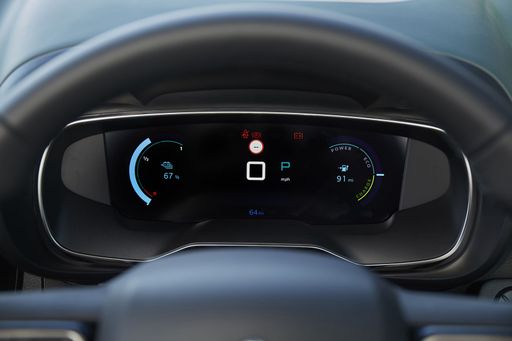
As for electric range, the Citroen Berlingo offers barely more range – reaching up to 343 km, about 4 km more than the Peugeot Rifter.

Rifter

Engine and Performance:

Power, torque and acceleration say a lot about how a car feels on the road. This is where you see which model delivers more driving dynamics.

Both models deliver identical power – 136 HP each.

When accelerating from 0 to 100 km/h, the Citroen Berlingo is barely quicker – completing the sprint in 11.2 s, while the Peugeot Rifter takes 11.3 s. That’s about 0.1 s quicker.

There’s no difference in top speed – both reach 132 km/h.

Both models offer the same torque – 300 Nm.

Berlingo

Space and Everyday Use:

Beyond pure performance, interior space and usability matter most in daily life. This is where you see which car is more practical and versatile.

Both vehicles offer seating for 7 people.

In terms of curb weight, Peugeot Rifter is marginally lighter – 1,498 kg compared to 1,505 kg. The difference is around 7 kg.

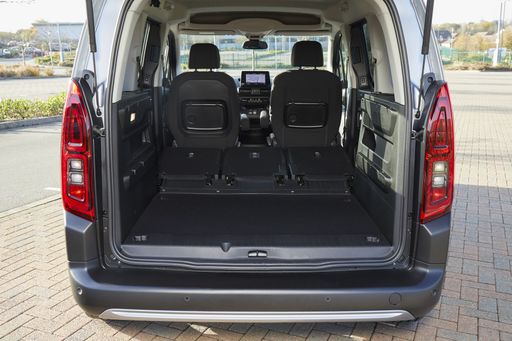
Boot capacity is identical – both offer 1,050 L of storage.

When it comes to payload, the Citroen Berlingo carries barely more – 840 kg compared to 814 kg. That’s a difference of about 26 kg.

Who wins the race in the data check?

The Citroen Berlingo holds a narrow overall lead in the objective data comparison.
This result only shows which model scores more points on paper – not which of the two cars feels right for you.

from £20,300
Berlingo

Citroen Berlingo

  • Engine Type : Electric, Diesel
  • Transmission : Automatic, Manuel
  • Drive Type : Front-Wheel Drive
  • Power HP : 102 - 136 HP
  • Consumption L/100km : 5.3 - 5.7 L/100km
  • Consumption kWh/100km : 18 - 18.7 kWh/100km
  • Electric Range : 334 - 343 km
Citroen Berlingo
Peugeot Rifter

Costs and Consumption

View detailed analysis

Engine and Performance

View detailed analysis

Dimensions and Body

View detailed analysis

Citroen Berlingo

The Citroën Berlingo is a charming, practical MPV that blends everyday versatility with a comfy ride and clever storage tricks that make life easier for families and small businesses. It won’t star in a sports-car ad, but its sensible layout, enormous load flexibility and friendly demeanor mean it often wins on plain common sense — perfect for school runs, weekend escapes and the odd IKEA mission.

details

Peugeot Rifter

The Peugeot Rifter is a practical, family-friendly people carrier that makes everyday errands and weekend escapes feel effortless thanks to its airy cabin and clever, flexible interior. With chunky, purposeful styling and storage solutions everywhere, the Rifter manages to be both unashamedly useful and unexpectedly likeable.

details
Citroen Berlingo
Peugeot Rifter

Costs and Consumption

Price
20,300 - 34,700 £
Price
22,900 - 36,600 £
Consumption L/100km
5.3 - 5.7 L/100km
Consumption L/100km
5.4 - 6.5 L/100km
Consumption kWh/100km
18 - 18.7 kWh/100km
Consumption kWh/100km
18.3 - 19.1 kWh/100km
Electric Range
334 - 343 km
Electric Range
328 - 339 km
Battery Capacity
46 kWh
Battery Capacity
-
co2
0 - 151 g/km
co2
0 - 157 g/km
Fuel tank capacity
-
Fuel tank capacity
-

Dimensions and Body

Body Type
High Roof Estate
Body Type
High Roof Estate
Seats
5 - 7
Seats
5 - 7
Doors
4 - 5
Doors
4 - 5
Curb weight
1,505 - 1,922 kg
Curb weight
1,498 - 1,941 kg
Trunk capacity
775 - 1,050 L
Trunk capacity
322 - 1,050 L
Length
4,403 - 4,753 mm
Length
4,405 - 4,755 mm
Width
1,848 mm
Width
1,848 mm
Height
1,844 - 1,849 mm
Height
1,818 - 1,837 mm
Max trunk capacity
-
Max trunk capacity
3,000 - 3,500 L
Payload
509 - 840 kg
Payload
489 - 814 kg

Engine and Performance

Engine Type
Electric, Diesel
Engine Type
Electric, Petrol, Diesel
Transmission
Automatic, Manuel
Transmission
Automatic, Manuel
Transmission Detail
Reduction Gearbox, Manual Gearbox, Automatic Gearbox
Transmission Detail
Reduction Gearbox, Manual Gearbox, Automatic Gearbox
Drive Type
Front-Wheel Drive
Drive Type
Front-Wheel Drive
Power HP
102 - 136 HP
Power HP
102 - 136 HP
Acceleration 0-100km/h
11.2 - 13.2 s
Acceleration 0-100km/h
11.3 - 13.5 s
Max Speed
132 km/h
Max Speed
132 km/h
Torque
250 - 300 Nm
Torque
205 - 300 Nm
Number of Cylinders
4
Number of Cylinders
3 - 4
Power kW
75 - 100 kW
Power kW
75 - 100 kW
Engine capacity
1,499 cm3
Engine capacity
1,199 - 1,499 cm3

General

Model Year
2,024 - 2,026
Model Year
2,024 - 2,026
CO2 Efficiency Class
A, E
CO2 Efficiency Class
A, E, F
Brand
Citroen
Brand
Peugeot
DriveDuel uses data analysis and artificial intelligence to evaluate vehicle data and create content. Content is regularly reviewed and improved. The displayed prices are estimates based on German list prices, adjusted to the respective country’s VAT. Country-specific registration taxes are not included. This information is not legally binding.