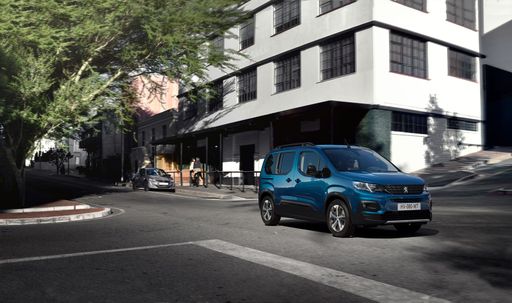
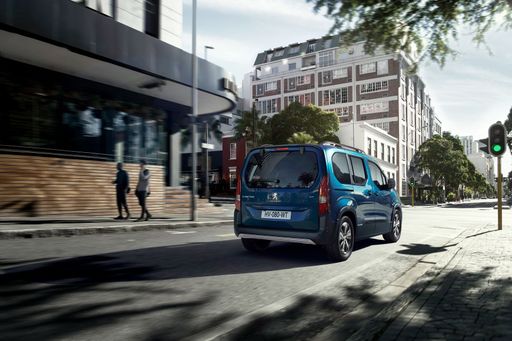
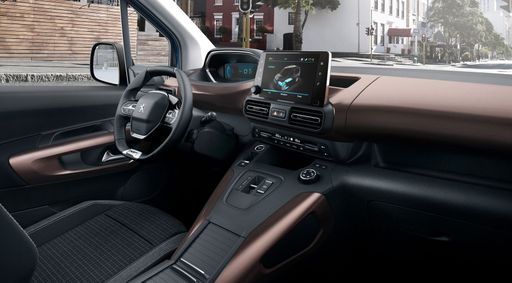
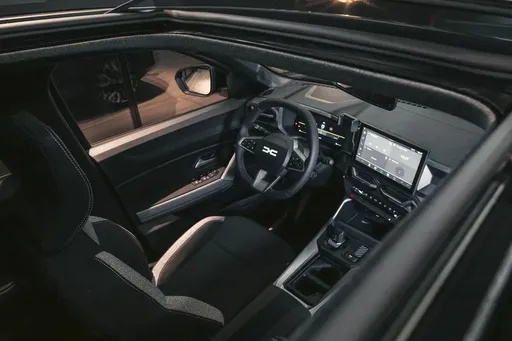
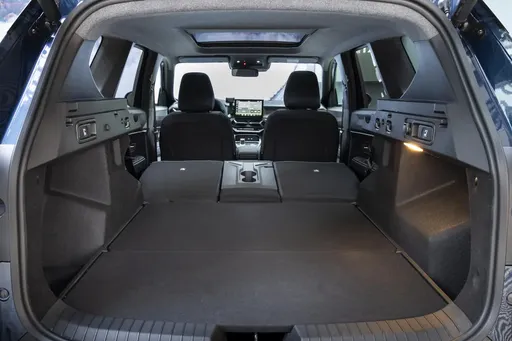
@ Peugeot / Stellantis Media
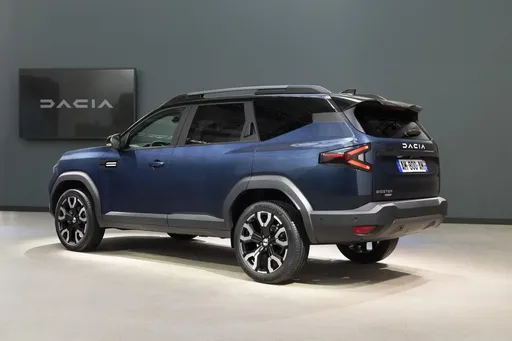
@ Dacia / Renault Group Media
VS

Peugeot Rifter vs Dacia Bigster – Performance, range & efficiency compared

Both models have their strengths – but which one suits you more?
Compare performance, efficiency, price and space directly: Peugeot Rifter or Dacia Bigster?

Rifter @ Peugeot / Stellantis Media

Peugeot Rifter vs. Dacia Bigster: A Battle of Versatility and Utility

In the world of versatile family vehicles, the Peugeot Rifter and Dacia Bigster stand out as two distinct yet compelling options. The high roof wagon Rifter and the SUV Bigster cater to families and adventurers alike, promising a blend of performance, space, and modern conveniences. Let's delve into the details to see how these two vehicles compare in terms of technical aspects and innovations.
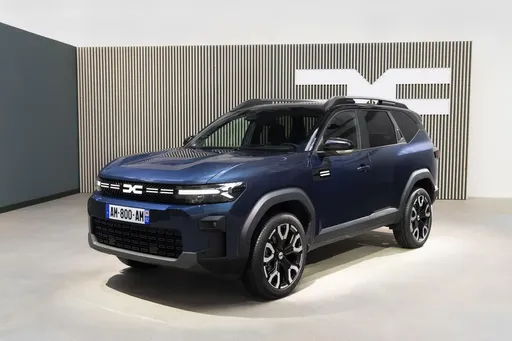
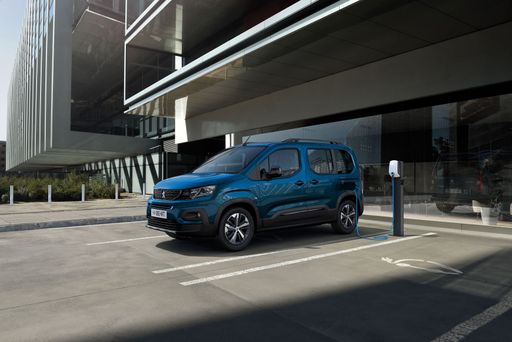
Bigster @ Dacia / Renault Group Media

Performance and Engine Options

The Peugeot Rifter boasts a diverse array of powertrain options, reflecting its adaptability to different needs. With engine choices including electric, petrol, and diesel, the Rifter caters to both traditionalists and eco-conscious drivers. Power output ranges up to 130 HP (96 kW) with torque figures peaking at 300 Nm, ensuring a robust performance across different terrains. It features both manual and automatic transmissions and offers front-wheel drive to enhance handling in urban environments.

On the contrary, the Dacia Bigster offers a simpler range of engine options while maintaining impressive efficiency. Available in petrol MHEV and full-hybrid variants, coupled with an LPG alternative, the Bigster aligns itself towards sustainability. It offers up to 155 HP (115 kW) with a balanced torque of 230 Nm. The Bigster incorporates both manual and automatic transmissions, as well as all-wheel and front-wheel drive options, enhancing its off-road potential.

Rifter @ Peugeot / Stellantis Media

Fuel Efficiency and Environmental Impact

Fleet excellence in fuel economy is where both vehicles shine. The Rifter boasts a mixed consumption rate between 5.4 and 6.9 L/100km, alongside an impressive electric range reaching up to 340 km. Its CO2 emissions start at 0 g/km for the electric variant, positioning it well within an environmentally friendly choice.

The Dacia Bigster matches these credentials with a consumption range of 4.7 to 6.1 L/100km and CO2 emissions starting as low as 106 g/km. Its hybrid technology optimally balances performance with ecological responsibility, making it a forward-looking alternative.

Bigster @ Dacia / Renault Group Media

Interior Space and Practicality

The interior of the Peugeot Rifter is a haven for both driver and passengers, with seating configurations available for five or seven occupants. Its high roof design maximizes practicality, and the trunk capacity ranges from 322 to 1050 liters, perfect for family trips or weekend adventures. The Rifter is substantially spacious with dimensions of 4405 mm to 4755 mm in length and an impressive width of 1848 mm.

The Dacia Bigster, albeit more compact, doesn’t fall short with its interior offerings. It provides a trunk capacity from 550 to 667 liters, ideal for the modern explorer. The SUV's length stands at 4570 mm, coupled with a width of 1813 mm, affording it a sleek yet functional profile fit for both city streets and rugged trails.

Rifter @ Peugeot / Stellantis Media

Innovations and Features

The Peugeot Rifter comes equipped with modern technological conveniences, incorporating a variety of multimedia and safety features designed to elevate the driving experience. It’s built to ensure comfort and ease with options like reduction, manual, or automatic gearboxes tailored to driver preference.

Meanwhile, the Dacia Bigster emphasizes efficiency with its integration of hybrid technologies and manual gearbox detail, making it a strong contender in the market for those seeking innovative solutions without compromising on power or versatility.

Bigster @ Dacia / Renault Group Media

Conclusion: Which Is Right For You?

Ultimately, the choice between the Peugeot Rifter and Dacia Bigster boils down to personal need and preference. The Rifter impresses with its diverse engine choices, spaciousness for larger families, and environmentally friendly options, ideal for those seeking a reliable family ride with versatility.

On the other hand, the Dacia Bigster shines with its modern hybrid technology, robust design, and off-road capabilities, perfectly suited for those who crave adventure and an eco-friendly footprint. Both vehicles present themselves as worthy contenders in the family and adventure vehicle market, embracing innovation, efficiency, and performance.

Here’s where it gets real: The technical differences in detail

Rifter @ Peugeot / Stellantis Media

Costs and Efficiency:

Price and efficiency are key factors when choosing a car – and this is often where the real differences emerge.

Dacia Bigster has a to a small extent advantage in terms of price – it starts at 20600 £, while the Peugeot Rifter costs 23800 £. That’s a price difference of around 3258 £.

Fuel consumption also shows a difference: Dacia Bigster manages with 4.70 L and is therefore slightly more efficient than the Peugeot Rifter with 5.60 L. The difference is about 0.90 L per 100 km.

Bigster @ Dacia / Renault Group Media

Engine and Performance:

Under the bonnet, it becomes clear which model is tuned for sportiness and which one takes the lead when you hit the accelerator.

When it comes to engine power, the Dacia Bigster has a to a small extent edge – offering 155 HP compared to 136 HP. That’s roughly 19 HP more horsepower.

In acceleration from 0 to 100 km/h, the Dacia Bigster is slightly quicker – completing the sprint in 9.70 s, while the Peugeot Rifter takes 10.80 s. That’s about 1.10 s faster.

In terms of top speed, the Peugeot Rifter performs barely noticeable better – reaching 184 km/h, while the Dacia Bigster tops out at 180 km/h. The difference is around 4 km/h.

There’s also a difference in torque: Peugeot Rifter pulls distinct stronger with 300 Nm compared to 230 Nm. That’s about 70 Nm difference.

Space and Everyday Use:

Whether family car or daily driver – which one offers more room, flexibility and comfort?

Seats: Peugeot Rifter offers clearly perceptible more seating capacity – 7 vs 5.

In curb weight, Dacia Bigster is slight lighter – 1425 kg compared to 1561 kg. The difference is around 136 kg.

In terms of boot space, the Peugeot Rifter offers distinct more room – 1050 L compared to 667 L. That’s a difference of about 383 L.

In maximum load capacity, the Peugeot Rifter performs convincingly better – up to 3500 L, which is about 1563 L more than the Dacia Bigster.

When it comes to payload, Peugeot Rifter clearly takes the win – 814 kg compared to 467 kg. That’s a difference of about 347 kg.

Who comes out on top?

Overall, the Peugeot Rifter shows itself to be is largely superior and secures the title of DriveDuel Champion.
It convinces with the more balanced overall package and proves to be the more versatile choice for everyday use.

from about £23,800
Rifter @ Peugeot / Stellantis Media

Peugeot Rifter

  • Engine Type : Electric, Diesel
  • Transmission : Automatic, Manuel
  • Drive Type : Front-Wheel Drive
  • Power HP : 102 - 136 HP
  • Consumption L/100km : 5.6 - 6 L
  • Consumption kWh/100km : 18.3 - 19.1 kWh
  • Electric Range : 328 - 339 km

Peugeot Rifter

The Peugeot Rifter is a practical, family-friendly people carrier that makes everyday errands and weekend escapes feel effortless thanks to its airy cabin and clever, flexible interior. With chunky, purposeful styling and storage solutions everywhere, the Rifter manages to be both unashamedly useful and unexpectedly likeable.

details

Dacia Bigster

5 (1)
rate

The Bigster is poised to redefine the SUV segment with its bold design and spacious interior, catering to the needs of both families and adventure seekers alike. Emphasizing sustainability and practicality, this model reflects a modern approach to automotive engineering, making it a compelling choice for environmentally conscious drivers. With its striking presence on the road, the Bigster not only captures attention but also embodies a new era of versatile mobility.

details
Peugeot Rifter
Dacia Bigster
Rifter @ Peugeot / Stellantis Media
Bigster @ Dacia / Renault Group Media

Costs and Consumption

Price
23800 - 36600 £
Price
20600 - 26600 £
Consumption L/100km
5.6 - 6 L
Consumption L/100km
4.7 - 7.1 L
Consumption kWh/100km
18.3 - 19.1 kWh
Consumption kWh/100km
-
Electric Range
328 - 339 km
Electric Range
-
Battery Capacity
-
Battery Capacity
-
co2
0 - 158 g/km
co2
106 - 137 g/km
Fuel tank capacity
50 L
Fuel tank capacity
50 - 55 L

Dimensions and Body

Body Type
High Roof Estate
Body Type
SUV
Seats
5 - 7
Seats
5
Doors
4 - 5
Doors
5
Curb weight
1561 - 1941 kg
Curb weight
1425 - 1547 kg
Trunk capacity
322 - 1050 L
Trunk capacity
510 - 667 L
Length
4405 - 4755 mm
Length
4570 mm
Width
1848 mm
Width
1813 mm
Height
1818 - 1837 mm
Height
1705 mm
Max trunk capacity
3000 - 3500 L
Max trunk capacity
1813 - 1937 L
Payload
489 - 814 kg
Payload
383 - 467 kg

Engine and Performance

Engine Type
Electric, Diesel
Engine Type
Petrol MHEV, Full Hybrid, LPG
Transmission
Automatic, Manuel
Transmission
Manuel, Automatic
Transmission Detail
Reduction Gearbox, Manual Gearbox, Automatic Gearbox
Transmission Detail
Manual Gearbox, Automated Manual
Drive Type
Front-Wheel Drive
Drive Type
All-Wheel Drive, Front-Wheel Drive
Power HP
102 - 136 HP
Power HP
130 - 155 HP
Acceleration 0-100km/h
10.8 - 13.6 s
Acceleration 0-100km/h
9.7 - 11.2 s
Max Speed
132 - 184 km/h
Max Speed
180 km/h
Torque
250 - 300 Nm
Torque
230 Nm
Number of Cylinders
4
Number of Cylinders
3 - 4
Power kW
75 - 100 kW
Power kW
96 - 115 kW
Engine capacity
1499 cm3
Engine capacity
1199 - 1799 cm3

General

Model Year
2024
Model Year
2025
CO2 Efficiency Class
A, E, F
CO2 Efficiency Class
E, D, C
Brand
Peugeot
Brand
Dacia
What drivetrain options does the Peugeot Rifter have?

The Peugeot Rifter is offered with Front-Wheel Drive.

The prices and data displayed are estimates based on German list prices and may vary by country. This information is not legally binding.