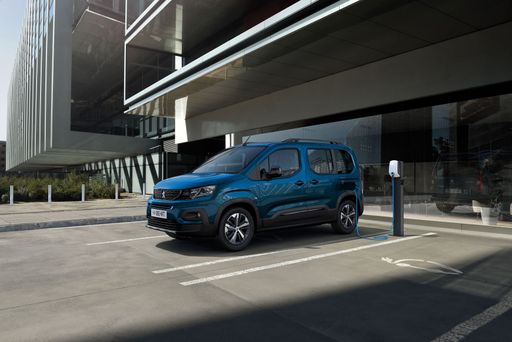
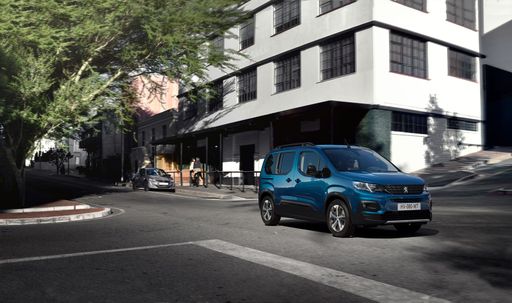
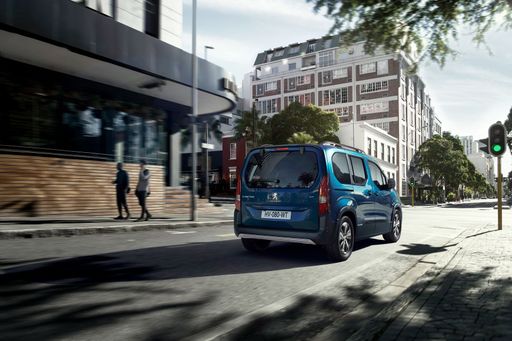
@ Peugeot / Stellantis Media
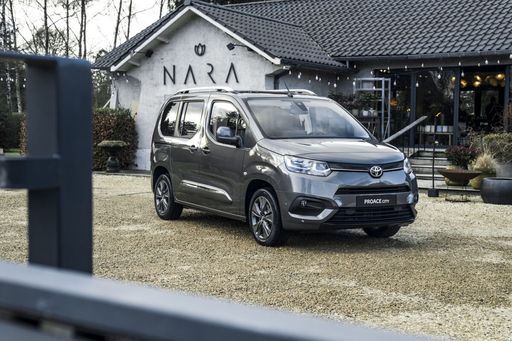
@ Toyota Motor Corporation
VS

Peugeot Rifter vs Toyota Proace City – Which one offers the better deal?

Two cars, one duel: Peugeot Rifter meets Toyota Proace City.
Which one wins in performance, efficiency and value for money? Find out now!

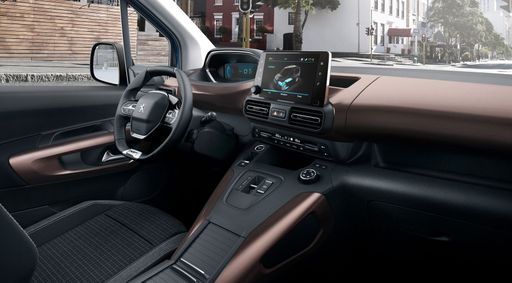
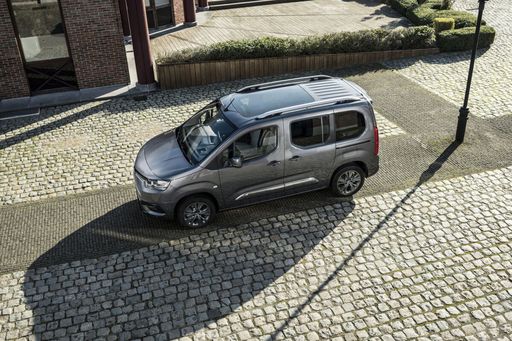
Rifter @ Peugeot / Stellantis Media

Peugeot Rifter vs. Toyota Proace City: High Roof Wagon Showdown

In the realm of high roof wagons, the Peugeot Rifter and the Toyota Proace City stand out as versatile contenders. Both offer ample space, adaptability, and a range of powertrain options. But how do they stack up against each other in terms of technical specifications and innovative features? Let’s dive into an in-depth comparison.

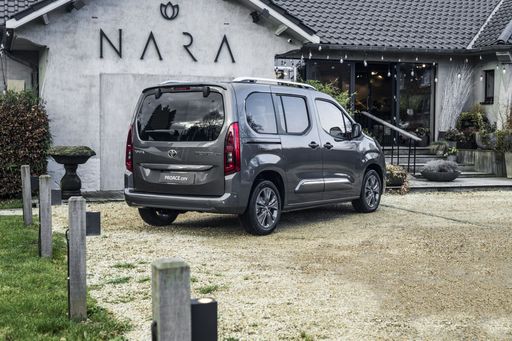
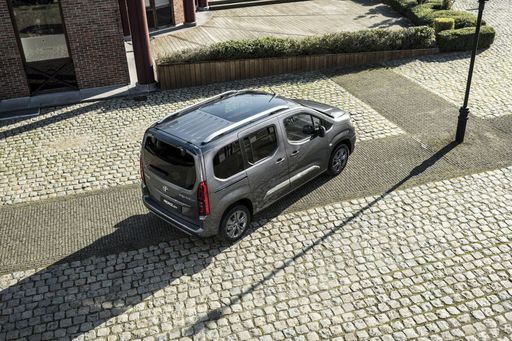
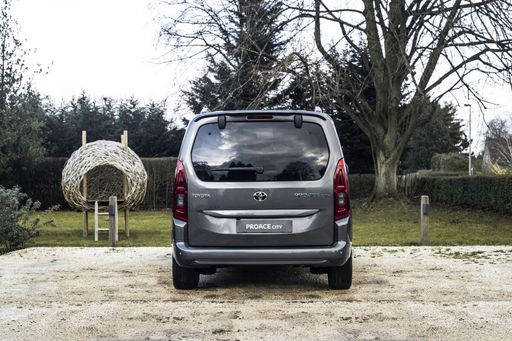
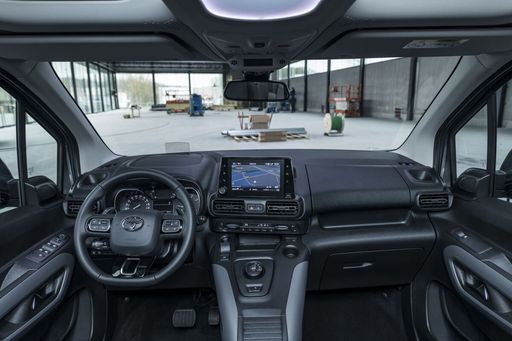
Proace City @ Toyota Motor Corporation

Engine Variants and Performance

The Peugeot Rifter and Toyota Proace City both provide an array of engine choices, demonstrating their adaptability to diverse driving preferences. The Rifter is available with electric, petrol, and diesel engines, with power ranging from 102 HP to 136 HP. Its electric variant offers a noteworthy range of up to 340 km.

Meanwhile, the Proace City mirrors this adaptability with petrol, diesel, and electric options. Its power output is similarly impressive, ranging from 102 HP to 136 HP. The electric Proace City can cover up to 343 km on a single charge, marginally surpassing the Rifter's electric range.

Rifter @ Peugeot / Stellantis Media

Transmission and Drive Types

Both vehicles feature a blend of manual and automatic gearboxes designed to cater to various driving styles. The Rifter and Proace City prioritize front-wheel drive, ensuring stability and control under diverse road conditions. Their transmission technologies are similar, with each offering manual, automatic, and reduction gearboxes.

Proace City @ Toyota Motor Corporation

Space, Comfort, and Practicality

Designed as practical family vehicles, the Peugeot Rifter and Toyota Proace City provide seating for up to seven passengers, making them perfect for larger families or carpools. The Rifter presents a trunk capacity between 322 L and 1050 L, while the Proace City offers 322 L to 912 L. Despite their similar dimensions, the Rifter nudges ahead with a slightly larger trunk capacity at full extension.

Both models come with either four or five doors, providing flexible access options for backseat passengers. The Rifter's interior is slightly more spacious, with a length of 4405 to 4755 mm and a height of up to 1837 mm. Comparatively, the Proace City measures between 4401 to 4751 mm in length and 1818 mm in height.

Rifter @ Peugeot / Stellantis Media

Fuel Efficiency and Environmental Impact

The Rifter demonstrates its efficiency with a fuel consumption range from 5.4 L/100km to 7.0 L/100km, while its electric variant consumes between 19.1 and 19.2 kWh/100km. CO2 efficiency classes span from 'A' to 'F', reflecting a broad range of environmental credentials depending on the engine chosen.

The Proace City's efficiency is competitive, with petrol and diesel consumption ranging from 5.3 L/100km to 6.3 L/100km. Its electric option is exceptionally efficient, consuming between 18.1 kWh/100km and 19.4 kWh/100km. With CO2 efficiency classes from 'A' to 'E', the Proace City often surfaces as the greener alternative.

Proace City @ Toyota Motor Corporation

Conclusion: A Well-Matched Duel

The Peugeot Rifter and Toyota Proace City represent fine examples of how practical family automobiles can embrace versatility and innovation. Both march neck-and-neck regarding performance, space, and technology. However, for those edging towards eco-friendliness and a slightly more extended electric range, the Proace City may hold the upper hand. Ultimately, your choice may pivot on specific needs and preferences, from trunk capacity to innovative features.

In this highly competitive segment, both the Rifter and Proace City continue to set benchmarks for high roof wagons. Their rivalry ensures continuous improvement and innovation, promising a bright future for enthusiasts of this car category.

Here’s where it gets real: The technical differences in detail

Rifter @ Peugeot / Stellantis Media

Costs and Efficiency:

Price and efficiency are often the first things buyers look at. Here it becomes clear which model has the long-term edge – whether at the pump, the plug, or in purchase price.

Toyota Proace City has a slightly advantage in terms of price – it starts at 20800 £, while the Peugeot Rifter costs 23800 £. That’s a price difference of around 3022 £.

Fuel consumption also shows a difference: Toyota Proace City manages with 5.30 L and is therefore minimal more efficient than the Peugeot Rifter with 5.60 L. The difference is about 0.30 L per 100 km.

In terms of energy consumption, the advantage goes to the Toyota Proace City: with 18.10 kWh per 100 km, it’s minimal more efficient than the Peugeot Rifter with 18.30 kWh. That’s a difference of about 0.20 kWh.

As for range, the Toyota Proace City performs hardly perceptible better – achieving up to 343 km, about 4 km more than the Peugeot Rifter.

Proace City @ Toyota Motor Corporation

Engine and Performance:

Under the bonnet, it becomes clear which model is tuned for sportiness and which one takes the lead when you hit the accelerator.

Both models deliver identical power – 136 HP each.

In acceleration from 0 to 100 km/h, the Peugeot Rifter is barely noticeable quicker – completing the sprint in 10.80 s, while the Toyota Proace City takes 11.50 s. That’s about 0.70 s faster.

In terms of top speed, the Toyota Proace City performs hardly perceptible better – reaching 186 km/h, while the Peugeot Rifter tops out at 184 km/h. The difference is around 2 km/h.

Both models offer the same torque – 300 Nm.

Space and Everyday Use:

Whether family car or daily driver – which one offers more room, flexibility and comfort?

Both vehicles offer seating for 7 people.

In curb weight, Toyota Proace City is slightly lighter – 1366 kg compared to 1561 kg. The difference is around 195 kg.

In terms of boot space, the Peugeot Rifter offers to a small extent more room – 1050 L compared to 912 L. That’s a difference of about 138 L.

In maximum load capacity, the Peugeot Rifter performs clearly perceptible better – up to 3500 L, which is about 807 L more than the Toyota Proace City.

When it comes to payload, Toyota Proace City minimal takes the win – 869 kg compared to 814 kg. That’s a difference of about 55 kg.

Who comes out on top?

Overall, the Toyota Proace City shows itself to be won narrowly and secures the title of DriveDuel Champion.
It convinces with the more balanced overall package and proves to be the more versatile choice for everyday use.

from about £20,800
Proace City @ Toyota Motor Corporation

Toyota Proace City

  • Engine Type : Petrol, Diesel, Electric
  • Transmission : Manuel, Automatic
  • Drive Type : Front-Wheel Drive
  • Power HP : 102 - 136 HP
  • Consumption L/100km : 5.3 - 6.3 L
  • Consumption kWh/100km : 18.10 kWh
  • Electric Range : 343 km

Peugeot Rifter

Der Peugeot Rifter beeindruckt mit seinem robusten Design und seiner hohen Vielseitigkeit, die ihn ideal für Familien und Outdoor-Abenteuer macht. Der Innenraum ist geräumig gestaltet und bietet zahlreiche innovative Technologien, die den Komfort und die Sicherheit der Insassen erhöhen. Zudem überzeugt der Rifter mit seiner hervorragenden Fahrdynamik, die sowohl in der Stadt als auch auf längeren Strecken für ein angenehmes Fahrerlebnis sorgt.

details

Toyota Proace City

The Toyota Proace City High Roof Combi is designed to seamlessly blend practicality with comfort, making it an ideal choice for families and businesses alike. Its versatile interior allows for flexible seating and cargo arrangements, catering to a variety of transport needs. Equipped with modern technology and advanced safety features, this vehicle ensures a reliable and secure driving experience.

details
Peugeot Rifter
Toyota Proace City
Rifter @ Peugeot / Stellantis Media
Proace City @ Toyota Motor Corporation

Costs and Consumption

Price
23800 - 36600 £
Price
20800 - 44100 £
Consumption L/100km
5.6 - 6 L
Consumption L/100km
5.3 - 6.3 L
Consumption kWh/100km
18.3 - 19.1 kWh
Consumption kWh/100km
18.10 kWh
Electric Range
328 - 339 km
Electric Range
343 km
Battery Capacity
-
Battery Capacity
-
co2
0 - 158 g/km
co2
0 - 146 g/km
Fuel tank capacity
50 L
Fuel tank capacity
50 - 61 L

Dimensions and Body

Body Type
High Roof Estate
Body Type
High Roof Estate
Seats
5 - 7
Seats
5 - 7
Doors
4 - 5
Doors
4 - 5
Curb weight
1561 - 1941 kg
Curb weight
1366 - 1664 kg
Trunk capacity
322 - 1050 L
Trunk capacity
322 - 912 L
Length
4405 - 4755 mm
Length
4401 - 4751 mm
Width
1848 mm
Width
1848 mm
Height
1818 - 1837 mm
Height
1812 - 1818 mm
Max trunk capacity
3000 - 3500 L
Max trunk capacity
2126 - 2693 L
Payload
489 - 814 kg
Payload
525 - 869 kg

Engine and Performance

Engine Type
Electric, Diesel
Engine Type
Petrol, Diesel, Electric
Transmission
Automatic, Manuel
Transmission
Manuel, Automatic
Transmission Detail
Reduction Gearbox, Manual Gearbox, Automatic Gearbox
Transmission Detail
Manual Gearbox, Reduction Gearbox, Automatic Gearbox
Drive Type
Front-Wheel Drive
Drive Type
Front-Wheel Drive
Power HP
102 - 136 HP
Power HP
102 - 136 HP
Acceleration 0-100km/h
10.8 - 13.6 s
Acceleration 0-100km/h
11.5 - 13.2 s
Max Speed
132 - 184 km/h
Max Speed
135 - 186 km/h
Torque
250 - 300 Nm
Torque
205 - 300 Nm
Number of Cylinders
4
Number of Cylinders
3 - 4
Power kW
75 - 100 kW
Power kW
75 - 100 kW
Engine capacity
1499 cm3
Engine capacity
1199 - 1499 cm3

General

Model Year
2024
Model Year
2024 - 2025
CO2 Efficiency Class
A, E, F
CO2 Efficiency Class
E, A
Brand
Peugeot
Brand
Toyota
What drivetrain options does the Peugeot Rifter have?

The Peugeot Rifter is offered with Front-Wheel Drive.

The prices and data displayed are estimates based on German list prices and may vary by country. This information is not legally binding.