VS

Ford Tourneo Connect vs Toyota Proace City comparison

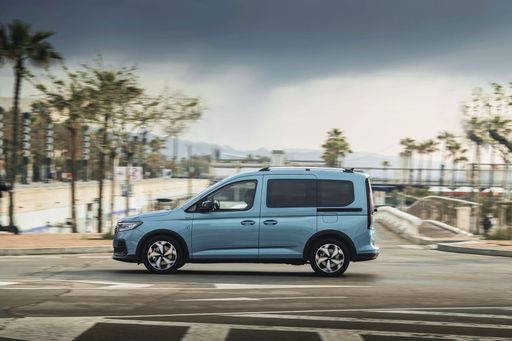
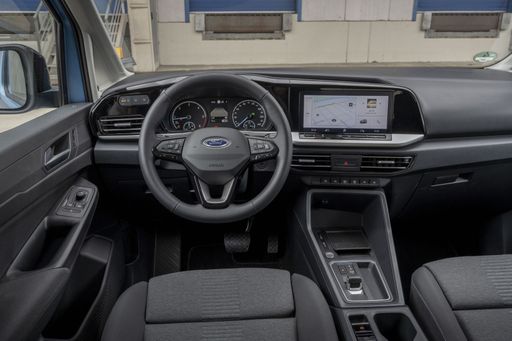
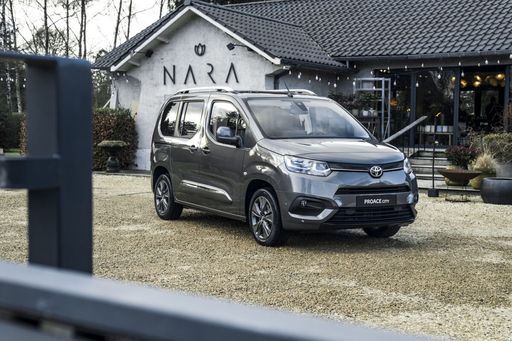
Compare performance (150 HP vs 136 HP), boot space and price (27,300 £ vs 20,800 £ ) at a glance. Find out which car is the better choice for you – Ford Tourneo Connect or Toyota Proace City?

Ford Tourneo Connect vs Toyota Proace City: Key differences

Ford Tourneo Connect

4.9 (1 Reviews)
rate
  • only slightly more power
  • significantly more efficient
  • somewhat quicker 0–100 km/h
  • clearly more trunk space
details

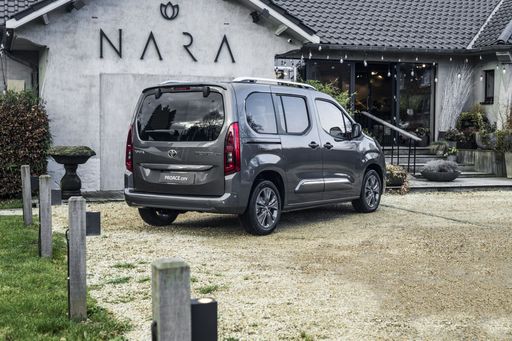
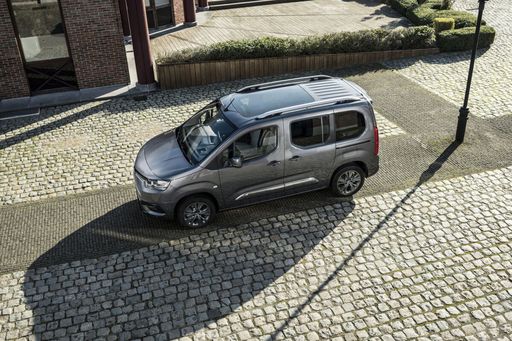
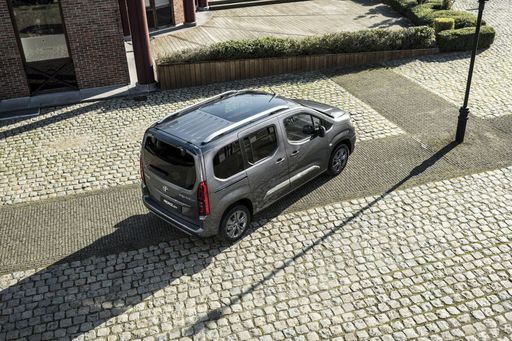
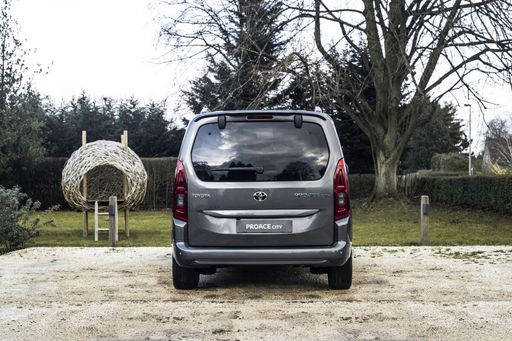
Toyota Proace City

  • markedly cheaper
  • considerably more electric range
  • somewhat lighter
details

By Achim Sedelmaier

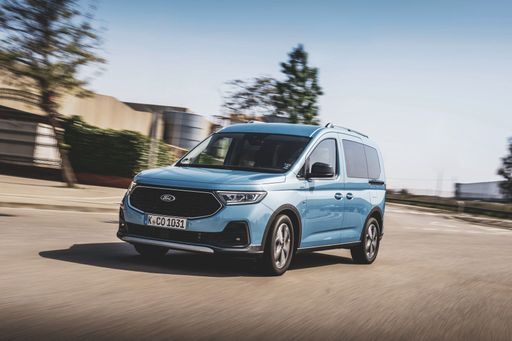
Tourneo Connect

Ford Tourneo Connect vs. Toyota Proace City: A Battle of High Roof Wagons

In the automotive world, the segment of high roof wagons often focuses on versatility, comfort, and space. Two popular contenders in this category are the Ford Tourneo Connect and the Toyota Proace City. As both models gear up for their latest releases, we delve into their technical aspects and innovations to uncover which wagon might best meet your needs.
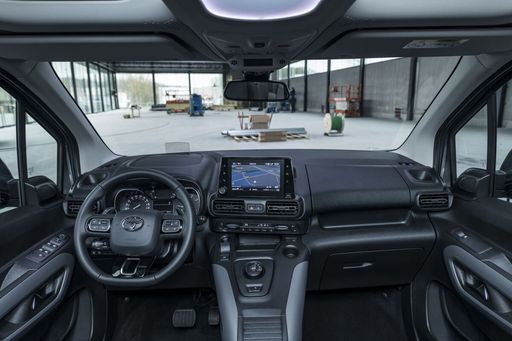
Proace City

Performance and Engine Options

The Ford Tourneo Connect presents a versatile range of engine types, including petrol, diesel, and a plug-in hybrid variant. It offers a selection of transmissions from a dual-clutch automatic for a seamless drive to a manual gearbox for those who prefer more control. The power output ranges from 102 HP to a more robust 150 HP. Its acceleration is respectable, with the 0-100 km/h sprint achieved in as fast as 11.4 seconds depending on the engine choice.

Comparatively, the Toyota Proace City is available with petrol, diesel, and an all-electric version, appealing to eco-conscious drivers. It provides a similar set of transmissions, with options such as a manual gearbox, and an automatic or reduction gearbox for the electric model. The power spectrum of the Proace City stretches from 102 HP to 136 HP, with acceleration times ranging from 11.5 to 13 seconds for its various configurations.

Tourneo Connect

Fuel Efficiency and Range

When it comes to fuel consumption, the Ford Tourneo Connect demonstrates decent efficiency with average consumption around 5.4 to 7 L/100km and a plug-in hybrid consumption as low as 0.5 L/100km, backed by a 19.7 kWh battery. It focuses on reducing emissions, achieving a CO2 output as low as 140 g/km for its cleaner models.

On the other hand, the Proace City offers a varied fuel consumption depending on the powertrain, ranging around 5.3 to 6.3 L/100km for traditional engines. Its electric model impresses with a consumption of 18.1 to 19.4 kWh/100km and an expansive range of up to 343 km on a single charge. The hybrid model proudly holds CO2 emissions at an environmentally friendly 0 g/km.

Proace City

Dimensions and Capacity

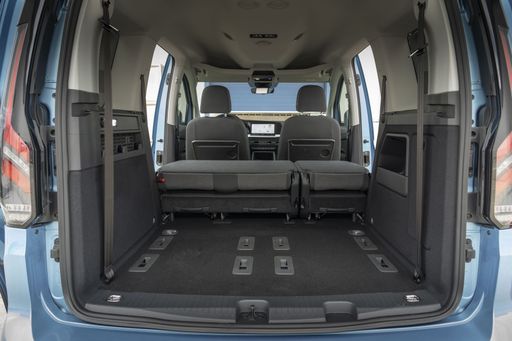
Space is a vital factor in this segment. The Ford Tourneo Connect is substantial in size with a length up to 4868 mm, width of 1855 mm, and height reaching 1833 mm. Its trunk offers up to 1720 liters of capacity, accommodating a well-equipped family road trip or business needs.

The Toyota Proace City comes in slightly more compact, extending up to 4751 mm in length, with a width of 1848 mm, and a slightly shorter height of 1818 mm. However, it compensates with great flexibility, offering seating for up to seven and a trunk capacity up to 912 liters, fitting a variety of usage scenarios.

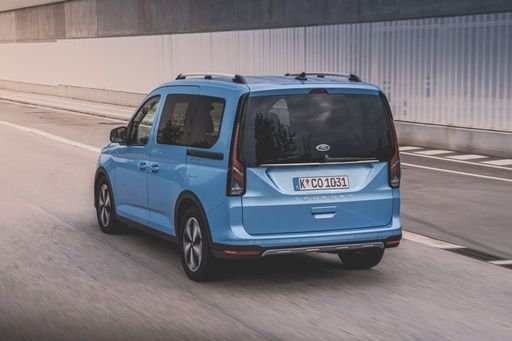
Tourneo Connect

Conclusion

Both the Ford Tourneo Connect and the Toyota Proace City bring unique strengths to the high roof wagon table. The Tourneo Connect shines with its diverse engine options, hybrid innovation, and expansive storage. Meanwhile, the Proace City's electric variant is outstanding, delivering an impressive range and lower emissions. Your choice between these dependable workers will largely depend on your priorities, whether they lean more towards environmental considerations, engine diversity, or spatial capacity requirements.

The 2024 designs promise modernity and adaptability. As the automotive industry continues to shift towards sustainability and technology-driven solutions, both Ford and Toyota provide compelling offerings worth consideration by anyone in search of a practical yet progressive high roof wagon.

Here’s where it gets real: The technical differences in detail

Tourneo Connect

Costs and Efficiency:

Price and efficiency are key factors when choosing a car – and this is often where the real differences emerge.

Toyota Proace City is markedly cheaper – starting at 20,800 £ , while the Ford Tourneo Connect costs 27,300 £ . That’s a price difference of around 6,544 £.

Fuel consumption also shows a difference: the Ford Tourneo Connect uses 0.5 L/100km and is significantly more efficient than the Toyota Proace City with 5.3 L/100km. The difference is about 4.8 L/100km.

As for electric range, the Toyota Proace City offers considerably more range – reaching up to 343 km, about 224 km more than the Ford Tourneo Connect.

Proace City

Engine and Performance:

Under the bonnet, it becomes clear which model is tuned for sportiness and which one takes the lead when you hit the accelerator.

When it comes to engine power, the Ford Tourneo Connect offers only slightly more power – delivering 150 HP compared to 136 HP. That’s roughly 14 HP more horsepower.

When accelerating from 0 to 100 km/h, the Ford Tourneo Connect is somewhat quicker – completing the sprint in 10.1 s, while the Toyota Proace City takes 11.5 s. That’s about 1.4 s quicker.

There’s also a difference in torque: the Ford Tourneo Connect delivers a bit more torque with 350 Nm compared to 300 Nm. That’s about 50 Nm more.

Tourneo Connect

Space and Everyday Use:

Beyond pure performance, interior space and usability matter most in daily life. This is where you see which car is more practical and versatile.

Seats: Toyota Proace City offers more seats – 7 vs 5.

In terms of curb weight, Toyota Proace City is somewhat lighter – 1,366 kg compared to 1,542 kg. The difference is around 176 kg.

Looking at boot space, the Ford Tourneo Connect offers clearly more boot space – 1,720 L compared to 912 L. That’s a difference of about 808 L.

When it comes to payload, the Toyota Proace City carries only slightly more – 829 kg compared to 818 kg. That’s a difference of about 11 kg.

Who wins the race in the data check?

The Ford Tourneo Connect is far ahead overall in the objective data comparison.
This result only shows which model scores more points on paper – not which of the two cars feels right for you.

from £27,300
Tourneo Connect

Ford Tourneo Connect

  • Engine Type : Plugin Hybrid, Petrol, Diesel
  • Transmission : Automatic, Manuel
  • Drive Type : Front-Wheel Drive, All-Wheel Drive
  • Power HP : 102 - 150 HP
  • Consumption L/100km : 0.5 - 6.9 L/100km
  • Electric Range : 116 - 119 km
Ford Tourneo Connect
Toyota Proace City

Costs and Consumption

View detailed analysis

Engine and Performance

View detailed analysis

Dimensions and Body

View detailed analysis

Ford Tourneo Connect

The Ford Tourneo Connect is a practical, surprisingly polished people-mover that balances family-friendly flexibility with car-like driving manners. With clever storage, sliding doors and a bright, airy cabin it’s a smart choice for buyers who want sensible versatility without sacrificing everyday comfort — and it’s oddly enjoyable to drive for its size.

details

Toyota Proace City

The Toyota Proace City is a clever compact workhorse that blends van practicality with passenger comfort, turning daily deliveries or weekend DIY runs into a surprisingly civilised affair. It won't set your pulse racing, but its easy driving manners, flexible interior and low-hassle ownership make it a smart pick for buyers who value usefulness over flash.

details
Ford Tourneo Connect
Toyota Proace City

Costs and Consumption

Price
27,300 - 41,900 £
Price
20,800 - 44,100 £
Consumption L/100km
0.5 - 6.9 L/100km
Consumption L/100km
5.3 - 6.3 L/100km
Consumption kWh/100km
-
Consumption kWh/100km
18.1 kWh/100km
Electric Range
116 - 119 km
Electric Range
343 km
Battery Capacity
-
Battery Capacity
-
co2
11 - 164 g/km
co2
0 - 146 g/km
Fuel tank capacity
-
Fuel tank capacity
-

Dimensions and Body

Body Type
High Roof Estate
Body Type
High Roof Estate
Seats
5
Seats
5 - 7
Doors
-
Doors
5
Curb weight
1,542 - 1,781 kg
Curb weight
1,366 - 1,664 kg
Trunk capacity
1,213 - 1,720 L
Trunk capacity
641 - 912 L
Length
-
Length
4,401 - 4,751 mm
Width
1,855 mm
Width
1,848 mm
Height
-
Height
1,812 - 1,818 mm
Max trunk capacity
-
Max trunk capacity
2,126 - 2,693 L
Payload
563 - 818 kg
Payload
525 - 829 kg

Engine and Performance

Engine Type
Plugin Hybrid, Petrol, Diesel
Engine Type
Electric, Petrol, Diesel
Transmission
Automatic, Manuel
Transmission
Automatic, Manuel
Transmission Detail
Dual-Clutch Automatic, Manual Gearbox
Transmission Detail
Reduction Gearbox, Manual Gearbox, Automatic Gearbox
Drive Type
Front-Wheel Drive, All-Wheel Drive
Drive Type
Front-Wheel Drive
Power HP
102 - 150 HP
Power HP
102 - 136 HP
Acceleration 0-100km/h
10.1 - 13.5 s
Acceleration 0-100km/h
11.5 - 13.2 s
Max Speed
-
Max Speed
135 km/h
Torque
220 - 350 Nm
Torque
205 - 300 Nm
Number of Cylinders
4
Number of Cylinders
3 - 4
Power kW
75 - 110 kW
Power kW
75 - 100 kW
Engine capacity
1,498 - 1,968 cm3
Engine capacity
1,199 - 1,499 cm3

General

Model Year
2,024 - 2,025
Model Year
2,024 - 2,026
CO2 Efficiency Class
B, E, F
CO2 Efficiency Class
A, E
Brand
Ford
Brand
Toyota
DriveDuel uses data analysis and artificial intelligence to evaluate vehicle data and create content. Content is regularly reviewed and improved. The displayed prices are estimates based on German list prices, adjusted to the respective country’s VAT. Country-specific registration taxes are not included. This information is not legally binding.